Cardiac Stress Test: Exercise, Imaging, and What Abnormal Results Mean
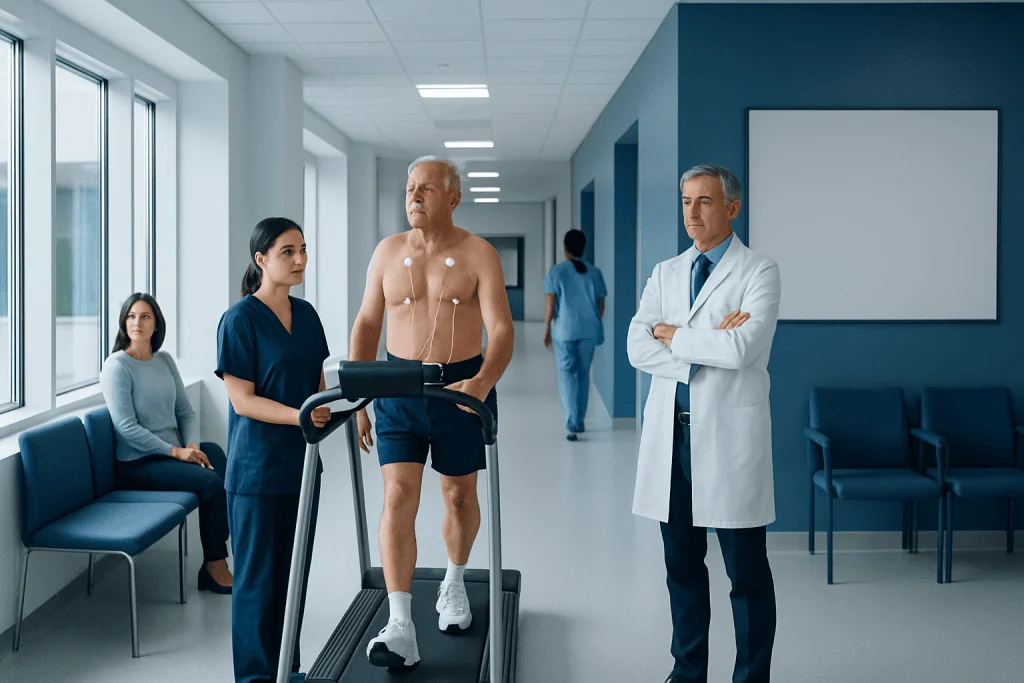
A cardiac stress test compares heart function at rest and during stress, most often using a treadmill, stationary bike, or medication. Some tests use ECG monitoring alone, while others add echocardiography, nuclear imaging, or cardiac MRI for more detail.
Key Takeaways
- A cardiac stress test compares heart function at rest and during stress, most often using a treadmill, stationary bike, or medication.
- Some tests use ECG monitoring alone, while others add echocardiography, nuclear imaging, or cardiac MRI for more detail.
- An abnormal result can suggest reduced blood flow, an old heart injury, rhythm problems, or reduced exercise capacity, but it must be interpreted with the full clinical picture.
- Preparation may include avoiding caffeine, adjusting certain medicines, and wearing comfortable clothing, depending on the test type.
- Most stress tests are safe when performed by trained teams with appropriate monitoring, but patients should report symptoms promptly.
A cardiac stress test shows how the heart works when it is asked to pump harder, usually during exercise or with medicine that simulates exercise. It can help doctors evaluate chest pain, shortness of breath, heart rhythm changes, and the likelihood of reduced blood flow to the heart muscle.
Overview
A cardiac stress test is a diagnostic test that evaluates how the heart responds when it needs to work harder. During physical activity, the heart requires more oxygen-rich blood. If the coronary arteries are narrowed or if the heart muscle is not functioning normally, changes may appear in symptoms, heart rhythm, blood pressure, ECG findings, or imaging results.
The test is commonly used to assess chest discomfort, shortness of breath, palpitations, unexplained fatigue with exertion, or known coronary artery disease. It may also help guide treatment decisions after a heart attack, angioplasty, bypass surgery, or when planning a safe level of exercise in selected patients.
A stress test does not answer every heart question by itself. Doctors interpret the results together with the patient’s medical history, physical examination, risk factors, blood tests, and sometimes other tests such as coronary CT angiography or cardiac catheterization.
Types of Cardiac Stress Tests
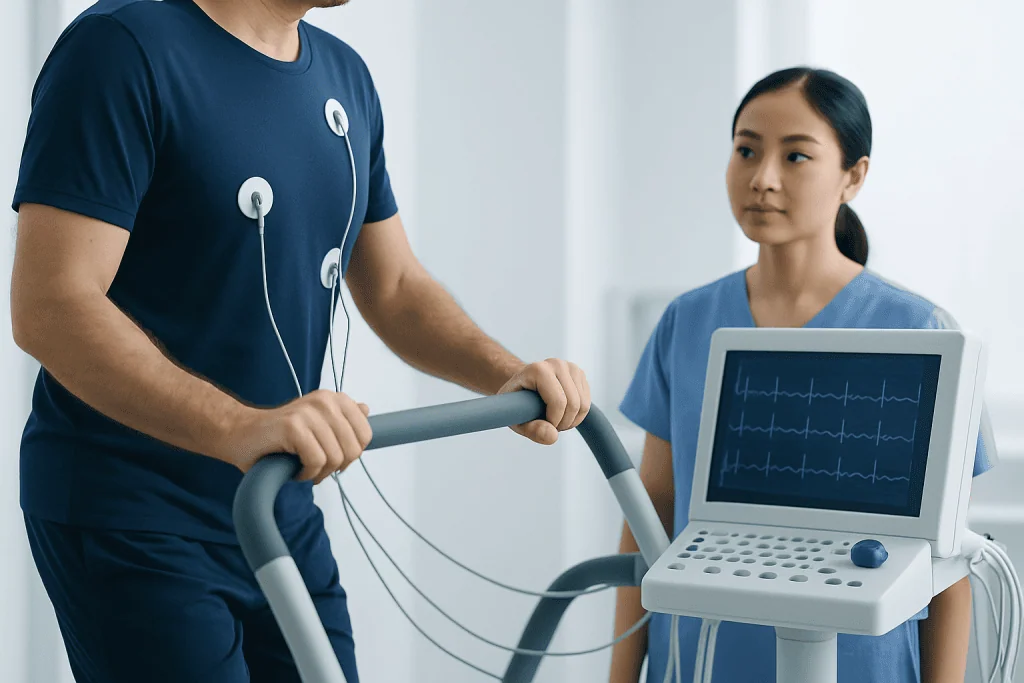
The simplest form is an exercise ECG stress test, often performed on a treadmill or stationary bike. ECG electrodes are placed on the chest to record the heart’s electrical activity, while blood pressure, heart rate, symptoms, and exercise capacity are monitored. This test is most useful when a person can exercise adequately and has a baseline ECG that can be interpreted reliably.
A stress echocardiogram combines stress testing with ultrasound images of the heart. Images are taken at rest and again during or immediately after stress. The doctor looks for areas of the heart muscle that do not squeeze normally under stress, which may suggest reduced blood flow through a coronary artery.
A nuclear stress test uses a small amount of radioactive tracer to show blood flow to the heart muscle at rest and during stress. The images can identify areas with reduced blood supply or scarring from a previous heart attack. In some centers, cardiac MRI stress testing may be used for selected patients to assess blood flow, heart muscle function, and scar tissue without ionizing radiation.
For people who cannot exercise enough, a pharmacologic stress test may be recommended. In this approach, medication is used to make the heart respond as if the body were exercising or to increase blood flow in the coronary arteries. The choice of test depends on symptoms, ECG findings, ability to exercise, kidney function, lung conditions, body size, previous heart procedures, and local expertise.
Who May Need a Stress Test

A cardiac stress test may be recommended when symptoms suggest that the heart is not receiving enough blood during activity. These symptoms can include pressure, tightness, or discomfort in the chest; pain spreading to the arm, jaw, neck, back, or upper abdomen; breathlessness; dizziness; unusual fatigue; or palpitations during exertion.
Doctors may also use stress testing in people with known heart disease to evaluate how well treatment is working. For example, it may help assess symptoms after stent placement, coronary bypass surgery, or medication changes. In selected cases, it can help determine exercise capacity before certain non-cardiac surgeries or guide a cardiac rehabilitation plan.
Stress testing is not automatically needed for every person with risk factors such as high blood pressure, diabetes, smoking history, high cholesterol, or family history of heart disease. For people without symptoms, the decision depends on individual risk and whether the result would change management. A cardiologist can help decide whether a stress test, imaging test, or a different evaluation is most appropriate.
How to Prepare
Preparation depends on the type of test and the patient’s medical conditions. Patients are usually advised to wear comfortable clothing and walking shoes if exercise is planned. They may be asked not to eat a heavy meal shortly before the test, because exercising or receiving stress medication can be uncomfortable on a full stomach.
Medication instructions should always come from the treating doctor or testing center. Some medicines, such as beta blockers or certain heart rate-controlling drugs, may affect the ability to reach a target heart rate. They should not be stopped unless the doctor specifically instructs the patient to do so. People using inhalers, insulin, diabetes tablets, blood thinners, or heart medicines should confirm what to do before the appointment.
For some nuclear or pharmacologic stress tests, patients may be asked to avoid caffeine for a period before the test. This can include coffee, tea, energy drinks, cola, chocolate, and some over-the-counter medicines, because caffeine may interfere with certain stress medications. Patients should also tell the team if they are pregnant, may be pregnant, breastfeeding, have asthma or severe lung disease, kidney problems, allergies, or difficulty lying flat.
What Happens During the Test
Before the test begins, a nurse, technician, or doctor reviews symptoms, medicines, and relevant medical history. ECG electrodes are attached to the chest, a blood pressure cuff is placed on the arm, and baseline measurements are recorded. If imaging is part of the test, resting images may be taken first.
During an exercise stress test, the treadmill or bike starts at a low level and gradually becomes harder. The patient is encouraged to continue as long as safely possible, while the team monitors heart rate, ECG, blood pressure, breathing, and symptoms. The test may stop when the target heart rate is reached, the patient develops limiting symptoms, ECG or blood pressure changes occur, or the doctor decides enough information has been collected.
During a pharmacologic stress test, medication is given through an IV. Patients may feel flushing, warmth, shortness of breath, chest pressure, headache, or a fast heartbeat; these sensations often pass quickly, and the team monitors the patient throughout. If imaging is used, pictures are taken at specific times to compare blood flow or heart motion during stress and at rest.
After the stress portion, monitoring continues during recovery until heart rate, blood pressure, and symptoms return toward baseline. The total appointment time varies: an exercise ECG may be relatively brief, while nuclear or MRI-based tests can take longer because of imaging steps and waiting periods.
What Normal and Abnormal Results Mean
A normal stress test generally means that the heart tolerated the workload without concerning symptoms, significant ECG changes, abnormal blood pressure response, or imaging signs of reduced blood flow. This can be reassuring, especially when the person achieved an adequate level of stress. However, no test is perfect, and symptoms that persist or worsen still deserve medical follow-up.
An abnormal stress test may suggest myocardial ischemia, meaning part of the heart muscle may not be getting enough blood during stress. It may also show scar tissue from a previous heart attack, reduced pumping function, an abnormal heart rhythm, poor exercise capacity, or an unusual blood pressure response. The meaning depends on which findings were abnormal and how strongly they match the patient’s symptoms and risk profile.
Sometimes results are described as inconclusive or nondiagnostic. This can happen if the patient could not exercise enough, the target heart rate was not reached, ECG interpretation was limited, image quality was reduced, or symptoms and test findings did not clearly match. In these situations, the doctor may recommend a different imaging stress test, coronary CT angiography, medical treatment with follow-up, or invasive coronary angiography in selected cases.
An abnormal result does not automatically mean a person needs a procedure. Treatment may include lifestyle changes, medicines to control symptoms and risk factors, further testing, or procedures such as angioplasty or bypass surgery when appropriate. The goal is to match the treatment plan to the patient’s symptoms, anatomy, overall health, and preferences.
Risks, Limitations, and Safety
Cardiac stress testing is generally safe when performed in a supervised medical setting. The test deliberately increases the heart’s workload, so temporary symptoms can occur. These may include tiredness, shortness of breath, dizziness, palpitations, chest discomfort, headache, or nausea, depending on the test type.
Serious complications are uncommon, but medical teams are prepared to respond if they occur. Possible complications include significant abnormal heart rhythms, a marked change in blood pressure, prolonged chest pain, fainting, or, rarely, a heart attack. Patients should immediately report chest pain, severe breathlessness, feeling faint, wheezing, or any symptom that feels unusual or concerning.
Each test also has limitations. Exercise ECG stress testing can be less accurate in people with certain baseline ECG abnormalities or those who cannot exercise adequately. Imaging tests can provide more information but may involve contrast agents, radiation in nuclear testing, longer appointment times, or specific restrictions for patients with kidney disease, implanted devices, or claustrophobia, depending on the modality.
After the Test and When to See a Doctor
After the test, most people can return to usual activities unless the medical team gives different instructions. If a sedating medicine was used, or if the patient felt unwell, additional observation or transportation support may be recommended. Results may be discussed the same day or after a cardiologist reviews ECG tracings and imaging data.
Patients should seek urgent medical attention if they develop chest pain that is severe, persistent, or occurs at rest; shortness of breath that does not improve; fainting; new weakness on one side of the body; or a fast or irregular heartbeat with dizziness. For milder but recurring symptoms, a timely appointment with a qualified doctor is important, even if a recent stress test was normal.
Long-term heart health often depends on managing risk factors. This may include stopping smoking, maintaining a heart-healthy diet, staying physically active as advised, controlling blood pressure, diabetes, and cholesterol, taking prescribed medicines consistently, and attending follow-up visits. For international patients, Acibadem International’s multidisciplinary specialists and JCI-accredited hospitals can diagnose and treat cardiovascular conditions, including evaluation with appropriate stress testing, based on individual medical needs.
Frequently asked questions
Is a cardiac stress test painful?
The test itself is not usually painful, although exercise can feel tiring and some people may develop shortness of breath or chest pressure. Pharmacologic stress medicines can cause temporary sensations such as flushing, warmth, headache, or a fast heartbeat. The medical team monitors symptoms closely and can stop the test when needed.
What is the difference between an exercise stress test and a nuclear stress test?
An exercise stress test usually uses ECG monitoring while the patient walks on a treadmill or pedals a bike. A nuclear stress test adds imaging with a small amount of radioactive tracer to show blood flow to the heart muscle at rest and during stress. Nuclear testing may be chosen when more detail is needed or when ECG-only testing may be difficult to interpret.
Can a person have a stress test if they cannot walk on a treadmill?
Yes. If a person cannot exercise enough because of joint problems, lung disease, weakness, neurological conditions, or other limitations, a pharmacologic stress test may be used. Medication creates a stress effect on the heart or coronary blood flow while the patient is monitored.
Does an abnormal stress test always mean blocked arteries?
Not always. An abnormal result can suggest reduced blood flow from coronary artery disease, but it can also reflect rhythm problems, blood pressure changes, reduced exercise capacity, previous heart damage, or technical limitations. Doctors interpret the result along with symptoms, risk factors, and other test findings before recommending treatment.
How should patients prepare for a cardiac stress test?
Patients should follow the instructions from the testing center, because preparation varies by test type. They may need to wear comfortable shoes, avoid a heavy meal, avoid caffeine before certain tests, and ask whether to take regular medicines as usual. Medicines should never be stopped without medical advice.
Are stress tests safe for older adults?
Many older adults can safely have a stress test when it is appropriately selected and supervised. The doctor considers overall health, mobility, symptoms, heart history, and other medical conditions before choosing exercise or pharmacologic stress. Monitoring during the test helps the team respond quickly if symptoms or abnormal changes occur.
References
- American Heart Association
- American College of Cardiology
- European Society of Cardiology
- Mayo Clinic
- National Heart, Lung, and Blood Institute
This article is for general information only and is not a substitute for professional medical advice. Please consult a qualified doctor about your individual situation.
Heart care in Turkey — expert evaluation and treatment
JCI-accredited · board-certified surgeons · reply within 24h
Add us as a Preferred Source to see more of our trusted health content across Google Search, AI Overviews and Discover.
Check your numbers in seconds
BMI, calories, due date, blood pressure and 30+ more clinical calculators — free, instant, doctor-reviewed ranges.

Cardiology Department
Diagnosis and treatment of heart and vascular conditions, from prevention to advanced interventional procedures.
91 specialists in this unit