Supraventricular Tachycardia: Sudden Fast Heartbeat and Ablation Treatment

Supraventricular tachycardia, or SVT, is a fast heart rhythm that begins in the upper chambers of the heart or the electrical pathways near them. Symptoms may include palpitations, chest discomfort, shortness of breath, dizziness, tiredness, or a pounding sensation in the neck.
Key Takeaways
- Supraventricular tachycardia, or SVT, is a fast heart rhythm that begins in the upper chambers of the heart or the electrical pathways near them.
- Symptoms may include palpitations, chest discomfort, shortness of breath, dizziness, tiredness, or a pounding sensation in the neck.
- An electrocardiogram during symptoms is the most useful test, but longer-term rhythm monitors may be needed if episodes are brief or infrequent.
- Some people can stop episodes with doctor-approved vagal maneuvers, while others need medicines or urgent treatment in a medical setting.
- Catheter ablation can be a highly effective treatment option for many types of SVT, especially when episodes are frequent, symptomatic, or medication is not preferred.
- Anyone with fainting, severe chest pain, severe breathlessness, or a fast heartbeat that does not settle should seek urgent medical care.
Supraventricular tachycardia is a common heart rhythm problem that can cause sudden episodes of a very fast heartbeat, often starting and stopping abruptly. Although episodes can feel unsettling, SVT is usually treatable with lifestyle measures, medicines, or catheter ablation when appropriate.
Overview
Supraventricular tachycardia, often shortened to SVT, is a type of abnormal heart rhythm in which the heart suddenly beats much faster than usual. The word “supraventricular” means the rhythm starts above the ventricles, usually in the upper chambers of the heart called the atria or in the electrical connection between the atria and ventricles. During an episode, the heartbeat may feel regular but very rapid, and it may begin and end without warning.
The heart has a natural electrical system that coordinates each beat. Normally, electrical signals begin in the sinus node, travel through the atria, pass through the atrioventricular node, and then move to the ventricles. In SVT, an extra pathway or a small electrical circuit can allow signals to loop quickly, causing the heart to race. Common forms include atrioventricular nodal re-entrant tachycardia, atrioventricular re-entrant tachycardia, and atrial tachycardia.
SVT can occur in otherwise healthy people and may first appear in adolescence or adulthood, although it can affect any age group. Many episodes are not life-threatening, but they can be uncomfortable and may interfere with daily activities. A careful medical evaluation helps confirm the rhythm, identify any underlying heart condition, and select the most suitable treatment.
Symptoms of Supraventricular Tachycardia
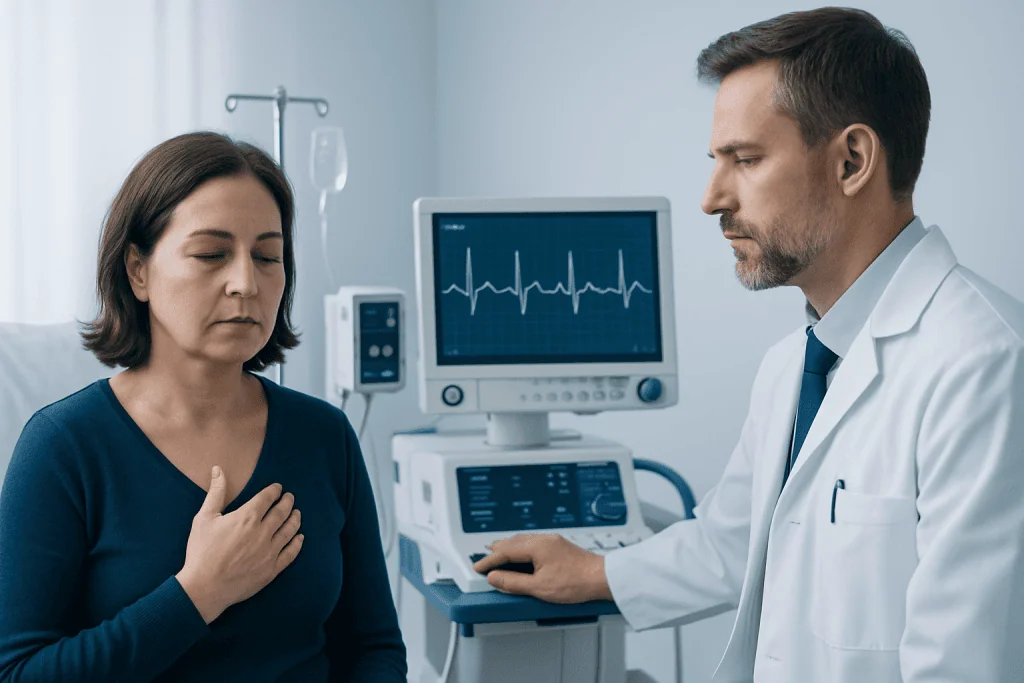
SVT symptoms can vary from person to person. Some people notice only a fluttering sensation, while others feel a sudden, forceful racing heartbeat that makes them stop what they are doing. Episodes may last seconds, minutes, or occasionally longer. The heart rate during SVT is often much faster than a person’s usual resting heart rate, and the rhythm may feel regular and rapid.
Common symptoms include:
- Palpitations or a sudden fast heartbeat
- A pounding feeling in the chest, throat, or neck
- Lightheadedness or dizziness
- Shortness of breath
- Chest pressure or discomfort
- Tiredness after an episode
- Anxiety or a sense that something is not right
Some people with SVT may also urinate more frequently after an episode, which can occur because of hormonal changes triggered by the fast rhythm. Fainting is less common but can happen, particularly if the heart rate is very fast or if there is another heart problem. Symptoms such as severe chest pain, fainting, confusion, or significant breathlessness require prompt medical attention.
Causes and Risk Factors

SVT usually develops because of the way electrical signals travel through the heart. In many people, there is an extra electrical pathway or a small circuit that can be activated by a premature heartbeat. Once activated, the circuit may keep sending rapid signals until it stops on its own or is interrupted by treatment. This mechanism is different from a heart attack, although symptoms can sometimes overlap and should be assessed appropriately.
Triggers do not cause the underlying electrical pathway, but they may make episodes more likely in some people. Possible triggers include caffeine, alcohol, dehydration, lack of sleep, emotional stress, intense exercise, fever, and some over-the-counter cold medicines or stimulants. Thyroid overactivity, anemia, electrolyte imbalance, and certain lung or heart conditions can also contribute to fast heart rhythms.
Risk factors depend on the type of SVT. Some people are born with an accessory pathway, such as in Wolff-Parkinson-White pattern or syndrome. Others develop atrial tachycardia in association with age, high blood pressure, heart valve disease, lung disease, or previous heart surgery. A family history of arrhythmias may also be relevant. Identifying risk factors helps guide treatment and determine whether additional tests are needed.
Diagnosis
The most important step in diagnosing SVT is recording the heart rhythm during an episode. A standard electrocardiogram, or ECG, can show the speed and pattern of the heartbeat and may suggest the specific type of SVT. However, because episodes can be brief and unpredictable, the ECG may be normal if the person is not having symptoms at the time of the test.
If symptoms come and go, a doctor may recommend a portable rhythm monitor. A Holter monitor records continuously for one or more days, while an event monitor or patch monitor may be worn for longer periods. Some people use smartphone-based ECG devices, but results should still be reviewed by a qualified clinician. Blood tests may be ordered to check thyroid function, anemia, or electrolyte levels, and an echocardiogram may be used to assess heart structure and function.
In selected cases, especially when catheter ablation is being considered, an electrophysiology study may be recommended. During this test, thin catheters are guided through blood vessels to the heart to map the electrical signals. The study can identify the exact mechanism of SVT and, in many cases, allow ablation treatment during the same procedure.
Treatment Options
Treatment depends on the type of SVT, symptom severity, episode frequency, other medical conditions, and patient preference. Some people have rare, mild episodes and need only reassurance, trigger management, and a plan for what to do if symptoms occur. Others need medicines to prevent episodes or to slow the heart rate if SVT develops.
For certain stable SVT episodes, a doctor may teach vagal maneuvers. These are techniques that stimulate the vagus nerve and can sometimes interrupt the electrical circuit causing the fast rhythm. Examples include a modified Valsalva maneuver, performed in a specific way under medical instruction. Carotid sinus massage should only be done by trained healthcare professionals because it is not suitable for everyone.
If an episode continues or symptoms are significant, treatment in a medical setting may be needed. Doctors may use medicines that act on the heart’s electrical system to stop SVT or control the rate, with monitoring for safety. Long-term preventive medicines may be considered for people who cannot have ablation, do not want a procedure, or have a type of SVT where medication is preferred. The choice of medication should always be individualized by a cardiologist or qualified physician.
Catheter Ablation for SVT
Catheter ablation is a minimally invasive procedure used to treat many types of SVT by targeting the small area of heart tissue or extra pathway responsible for the rhythm. During the procedure, flexible catheters are inserted through a vein, often in the groin, and guided to the heart. The electrophysiology team maps the abnormal electrical circuit and applies energy, commonly radiofrequency heat or sometimes freezing energy, to interrupt it.
Ablation may be considered when SVT episodes are frequent, prolonged, very symptomatic, difficult to control with medication, or when a person prefers a treatment that may reduce the need for long-term medicines. It is also commonly discussed for accessory pathway-related tachycardia, including some cases associated with Wolff-Parkinson-White syndrome. The procedure is planned after reviewing the patient’s ECGs, medical history, and overall health.
Like any procedure, catheter ablation has potential risks, such as bleeding or bruising at the catheter site, blood vessel injury, rhythm disturbances, or, rarely, damage to the normal electrical system requiring a pacemaker. Serious complications are uncommon in experienced centers, but the exact risk depends on the SVT type and the patient’s condition. Patients should receive a clear explanation of benefits, alternatives, and risks before giving consent.
Recovery is usually straightforward, with monitoring after the procedure and instructions about activity, wound care, and follow-up. Some people feel brief palpitations during the healing period, which does not always mean the SVT has returned. At Acibadem International, multidisciplinary cardiology and electrophysiology specialists in JCI-accredited hospitals evaluate and treat heart rhythm disorders, including SVT, for international patients when clinically appropriate.
Prevention and Self-care
Not all SVT episodes can be prevented, especially when an extra electrical pathway is present. However, many people can reduce episode frequency by recognizing personal triggers and supporting overall heart health. Keeping a symptom diary can be useful. It may include the time of symptoms, heart rate if known, activity, sleep, caffeine or alcohol intake, stress level, and how the episode stopped.
General self-care measures include staying well hydrated, sleeping regularly, moderating caffeine and alcohol if they appear to trigger symptoms, avoiding recreational stimulants, and asking a doctor or pharmacist before using decongestants or stimulant-containing supplements. Managing thyroid disease, high blood pressure, sleep apnea, anemia, or other contributing conditions may also help reduce rhythm problems.
People diagnosed with SVT should ask their clinician for a personal action plan. This may include when to try a vagal maneuver, when to take prescribed medication, and when to seek urgent care. It is also helpful to share the plan with family members or travel companions, particularly if episodes have been prolonged or associated with dizziness.
When to See a Doctor
A person should arrange a medical evaluation if they experience recurrent palpitations, sudden episodes of a fast heartbeat, unexplained dizziness, or chest discomfort during a racing heartbeat. Even if episodes stop on their own, documenting the rhythm is important because different arrhythmias require different treatment approaches. A primary care doctor may begin the evaluation and refer the patient to a cardiologist or electrophysiologist.
Urgent medical care is needed if a fast heartbeat is accompanied by fainting, severe chest pain, severe shortness of breath, confusion, weakness, or symptoms that do not improve. People with known heart disease, pregnancy, or significant medical conditions should also seek prompt advice when new or worsening palpitations occur.
SVT is often manageable once the rhythm is correctly identified. With an accurate diagnosis and an individualized plan, many people can return to normal activities with greater confidence. Treatment decisions should be made together with a qualified healthcare professional, taking into account the person’s symptoms, medical history, and preferences.
Frequently asked questions
Is supraventricular tachycardia dangerous?
SVT is often not life-threatening in people with otherwise healthy hearts, but it can cause distressing symptoms and affect quality of life. Some people may need treatment if episodes are frequent, prolonged, or associated with dizziness, chest discomfort, or fainting. A medical evaluation is important to confirm the rhythm and rule out other conditions.
What does an SVT episode feel like?
Many people describe SVT as a sudden racing, fluttering, or pounding heartbeat that starts and stops abruptly. It may be felt in the chest, throat, or neck and can be accompanied by lightheadedness, shortness of breath, tiredness, or anxiety. Symptoms vary, so recording the heart rhythm during an episode is very helpful.
Can SVT go away on its own?
Some SVT episodes stop on their own within seconds or minutes, and some people have long periods without symptoms. However, the electrical tendency may still be present, so episodes can return. A doctor can advise whether observation, medication, or catheter ablation is the best approach.
How is SVT different from atrial fibrillation?
SVT usually refers to a group of fast rhythms that often feel regular and may start and stop suddenly. Atrial fibrillation is another rhythm disorder in which the heartbeat is often irregular and may require different evaluation and treatment, including stroke risk assessment. An ECG is the key test to distinguish between them.
Is catheter ablation painful?
Catheter ablation is performed with local anesthesia at the catheter insertion site and sedation or anesthesia depending on the case and center protocol. Patients may feel pressure at the access site or brief sensations during rhythm testing, but the care team monitors comfort throughout the procedure. The doctor will explain what to expect before the procedure.
Will medication cure SVT?
Medicines can reduce episodes, slow the heart rate, or help stop certain SVT attacks, but they usually do not remove the electrical pathway or circuit causing the rhythm. Catheter ablation is the treatment that aims to eliminate the source of many SVT types. The best option depends on symptoms, SVT type, health status, and patient preference.
Can lifestyle changes prevent SVT?
Lifestyle changes may reduce episodes in people who have clear triggers, such as dehydration, excess caffeine, alcohol, stress, or lack of sleep. They cannot always prevent SVT when an extra electrical pathway is present. A personalized plan from a healthcare professional is the safest way to combine self-care with medical treatment if needed.
References
- American Heart Association
- European Society of Cardiology
- Heart Rhythm Society
- National Heart, Lung, and Blood Institute
- Mayo Clinic
This article is for general information only and is not a substitute for professional medical advice. Please consult a qualified doctor about your individual situation.
Explore treatments in Turkey — costs, top hospitals & a free quote
JCI-accredited · board-certified surgeons · reply within 24h
Add us as a Preferred Source to see more of our trusted health content across Google Search, AI Overviews and Discover.
Check your numbers in seconds
BMI, calories, due date, blood pressure and 30+ more clinical calculators — free, instant, doctor-reviewed ranges.

Cardiology Department
Diagnosis and treatment of heart and vascular conditions, from prevention to advanced interventional procedures.
91 specialists in this unit