

Infertility Evaluation: Tests for Women and Men

Infertility evaluation usually involves both partners, even when one person has a known health issue. Common tests for women include ovulation assessment, hormone testing, ultrasound, and evaluation of the uterus and fallopian tubes.
Key Takeaways
- Infertility evaluation usually involves both partners, even when one person has a known health issue.
- Common tests for women include ovulation assessment, hormone testing, ultrasound, and evaluation of the uterus and fallopian tubes.
- Common tests for men include semen analysis, medical history review, physical examination, and selected hormone or genetic tests when needed.
- Many causes of infertility are treatable with lifestyle changes, medication, surgery, intrauterine insemination, or IVF.
- A fertility specialist can personalize testing and treatment according to age, medical history, test results, and pregnancy goals.
Infertility evaluation is a step-by-step medical assessment that helps identify why pregnancy has not occurred and what treatment options may help. Both partners are usually assessed, because fertility depends on ovulation, sperm health, fallopian tubes, the uterus, timing, and overall health.
Overview
Infertility evaluation is the medical process used to understand why a couple or individual has not achieved pregnancy after trying for a certain period of time. In general, evaluation is recommended after 12 months of regular unprotected intercourse for women under 35, or after 6 months for women aged 35 or older. Earlier assessment may be advised if there are irregular periods, known pelvic disease, previous cancer treatment, recurrent pregnancy loss, or a known male reproductive concern.
Fertility depends on several steps working together. A woman needs to ovulate, healthy sperm must reach and fertilize the egg, the fallopian tubes should be open, and the uterus must be able to support implantation and pregnancy. Infertility evaluation looks at each of these areas in a structured way.
It is common for both partners to feel anxious before testing. However, the purpose of evaluation is not to assign blame. It is to identify factors that can be addressed and to guide the safest, most appropriate treatment plan. In some cases, no single cause is found; this is called unexplained infertility, and treatment options may still be available.
When Infertility Testing Is Recommended

Timing of infertility testing depends mainly on age, menstrual pattern, medical history, and how long pregnancy has been attempted. Because fertility naturally changes with age, women aged 35 and older are usually advised to seek evaluation sooner than younger women. Women aged 40 and older may benefit from consultation as soon as they begin trying to conceive.
Testing may also be recommended earlier when there are signs that ovulation, sperm production, or reproductive anatomy could be affected. Examples include very irregular or absent periods, severe menstrual pain, a history of pelvic inflammatory disease, endometriosis, ectopic pregnancy, repeated miscarriage, previous ovarian or testicular surgery, or chemotherapy and radiotherapy exposure.
Men should also be evaluated if there is a history of undescended testicles, testicular injury, varicocele, erectile or ejaculation problems, testosterone use, certain infections, or prior surgery involving the reproductive tract. A semen analysis is often one of the first tests because it is noninvasive and provides important information about sperm count, movement, and shape.
Fertility Tests for Women
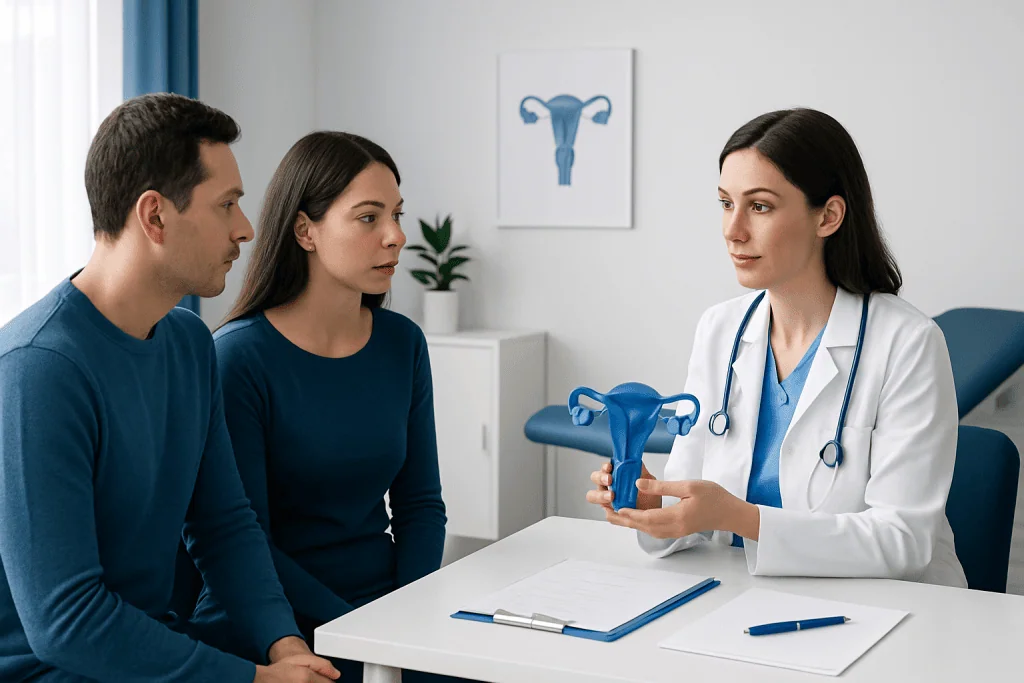
Fertility tests for women begin with a detailed medical history and physical examination. The doctor asks about menstrual cycles, previous pregnancies, pelvic pain, infections, surgeries, medications, lifestyle factors, and family history. This information helps decide which tests are most useful and avoids unnecessary investigations.
Ovulation assessment is a key part of female infertility evaluation. Doctors may use menstrual cycle history, blood tests such as progesterone at a specific time in the cycle, ovulation predictor kits, or ultrasound monitoring. Hormone tests may include thyroid-stimulating hormone, prolactin, follicle-stimulating hormone, estradiol, luteinizing hormone, and anti-Müllerian hormone, depending on the situation.
Ultrasound imaging is commonly used to assess the ovaries, follicles, and uterus. A transvaginal ultrasound can help identify ovarian cysts, fibroids, polyps, signs of polycystic ovary syndrome, or reduced ovarian reserve indicators. It may also be used during fertility treatment to monitor follicle growth.
Evaluation of the fallopian tubes and uterine cavity may include hysterosalpingography, which uses contrast imaging to show whether the tubes appear open. Other options include saline infusion sonography or hysteroscopy, depending on symptoms and earlier test findings. These tests can help detect uterine polyps, fibroids that affect the cavity, scar tissue, or tubal blockage.
Male Infertility Testing
Male infertility testing usually starts with a reproductive and general health history. The doctor may ask about puberty, previous fertility, sexual function, medications, anabolic steroid or testosterone use, smoking, alcohol, occupational heat or chemical exposure, infections, surgeries, and chronic illnesses. A physical examination may assess the testicles, epididymis, vas deferens, and signs of varicocele or hormonal imbalance.
Semen analysis is the central test for male fertility. It measures semen volume, sperm concentration, total sperm count, motility, and morphology. Because sperm results can vary from one sample to another, a repeat test is often recommended if the first result is abnormal or borderline.
If semen analysis shows significant abnormalities, additional testing may be advised. This can include hormone tests such as follicle-stimulating hormone, luteinizing hormone, testosterone, and prolactin. In selected cases, genetic testing, scrotal ultrasound, post-ejaculation urine testing, or specialized sperm function tests may be considered.
Some male fertility problems are related to sperm production, while others involve sperm transport or ejaculation. Treatment depends on the cause and may include lifestyle changes, stopping testosterone or certain medications under medical supervision, treating infections, varicocele repair in selected cases, sperm retrieval procedures, intrauterine insemination, or in vitro fertilization with intracytoplasmic sperm injection.
Understanding Test Results and Possible Causes
Infertility evaluation may reveal one main factor or several smaller factors that together reduce the chance of pregnancy. Common female-related causes include ovulation disorders, diminished ovarian reserve, endometriosis, tubal blockage, uterine fibroids or polyps, pelvic adhesions, and hormonal conditions such as thyroid disease or high prolactin levels. Common male-related causes include low sperm count, poor sperm movement, abnormal sperm shape, varicocele, obstruction, or hormonal problems.
Sometimes both partners have contributing factors. For example, a mild sperm issue combined with irregular ovulation may make natural conception less likely, even if either factor alone might not prevent pregnancy. This is why a couple-based approach is important.
Unexplained infertility means that standard testing does not identify a clear cause. This can be frustrating, but it does not mean pregnancy is impossible. It may reflect subtle issues with egg quality, sperm function, fertilization, tubal function, or implantation that are not fully visible on routine tests.
Test results should always be interpreted in context. Age, how long a couple has been trying, previous pregnancies, cycle regularity, ovarian reserve, semen quality, and personal goals all influence next steps. A fertility specialist can explain what the results mean and whether more testing or treatment is appropriate.
Treatment Options After Evaluation
Treatment depends on the diagnosis, age, duration of infertility, and personal preferences. Some people need only targeted treatment of a medical condition, such as thyroid imbalance, high prolactin, or ovulation problems. Others may benefit from surgical treatment for selected uterine, tubal, endometriosis, or male reproductive tract conditions.
Ovulation induction may be used when ovulation is irregular or absent. This involves medications that help the ovaries release an egg, often combined with ultrasound or blood test monitoring. Timed intercourse or intrauterine insemination may be recommended depending on semen results and other fertility factors.
In vitro fertilization may be considered when there is tubal blockage, severe male factor infertility, diminished ovarian reserve, endometriosis, long-standing unexplained infertility, or when other treatments have not worked. IVF involves stimulating the ovaries, retrieving eggs, fertilizing them in a laboratory, and transferring an embryo into the uterus. In some cases, intracytoplasmic sperm injection is used to inject a single sperm into an egg.
Fertility care should be individualized. A good treatment plan balances effectiveness, safety, emotional wellbeing, time considerations, and the risk of multiple pregnancy. Patients should feel comfortable asking about alternatives, expected steps, possible side effects, and when the plan should be reviewed.
Prevention, Self-Care, and When to See a Doctor
Not all causes of infertility can be prevented, but general health habits may support reproductive wellbeing. Maintaining a healthy weight, avoiding smoking, limiting alcohol, managing chronic conditions, protecting against sexually transmitted infections, and reviewing medications with a doctor can be helpful. Men may also be advised to avoid excessive heat exposure to the testicles and to avoid non-prescribed anabolic steroids or testosterone.
For those trying to conceive, regular intercourse every 2 to 3 days across the cycle, or more focused timing around ovulation, can improve chances. Tracking periods can help identify fertile days and reveal cycle irregularity. However, overly stressful tracking is not necessary for everyone, and emotional balance is an important part of care.
A doctor should be consulted if pregnancy has not occurred after the recommended time frame, or earlier if there are warning signs such as absent periods, very irregular cycles, severe pelvic pain, repeated miscarriage, known endometriosis, previous pelvic infection, testicular problems, or abnormal semen results. Prompt evaluation is also sensible when age is an important factor.
Acibadem International provides infertility diagnosis and treatment through multidisciplinary specialists in JCI-accredited hospitals for international patients. A qualified fertility team can help coordinate testing, explain results clearly, and recommend a personalized plan based on medical evidence and individual goals.
Frequently asked questions
What is the first step in an infertility evaluation?
The first step is usually a detailed medical history for both partners, followed by a physical examination and basic tests. For women, this often includes ovulation and hormone assessment. For men, semen analysis is usually one of the earliest and most important tests.
Does infertility testing always involve both partners?
Yes, in most cases both partners should be assessed. Fertility depends on sperm health, ovulation, the fallopian tubes, the uterus, and timing. Testing only one partner can delay diagnosis or miss a contributing factor.
Is semen analysis enough to diagnose male infertility?
Semen analysis provides essential information, but it may not explain the exact cause of an abnormal result. If the result is abnormal, doctors may repeat the test and consider hormone tests, physical examination findings, ultrasound, or genetic testing in selected cases.
Are fertility tests painful?
Many fertility tests, such as blood tests, ultrasound, and semen analysis, are not painful. Some procedures that assess the uterus or fallopian tubes may cause temporary cramping or discomfort. The medical team can explain what to expect and how to prepare.
What if all infertility test results are normal?
When standard test results are normal but pregnancy has not occurred, the diagnosis may be unexplained infertility. This can be frustrating, but treatment options such as ovulation induction, intrauterine insemination, or IVF may still be considered depending on age and history.
When should a couple see a fertility specialist?
A fertility specialist is generally recommended after 12 months of trying for women under 35, after 6 months for women aged 35 or older, or sooner when there are known risk factors. Earlier consultation is also appropriate for irregular periods, recurrent miscarriage, known tubal or sperm problems, or prior cancer treatment.
This article is for general information only and is not a substitute for professional medical advice. Please consult a qualified doctor about your individual situation.
Infertility in Turkey — costs, top hospitals & a free quote
JCI-accredited · board-certified surgeons · reply within 24h
Add us as a Preferred Source to see more of our trusted health content across Google Search, AI Overviews and Discover.
Check your numbers in seconds
BMI, calories, due date, blood pressure and 30+ more clinical calculators — free, instant, doctor-reviewed ranges.

IVF & Reproductive Health
Assisted reproduction and fertility treatments tailored to each couple.
Related Treatments
Related Conditions
More from the Health Library

Poor Egg Quality in IVF: What It Means and What Can Help

Endometriosis and IVF: When Assisted Reproduction May Help

IVF for Recurrent Miscarriage: Tests, Treatment Planning, and Expectations

How to Conceive: When Lifestyle Changes Help and When Treatment May Be Needed

Natural Cycle IVF: Candidates, Process, and Trade-Offs

Emotional Stress During IVF: Coping Strategies and When to Seek Support
Gynecology & Obstetrics Specialists at Acibadem

Prof. Dr. Engin Oral (m)
Gynecology & Obstetrics
Dr. A. Ezgi Sancaklı
Gynecology & Obstetrics
Prof. Dr. A. Taner Usta
Gynecology & Obstetrics
Prof. Dr. Ahmet Cem Batukan
Gynecology & Obstetrics