Ocular Prosthetics: What to Expect From Fitting, Appearance, and Long-Term Care

An ocular prosthesis does not restore vision, but it can improve appearance, protect the eye socket, and support emotional recovery. The fitting process usually includes socket assessment, impression taking, color matching, trial fitting, and final polishing.
Key Takeaways
- An ocular prosthesis does not restore vision, but it can improve appearance, protect the eye socket, and support emotional recovery.
- The fitting process usually includes socket assessment, impression taking, color matching, trial fitting, and final polishing.
- A well-made prosthetic eye is customized to match the size, shape, color, and position of the remaining natural eye as closely as possible.
- Long-term care includes gentle cleaning, professional polishing, and periodic replacement when fit or appearance changes.
- Redness, pain, swelling, increased discharge, or a prosthesis that suddenly feels loose should be assessed by an eye care professional.
Ocular prosthetics are custom-made artificial eyes designed to restore facial balance and comfort after eye loss or severe eye damage. With careful fitting, regular follow-up, and daily hygiene habits, most patients can achieve a natural appearance and return to everyday activities with confidence.
Overview: What Are Ocular Prosthetics?
Ocular prosthetics are custom-made artificial eyes used when an eye is missing, severely damaged, or no longer able to maintain a comfortable and natural appearance. The prosthesis is usually made from medical-grade acrylic and is shaped and painted to match the person’s other eye. It sits over the healed eye socket or over a small remaining eye, depending on the patient’s condition and previous treatment.
An ocular prosthesis cannot restore vision. Its purpose is cosmetic, protective, and functional in a different way: it helps support the eyelids, maintains the shape of the eye socket, and improves facial symmetry. Many patients find that the prosthesis also supports emotional recovery after injury, disease, or surgery because it helps them feel more comfortable in social and professional settings.
Care is usually provided by a team that may include an ophthalmologist, oculoplastic surgeon, ocularist, and, when needed, specialists in oncology, neurology, or rehabilitation. A dedicated ocular prosthetics service can guide patients through fitting, adjustment, cleaning education, and long-term follow-up.
Who May Need an Artificial Eye?
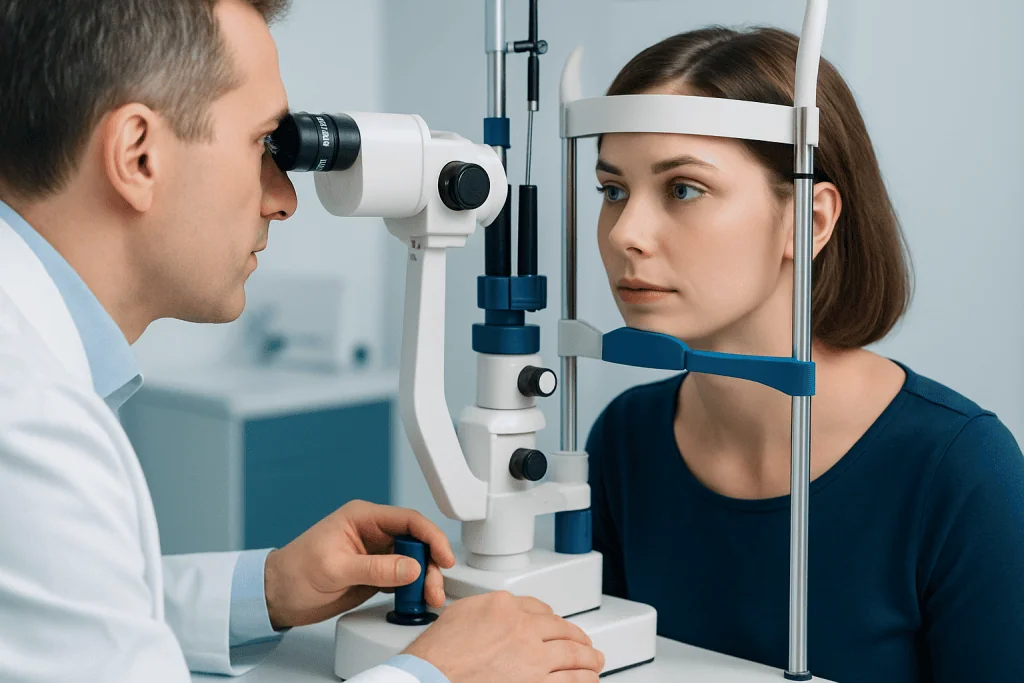
An artificial eye may be recommended after removal of an eye, severe trauma, advanced infection, painful blindness, certain tumors, or congenital conditions in which the eye did not develop normally. Some patients have the eye removed through enucleation, in which the whole eye is removed, or evisceration, in which the inner contents are removed while the outer white shell remains. Others may need a thin cosmetic shell placed over a small or disfigured eye.
The first priority is always the patient’s health and comfort. Before prosthetic fitting, the medical team checks that any underlying disease has been treated, the socket has healed well, and the eyelids can support a prosthesis safely. For patients who have had cancer, trauma, or complex surgery, follow-up may involve several specialists.
Children may also need ocular prosthetics. In pediatric cases, regular review is especially important because the face and eye socket are still growing. Prostheses for children are often adjusted or replaced more frequently than those for adults to support symmetrical development and comfort.
What to Expect Before and During Fitting

The fitting process usually begins after the socket has healed enough for a custom prosthesis. The timing varies depending on the type of surgery, the condition being treated, and the individual healing response. A temporary clear conformer may be placed earlier to help preserve the socket shape while healing takes place.
Before fitting, the patient typically has an eye and socket assessment. This may include checking the eyelids, tear film, socket depth, implant movement, discharge, and skin around the eye. A comprehensive eye examination may also be recommended to monitor the remaining eye and overall eye health.
The ocularist then takes an impression or uses fitting techniques to capture the shape of the socket. This helps create a prosthesis that sits comfortably and moves as naturally as possible. The process may involve several trial fittings to refine the size, curve, eyelid opening, and gaze direction.
Color matching is an important part of the visit. The iris, pupil, fine blood vessel patterns, and scleral color are painted by hand or created with specialized methods to match the natural eye under normal lighting. The final prosthesis is polished until smooth so it can sit comfortably against the tissues.
Appearance, Movement, and Realistic Expectations
A well-fitted ocular prosthesis is designed to look natural in everyday interactions. It is customized for the patient’s facial anatomy, eyelid shape, and the appearance of the remaining eye. Many people find that others do not notice the prosthesis unless they are told, especially when the eyelids and socket heal well.
Movement varies from person to person. If an orbital implant was placed during surgery, the prosthesis may move with the surrounding tissues to some degree. However, movement is usually not identical to a natural eye, particularly in wide side gaze. The goal is comfortable alignment and a balanced appearance when looking straight ahead and during normal conversation.
Expectations should be discussed openly with the ocularist and ophthalmology team. Factors such as socket scarring, eyelid position, implant movement, previous radiation, trauma, or multiple surgeries can affect the final appearance. In some cases, additional eyelid or socket procedures may be considered through eye surgery to improve fit, comfort, or symmetry.
Daily Care and Cleaning at Home
Most patients can care for a prosthetic eye with simple, consistent habits. The exact routine should be individualized by the ocularist or ophthalmologist, because some people need more frequent cleaning while others do better with minimal handling. Over-cleaning or frequent removal can sometimes irritate the socket.
General care often includes washing hands before touching the prosthesis, wiping eyelids gently when mucus accumulates, and using only recommended cleaning solutions. The prosthesis should not be cleaned with alcohol, harsh chemicals, abrasive materials, boiling water, or household disinfectants. If the prosthesis is removed at home, it should be placed on a soft clean surface to avoid scratches.
- Use clean hands and gentle technique when handling the prosthesis.
- Avoid rubbing the eye socket forcefully.
- Follow instructions about whether the prosthesis should be worn overnight.
- Use lubricating drops only if they are recommended by the care team.
- Keep scheduled visits for polishing and fit checks.
Mild mucus can be normal because the prosthesis is a foreign surface in the socket. However, a change in discharge, odor, increasing redness, or discomfort may indicate irritation, dryness, allergy, infection, or a fit problem and should be evaluated.
Long-Term Follow-Up, Polishing, and Replacement
Ocular prosthetics require long-term maintenance. Even when the prosthesis looks good and feels comfortable, the socket tissues can change gradually over time. Regular professional assessment helps detect small issues before they affect comfort, eyelid support, or appearance.
Professional polishing is commonly recommended at intervals advised by the ocularist, often every 6 to 12 months depending on surface condition and patient needs. Polishing removes microscopic scratches and deposits that may contribute to irritation or mucus buildup. Adjustments may also be made if the prosthesis rotates, feels loose, causes pressure, or no longer aligns well.
A prosthetic eye may need replacement after several years, although the timing varies. Reasons include changes in socket shape, facial growth in children, surface wear, discoloration, reduced comfort, or changes in the appearance of the natural eye. Patients should not try to reshape, sand, paint, or repair the prosthesis at home.
The remaining natural eye also deserves ongoing protection and monitoring. Routine eye checks, protective eyewear during sports or risky activities, and early attention to any change in vision are important parts of long-term care.
Emotional Adjustment and Quality of Life
Losing an eye or living with a visible eye difference can affect confidence, identity, and daily routines. These reactions are understandable. Some patients adapt quickly, while others need more time, counseling, peer support, or rehabilitation to feel comfortable again in social, school, or work settings.
Practical preparation can help. Patients may choose to practice inserting and removing the prosthesis with the ocularist, discuss how to answer questions from others, and learn which activities can be continued safely. Most daily activities, including travel, work, exercise, and social events, are possible once healing is complete and the prosthesis fits well.
Families and caregivers can provide support by focusing on comfort, independence, and normal routines rather than appearance alone. For children, age-appropriate explanations and regular follow-up can make the prosthesis feel like a familiar part of daily care.
When to See a Doctor
Patients should contact an ophthalmologist, ocularist, or emergency care provider if they develop increasing pain, swelling, bleeding, sudden redness, significant discharge, fever, or a prosthesis that cannot be inserted comfortably. Prompt assessment is also important if the prosthesis falls out repeatedly, causes pressure marks, or begins to look noticeably misaligned.
Medical advice is also recommended after trauma to the socket, a fall, or an accident involving the face. Even if the prosthesis appears intact, the eyelids, socket tissues, implant, or surrounding bones may need assessment. Patients with a history of eye cancer should follow their specialist’s surveillance plan carefully.
International patients may seek coordinated assessment when fitting, socket health, or long-term maintenance is complex. Acibadem International’s multidisciplinary specialists and JCI-accredited hospitals provide diagnosis and treatment for eye conditions, including ocular prosthetic care, for patients traveling from abroad.
Frequently asked questions
Does an ocular prosthesis restore vision?
No. An ocular prosthesis is a cosmetic and protective device, not a seeing eye. It helps restore facial symmetry, supports the eyelids, and can improve comfort and confidence, but it does not transmit visual information to the brain.
Is fitting an artificial eye painful?
Fitting is usually not painful, although mild pressure or sensitivity may occur during impressions or trial fittings. The socket should be healed enough before a custom prosthesis is made. If pain occurs, the care team should be informed so the fit and socket health can be checked.
How natural will a prosthetic eye look?
A custom prosthetic eye is designed to match the size, color, and position of the remaining eye as closely as possible. Most prostheses look natural in everyday face-to-face interaction. Movement may not be identical to a natural eye, especially when looking far to the side.
How often should a prosthetic eye be cleaned?
Cleaning frequency depends on the patient’s socket, tear production, mucus, and the ocularist’s instructions. Some patients remove and clean the prosthesis regularly, while others are advised to handle it less often. Gentle eyelid hygiene and professional polishing are usually important parts of care.
Can a person sleep with an ocular prosthesis in place?
Many people can sleep with their prosthesis in place, but recommendations vary. Some patients are advised to remove it at night because of dryness, irritation, or socket conditions. The safest approach is to follow the instructions given by the ocularist or ophthalmologist.
How long does an ocular prosthesis last?
Many artificial eyes last several years, but the timing for replacement varies. Changes in the socket, surface scratches, discoloration, growth in children, or reduced comfort may mean a new prosthesis is needed. Regular follow-up helps determine the right time for adjustment or replacement.
What should someone do if the prosthesis becomes uncomfortable?
The prosthesis should not be forced into place or altered at home. Increased discomfort, redness, swelling, discharge, or repeated slipping should be assessed by an ocularist or ophthalmologist. Often, polishing, adjustment, lubrication, or treatment of socket irritation can improve comfort.
This article is for general information only and is not a substitute for professional medical advice. Please consult a qualified doctor about your individual situation.
Ocular Prosthetics in Turkey — costs, top hospitals & a free quote
JCI-accredited · board-certified surgeons · reply within 24h
Add us as a Preferred Source to see more of our trusted health content across Google Search, AI Overviews and Discover.

Related Treatments
More from the Health Library

Is LASIK Worth It? Benefits, Costs, and Long-Term Results

Dry Eye Disease: Burning, Gritty Eyes, and Treatment Options

Does Insurance Cover LASIK? Coverage and Exceptions

Chalazion and Stye: Eyelid Lumps and Treatment Options
How to Choose an Eye Doctor for Cataract Surgery Abroad