iLASIK vs IntraLase: Are These Laser Eye Procedures Different?

IntraLase is a flap-creation technology used during LASIK surgery. iLASIK usually describes a broader, customized laser vision correction process.
Key Takeaways
- IntraLase is a flap-creation technology used during LASIK surgery.
- iLASIK usually describes a broader, customized laser vision correction process.
- Both approaches aim to improve vision by reshaping the cornea.
- Candidacy depends on corneal thickness, prescription, eye health, and dry eye status.
- A detailed eye examination is essential before choosing any laser eye procedure.
iLASIK and IntraLase are closely related terms, but they are not exactly the same thing. IntraLase refers to a femtosecond laser used to create the corneal flap in LASIK, while iLASIK is often used to describe a customized LASIK approach that may include IntraLase technology along with advanced mapping and excimer laser treatment.
Overview: Are iLASIK and IntraLase the Same?
Many patients use the terms iLASIK and IntraLase as if they mean the same procedure, but they describe different parts of laser vision correction. IntraLase is a brand name for a femtosecond laser that creates the thin flap in the cornea during LASIK. iLASIK, by contrast, is commonly used as a marketing or platform term for a more personalized LASIK treatment that may combine wavefront-guided measurements, an IntraLase femtosecond flap, and an excimer laser to reshape the cornea.
In simple terms, IntraLase is one technology, while iLASIK is usually a treatment concept that can include several technologies working together. This is why a person may hear that they are having iLASIK and also be told that an IntraLase laser will be used. The two are related, but one is not a direct synonym for the other.
Both are designed to treat common refractive errors such as nearsightedness, farsightedness, and astigmatism. Their shared goal is to reduce dependence on glasses or contact lenses by changing how light focuses on the retina.
How These Laser Eye Procedures Work
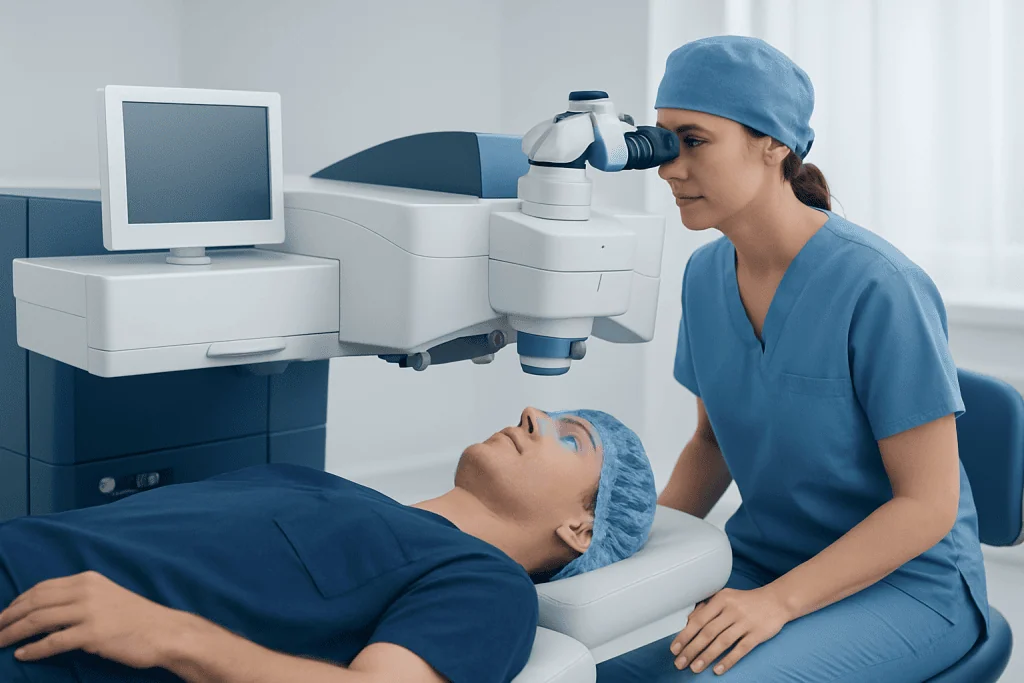
To understand the difference, it helps to look at the steps of LASIK. In standard LASIK, a surgeon first creates a very thin flap in the outer layer of the cornea. The flap is gently lifted, and an excimer laser then reshapes the corneal tissue underneath. After that, the flap is placed back into position, where it naturally adheres without stitches in most cases.
IntraLase refers specifically to the first of these steps: flap creation. Instead of using a mechanical blade called a microkeratome, IntraLase uses extremely short femtosecond laser pulses to create a precise corneal flap. This bladeless method became popular because it offers a high level of control over flap thickness and shape.
iLASIK usually describes a customized process rather than only one device. It may include detailed corneal mapping, wavefront measurements that identify subtle visual irregularities, IntraLase flap creation, and then customized corneal reshaping with an excimer laser. For many patients, the phrase iLASIK suggests a tailored form of LASIK rather than a separate surgery altogether.
Because terms can vary from one clinic to another, patients benefit from asking exactly which laser technologies will be used, whether the treatment is wavefront-guided or wavefront-optimized, and whether the procedure is fully bladeless.
Main Differences Between iLASIK and IntraLase

The main difference is scope. IntraLase is one part of the LASIK procedure: the technology that creates the corneal flap. iLASIK is a broader label that often includes the entire customized treatment pathway, from advanced diagnostic planning to flap creation and laser reshaping.
Another difference is emphasis. When a surgeon discusses IntraLase, the focus is usually on the safety and precision of femtosecond flap creation. When discussing iLASIK, the focus is often on personalization and high-definition vision correction. This may appeal especially to patients who want treatment designed around their individual prescription and corneal measurements.
That said, there can be overlap. A patient undergoing iLASIK may very well receive an IntraLase-created flap. In this sense, IntraLase can be part of iLASIK. But a person could also hear the term IntraLase used in a more limited way, referring only to the bladeless flap technique rather than the full customized treatment plan.
For patients comparing options, it is often more useful to ask practical questions than to focus only on brand names. Important questions include:
- Is the procedure bladeless?
- Will the treatment be customized to the patient’s visual profile?
- What type of preoperative mapping will be performed?
- What results and limitations are realistic for the individual prescription?
Who May Be a Good Candidate?
Good candidates for LASIK-based procedures generally have a stable eyeglass or contact lens prescription, healthy corneas, and no major untreated eye disease. Adults with nearsightedness, farsightedness, or astigmatism may be eligible, but candidacy depends on much more than the glasses prescription alone.
Corneal thickness and shape are especially important because LASIK removes a small amount of corneal tissue. If the cornea is too thin or irregular, another option may be safer. Significant dry eye, uncontrolled diabetes, pregnancy-related vision changes, certain autoimmune conditions, or active eye infection can also affect whether laser vision correction is advisable at a given time.
Patients with other eye conditions may need evaluation before surgery. For example, symptoms caused by cataracts, retinal problems, or corneal disease may require different treatment pathways, such as cataract surgery or specialist corneal care instead of refractive laser surgery.
The best way to know whether iLASIK or an IntraLase-based LASIK approach is suitable is to have a comprehensive eye examination. This should include refraction testing, corneal topography, tear film assessment, pupil evaluation, and a review of medical history and expectations.
Benefits, Limitations, and Possible Risks
Potential benefits of a bladeless LASIK approach using IntraLase include precise flap creation and the possibility of a more predictable flap profile than with older mechanical methods. When combined with customized planning, iLASIK may help address subtle optical imperfections and improve visual quality for some patients.
However, no refractive surgery can guarantee perfect vision or complete freedom from glasses. Some people may still need glasses for certain tasks, especially reading as they age. Visual results can also vary based on the original prescription, corneal features, healing response, and the presence of dry eye or other eye conditions.
Like all surgery, LASIK carries risks and side effects. Temporary dry eye, glare, halos, fluctuating vision, and light sensitivity can occur during recovery. Less commonly, there may be flap-related complications, undercorrection, overcorrection, infection, or problems with night vision. Careful screening lowers risk, but it does not remove it entirely.
Patients who are not ideal candidates for LASIK may still have other options. Depending on the eye structure and diagnosis, an ophthalmologist may discuss alternative refractive procedures or continued use of glasses and contact lenses. A balanced consultation should cover both benefits and limitations in clear terms.
What to Expect Before, During, and After the Procedure
Before surgery, the patient usually has detailed imaging and measurements of the eyes. Contact lenses often need to be stopped for a period before testing because they can temporarily alter corneal shape. The surgeon reviews the results, confirms candidacy, and explains the expected outcome, recovery, and possible side effects.
During the procedure, numbing eye drops are used. If IntraLase is part of the plan, the femtosecond laser creates the flap first. The flap is then lifted, and the excimer laser reshapes the cornea based on the treatment plan. The procedure itself is typically brief, and patients usually go home the same day.
After surgery, mild irritation, tearing, blurry vision, or light sensitivity can occur for a short time. Recovery often begins quickly, but vision can continue to stabilize over days to weeks. Eye drops and follow-up visits are important to support healing and monitor for dry eye or inflammation.
Patients are usually advised to avoid rubbing the eyes, swimming, dusty environments, and eye makeup for a period after treatment. These instructions help protect the flap and reduce the chance of irritation or infection. If symptoms seem unusual or worsen, prompt medical advice is important.
How to Choose Between Them
For many patients, the choice is not truly between iLASIK and IntraLase as competing surgeries. Instead, the decision is usually about whether a customized bladeless LASIK approach is appropriate and which technologies the surgeon recommends. Since IntraLase may be one component of iLASIK, the discussion often centers on treatment planning rather than on choosing one term over the other.
Useful points to discuss with an ophthalmologist include corneal thickness, the degree of refractive error, dry eye risk, pupil size, occupational visual needs, and whether night driving is especially important. Patients should also ask what kind of customization is available and whether another procedure may better suit their eye anatomy.
It can also help to ask the clinic to explain the exact devices and steps being proposed in plain language. A patient should feel comfortable understanding whether they are being offered a femtosecond flap, customized ablation, or another form of eye laser correction. Clear communication supports informed decision-making.
Near the end of the consultation process, some patients seek care in centers with multidisciplinary ophthalmology services. Acibadem International’s specialists in eye care, working in JCI-accredited hospitals, evaluate and treat international patients who are considering laser vision correction and other eye procedures.
When to See an Eye Doctor
Anyone interested in reducing dependence on glasses or contact lenses should see an ophthalmologist or qualified eye specialist for an evaluation rather than self-selecting a procedure based on advertising terms. An expert assessment helps determine whether LASIK is suitable and whether iLASIK, IntraLase-based LASIK, or another approach is more appropriate.
Medical advice is especially important if there is eye pain, sudden vision loss, new flashes or floaters, ongoing redness, severe dryness, or a history of eye disease. These symptoms may point to conditions that need diagnosis and treatment before any elective refractive procedure is considered.
Patients who have already had laser eye surgery should also seek review if their vision becomes blurry again or if they develop persistent discomfort. In some cases, symptoms may be related to healing, dry eye, or an unrelated condition affecting the cornea, lens, or retina.
Regular eye checkups remain important even after successful refractive surgery. Laser vision correction can reduce the need for glasses, but it does not prevent age-related or medical eye conditions from developing later in life.
Frequently asked questions
Is iLASIK better than IntraLase?
They are not directly competing procedures, so one is not automatically better than the other. IntraLase is a flap-creation laser, while iLASIK usually refers to a customized LASIK approach that may include IntraLase. The better choice depends on the patient’s eye measurements, prescription, and overall suitability for LASIK.
Does IntraLase mean bladeless LASIK?
In many cases, yes. IntraLase is a femtosecond laser used to create the corneal flap without a mechanical blade. However, the rest of the LASIK procedure still involves excimer laser reshaping under the flap.
Can iLASIK treat astigmatism?
Yes, customized LASIK approaches are commonly used to treat astigmatism as well as nearsightedness and farsightedness. Whether treatment is appropriate depends on the level of astigmatism, corneal shape, and the person’s eye health. A detailed eye assessment is needed to confirm candidacy.
Is recovery different with iLASIK and IntraLase?
Recovery is often similar because both terms relate to LASIK-based surgery. Many people notice improved vision within a short time, though healing and visual stabilization continue over days to weeks. Dry eye symptoms, glare, or light sensitivity may occur temporarily during recovery.
Who should not have LASIK?
People with unstable prescriptions, very thin or irregular corneas, significant untreated dry eye, active eye disease, or certain medical conditions may not be good candidates. Pregnancy and some medications can also affect timing or suitability. An ophthalmologist can advise whether another vision correction option would be safer.
Will laser eye surgery eliminate the need for glasses forever?
Not always. LASIK can significantly reduce dependence on glasses or contact lenses, but some people still need glasses for certain tasks. Age-related reading changes and future eye conditions can also affect vision later on.
References
- American Academy of Ophthalmology
- National Eye Institute
- U.S. Food and Drug Administration
- Royal College of Ophthalmologists
- American Society of Cataract and Refractive Surgery
This article is for general information only and is not a substitute for professional medical advice. Please consult a qualified doctor about your individual situation.
Intralase in Turkey — costs, top hospitals & a free quote
JCI-accredited · board-certified surgeons · reply within 24h
Add us as a Preferred Source to see more of our trusted health content across Google Search, AI Overviews and Discover.

Ophthalmology
Comprehensive eye care from laser vision correction to retina, cornea and cataract surgery.
75 specialists in this unit