Bladder Stones: Symptoms, Causes, and When Treatment Is Needed

Bladder stones form when minerals crystallize in urine that is not fully emptied from the bladder. Common symptoms include pain during urination, frequent urination, blood in the urine, and interrupted urine flow.
Key Takeaways
- Bladder stones form when minerals crystallize in urine that is not fully emptied from the bladder.
- Common symptoms include pain during urination, frequent urination, blood in the urine, and interrupted urine flow.
- Men, especially older men with prostate enlargement, are more likely to develop bladder stones.
- Treatment usually involves removing the stones and addressing the reason they formed.
- Medical evaluation is important if symptoms persist, recur, or are accompanied by fever or trouble passing urine.
Bladder stones are hard mineral deposits that form when urine stays in the bladder too long and becomes concentrated. They are often treatable, but ongoing symptoms should be assessed because bladder stones can signal an underlying urinary problem.
Overview
Bladder stones are hard collections of minerals that develop inside the bladder. They form when urine remains in the bladder after urination and becomes concentrated, allowing minerals to crystallize and gradually clump together. Some stones are tiny and cause little discomfort, while others grow larger and irritate the bladder lining.
Although they can occur in anyone, bladder stones are more common in men, particularly later in life. This is often because conditions that block normal urine flow, such as an enlarged prostate, make it harder to empty the bladder completely. In children, bladder stones are less common but can occur in certain nutritional or urinary tract conditions.
Bladder stones are different from kidney stones, even though both involve mineral buildup in the urinary system. A stone may form in the bladder itself or travel there from the kidneys. When a stone remains in the bladder, it may lead to discomfort, infection, bleeding, or problems with urination.
Most bladder stones can be treated successfully. The key is not only to remove the stone but also to find out why it formed, so the chance of it returning can be reduced.
Symptoms of bladder stones
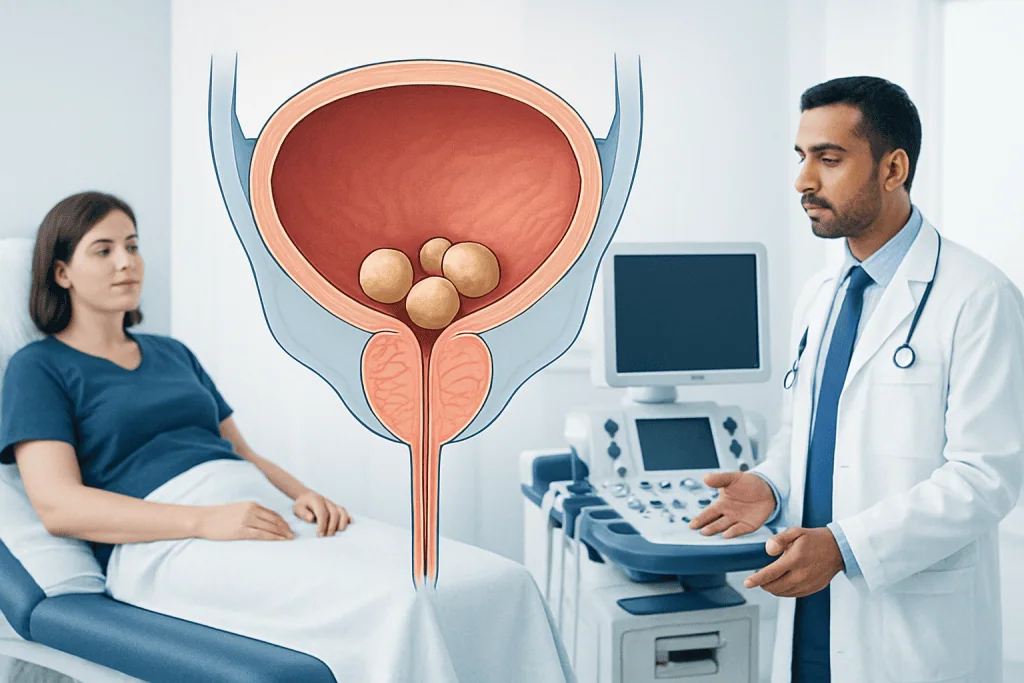
Some bladder stones do not cause symptoms at first, especially if they are small. When symptoms appear, they are usually related to irritation of the bladder wall or blockage of urine flow. A person may notice discomfort in the lower abdomen, pain or burning during urination, or a frequent need to urinate.
Other common symptoms include blood in the urine, cloudy or dark urine, interrupted urine flow, or difficulty starting urination. Men may sometimes feel pain at the tip of the penis. Symptoms can come and go, especially if the stone moves around inside the bladder.
Bladder stones can also increase the risk of urinary tract infections. If infection develops, symptoms may include fever, worsening pain, foul-smelling urine, or a stronger urge to urinate. In some cases, a person may feel that the bladder never fully empties.
- Pain or burning when passing urine
- Frequent urination, especially at night
- Blood in the urine
- Lower abdominal discomfort or pressure
- Weak, stop-start, or difficult urine flow
- Cloudy or unusually dark urine
Causes and risk factors
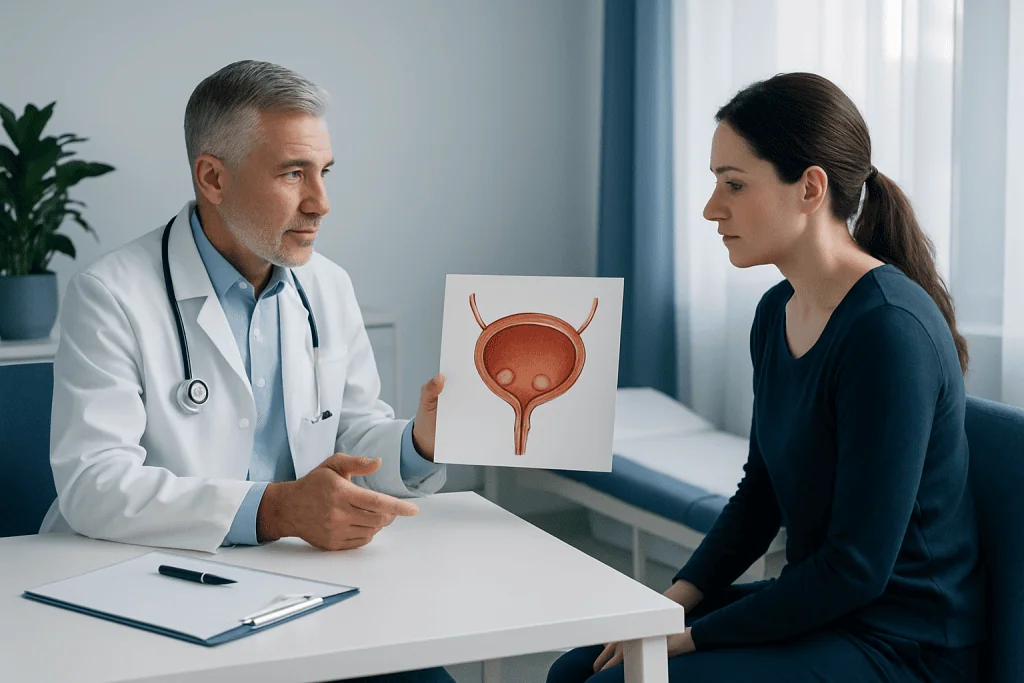
The most common reason bladder stones form is incomplete bladder emptying. When urine stays in the bladder, it becomes more concentrated. Minerals such as calcium, uric acid, and other substances can then crystallize and create stones. Over time, these crystals can grow larger.
In men, an enlarged prostate is a leading risk factor because it can partly block the urethra and prevent full emptying of the bladder. Other possible causes include nerve damage affecting bladder function, bladder diverticula, long-term catheter use, recurrent infections, or previous urinary tract surgery. Conditions that affect the urinary tract more broadly, such as bladder diseases, may also contribute.
Sometimes a stone starts in the kidney and then moves into the bladder, where it becomes trapped and enlarges. In that situation, the person may also need evaluation for kidney stone disease care. Dehydration, a diet that contributes to concentrated urine, and chronic inflammation can also play a role, though they are usually not the only cause.
Risk tends to be higher in older adults, people with urinary obstruction, those with repeated urinary infections, and anyone with conditions that interfere with normal bladder emptying. Identifying these factors is important because treatment works best when the underlying problem is addressed as well as the stone itself.
How bladder stones are diagnosed
Diagnosis usually begins with a medical history and physical examination. A doctor will ask about urinary symptoms, past stone disease, infections, prostate problems, medications, and how long symptoms have been present. In many cases, the pattern of symptoms offers important clues.
Urine tests are commonly used to look for blood, signs of infection, and crystals. Blood tests may also be recommended to check kidney function and look for factors that may increase the risk of stone formation. If infection is suspected, a urine culture may be needed.
Imaging tests help confirm the diagnosis and show the size, number, and location of stones. Ultrasound is often a useful first test, and some patients may need X-rays or CT imaging for a more detailed view. In specialist care, urinary ultrasound evaluation and advanced urinary tract imaging can help clarify the cause and guide treatment planning.
Sometimes cystoscopy is recommended. In this procedure, a thin camera is passed through the urethra into the bladder so the doctor can look directly inside. This can confirm the presence of stones and identify related issues such as obstruction, inflammation, or structural changes.
Treatment options
Small bladder stones may occasionally pass on their own, especially if the person can increase fluid intake and empty the bladder well. However, many bladder stones do not pass naturally and need treatment, particularly if they are causing symptoms, recurrent infection, or blockage.
The most common treatment is cystolitholapaxy, in which a doctor uses a small instrument through the urethra to break the stone into smaller pieces and remove them. Energy sources such as laser, ultrasound, or mechanical devices may be used. For some patients, laser stone fragmentation is a minimally invasive option that helps clear the stone effectively.
If the stone is very large or there is a complex bladder problem, surgery may be needed. Just as important as removing the stone is treating the condition that caused it, such as prostate enlargement, infection, bladder outlet obstruction, or a neurological bladder problem. Without this step, stones can return.
Antibiotics may be used if there is an infection, but they do not dissolve the stone itself. The treatment plan depends on the person’s symptoms, the size and number of stones, overall urinary health, and whether another urinary tract condition is present. Patients being assessed for specialist bladder stone treatment are often evaluated for both immediate stone removal and long-term prevention.
Prevention and self-care
Preventing bladder stones usually focuses on helping the bladder empty fully and reducing the chance that minerals will concentrate in retained urine. Drinking enough water is one of the simplest and most helpful steps for many people, unless a doctor has advised fluid restriction for another medical reason.
It is also important to manage any condition that affects urine flow. Men with symptoms of prostate enlargement, people with recurrent infections, and those with long-term catheters may benefit from regular follow-up. Prompt treatment of urinary symptoms can reduce irritation, infection, and recurrent stone formation.
Self-care measures may support urinary health, but they do not replace medical treatment when stones are present. A person should not rely on home remedies alone if there is pain, bleeding, fever, or trouble urinating. These symptoms may mean the stone is causing irritation or obstruction.
- Stay well hydrated throughout the day
- Do not ignore persistent urinary symptoms
- Seek treatment for infections promptly
- Follow medical advice for prostate or bladder problems
- Attend follow-up visits if bladder stones have occurred before
When to see a doctor
A doctor should be consulted if there is pain during urination, blood in the urine, frequent urination, or difficulty emptying the bladder. These symptoms do not always mean bladder stones, but they should be evaluated because several urinary conditions can cause similar problems.
Urgent medical attention is needed if symptoms are severe or if there is fever, inability to pass urine, intense lower abdominal pain, or signs of infection. Delaying care may increase the risk of complications such as ongoing bleeding, urinary retention, or kidney problems.
Medical review is also important if bladder stones keep coming back. Recurrent stones often suggest an underlying issue that needs more detailed assessment. Identifying and treating the root cause can make future episodes less likely.
For international patients who need evaluation and treatment, Acibadem International’s multidisciplinary specialists in JCI-accredited hospitals diagnose and manage bladder stones along with the urinary conditions that may be contributing to them.
Frequently asked questions
Can bladder stones go away on their own?
Very small bladder stones may sometimes pass naturally, especially if a person can empty the bladder completely and stay well hydrated. However, many bladder stones remain in the bladder and need medical treatment, particularly if they cause pain, bleeding, infection, or blockage.
What is the difference between bladder stones and kidney stones?
Kidney stones form in the kidneys, while bladder stones form in the bladder or become trapped there after traveling from higher in the urinary tract. Both are made of crystallized minerals, but the causes, symptoms, and treatment approach may differ.
Are bladder stones common in men?
Yes, bladder stones are more common in men, especially older men. One major reason is that prostate enlargement can interfere with normal urine flow and prevent the bladder from emptying fully.
Do bladder stones always cause pain?
No, not always. Some bladder stones cause no symptoms at first, but as they grow or move within the bladder, they may trigger pain, burning during urination, blood in the urine, or trouble passing urine.
How are bladder stones removed?
They are often removed with a minimally invasive procedure using instruments passed through the urethra into the bladder. The stone is broken into smaller pieces and taken out, and larger or more complex stones may require a different surgical approach.
Can bladder stones come back after treatment?
Yes, they can return if the reason they formed is not addressed. Preventing recurrence usually means treating underlying problems such as urinary blockage, infection, incomplete bladder emptying, or stones coming from the kidneys.
References
- National Institute of Diabetes and Digestive and Kidney Diseases
- European Association of Urology
- American Urological Association
- NHS
- Mayo Clinic
This article is for general information only and is not a substitute for professional medical advice. Please consult a qualified doctor about your individual situation.
Bladder Stones in Turkey — costs, top hospitals & a free quote
JCI-accredited · board-certified surgeons · reply within 24h
Add us as a Preferred Source to see more of our trusted health content across Google Search, AI Overviews and Discover.

Urology
Treatment of the urinary system and male reproductive health, including robotic and laser procedures.
61 specialists in this unit