

Kawasaki Disease in Children: Warning Signs and Why Fast Treatment Matters

Kawasaki disease usually causes a high fever lasting at least five days along with rash, red eyes, mouth changes, swollen lymph nodes, or swelling of the hands and feet. The condition is treatable, and early therapy significantly lowers the chance of coronary artery damage.
Key Takeaways
- Kawasaki disease usually causes a high fever lasting at least five days along with rash, red eyes, mouth changes, swollen lymph nodes, or swelling of the hands and feet.
- The condition is treatable, and early therapy significantly lowers the chance of coronary artery damage.
- Doctors diagnose Kawasaki disease based on symptoms, examination, and heart testing such as echocardiography.
- Most children recover well with timely care, but follow-up is important to monitor the heart.
- Parents should seek urgent medical assessment for a persistent fever with several of the typical warning signs.
Kawasaki disease is an inflammatory illness that mostly affects young children and can involve the blood vessels, especially the coronary arteries. Early diagnosis and prompt treatment are important because they greatly reduce the risk of heart complications.
Overview of Kawasaki Disease
Kawasaki disease is a condition that causes inflammation in blood vessels throughout the body. It is seen mainly in infants and young children, although older children can also be affected. The exact cause is not fully understood, but it is not thought to be caused by anything a parent did or did not do.
This illness matters because it can affect the coronary arteries, the blood vessels that supply the heart muscle. Without treatment, some children develop widening or weakening of these arteries, called coronary artery aneurysms. With prompt care, however, the risk of serious heart problems drops considerably.
Kawasaki disease can be confusing in the early days because it may resemble common childhood infections. A child may first appear to have a viral illness with fever, irritability, and rash. What makes Kawasaki disease different is the pattern of symptoms and the persistence of fever.
Although the disease often improves with treatment, careful follow-up is still important. Doctors may recommend heart imaging and repeat visits to be sure the child is recovering well and that the coronary arteries remain healthy. Families looking for more background on Kawasaki disease care may find it helpful to understand both the short-term illness and the need for heart monitoring.
Warning Signs and Symptoms
The most important warning sign is a fever that lasts five days or longer, often quite high and not improving as expected. Along with fever, children may develop very red eyes without thick discharge, a widespread rash, red or cracked lips, a “strawberry” tongue, and redness or swelling in the mouth and throat.
Changes in the hands and feet are also common. The palms and soles may become red or swollen, and later the skin around the fingers and toes may peel. Many children are unusually irritable, tired, or less interested in eating and drinking than usual.
Another common sign is a swollen lymph node in the neck, usually on one side. Not every child has every symptom, and the signs do not always appear all at once. This can make the disease harder to recognize, especially in very young infants.
- Fever for at least five days
- Red eyes without pus-like discharge
- Red, cracked lips or a strawberry tongue
- Rash on the body
- Swollen or red hands and feet
- Swollen lymph node in the neck
Some children have what doctors call incomplete Kawasaki disease. This means they do not show the full classic pattern, but they can still develop heart complications. For that reason, a child with prolonged fever and several suggestive features should be assessed by a doctor promptly.
Causes and Risk Factors
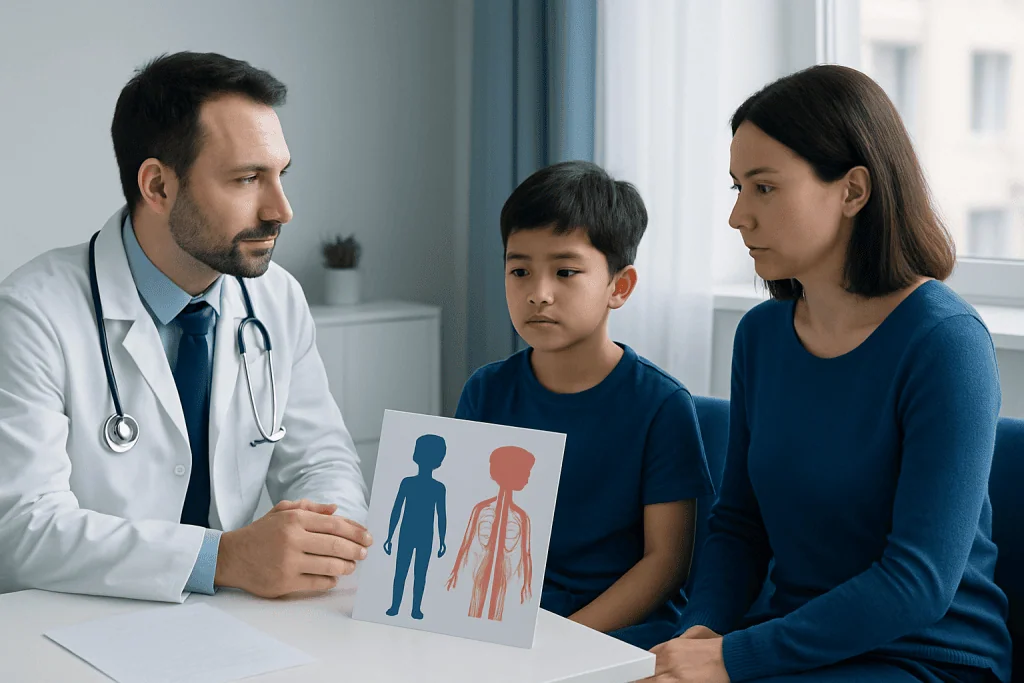
The exact cause of Kawasaki disease remains unknown. Many experts believe it may happen when an infection or environmental trigger causes an unusually strong immune response in a child who is genetically susceptible. It is not considered contagious in the usual sense, and it does not spread in the way common colds or stomach viruses do.
Certain patterns are known. Kawasaki disease is most common in children under 5 years of age, and boys are affected slightly more often than girls. It can occur in any ethnic group, though it is more common in some populations, particularly children of East Asian ancestry.
Cases may cluster at certain times of year, which supports the idea that infections or seasonal factors may play a role. Even so, there is no single virus, bacterium, or exposure that explains all cases. Parents should not blame themselves, because ordinary parenting choices do not cause Kawasaki disease.
The main concern is not the trigger itself but the inflammation it creates in the blood vessels. In a small number of children, this inflammation can affect the heart muscle, heart valves, or the coronary arteries. That is why doctors may involve pediatric cardiology teams and use tests such as echocardiography to look closely at the heart.
How Doctors Diagnose Kawasaki Disease
There is no single test that confirms Kawasaki disease in every case. Doctors make the diagnosis using a combination of the child’s symptoms, physical examination, medical history, and supportive laboratory findings. The pattern of fever plus characteristic signs is especially important.
Blood tests may show inflammation, anemia, changes in liver tests, or a high platelet count later in the illness. Urine testing and other blood work can help rule out infections or other inflammatory conditions that can look similar. These tests support the diagnosis, but they do not replace a careful clinical assessment.
Heart evaluation is a key part of diagnosis and follow-up. An echocardiogram is often done soon after Kawasaki disease is suspected to check the coronary arteries and heart function. Depending on the child’s symptoms and course, repeat imaging may be recommended in the weeks after diagnosis.
Doctors also consider other conditions that can mimic Kawasaki disease, including viral infections, scarlet fever, drug reactions, and inflammatory illnesses. Because the illness can overlap with other childhood conditions, sometimes a hospital-based evaluation is the safest way to reach a diagnosis quickly and begin treatment without delay. In selected cases, a pediatric cardiology team may also use non-invasive cardiology assessment as part of structured follow-up.
Why Fast Treatment Matters
Fast treatment matters because the greatest benefit comes when therapy is started early in the course of illness, ideally within the first 10 days of fever. Prompt treatment significantly lowers the risk of damage to the coronary arteries. It also usually helps the child feel better more quickly.
The standard first-line treatment is intravenous immunoglobulin, often called IVIG. This medicine helps calm the abnormal inflammatory response. Doctors also commonly use aspirin in carefully supervised doses to reduce inflammation and lower the risk of clotting problems related to coronary artery changes.
Some children need additional treatment if they do not respond fully to the first dose of IVIG or if they are at higher risk for complications. In these situations, doctors may consider corticosteroids or other anti-inflammatory medicines. Treatment decisions are individualized based on age, severity, test findings, and the child’s overall condition.
If coronary artery changes develop, long-term follow-up becomes especially important. A child may need repeat heart scans and, in some cases, ongoing medications to protect the heart and circulation. Severe complications are uncommon with timely care, but when they occur, they can increase the risk of later heart disease, including problems related to blood flow in the coronary arteries, somewhat like coronary artery disease in adults.
Recovery, Follow-Up, and Long-Term Outlook
Most children recover well, especially when treatment begins early. Fever often settles within a day or two after IVIG, and the rash, eye redness, and mouth changes gradually improve. Even when the child seems better, follow-up remains important because heart changes can sometimes appear or evolve after the first symptoms begin to fade.
Doctors usually arrange repeat echocardiograms over the following weeks and sometimes months, depending on the child’s age and heart findings. Children with normal heart scans and smooth recovery often return to regular activities after their doctor advises it is safe. Those with coronary artery involvement may need longer monitoring by a pediatric cardiologist.
The long-term outlook depends largely on whether the coronary arteries were affected. Many children have no lasting heart problems. If aneurysms or other coronary changes develop, care may include ongoing medications, exercise guidance, and structured cardiac follow-up to reduce future complications.
For international families needing coordinated assessment, Acibadem International’s multidisciplinary specialists and JCI-accredited hospitals diagnose and treat Kawasaki disease in children, with pediatric and cardiology follow-up when needed. In uncommon situations where heart complications become more complex, broader services such as cardiothoracic surgery may be part of long-term planning.
When to See a Doctor and Self-Care at Home
Parents should seek medical attention promptly for a child with fever lasting five days or more, especially if it is accompanied by rash, red eyes, red cracked lips, swollen hands or feet, or a swollen neck gland. Infants may show fewer classic signs, so persistent unexplained fever in a young baby also deserves urgent assessment.
At home, supportive care can help while medical evaluation is being arranged. Children should be encouraged to drink fluids, rest, and take medicines only as advised by a doctor. Because Kawasaki disease can affect the heart, it is not a condition to manage with home remedies alone.
After diagnosis, families should follow all instructions about medicines, follow-up appointments, and heart testing. It is also helpful to ask about vaccines, activity levels, and when the child can return to daycare or school. If aspirin or other longer-term medicines are prescribed, parents should use them exactly as directed and tell all healthcare providers about the child’s medical history.
Urgent reassessment is important if the child develops chest pain, difficulty breathing, fainting, unusual sleepiness, signs of dehydration, or fever that returns after treatment. While these problems are not common, they should never be ignored because they can signal ongoing inflammation or a heart-related complication.
Frequently asked questions
Is Kawasaki disease contagious?
Kawasaki disease is not thought to spread from one child to another like a typical cold or flu. Its exact cause is still unknown, but experts believe it may involve an abnormal immune response in some children.
What age group is most affected by Kawasaki disease?
Kawasaki disease is most common in children under 5 years old. It can occur in older children as well, but this is less common.
Can a child have Kawasaki disease without all the classic symptoms?
Yes. Some children have incomplete Kawasaki disease, which means they do not show the full set of typical signs. Even in these cases, there can still be a risk to the coronary arteries, so medical evaluation is important.
Why is the heart monitored in Kawasaki disease?
Doctors monitor the heart because Kawasaki disease can inflame the coronary arteries and, less often, affect the heart muscle or valves. Echocardiography helps detect these changes early and guides follow-up care.
Does every child with Kawasaki disease develop heart complications?
No. Most children recover without serious long-term heart problems, especially when treatment is given early. The main goal of prompt therapy is to greatly reduce the risk of coronary artery damage.
How long does recovery usually take?
Many symptoms begin to improve within days after treatment starts, but full recovery can take several weeks. Follow-up visits are important even after the child seems better, because heart changes may need ongoing monitoring.
This article is for general information only and is not a substitute for professional medical advice. Please consult a qualified doctor about your individual situation.
Kawasaki Disease in Turkey — costs, top hospitals & a free quote
JCI-accredited · board-certified surgeons · reply within 24h
Add us as a Preferred Source to see more of our trusted health content across Google Search, AI Overviews and Discover.

Cardiology Department
Diagnosis and treatment of heart and vascular conditions, from prevention to advanced interventional procedures.
93 specialists in this unitRelated Treatments
Related Conditions
More from the Health Library

Heart Specialist vs Cardiologist: Who Treats Which Heart Problem?

Blood Sugar Control After CABG: Healing, Infection Risk, and Recovery

Kawasaki Disease in Children: When Fever May Signal Heart Inflammation

Deep Vein Thrombosis: Early Signs, Risk Factors, and Urgent Treatment

Cardiac MRI Before CABG: Assessing Heart Muscle Viability

Cardiomyopathy: Enlarged or Weakened Heart Muscle Explained
Cardiology Specialists at Acibadem
Prof. Dr. Ahmet Kaya Bilge
Cardiology
Prof. Dr. Ahmet Oytun Baykan
Cardiology
Prof. Dr. Ahmet Tulga Ulus
Cardiovascular Surgery
Prof. Dr. Ahmet Ümit Güllü
Cardiovascular Surgery