What Is Dental Robotics Used for in Implant Surgery?
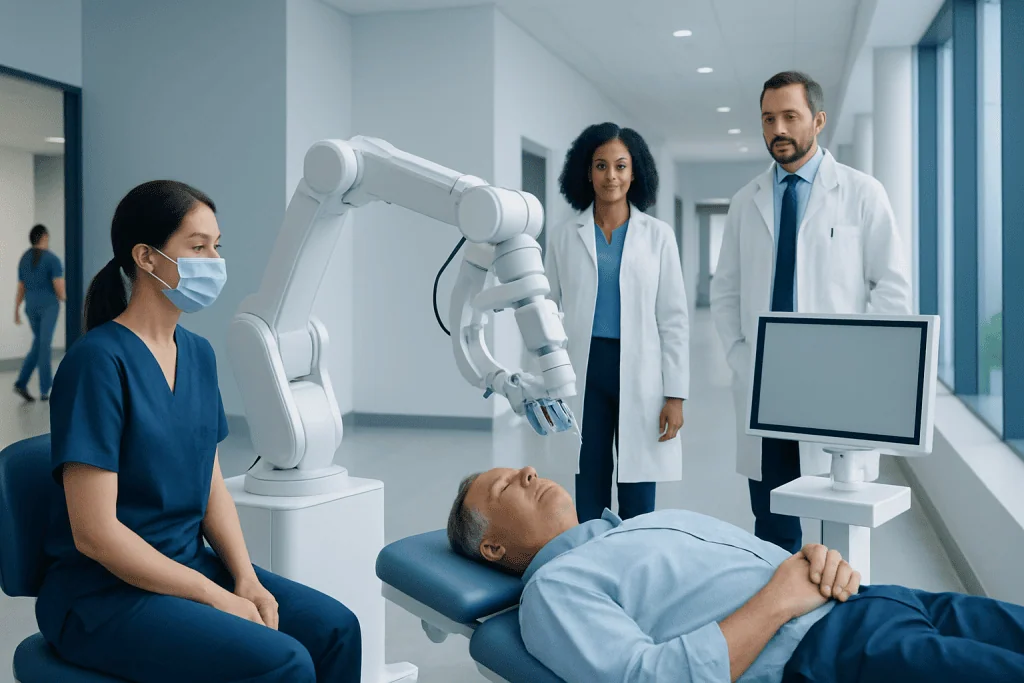
Dental robotics supports accurate planning and controlled implant placement. The system works alongside the dentist or surgeon rather than replacing them.
Key Takeaways
- Dental robotics supports accurate planning and controlled implant placement.
- The system works alongside the dentist or surgeon rather than replacing them.
- Robotic guidance may help improve consistency, especially in complex cases.
- Pre-surgical imaging and careful case selection remain essential.
- Not every patient needs robotic assistance, and suitability depends on anatomy and treatment goals.
Dental robotics is used in implant surgery to help dentists and oral surgeons plan implant position and guide placement with a high level of precision. It does not replace the clinician, but supports careful, personalized treatment based on the patient’s anatomy.
Overview: what dental robotics does in implant surgery
Dental robotics is a technology used to assist clinicians during dental implant surgery. In simple terms, it combines digital scans, treatment-planning software, and robotic guidance to help the dentist or oral surgeon place an implant in the planned position, angle, and depth. The goal is to support precision while adapting treatment to each patient’s jawbone, bite, and nearby anatomical structures.
In implant surgery, a small titanium post is placed into the jawbone to act as an artificial tooth root. Because implants need stable support and correct alignment, planning is very important. Dental robotics adds another layer of guidance by translating the digital plan into real-time assistance during the procedure. This can be especially helpful when space is limited or when the implant needs to be placed close to sensitive structures such as nerves or the sinus.
It is also important to understand what dental robotics is not. The robot does not perform the entire procedure on its own. The treating clinician remains in control, makes the final decisions, and carries out the surgery. Robotic systems are best understood as advanced tools that can help improve consistency and support clinical judgment.
How robot-guided implant surgery works
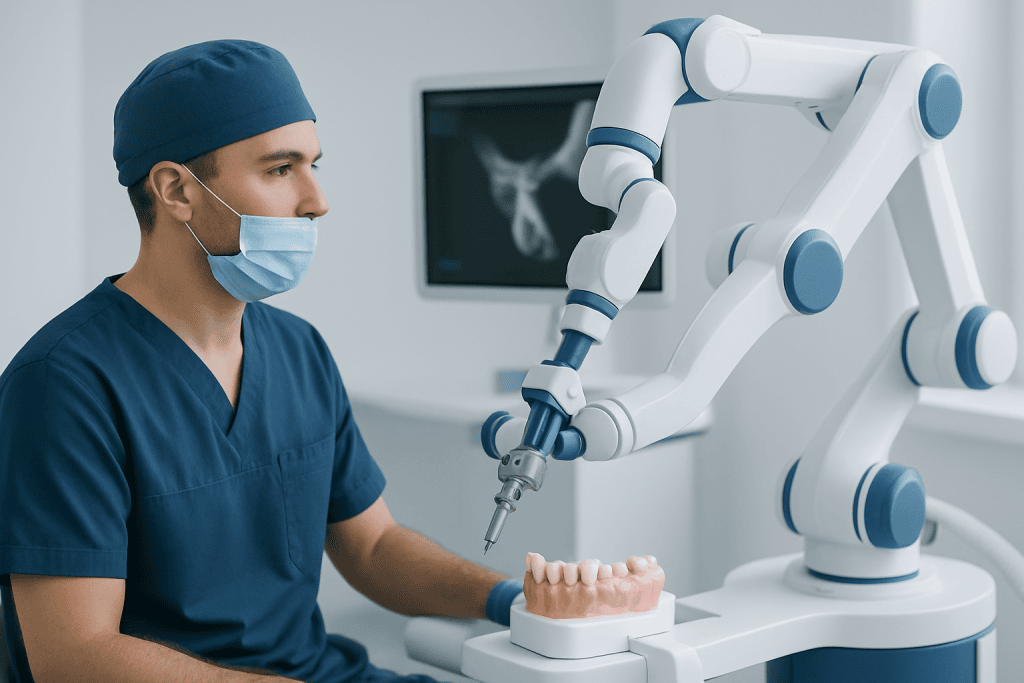
The process usually begins with a detailed examination. This often includes a clinical assessment, dental impressions or digital scans, and 3D imaging such as cone beam computed tomography. These images help the clinician evaluate bone volume, bone quality, tooth position, and the location of important structures. Based on this information, a virtual treatment plan is created.
During planning, the clinician chooses the ideal implant size and determines where the implant should go to support the future tooth or prosthesis. Robotic software can map the planned angle, depth, and position. During surgery, the system then helps the operator follow that plan with real-time guidance or physical control features, depending on the device being used.
Some robotic systems are dynamic, meaning they guide the handpiece during the procedure while allowing adjustments if needed. Others work with navigation features that display the drill position relative to the patient’s anatomy. In either case, the main benefit is that the clinician receives continuous feedback. This can help align the surgical steps with the digital plan used for dental implant treatment.
After implant placement, the restoration phase still matters. The implant must heal and integrate with bone before the final crown, bridge, or full-arch prosthesis is attached. In many patients, this final step may involve a dental crown or larger implant-supported restorations, depending on the number of missing teeth.
What dental robotics is used for
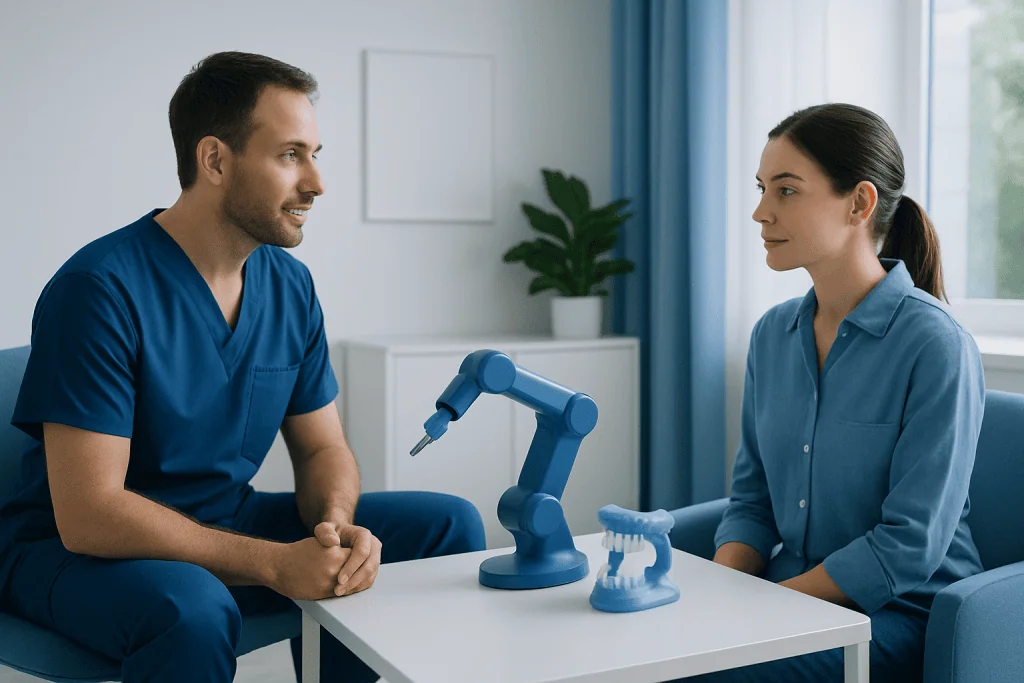
Dental robotics is mainly used to improve planning accuracy and guide implant placement. It can help the clinician place implants in areas where precision is especially important, such as the front teeth, where appearance matters, or the back of the jaw, where chewing forces are higher. It may also support treatment when bone volume is limited and implant positioning must be carefully balanced.
Another important use is full-arch rehabilitation. For patients missing many or all teeth, clinicians may place several implants to support a fixed prosthesis. In these cases, exact spacing and angulation are very important for function and comfort. Robotic guidance may support complex workflows used in All-on-4 treatment or All-on-6 treatment, where multiple implants must work together as a stable foundation.
Dental robotics can also be useful in cases that require prosthetically driven planning. This means the implant is positioned not only where bone is available, but also where it will best support the final tooth replacement. By planning from the final restoration backward, the clinician aims to achieve better bite alignment, easier hygiene, and a more natural appearance.
In selected cases, robotic assistance may also support minimally invasive approaches by helping clinicians avoid unnecessarily large flaps or excessive drilling. This depends on the patient’s anatomy and the clinician’s judgment, but it reflects the broader aim of using technology to make treatment as controlled and individualized as possible.
Potential benefits and possible limitations
The most commonly discussed benefit of dental robotics is precision. By using 3D planning and real-time guidance, the clinician may be better able to place the implant according to the intended plan. This can be valuable when trying to preserve surrounding bone, avoid nearby structures, and create the right position for the final tooth replacement.
Another possible advantage is consistency. In complex cases, robotic systems may help reduce small variations in angulation or depth that can affect the final outcome. Better alignment may also support function, appearance, and long-term maintenance. For patients, the technology may offer reassurance that treatment is being carefully planned using detailed imaging and digital guidance.
At the same time, dental robotics has limitations. It is not suitable for every case, and it does not guarantee a perfect result. Success still depends on oral health, bone quality, healing capacity, home care, smoking status, and the experience of the dental team. The technology also relies on accurate imaging, proper calibration, and careful execution throughout the procedure.
In some situations, traditional guided surgery or freehand implant placement by an experienced clinician may still be appropriate. Dental robotics is one tool among several. The best option depends on the patient’s anatomy, treatment goals, available bone, and whether additional procedures such as dental bone grafts are needed before or during implant placement.
Who may be a good candidate
Patients who need one or more dental implants may be considered for robot-guided surgery if their clinic offers this technology and the dental team believes it is appropriate. It may be especially helpful in cases where implant position is critical for aesthetics, where several implants need to be placed in a coordinated way, or where the anatomy is complex and requires detailed navigation.
Good candidates generally need healthy enough gums and adequate jawbone support for implants, although some may first need treatment to improve oral conditions. Active gum disease, untreated tooth infections, and poor oral hygiene can affect healing and implant success. Before implant surgery, the dental team may address these issues through comprehensive general dentistry care and periodontal management.
Medical history also matters. Conditions such as uncontrolled diabetes, heavy tobacco use, certain bone disorders, or medicines that affect bone healing can influence whether implants are advisable and how they should be planned. These factors do not always prevent treatment, but they do require careful discussion with a qualified clinician.
Ultimately, candidacy is individualized. The decision is based not only on whether robotics is available, but on whether it offers a meaningful advantage in that patient’s case. A careful consultation allows the dentist or oral surgeon to explain the options, compare methods, and recommend a treatment plan that matches the patient’s needs.
Diagnosis, planning, and the procedure itself
Before surgery, the dental team evaluates the mouth, gums, bite, and jawbone in detail. This typically includes reviewing symptoms, checking for tooth loss patterns, and looking for signs of infection, gum disease, or bone loss. Digital scans and 3D imaging help create a complete picture of the area where the implant will be placed.
The planning stage is one of the most important parts of robot-guided implant surgery. The clinician identifies the ideal implant site, chooses the implant dimensions, and assesses how the future restoration will fit. If there is not enough bone, extra steps may be needed before implant placement. If multiple teeth are involved, the plan may also account for how the upper and lower teeth come together during chewing.
On the day of the procedure, local anesthesia is commonly used, and some patients may also be offered sedation depending on the treatment plan. The robotic system is set up according to the patient’s digital plan. During drilling and implant placement, the clinician uses the guidance system to maintain the planned trajectory and depth while remaining in control throughout the surgery.
After the implant is placed, healing begins. Over time, the implant fuses with the jawbone in a process called osseointegration. Follow-up visits help the team monitor recovery and determine when the final restoration can be attached. In some centers, multidisciplinary specialists, including those at Acibadem International’s JCI-accredited hospitals, evaluate implant cases using advanced digital and surgical planning for international patients.
Recovery, aftercare, and long-term success
Recovery after robot-guided implant surgery is often similar to recovery after other implant procedures. Many patients can return to light daily activities soon after treatment, although temporary swelling, mild discomfort, or tenderness around the surgical area can occur. The dentist will give personalized instructions about eating, cleaning the mouth, and taking any prescribed medicines.
Good aftercare is essential for healing. Patients are usually advised to keep the area clean, avoid disturbing the surgical site, and follow guidance on brushing and rinsing. Soft foods may be recommended for a period, especially if more than one implant was placed or if bone grafting was involved. Attending follow-up appointments is important so the team can monitor healing and address any concerns early.
Long-term implant success depends on more than the surgery itself. Daily oral hygiene, regular dental checkups, and prompt treatment of gum problems all help protect the implant and surrounding tissues. Smoking cessation and good control of chronic health conditions may also improve outcomes. Even precisely placed implants can fail if the surrounding gum and bone are not kept healthy.
Patients should also understand that the final restoration needs maintenance. Crowns, bridges, and full-arch prostheses can wear over time and may need professional adjustment. The dental team will explain how to clean around the implant and when to return for review, helping support comfort and function for the long term.
When to ask a dentist about dental robotics
A patient may wish to ask about dental robotics when considering implants for a missing tooth, several missing teeth, or full-arch restoration. It can be a useful topic if the case involves difficult anatomy, limited bone, a desire for highly detailed digital planning, or concerns about implant positioning in an area where appearance is especially important.
Questions to discuss include whether robot-guided surgery is suitable for the case, what imaging is needed, whether other options would work just as well, and whether additional procedures may be required before implant placement. Patients can also ask how the final restoration will be planned and what kind of recovery to expect.
It is important to contact a dentist promptly after implant surgery if there is increasing pain, ongoing bleeding, swelling that worsens instead of improving, fever, pus, a loose implant, or numbness that does not settle as expected. These symptoms do not always mean a serious problem, but they should be assessed without delay.
For people exploring their options, asking about dental robotics can be a helpful way to understand how modern technology may support implant care. A qualified dental professional can explain the benefits, limitations, and whether this approach is the right fit for the individual patient.
Frequently asked questions
Does a robot perform the implant surgery by itself?
No. Dental robotics is used as an assistive technology, and the dentist or oral surgeon remains in control of the procedure. The system helps with planning and guidance, but the clinician makes the decisions and performs the surgery.
Is robot-guided implant surgery more accurate than traditional methods?
Robotic guidance is designed to support very precise planning and placement. In many cases, it may improve consistency and help the clinician follow the intended implant position closely. However, overall results still depend on the patient’s anatomy, healing, and the experience of the treating team.
Is dental robotics used for every implant patient?
No. Not every patient needs robotic assistance, and many implants are successfully placed using other methods. The choice depends on case complexity, the clinic’s technology, and whether robotic guidance is likely to add meaningful benefit.
Can dental robotics reduce pain or recovery time?
It may support a more controlled and efficient procedure in some cases, which can be helpful for tissue preservation. Still, recovery varies from person to person, and pain or healing time cannot be predicted by technology alone. Following aftercare instructions remains very important.
What tests are needed before robot-guided implant surgery?
Most patients need a dental examination, digital scans, and 3D imaging to assess the jawbone and nearby structures. The dental team may also review gum health, bite alignment, and medical history. These steps help determine whether implants and robotic guidance are appropriate.
Can dental robotics be used for full-mouth implant treatment?
Yes, it can be used in selected full-arch cases where multiple implants must be placed with careful spacing and angulation. This may be helpful when planning a fixed implant-supported restoration. The suitability of this approach depends on bone support, oral health, and the overall treatment plan.
References
- American Dental Association
- International Team for Implantology
- European Association for Osseointegration
- National Institute of Dental and Craniofacial Research
- World Health Organization
This article is for general information only and is not a substitute for professional medical advice. Please consult a qualified doctor about your individual situation.
Dental Robotics in Turkey — costs, top hospitals & a free quote
JCI-accredited · board-certified surgeons · reply within 24h
Add us as a Preferred Source to see more of our trusted health content across Google Search, AI Overviews and Discover.

Dental & Oral Health
Full-scope dental care from implants and aesthetics to oral and maxillofacial surgery.
151 specialists in this unitRelated Treatments
More from the Health Library



Related Specialists

Assoc. Prof. Dr. Ferit Bayram
Oral & Dental Health
Assoc. Prof. Dr. Yeliz Çavuşoğlu Yüce
Oral & Dental Health
Assoc. Prof. Dr. Mutlu Keskin
Oral & Dental Health
Prof. Dr. Ülkü Noyan
Oral & Dental Health