Inherited Eye Diseases: When Genetic Testing Can Help Families

Inherited eye diseases can affect the retina, optic nerve, cornea, lens, or overall eye development. Genetic testing does not replace an eye exam, but it can help confirm the exact cause of a suspected inherited condition.
Key Takeaways
- Inherited eye diseases can affect the retina, optic nerve, cornea, lens, or overall eye development.
- Genetic testing does not replace an eye exam, but it can help confirm the exact cause of a suspected inherited condition.
- Test results may guide follow-up care, identify at-risk relatives, and support informed family planning.
- Genetic counseling is important before and after testing to explain benefits, limits, and possible results.
- Not every family needs testing, but it is often helpful when vision problems run in the family or diagnosis is uncertain.
Inherited eye diseases are conditions caused by gene changes that can affect vision from childhood through adulthood. Genetic testing may help confirm a diagnosis, guide monitoring and treatment decisions, and provide useful information for relatives and family planning.
Overview of Inherited Eye Diseases
Inherited eye diseases are vision conditions linked to changes in genes passed through families or occurring for the first time in one person. These conditions can affect different parts of the eye, including the retina, optic nerve, cornea, lens, or structures that control eye development. Some begin in infancy or childhood, while others appear later in adolescence or adulthood.
A wide range of disorders fall into this group. Examples include inherited retinal dystrophies such as retinitis pigmentosa, Stargardt disease, Leber congenital amaurosis, some forms of macular disease, congenital cataracts, optic nerve disorders, and syndromes in which eye findings occur along with hearing, kidney, neurologic, or other health problems. Because symptoms and inheritance patterns can vary, two people in the same family may be affected differently.
For many families, the most difficult part is uncertainty. A person may have reduced night vision, progressive peripheral vision loss, unusual sensitivity to light, or unexplained vision problems without a clear diagnosis. In these situations, a detailed eye assessment together with ophthalmic genetics evaluation can help bring the clinical findings and family history together.
Symptoms and Clues That May Suggest a Genetic Cause
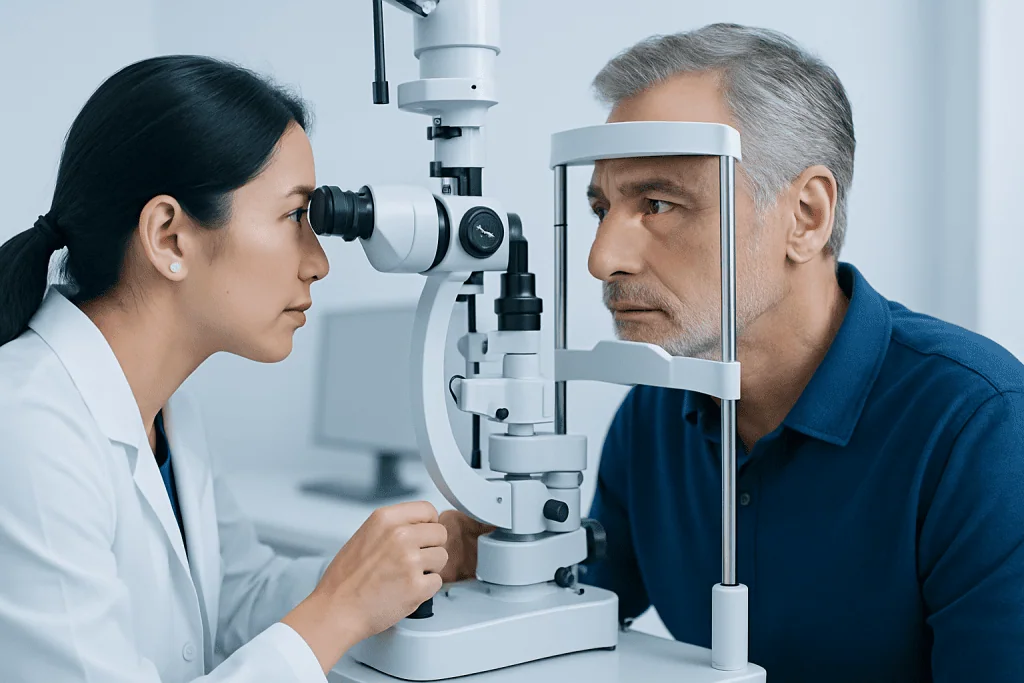
The symptoms of inherited eye diseases depend on which eye structures are involved. Common signs include night blindness, loss of side vision, reduced central vision, poor color vision, light sensitivity, involuntary eye movements, difficulty focusing, or vision that changes over time. In babies and young children, clues may include delayed visual development, wandering eyes, unusual eye movements, or trouble tracking faces and objects.
Some inherited conditions also change the appearance of the eye or are found during routine screening before symptoms are noticed. An ophthalmologist may detect retinal pigment changes, optic nerve abnormalities, congenital cataracts, unusual refractive errors, or other structural findings during a comprehensive eye examination. A strong family history of similar symptoms can increase suspicion, but a family history is not always obvious because some conditions skip generations or affect males and females differently.
Inherited eye disease may also be part of a broader syndrome. For example, a child with vision loss plus hearing changes, developmental concerns, kidney problems, or growth differences may need a wider medical evaluation. This is one reason a diagnosis often involves not only eye specialists, but also pediatricians, neurologists, geneticists, or retinal experts depending on the findings.
When Genetic Testing Can Help Families
Genetic testing can be especially helpful when the diagnosis is uncertain, when several inherited conditions look similar, or when a precise name for the condition would change care. In eye medicine, many disorders share overlapping symptoms and examination findings. A genetic test may identify the specific gene involved and help confirm what type of inherited eye disease a person has.
For families, this information can be useful in several ways. It may clarify the likely pattern of inheritance, show whether siblings or future children could also be affected, and support reproductive decision-making for adults who want to understand risk before pregnancy. It can also help doctors recommend screening for related non-eye problems if the gene is linked to a syndrome affecting other organs.
Testing may also open practical options. In some cases, a confirmed genetic diagnosis can help determine eligibility for research studies, inherited retinal disease registries, low-vision support services, or selected targeted therapies as they become available. Genetic testing is not needed in every situation, but it is often considered when there is early-onset vision loss, a family history of similar eye problems, unexplained progressive retinal disease, congenital cataracts, or findings suggesting a syndrome.
Families should know that genetic testing is a tool, not a guarantee of an immediate answer. Sometimes testing confirms a diagnosis clearly; sometimes it narrows the possibilities; and sometimes it finds no causative variant with current technology. Even so, well-chosen testing can still be valuable when interpreted alongside a full clinical evaluation.
How Genetic Testing Works and What Results Mean
Testing usually starts with a careful review of medical history, family history, and eye examination findings. The sample for testing is commonly taken from blood or saliva. Depending on the situation, the laboratory may look at a panel of genes known to cause inherited eye disease, perform broader sequencing, or test for a specific change already identified in another family member.
Results generally fall into a few categories. A positive or diagnostic result identifies a gene change that is known to cause the condition. A negative result means no relevant change was found with that test, but it does not always rule out a genetic cause. A variant of uncertain significance means a gene change was found, but medicine does not yet know whether it is disease-causing. This can be frustrating, but uncertain results may become clearer over time as scientific knowledge grows.
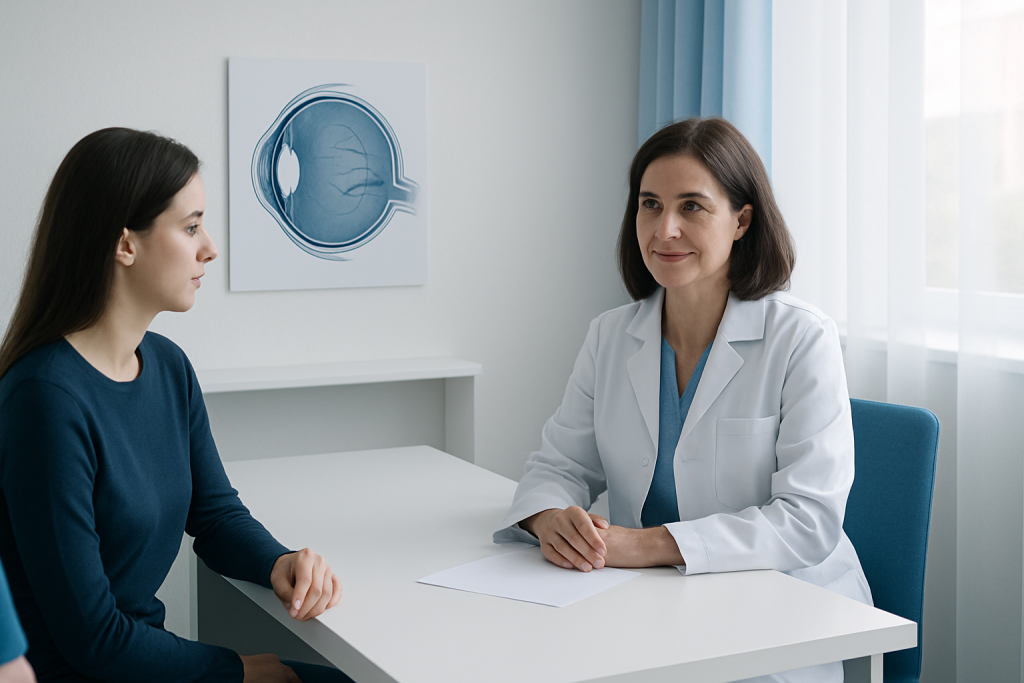
Genetic counseling is an important part of the process because it helps families understand these possibilities before testing and make sense of the results afterward. Counseling also addresses privacy, emotional concerns, and whether testing of parents, siblings, or children might be helpful. In many cases, doctors may recommend testing the person most clearly affected first because this often gives the best chance of finding an informative answer.
Because inherited eye disease can involve both vision and neurologic pathways, some patients may also need input from specialists in neuro-ophthalmology or retinal care. The goal is to interpret genetic findings in the context of the person as a whole, not in isolation.
Diagnosis Beyond the Gene Test
Even when genetic testing is planned, diagnosis still depends on a detailed clinical workup. Eye doctors assess visual acuity, visual fields, refraction, color vision, and the health of the retina, optic nerve, and lens. Imaging and functional tests may include retinal photography, optical coherence tomography, electrophysiology, and other examinations based on age and symptoms.
In children, the diagnostic process may need to be adapted to developmental stage and cooperation level. Pediatric specialists can help assess infants and young children who cannot describe symptoms clearly. When retinal disease is suspected in a child, families may benefit from evaluation by services such as pediatric retina care and, when needed, broader retinal assessment through retina and vitreous specialists.
The family tree is also part of diagnosis. Doctors may ask about relatives with poor night vision, unexplained blindness, hearing loss, early cataracts, or a need for very strong glasses from a young age. Even small details can be useful. Sometimes a pattern in the family provides a strong clue to autosomal dominant, autosomal recessive, X-linked, or mitochondrial inheritance.
When the findings do not fit a single straightforward diagnosis, care may involve repeat evaluations over time. Some inherited eye diseases evolve gradually, and the full clinical pattern becomes clearer with age. Follow-up can therefore be as important as the first visit.
Treatment, Monitoring, and Supportive Care
Treatment depends on the exact inherited eye disease and how much vision is affected. Some conditions currently have no cure, but that does not mean nothing can be done. Regular monitoring can help detect complications, preserve function where possible, and support the best quality of life. Care may include prescription glasses or contact lenses, low-vision rehabilitation, protective measures, educational support for children, and treatment of complications such as cataract or retinal changes.
For certain inherited disorders, management is becoming more personalized. A confirmed molecular diagnosis may help determine whether a patient could benefit from emerging targeted treatments, disease-specific follow-up, or referral to a clinical trial center. In other conditions, treatment focuses on associated findings rather than the gene itself, such as managing congenital cataracts, corneal disease, or retinal complications.
Families often benefit from practical support alongside medical care. This may include orientation and mobility training, school accommodations, visual aids, occupational therapy, and psychological support when a new diagnosis brings uncertainty. Children with inherited eye disease often do best when parents, teachers, and health professionals work together early.
Near the end of the diagnostic journey, some families seek multidisciplinary care in centers experienced with inherited eye disease. Acibadem International offers evaluation and treatment for international patients through multidisciplinary specialists and JCI-accredited hospitals, particularly in areas such as ophthalmic genetics and retinal care.
Prevention, Family Planning, and Self-Care
Most inherited eye diseases cannot be prevented in the usual sense because they are linked to genetic changes. However, early recognition can prevent avoidable delays in care and may reduce complications. When there is a known family history, relatives may benefit from screening examinations even if they do not yet have symptoms. Early diagnosis can also help children access visual support sooner.
For adults planning a family, genetic counseling can provide clear information about inheritance patterns and reproductive options. The aim is not to pressure families toward any decision, but to help them understand possible risks and choices. This can be reassuring for people who have lived with an inherited eye condition and want reliable information before having children.
Self-care remains important even when a condition is genetic. Patients should attend regular eye appointments, protect their eyes from injury and excessive ultraviolet exposure when advised, use prescribed visual aids, and report any sudden vision change promptly. General health measures such as controlling diabetes, avoiding smoking, and following broader medical advice may also support overall eye health, even if they do not change the underlying gene-related condition.
Families should be cautious about unproven supplements or internet claims promising to reverse inherited blindness. Any treatment, vitamin plan, or experimental therapy should be discussed with a qualified ophthalmologist or genetics specialist first.
When to See a Doctor
A person should see an eye doctor if there is unexplained vision loss, difficulty seeing at night, loss of side vision, unusual sensitivity to light, rapidly worsening eyesight, or a strong family history of serious eye disease. Children should be assessed promptly if they do not make eye contact as expected, seem unable to track objects, have unusual eye movements, or show signs of visual delay.
Medical review is also important when an eye condition appears together with hearing changes, developmental concerns, kidney disease, neurologic symptoms, or other health problems. These combinations can point to a syndrome that needs broader assessment beyond the eye alone. Early referral can help organize the right tests and specialist input.
Urgent care is needed for sudden vision loss, eye pain, flashes and floaters with a curtain-like shadow, or any acute change that could reflect a new eye emergency rather than an inherited condition itself. Families should not assume every symptom is simply part of the known diagnosis. A new or sudden change always deserves prompt medical advice.
Frequently asked questions
What are inherited eye diseases?
Inherited eye diseases are conditions caused by gene changes that affect vision or eye development. They can involve the retina, optic nerve, cornea, lens, or other eye structures, and may appear in childhood or later in life.
Does a family history always mean a child will develop the same eye disease?
Not always. The risk depends on the specific condition and how it is inherited, such as dominant, recessive, or X-linked inheritance. Genetic counseling can help explain the chance that a child or other relative may be affected.
When should a family consider genetic testing for an eye condition?
Testing is often considered when vision problems run in the family, when symptoms started early, when retinal or optic nerve findings are unexplained, or when doctors suspect a syndrome. It can also be helpful when a precise diagnosis may affect monitoring, treatment, or family planning.
Can genetic testing diagnose every inherited eye disease?
No. A negative test does not always rule out a genetic cause, because some gene changes may not yet be identifiable with current methods. Results need to be interpreted together with the eye examination and family history.
What is a variant of uncertain significance?
This means the test found a gene change, but experts do not yet know whether it causes disease. It is not the same as a confirmed diagnosis. Over time, more research or testing of relatives may help clarify its meaning.
Can genetic testing change treatment?
Sometimes. In some inherited eye diseases, knowing the exact gene may guide follow-up, identify associated health risks, or help determine whether targeted therapy or a clinical trial is appropriate. In other cases, treatment remains supportive, but the diagnosis still helps families plan care.
References
- American Academy of Ophthalmology
- National Eye Institute
- American College of Medical Genetics and Genomics
- National Organization for Rare Disorders
- Orphanet
This article is for general information only and is not a substitute for professional medical advice. Please consult a qualified doctor about your individual situation.
Explore treatments in Turkey — costs, top hospitals & a free quote
JCI-accredited · board-certified surgeons · reply within 24h
Add us as a Preferred Source to see more of our trusted health content across Google Search, AI Overviews and Discover.

IVF & Reproductive Health
Assisted reproduction and fertility treatments tailored to each couple.