

Aesthetic Surgery vs Reconstructive Surgery: Key Differences

Aesthetic surgery is usually chosen to enhance appearance in areas that are otherwise healthy. Reconstructive surgery is performed to repair defects, restore function, or improve quality of life.
Key Takeaways
- Aesthetic surgery is usually chosen to enhance appearance in areas that are otherwise healthy.
- Reconstructive surgery is performed to repair defects, restore function, or improve quality of life.
- Some procedures can have both aesthetic and reconstructive benefits, depending on the person’s needs.
- The best approach depends on health, anatomy, goals, and a careful surgical assessment.
- Board-qualified plastic surgeons evaluate both medical and emotional factors before recommending surgery.
Aesthetic and reconstructive surgery both belong to plastic surgery, but they serve different goals. Aesthetic surgery focuses on improving appearance, while reconstructive surgery aims to restore form, function, or both after congenital conditions, injury, disease, or previous treatment.
Overview
Plastic surgery is a broad medical specialty that includes both aesthetic surgery and reconstructive surgery. Although the two are closely related and often use similar surgical techniques, their main goals are different. Understanding that difference can help patients make informed choices and set realistic expectations.
Aesthetic surgery, sometimes called cosmetic surgery, is performed to improve or refine appearance. It is usually chosen by people who are healthy and want to change a feature of the face or body for personal reasons. Common examples include reshaping the nose, contouring the body, or procedures such as aesthetic breast surgery to change breast size or shape.
Reconstructive surgery is performed to restore normal appearance, function, or both when the body has been affected by a birth difference, trauma, burns, cancer treatment, infection, or another medical condition. It may involve repairing tissues, improving movement, protecting organs, or rebuilding structures such as the breast, ear, eyelid, or hand.
In practice, the line between the two is not always strict. A person may undergo reconstructive surgery and also gain aesthetic improvement. Likewise, an aesthetic procedure may support comfort, self-confidence, or daily function. For this reason, surgeons assess the whole person rather than focusing only on labels.
What Makes Aesthetic Surgery Different?
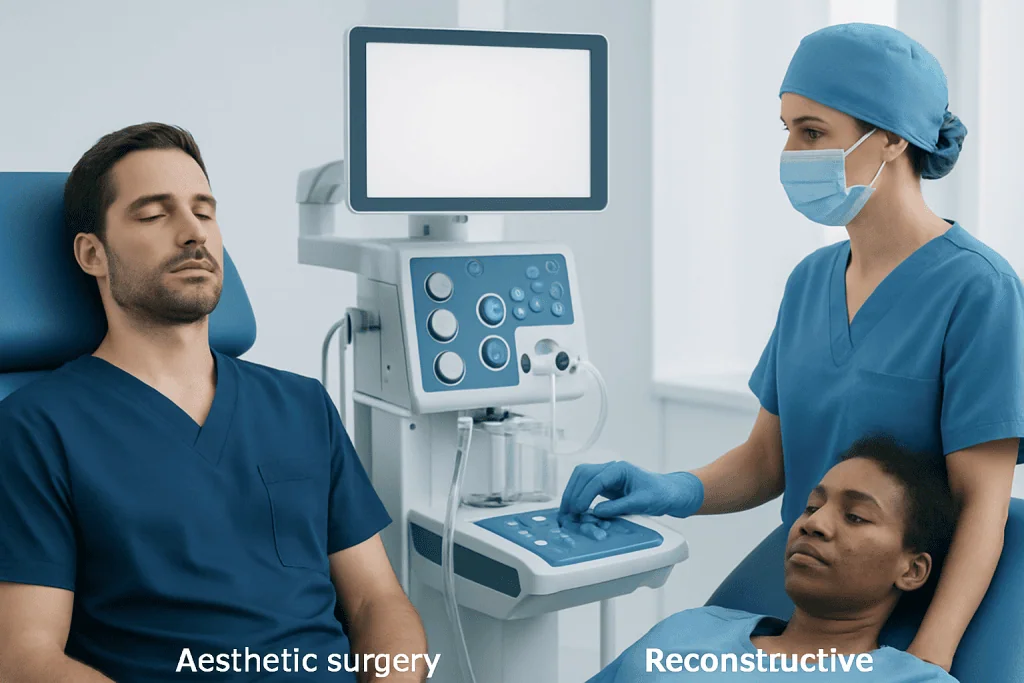
The defining feature of aesthetic surgery is its purpose: to enhance appearance according to the patient’s wishes. This may include improving proportion, contour, symmetry, or signs of aging. The body area being treated is usually functioning normally before surgery, and the choice to have the procedure is generally elective.
Examples of aesthetic procedures include liposuction, breast lifting, facial contouring, eyelid surgery, and neck shaping. Depending on the person’s concerns, treatments may range from body contouring such as classic liposuction to breast reshaping with breast lift surgery. Some procedures also address features that cause self-consciousness but are not medically dangerous.
People consider aesthetic surgery for many reasons. They may want to feel more comfortable in clothing, restore body contours after weight changes or pregnancy, soften visible signs of aging, or address a longstanding feature that affects self-image. These are personal decisions, and careful counseling helps ensure goals are realistic and well understood.
Aesthetic surgery should not be viewed as superficial or trivial, but it also should not be approached casually. Even when a procedure is elective, it still involves medical assessment, preparation, recovery, and possible risks. A thoughtful discussion with a qualified surgeon is an important part of safe decision-making.
What Makes Reconstructive Surgery Different?

Reconstructive surgery is defined by its restorative purpose. It is used when there is a structural problem affecting the body because of a congenital difference, injury, illness, previous surgery, or tissue loss. The aim may be to improve function, rebuild anatomy, protect health, reduce pain, or support recovery after major treatment.
Examples include repair after burns, surgery for congenital hand differences such as syndactyly, reconstruction after cancer treatment, and procedures to correct trauma-related damage such as facial trauma. Reconstructive surgery may also be used to close wounds, release scar contractures, rebuild eyelids, restore the breast after mastectomy, or repair damaged nerves and soft tissues.
Some reconstructive procedures are urgent, especially after accidents or when important functions such as vision, breathing, eating, speech, or hand movement are affected. Others are planned over time, sometimes in several stages, to achieve the safest and most durable result. Children with congenital differences may need surgery at particular ages to support growth and development.
Reconstructive surgery often requires close coordination with other specialties. Depending on the problem, care may involve oncologists, orthopedic surgeons, ophthalmologists, dermatologists, wound care teams, rehabilitation specialists, and psychologists. This multidisciplinary approach helps address both the physical and emotional effects of a condition.
Where the Two Areas Overlap
Although the goals are different, aesthetic and reconstructive surgery frequently overlap. The same procedure can be reconstructive for one person and aesthetic for another, depending on the underlying reason for treatment. What matters most is the patient’s anatomy, symptoms, and treatment goals.
Breast surgery is a clear example. A woman may choose breast surgery for appearance, proportion, or age-related changes, or she may need breast reconstruction after mastectomy or another breast operation. Both approaches require careful planning, but one is primarily cosmetic while the other is restorative.
Facial and eye-area procedures may also cross categories. Surgery around the eyelids or brows can be aesthetic when it is done to refresh appearance, but it may be reconstructive when tissue loss, trauma, or eyelid position interferes with vision or eye protection. In such situations, options such as reconstructive ophthalmology or related oculoplastic care may be considered.
Scars offer another example of overlap. Scar revision may be reconstructive when a scar limits movement, causes discomfort, or affects an important body function. The same surgery may also improve appearance. This overlap is one reason plastic surgeons consider both function and aesthetics when planning treatment.
How Surgeons Decide Which Type of Surgery Is Needed
The first step is a detailed consultation. The surgeon reviews the patient’s health, medications, previous operations, anatomy, symptoms, and goals. In reconstructive cases, the surgeon also considers what tissue is missing or damaged, whether function is limited, and whether treatment is urgent or can be staged over time.
Examination may include photographs, measurements, imaging, laboratory tests, or input from other specialists. For example, people recovering from cancer treatment, major trauma, or chronic wounds may need broader medical evaluation before a surgical plan is finalized. Children with congenital differences may need growth-related assessments as well.
Surgeons also evaluate practical questions such as healing capacity, smoking status, weight stability, scar history, and support during recovery. These factors matter in both aesthetic and reconstructive surgery because they influence safety and results. Patients are usually advised to stop smoking, manage chronic conditions, and follow preoperative instructions closely.
Just as important, the consultation explores expectations. A surgeon should explain what surgery can improve, what it cannot fully change, how recovery may feel, and whether more than one procedure may be needed. The best plans are individualized rather than based on trends or one-size-fits-all solutions.
Benefits, Risks, and Recovery
The benefits of aesthetic surgery often include improved body confidence, better harmony of facial or body features, and a stronger sense of comfort with one’s appearance. Reconstructive surgery may help restore movement, improve healing, rebuild anatomy, relieve discomfort, and support daily activities. In both cases, the goal is to improve quality of life in a meaningful and realistic way.
All surgery carries potential risks. These may include bleeding, infection, delayed healing, scarring, fluid collection, numbness, asymmetry, anesthesia-related problems, or a result that does not fully meet expectations. Reconstructive surgery can be especially complex when tissue quality is poor, wounds are extensive, or several stages are required.
Recovery varies widely depending on the procedure, the body area treated, and the person’s general health. Some patients return to routine activities within days, while others need weeks of limited movement, wound care, splints, compression garments, or physical therapy. Swelling and bruising are common early on, and final results may take time to appear.
Following postoperative instructions is a major part of a successful recovery. Patients should ask about activity restrictions, pain control, incision care, signs of complications, and when to attend follow-up visits. If concerns arise after surgery, prompt communication with the care team is important.
Questions to Ask Before Choosing Surgery
Before moving forward, patients benefit from asking clear and practical questions. A good consultation should leave them feeling informed, respected, and comfortable with the plan. It is reasonable to take time to consider options, especially when surgery is elective.
Helpful questions may include:
- What is the main goal of this procedure: aesthetic improvement, reconstruction, or both?
- Am I a good candidate based on my health and anatomy?
- What results are realistic for me?
- What are the main risks and how are they reduced?
- What will recovery involve, and how long will healing take?
- Could I need revision surgery or more than one stage?
- Are there non-surgical or less invasive alternatives?
Patients should also ask about the surgeon’s training and experience with the specific procedure. Because aesthetic and reconstructive surgery can overlap, it is helpful to choose a surgeon who is comfortable addressing both appearance and function when needed.
For international patients or people seeking complex care, treatment in a multidisciplinary setting can be valuable. Near the end of the care pathway, some patients may choose centers such as Acibadem International, where multidisciplinary specialists in JCI-accredited hospitals diagnose and treat both aesthetic and reconstructive conditions.
When to See a Doctor
A doctor’s evaluation is appropriate when a person is considering surgery to change appearance or restore form or function. Consultation is especially important when there is pain, reduced movement, tissue loss, a chronic wound, scar tightening, a congenital difference, or changes after trauma, burns, or cancer treatment.
Urgent medical attention may be needed after an injury involving the face, hands, eyes, or deep soft tissues, or when there are signs of infection such as spreading redness, fever, pus, or worsening swelling. Delayed care can sometimes affect both healing and long-term function.
People who are interested in aesthetic surgery should also seek medical advice if they have significant health conditions, smoke, take blood-thinning medicines, or have a history of poor wound healing. A proper assessment helps improve safety and may identify better timing or alternative treatments.
Whether the concern is cosmetic, functional, or both, the most helpful next step is a personalized consultation with a qualified surgeon. Good care starts with understanding the reason for surgery, the expected outcome, and the safest path forward.
Frequently asked questions
Is aesthetic surgery the same as plastic surgery?
Not exactly. Plastic surgery is the wider medical specialty, and aesthetic surgery is one part of it. The other major part is reconstructive surgery, which focuses on restoring form or function after a medical problem or injury.
What is the main difference between aesthetic and reconstructive surgery?
The main difference is the purpose of treatment. Aesthetic surgery is usually elective and aims to improve appearance, while reconstructive surgery aims to repair defects, restore anatomy, or improve function after disease, trauma, or congenital conditions.
Can one operation be both aesthetic and reconstructive?
Yes. Some procedures improve both appearance and function at the same time. For example, surgery may repair damaged tissue while also improving symmetry, contour, or visible scarring.
Is reconstructive surgery always medically necessary?
Not always in an emergency sense, but it is often performed to address an important physical problem. Some reconstructive procedures are urgent, while others are planned to improve function, healing, comfort, or long-term quality of life.
How do doctors decide which surgery is right?
Doctors consider the reason for treatment, the patient’s health, anatomy, symptoms, and goals. They also review expected benefits, possible risks, and whether non-surgical options or staged treatment may be more appropriate.
Does recovery differ between aesthetic and reconstructive surgery?
Recovery can differ a lot depending on the procedure and the body area treated. Reconstructive surgery may involve more complex healing or multiple stages, but some aesthetic procedures also require significant recovery time and careful follow-up.
References
- American Society of Plastic Surgeons
- NHS
- Mayo Clinic
- MedlinePlus
- World Health Organization
This article is for general information only and is not a substitute for professional medical advice. Please consult a qualified doctor about your individual situation.
Reconstructive Surgery in Turkey — costs, top hospitals & a free quote
JCI-accredited · board-certified surgeons · reply within 24h
Add us as a Preferred Source to see more of our trusted health content across Google Search, AI Overviews and Discover.

Related Treatments
Related Conditions
More from the Health Library



Related Specialists
Assoc. Prof. Dr. Erdem Güven (m)
Aesthetic Plastic & Reconstructive Surgery
Prof. Dr. Şükrü Yazar
Aesthetic Plastic & Reconstructive Surgery
Prof. Dr. Hakan Ağır
Aesthetic Plastic & Reconstructive Surgery
Prof. Dr. Bülent Saçak
Aesthetic Plastic & Reconstructive Surgery