Breast Implant Removal and What Happens to the Capsule

Breast explant surgery removes one or both implants, sometimes with part or all of the surrounding scar tissue capsule. Reasons include capsular contracture, rupture, infection, or a personal decision to stop having implants. Breast shape changes after removal, and some people combine explant with reshaping surgery.
Key Takeaways
- Breast explant surgery can be chosen for implant-related complications, changes in personal preference or reconstructive planning.
- Removal may involve the implant alone or implant removal with partial or total capsulectomy when clinically appropriate.
- A breast lift or fat grafting may be considered for selected people, but these are separate decisions from implant removal.
- Most people need temporary activity restrictions and follow-up visits while swelling and scars settle.
- New breast swelling, a lump, persistent pain or skin changes after implants should be assessed by a qualified clinician.
Maybe your breast has started to feel firm and look different. Maybe one side lost volume overnight. Or maybe you simply don’t want implants any more, and that’s reason enough.
Breast explant surgery is the removal of one or both breast implants, sometimes together with part or all of the scar tissue capsule around an implant. What the operation involves, how recovery goes and how your breasts look afterwards depend on the implant type, why it’s coming out, the quality of your own breast tissue, and whether reshaping surgery is done at the same time.
Breast Explant Surgery at a Glance
Breast explant surgery, also called breast implant removal, is an operation to remove saline or silicone breast implants. It may be performed because of a complication, discomfort, changes in breast shape, concern about an implant rupture, or simply because a person no longer wishes to have implants. The operation can be performed on one breast or both breasts.
Breast implants are surrounded by a layer of scar tissue called a capsule. During explant surgery, the surgeon may remove the implant only, remove part of the capsule, or remove the entire capsule. The most suitable option depends on findings such as capsular contracture, rupture, inflammation, calcification, implant position and the safety of separating the capsule from surrounding tissue.
There is no single standard version of this operation; it is built around you. Some people choose removal alone. Others consider breast reshaping at the same time, or later on. Sitting down with a board-qualified plastic surgeon is how you find out what your surgery would actually involve, what results are realistic, and what recovery will ask of you.
Who May Consider Breast Implant Removal?

People may consider breast explant surgery for both medical and personal reasons. Common clinical reasons include capsular contracture, in which the capsule becomes firm and may cause tightness, pain or a changed breast shape; implant rupture or deflation; recurrent fluid around an implant; infection; implant displacement; or persistent concerns about appearance following augmentation or reconstruction.
Saline implant deflation is often noticeable because the breast loses volume. Silicone implant rupture may not always cause obvious symptoms and is sometimes described as a “silent rupture.” Imaging may be used when rupture is suspected. In some situations, implant removal is part of evaluation or treatment for unusual implant-associated conditions, including breast implant-associated anaplastic large cell lymphoma (BIA-ALCL), which requires specialist assessment.
Good candidates are generally in stable health, understand that breast size and contour will change after removal, and can follow postoperative instructions. Smoking and nicotine exposure can interfere with wound healing, so surgeons commonly advise stopping these products well ahead of surgery. The consultation should also cover medical history, previous breast operations, medications and personal goals.
- Symptoms such as hardening, distortion, pain or recurrent swelling
- Known or suspected implant rupture or deflation
- Desire to remove implants without replacement
- Need to revise prior breast reconstruction or augmentation
Planning the Procedure and Choosing the Surgical Approach
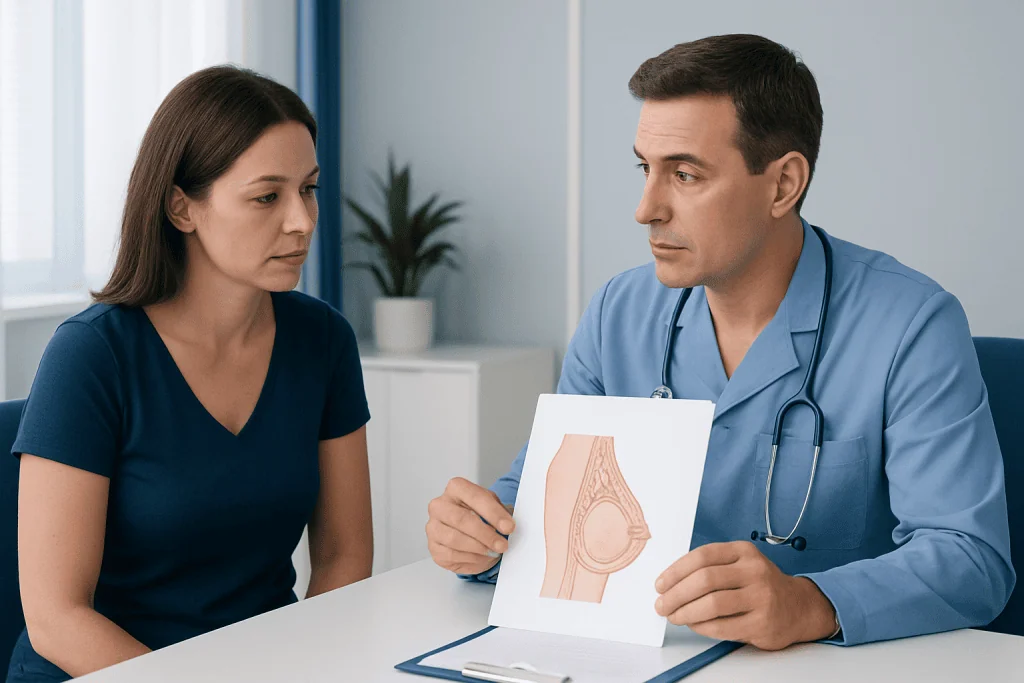
Before surgery, the plastic surgeon reviews implant records when available, including the implant type, placement and date of surgery. A physical examination assesses breast skin, natural breast tissue, scars, nipple position and signs of implant-related changes. Ultrasound or magnetic resonance imaging may be recommended when there is concern about silicone implant integrity or an unexplained fluid collection.
During planning, the surgeon discusses whether the capsule needs treatment. En bloc capsulectomy means removing an implant and capsule together as one unit. This technique is not necessary or safest for every patient; it may be considered in specific clinical circumstances, while attempting it routinely can increase surgical complexity and risk. A surgeon should explain why a particular capsule approach is recommended.
Removal alone may leave loose skin, flattening or changes in breast position, especially after larger implants or long-term implant use. A breast lift may improve breast shape for selected patients by removing excess skin and repositioning the nipple and breast tissue. Some people prefer to allow tissues to settle after explant surgery before deciding whether any further procedure is right for them.
How Breast Explant Surgery Is Performed
Breast explant surgery is usually performed under general anesthesia. The surgeon commonly uses a previous incision where possible, such as an incision beneath the breast, around the areola or in the armpit. The exact location depends on the original implant placement, scar position and the planned capsule procedure.
After making the incision, the surgeon carefully reaches the implant pocket and removes the implant. If fluid is present, it may be collected for appropriate laboratory evaluation. The capsule may be left in place, partly removed or fully removed according to the preoperative plan and findings during surgery. When an implant is ruptured, the surgeon removes implant material as safely as possible and addresses the capsule as indicated.
If a lift or another contouring procedure is planned, it is performed after implant removal. Temporary drainage tubes are occasionally used when there is a larger surgical space or extensive capsule removal; if used, the care team explains how to monitor and empty them. The incisions are then closed, and supportive dressings or a surgical bra are applied.
The length of surgery varies with the complexity of the operation, whether one or both implants are removed, and whether a capsulectomy or breast lift is included. The surgical team provides individualized instructions about fasting, medicines, arrival time and arranging help at home after anesthesia.
Recovery Timeline and Expected Results
Recovery after breast explant surgery differs from person to person. In the first several days, soreness, pressure, bruising and swelling are common. Prescribed or recommended pain relief, a supportive garment and rest can help with comfort. Patients should follow the surgeon’s guidance for bathing, incision care, sleeping position and drain care if drains are present.
Many people can manage light daily activities within days, but should avoid lifting, strenuous exercise, upper-body workouts and activities that raise blood pressure until cleared by their surgeon. The timing of return to work depends on the procedure and the nature of the work. Follow-up appointments are important for checking wound healing and discussing pathology or laboratory findings when samples were collected.
The breast appearance changes immediately after implant removal, but early swelling and skin relaxation make the final contour difficult to judge at first. Over the following weeks and months, swelling reduces and tissues gradually adapt. Scars also mature slowly and may remain noticeable for some time before fading. The final result depends on skin elasticity, breast tissue volume, implant size, prior surgery and whether reshaping was performed.
The emotional side is part of recovery as well. Some people feel plain relief once the implants are out; others need time to get used to a different body. Open discussion with the surgical team and support from trusted family, friends or a mental health professional can be helpful when needed.
Benefits, Limitations and Possible Risks
The potential benefit of breast explant surgery is removal of the implant and, when indicated, treatment of an implant-related problem such as rupture, significant contracture or discomfort. For people who no longer want implants, it can also align their physical appearance with their current preferences. If an implant is removed because of a clinical concern, follow-up care is tailored to the underlying finding.
Be clear-eyed about the limits, too. Taking implants out does not guarantee that every symptom you associate with them will disappear, especially when those symptoms could have other medical causes. That is why new or ongoing symptoms deserve a proper look from a clinician, rather than being pinned on one explanation.
As with other operations, possible risks include bleeding, infection, fluid collection, delayed wound healing, changes in nipple or breast sensation, asymmetry, unfavorable scarring, contour irregularity and anesthesia-related complications. Capsulectomy may involve additional risks because the capsule can be close to the chest wall, ribs and lung lining. Rarely, further surgery may be needed.
Good planning, an experienced surgical team and following your aftercare instructions all cut down avoidable risks, but no operation is risk-free. Ask why each part of the procedure is being done, what the alternatives are and where the scars will be, and get those answers before you sign the consent form.
When to Seek Medical Care
Anyone with breast implants should arrange medical assessment for a new breast lump, persistent pain, marked hardening, a change in shape, unexplained swelling, enlarged lymph nodes near the breast or armpit, or a suspected deflation. These symptoms often have treatable explanations, but they should not be ignored. Imaging and specialist review may be needed to identify the cause.
After explant surgery, prompt contact with the surgical team is appropriate for worsening rather than improving pain, increasing redness or warmth, fever, pus-like drainage, a rapidly enlarging breast, shortness of breath, chest pain or opening of an incision. Emergency care is needed for severe breathing difficulty, chest pain or signs of a serious allergic reaction.
If you are thinking about having implants removed, start with a consultation built around your own situation. At Acibadem International, our multidisciplinary specialists and JCI-accredited hospitals assess and treat breast implant concerns for international patients, including evaluation and breast implant removal when appropriate.
Frequently asked questions
What is breast explant surgery?
Breast explant surgery is an operation to remove one or both breast implants. Depending on the clinical situation, the surgeon may also remove some or all of the scar tissue capsule that naturally forms around an implant.
Is capsulectomy always needed during breast implant removal?
No. Whether to remove the capsule depends on factors such as capsular contracture, rupture, infection, abnormal fluid, calcification and the safety of the procedure. A total capsulectomy or en bloc technique is not routinely required for every implant removal.
What will breasts look like after implants are removed?
Breasts may appear smaller, softer, flatter or less lifted than they did with implants. The outcome depends on natural breast tissue, skin elasticity, implant size, how long implants were present and whether a breast lift is performed.
How long does recovery from breast explant surgery take?
Initial discomfort and swelling commonly improve during the first days to weeks, while breast shape and scars continue to settle over several months. The exact timeline depends on whether the procedure included capsulectomy, a breast lift or treatment of a complication.
Can silicone implants rupture without symptoms?
Yes. Silicone implant rupture can sometimes occur without an obvious change in breast size or shape. A clinician may recommend ultrasound or magnetic resonance imaging if rupture is suspected or if routine monitoring is appropriate.
Can implants be removed and replaced during the same operation?
Yes, implant exchange can sometimes be performed in one operation, although it is different from explantation without replacement. The choice depends on the reason for surgery, the condition of the capsule and tissues, infection risk, and the person’s goals.
This article is for general information only and is not a substitute for professional medical advice. Please consult a qualified doctor about your individual situation.
Explore treatments in Turkey — costs, top hospitals & a free quote
7 JCI-accredited hospitals · board-certified surgeons · reply within 24h
Add us as a Preferred Source to see more of our trusted health content across Google Search, AI Overviews and Discover.
Check your numbers in seconds
BMI, calories, due date, blood pressure and 30+ more clinical calculators — free, instant, doctor-reviewed ranges.

Medically reviewed by the Acıbadem International Medical Board — August 24, 2026
See our medical review board →
Update history
- PublishedAugust 22, 2026
- Medical review approvedAugust 24, 2026
- Last content updateAugust 24, 2026
Aesthetic Plastic & Reconstructive Surgery Specialists at Acibadem

Dr. Mustafa Mert Okumuş (m)
Aesthetic Plastic & Reconstructive Surgery
Dr. Mutluhan Temizsoy
Aesthetic Plastic & Reconstructive Surgery
Dr. Nargız Ibrahımlı
Aesthetic Plastic & Reconstructive Surgery
Dr. Nezail Demirciler
Aesthetic Plastic & Reconstructive Surgery
Dr. Nihal Üstün
Aesthetic Plastic & Reconstructive SurgeryRelated Treatments
Related Conditions
More from the Health Library

Laser Lipo Targets Small Fat Deposits, Not Weight Loss

Brazilian Butt Lift: Fat Transfer, Safety and Recovery

Liquid Rhinoplasty Reshapes the Nose With Temporary Filler

An Abdominal Pannus Is Overhanging Skin, Not a Stomach Problem

Eyelid surgery blepharoplasty Risks & Side Effects Explained by Surgeons