

Can You Get LASIK after 40: An Evidence-Based Patient Guide
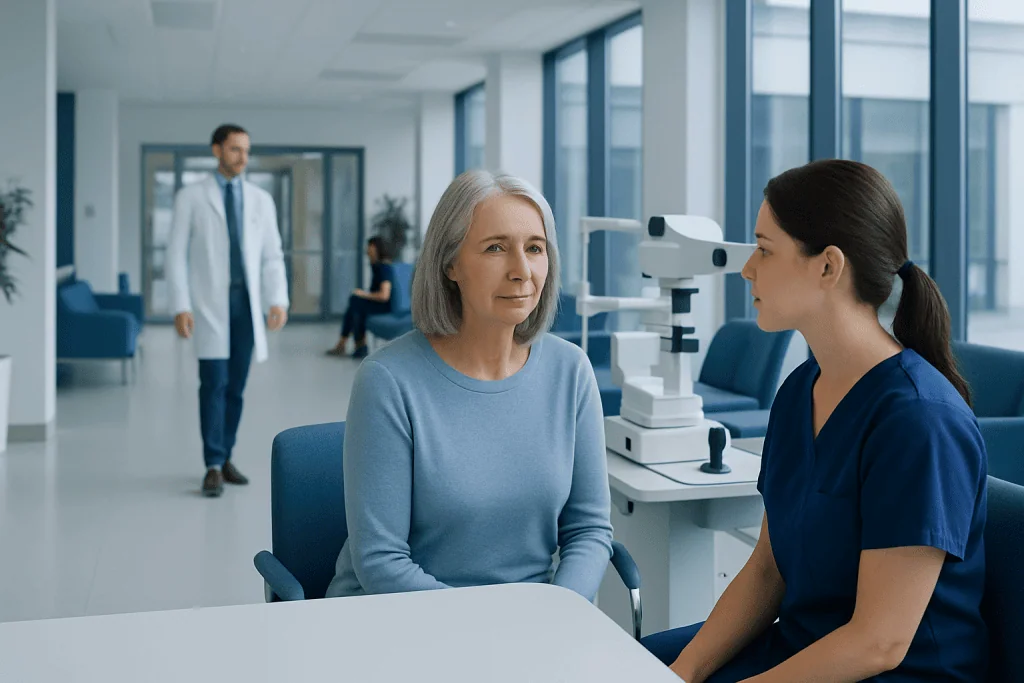
Age alone does not usually disqualify someone from LASIK after 40. A detailed examination checks corneal shape and thickness, prescription stability, dry eye, lens clarity and retinal health.
Key Takeaways
- Age alone does not usually disqualify someone from LASIK after 40.
- A detailed examination checks corneal shape and thickness, prescription stability, dry eye, lens clarity and retinal health.
- Presbyopia commonly begins in the 40s, meaning distance-focused LASIK may not remove the need for reading glasses.
- Monovision LASIK can be an option for selected patients, usually after a successful contact-lens trial.
- Dry eye, unstable prescriptions, certain corneal conditions and cataracts may make LASIK unsuitable or change the best treatment choice.
Yes, many people can have LASIK after age 40 if their prescription is stable and their corneas and overall eye health are suitable. However, LASIK does not stop the normal age-related need for reading glasses, so a personalised eye assessment is especially important in this decade.
Overview: Can You Get LASIK After 40?
Yes. Many adults can get LASIK after 40, provided that a comprehensive eye examination shows their eyes are suitable for laser vision correction. There is no universal upper age limit for LASIK; suitability depends far more on the health and shape of the cornea, prescription stability, tear-film quality, lens clarity and overall eye health than on age alone.
The key consideration in the 40s is presbyopia, a normal age-related change in which the eye gradually loses the ability to focus on close objects. LASIK reshapes the cornea to correct refractive errors such as short-sightedness, long-sightedness and astigmatism, but it does not prevent presbyopia. An ophthalmologist can explain whether distance correction, monovision, reading glasses or another approach is most likely to match the person’s everyday visual needs.
LASIK may reduce dependence on glasses or contact lenses, but it is an elective procedure and expectations matter. A careful assessment should include a discussion of work, driving, screen use, hobbies, night vision, eye comfort and plans for future eye care.
How LASIK Works and What Changes After 40
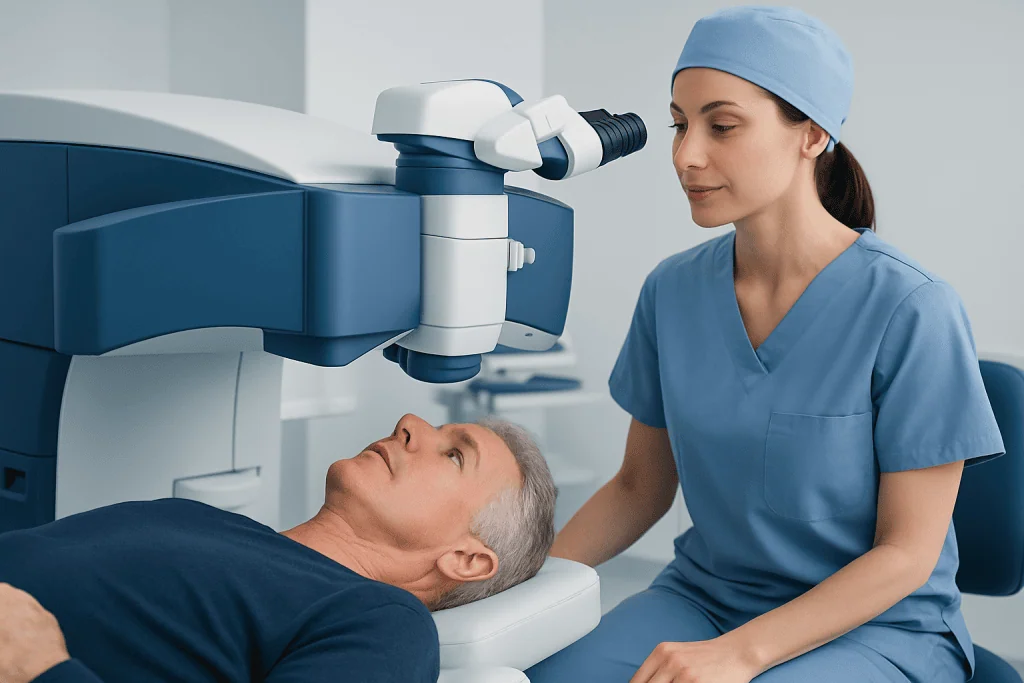
LASIK is a laser refractive procedure that changes the curvature of the cornea, the clear front surface of the eye. First, the surgeon creates a thin corneal flap. The flap is lifted, an excimer laser removes a precisely planned amount of corneal tissue, and the flap is repositioned. Altering the corneal shape helps light focus more accurately on the retina.
In people who are short-sighted, the cornea is generally flattened; for some people who are long-sighted, it is steepened. Astigmatism can also be treated by reshaping uneven areas of the cornea. The treatment plan is based on detailed measurements rather than the glasses prescription alone.
After 40, the natural lens inside the eye becomes less flexible. This is why someone may have excellent distance vision after LASIK but still need reading glasses for menus, phones or close work. In selected people, monovision may be considered: one eye is adjusted primarily for distance and the other for near tasks. The brain needs to adapt to this difference, so a contact-lens trial is commonly used before making a permanent surgical decision.
Laser vision correction is distinct from treatment for cloudy natural lenses. If cataract changes are present or likely to be the main cause of blurred vision, lens-based treatment may be more appropriate than LASIK.
Is It Worth It to Get LASIK in Your 40s?
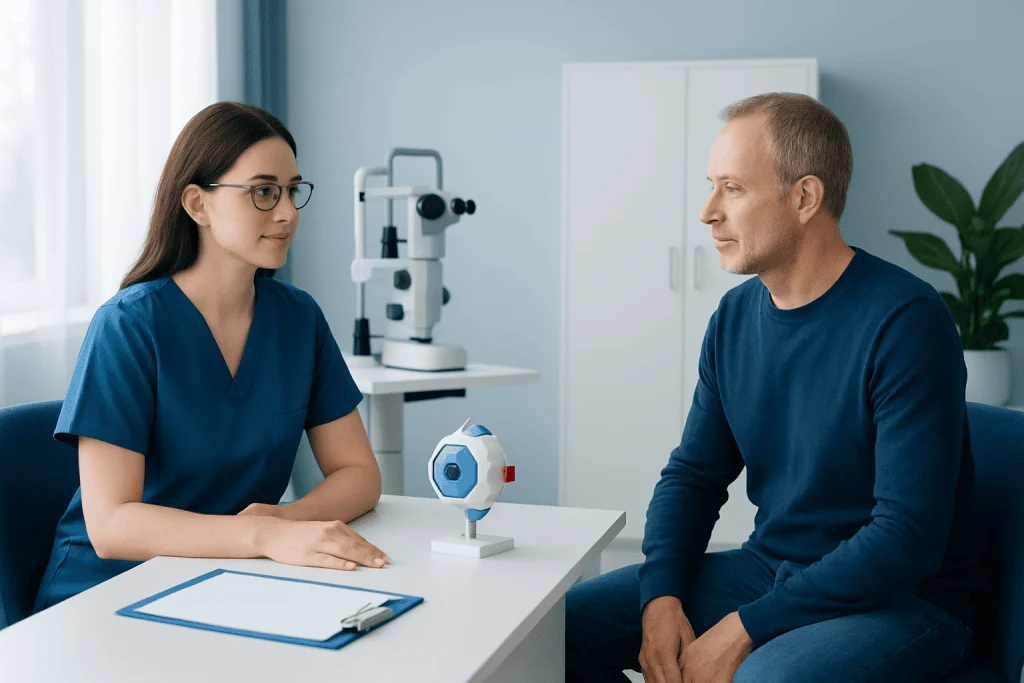
Whether LASIK is worth it in a person’s 40s depends on their visual priorities, eye findings and comfort with possible trade-offs. For a suitable candidate who wants less reliance on distance glasses or contact lenses for driving, exercise or daily activities, the procedure can be a useful option. It cannot promise complete freedom from eyewear in every situation.
A person considering LASIK should think about their near-vision requirements. Someone who values sharp distance vision in both eyes may prefer conventional distance correction and use reading glasses when needed. Another person may prefer monovision if a contact-lens trial demonstrates comfortable vision for their routine. Neither approach is automatically better; the choice is individual.
It is also sensible to consider the likelihood of future lens changes. Most people eventually develop cataracts as they age, and cataract surgery remains possible after prior LASIK. However, previous laser surgery should be recorded because it can affect the calculations used when selecting an intraocular lens later in life.
A consultation is most valuable when it focuses on realistic outcomes rather than simply eligibility. The ophthalmologist should discuss the likely need for reading glasses, the possibility of enhancement treatment in selected circumstances and alternatives if LASIK is not the best match.
Candidacy: Is 44 Too Old for Laser Eye Surgery?
No. Being 44 is not, by itself, too old for laser eye surgery. Likewise, people often ask whether they can get LASIK at 47 years old or whether they can get LASIK eye surgery in their 40s; the answer may be yes if the examination confirms that the eyes meet safety and suitability criteria.
Suitable candidates generally have a stable refractive prescription, healthy corneas of appropriate thickness and shape, and no active eye infection or uncontrolled eye disease. The assessment may include vision testing, corneal topography or tomography, corneal thickness measurement, pupil evaluation, tear-film assessment and a dilated examination of the retina and optic nerve.
A person can have 20/40 vision and still potentially be considered for LASIK. The number alone does not determine candidacy. The doctor will establish why vision is reduced, whether it improves with refraction, and whether laser correction is likely to improve unaided vision safely. Blurred vision caused by cataract, retinal disease, corneal disease or significant dry eye needs a different evaluation.
Pregnancy and breastfeeding can temporarily affect refraction and tear production. For this reason, laser refractive surgery is usually postponed until hormonal changes have settled and the prescription is stable.
What Disqualifies Me From Getting LASIK?
Some findings may mean LASIK is not advisable, while others may simply require treatment first, closer assessment or consideration of another refractive option. A decision should be made by an experienced ophthalmologist after a full examination rather than from age, prescription or online screening alone.
Potential reasons to postpone or avoid LASIK include an unstable prescription, corneas that are too thin or irregular, keratoconus or suspicion of corneal weakening, significant dry eye, active eye infection or inflammation, and certain retinal or optic nerve conditions. Advanced cataracts can also make LASIK a poor choice because the natural lens, rather than the cornea, is causing much of the visual change.
- Autoimmune or connective-tissue conditions may require individual assessment, especially if they affect healing or cause dry eyes.
- Uncontrolled diabetes can affect healing and prescription stability.
- Glaucoma, previous eye surgery, severe allergies or frequent eye rubbing may alter the risk assessment.
- Large prescriptions may be treatable in some cases, but corneal measurements and the amount of tissue that would need to be removed are essential.
Not being a LASIK candidate does not mean that vision correction is impossible. Depending on the reason, alternatives may include surface laser procedures, implantable lenses, management of dry eye, or lens-based surgery when appropriate.
The Procedure and Recovery Timeline
Before treatment, the clinician confirms measurements, reviews medical history and explains the planned correction. Contact lenses may need to be stopped for a period before testing because they can temporarily alter corneal shape. On the treatment day, numbing eye drops are used, and the person remains awake. A device gently holds the eyelids open while the surgeon performs the laser steps.
The laser treatment itself is brief, although preparation and checks take longer. People are usually able to go home the same day, but they should arrange transport because vision can be hazy initially and sedating medication may sometimes be used. Protective shields may be recommended while sleeping during the early healing period.
Many people notice clearer vision within a day or two, but visual sharpness can fluctuate during the first weeks. Dryness, light sensitivity, glare or halos around lights can occur during recovery and often improve with healing. Follow-up appointments are important to check vision, corneal healing and eye pressure, and prescribed drops should be used exactly as directed.
Eyes should not be rubbed during recovery. The care team will provide individual advice about returning to work, driving, swimming, eye makeup, contact sports and other activities. Any sudden reduction in vision, worsening pain or increasing redness requires prompt medical assessment.
Benefits, Risks and Everyday Self-Care
The potential benefit of LASIK is reduced dependence on glasses or contact lenses for distance, and sometimes for other visual tasks depending on the correction plan. For people over 40, the benefit should be weighed against the likely need for near-vision support due to presbyopia. A successful result is best defined by vision that fits the person’s daily activities and informed expectations.
Possible side effects include temporary dry eye, fluctuating vision, glare, halos, starbursts and reduced contrast sensitivity, particularly in low light. Less common complications can include infection, inflammation, flap-related problems, undercorrection, overcorrection or irregular healing. Some people need glasses, contact lenses or an enhancement procedure after treatment.
Good eye care supports comfort and long-term vision, whether or not a person chooses LASIK. This includes attending routine eye examinations, using lubricating drops only as recommended, protecting eyes from injury and ultraviolet light, managing long-term health conditions, and seeking advice about persistent dryness or changes in vision.
For international patients, Acibadem International’s multidisciplinary specialists and JCI-accredited hospitals can assess refractive concerns and discuss LASIK eye surgery alongside other appropriate vision-correction options.
When to Seek Medical Care
Anyone considering laser vision correction should arrange a comprehensive consultation with an ophthalmologist rather than relying on a glasses prescription or age alone. This is particularly important after 40, when presbyopia, dry eye and early lens changes may influence the safest and most satisfying treatment plan.
Prompt eye care is needed for sudden vision loss, flashes of light, a sudden increase in floaters, a curtain-like shadow in the visual field, severe eye pain, marked redness, injury or chemical exposure. These symptoms are not expected effects of routine ageing and should be assessed urgently.
After LASIK, contact the treating eye team promptly for worsening pain, a sudden decrease in vision, increasing redness, discharge or any symptom that feels significantly different from the recovery guidance provided. Early assessment helps protect eye health and allows appropriate treatment if needed.
Frequently asked questions
Is LASIK surgery possible after 40 years old?
Yes, LASIK surgery is possible after 40 years old for many people. Eligibility depends on a detailed assessment of corneal health, prescription stability, dry eye, lens clarity and retinal health. Age alone does not determine whether treatment is appropriate.
Can you get LASIK eye surgery after 40 if you need reading glasses?
Possibly. Reading-glass use often reflects presbyopia, which LASIK does not stop or reverse. A person may choose distance-focused LASIK and use reading glasses, or may be assessed for monovision if they tolerate it well during a contact-lens trial.
Can you get LASIK with 20/40 vision?
Potentially, yes. A 20/40 measurement does not automatically qualify or disqualify someone. The ophthalmologist must identify the cause of reduced vision and determine whether it can be safely improved with corneal laser correction.
Can you get LASIK surgery after 40 if you have dry eyes?
Dry eye is common after 40 and needs careful evaluation before LASIK. Mild or treatable dryness may be managed before reassessment, while significant dry eye can make LASIK less suitable. The doctor may recommend another approach if symptoms or measurements indicate a higher risk of worsening dryness.
Is monovision LASIK a good option after 40?
Monovision LASIK can work well for selected people who want to reduce reliance on reading glasses. One eye is targeted for distance and the other for near vision, which may affect depth perception or night vision for some individuals. A successful contact-lens trial is usually recommended before surgery.
Will LASIK prevent cataracts later in life?
No. LASIK changes the cornea and does not prevent cataracts, which develop in the natural lens inside the eye. Cataract surgery can still be performed after LASIK, but the eye surgeon should know about the earlier procedure when planning lens calculations.
References
- American Academy of Ophthalmology
- U.S. Food and Drug Administration
- National Eye Institute
- Royal College of Ophthalmologists
This article is for general information only and is not a substitute for professional medical advice. Please consult a qualified doctor about your individual situation.
LASIK in Turkey — costs, top hospitals & a free quote
JCI-accredited · board-certified surgeons · reply within 24h
Add us as a Preferred Source to see more of our trusted health content across Google Search, AI Overviews and Discover.

More from the Health Library



Related Specialists

Fzt. Canberk Altan
Physical Medicine & Rehabilitation
Dr. Hamdi Tüfekçi
Anesthesiology
Dr. Murat Dutipek
Otorhinolaryngology
Dr. Burcu Duran Tak
Acibadem Life Clinical Service