Can You Get LASIK While Pregnant: An Evidence-Based Patient Guide

LASIK is generally not recommended during pregnancy because hormonal changes can temporarily alter prescription, corneal shape, and tear production. Breastfeeding may also be a reason to postpone LASIK, particularly because of ongoing hormonal effects and the use of postoperative medicines.
Key Takeaways
- LASIK is generally not recommended during pregnancy because hormonal changes can temporarily alter prescription, corneal shape, and tear production.
- Breastfeeding may also be a reason to postpone LASIK, particularly because of ongoing hormonal effects and the use of postoperative medicines.
- A detailed eye examination is needed to confirm that a person’s prescription, corneal thickness, and eye health are suitable for laser vision correction.
- Many people can consider LASIK once they have stopped breastfeeding and their vision has remained stable for a period advised by their ophthalmologist.
- LASIK can provide long-term reduction in dependence on glasses or contact lenses, but it does not prevent age-related vision changes such as presbyopia.
Can you get LASIK while pregnant? Most eye specialists recommend waiting until after pregnancy and breastfeeding, when vision and the eye surface have returned to a stable baseline. This guide explains why postponing treatment is usually safest, how LASIK works, and when laser vision correction may become appropriate.
Can You Get LASIK While Pregnant?
In most cases, LASIK is not performed during pregnancy. Although LASIK is an elective procedure and is not known to directly affect a pregnancy, pregnancy-related hormonal changes can temporarily change vision, corneal shape, and tear production. These changes can make it harder to calculate an accurate laser correction and may affect comfort and healing after surgery.
Ophthalmologists also consider the eye drops used before and after surgery. While the amount of medication absorbed into the body from eye drops is usually small, elective treatment is commonly deferred when there is no medical need to proceed. Waiting allows the prescription and ocular surface to stabilize, supporting more predictable planning and results.
For people who are pregnant and finding their glasses or contact lenses less comfortable, an eye examination can identify whether dry eye, contact lens intolerance, or another issue is contributing. Temporary adjustments to glasses or contact lens use are often the most appropriate approach until after pregnancy.
Why Pregnancy Can Change Vision and LASIK Planning
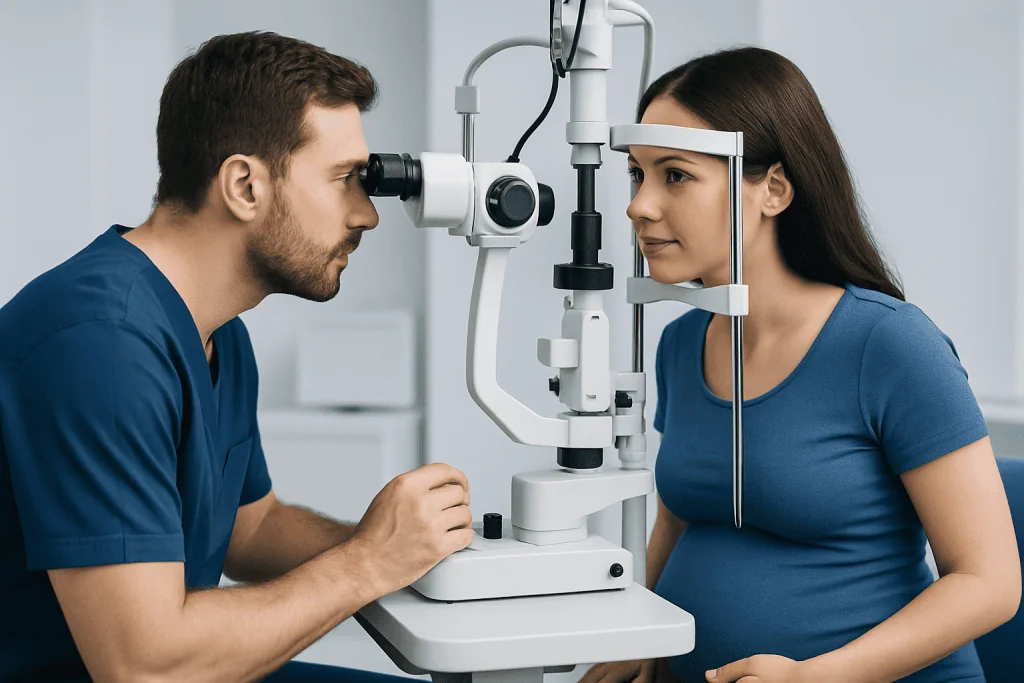
Pregnancy can cause fluid shifts and hormonal changes throughout the body, including in the cornea, the clear front surface of the eye. In some people, this may slightly alter corneal curvature or thickness. Even a small, temporary change can influence a glasses prescription and the measurements used to plan laser vision correction.
Dry eye symptoms may also become more noticeable during pregnancy. LASIK can cause temporary dry eye while the corneal nerves recover, so having an unstable tear film before surgery may increase postoperative discomfort or blur vision during recovery. Existing dry eye should be assessed and treated before any elective refractive procedure.
Vision changes in pregnancy are often temporary, but new or sudden visual symptoms should not simply be assumed to be hormonal. Blurred vision, flashing lights, blind spots, severe headache, eye pain, or a sudden loss of vision requires prompt medical assessment, especially because some pregnancy-related conditions can affect the eyes and nervous system.
How LASIK Works and Who May Be a Candidate
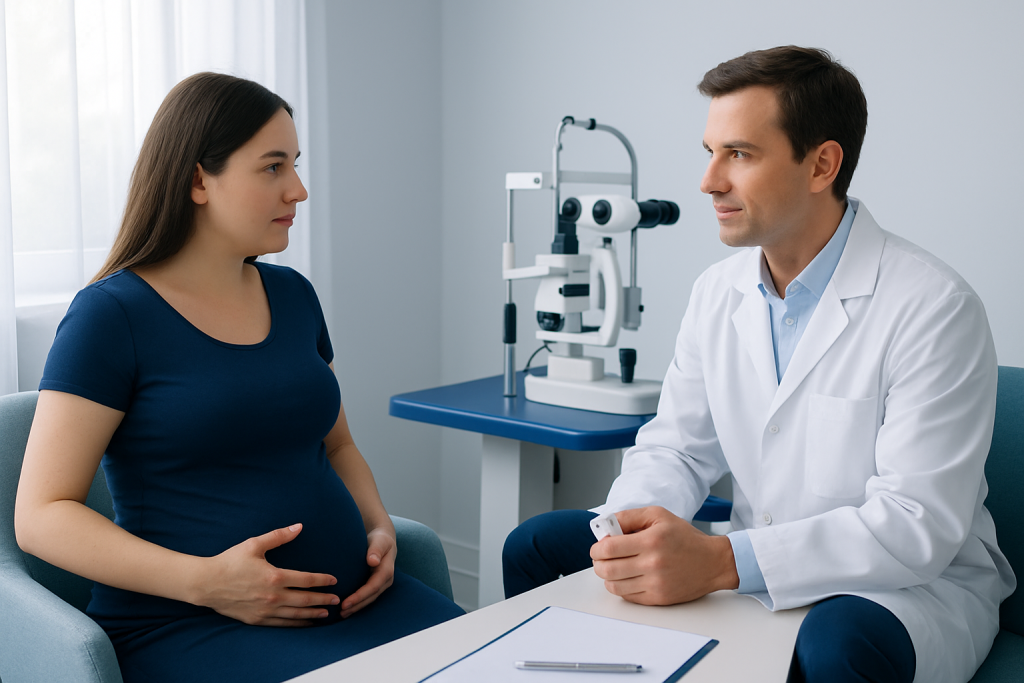
LASIK, or laser-assisted in situ keratomileusis, reshapes the cornea so that light focuses more accurately on the retina. It may reduce dependence on glasses or contact lenses for nearsightedness, farsightedness, and some forms of astigmatism. It is one type of refractive surgery; the most suitable procedure depends on the individual eye and prescription.
During a LASIK assessment, the ophthalmology team measures the prescription, corneal thickness and shape, pupil size, tear film, and overall eye health. The assessment also reviews medical history, medications, visual needs, and expectations. Stable vision over time is important because laser treatment is designed around the prescription measured before surgery.
A typical LASIK procedure uses a femtosecond laser to create a thin corneal flap. The surgeon gently lifts the flap, uses an excimer laser to reshape the underlying corneal tissue, and then returns the flap to its position. Numbing drops are used, and the procedure itself is usually brief, but the preoperative evaluation is essential to safe decision-making.
People exploring laser vision correction can learn more about LASIK eye surgery and the examinations used to determine whether it is appropriate. A consultation should be scheduled after pregnancy-related vision changes have settled rather than during a period of changing prescription.
What Disqualifies Me From Getting LASIK?
Pregnancy and breastfeeding are usually temporary reasons to delay LASIK rather than permanent disqualifiers. A person may also be advised to wait if their prescription has changed recently, they are under the age typically associated with stable adult refraction, or they have not had enough time for the eyes to stabilize after stopping contact lenses.
Some eye conditions may make LASIK unsuitable or require a different treatment approach. These include an irregular or too-thin cornea, keratoconus, significant dry eye disease, uncontrolled glaucoma, active eye infection or inflammation, certain retinal conditions, or visually significant cataracts. An ophthalmologist may recommend observation, medical treatment first, or another refractive option depending on the findings.
General health can also matter. Poorly controlled diabetes, autoimmune disease, medications that affect healing, and a history of problematic wound healing may need individualized assessment. These factors do not always rule out surgery, but they can alter the balance of potential benefits and risks.
- A stable glasses prescription is important for accurate treatment planning.
- Healthy corneas and adequate tear production support safer recovery.
- Realistic expectations are essential: LASIK reduces refractive error but cannot guarantee perfect vision in every situation.
- A comprehensive eye examination determines candidacy more reliably than prescription strength alone.
Recovery Timeline, Benefits, and Possible Risks
After LASIK, many people notice improved vision within a day or two, although vision can fluctuate during the early healing period. Mild burning, tearing, light sensitivity, hazy vision, or a gritty sensation can occur soon after the procedure. Follow-up visits allow the ophthalmologist to monitor healing and check vision.
Eye drops are typically prescribed to reduce infection risk, support healing, and manage dryness. Patients are usually asked not to rub their eyes and to avoid swimming, dusty environments, eye makeup, and contact sports for a period recommended by their surgical team. The exact timeline differs by procedure, eye health, and healing response.
Potential benefits include reduced reliance on glasses or contact lenses and easier participation in daily activities. Possible side effects or complications include dry eye, glare, halos, starbursts around lights, undercorrection, overcorrection, regression of the correction, flap-related concerns, and rarely more serious vision problems. Careful screening helps lower risk but cannot remove it completely.
LASIK does not stop normal age-related changes. In particular, presbyopia, the gradual difficulty focusing up close that often begins in midlife, can still occur. Some people may later use reading glasses, need an enhancement procedure, or develop other eye conditions unrelated to their original LASIK correction.
What Happens 10 Years After LASIK?
Ten years after LASIK, many people continue to have good distance vision and remain less dependent on glasses or contact lenses. Long-term results vary because the eyes and visual needs continue to change over time. The original refractive error, age at surgery, corneal characteristics, and natural aging all influence the experience.
Some people develop a small return of refractive error over years, which may be called regression. If the cornea remains healthy and there is enough tissue, an ophthalmologist may discuss whether an enhancement is appropriate. Not everyone with a change in vision needs or qualifies for additional laser treatment.
Presbyopia can become noticeable regardless of previous LASIK, making reading glasses useful for close work. Cataracts may also develop later in life, as they can in people who have never had LASIK. Prior LASIK should be shared with future eye surgeons because it is relevant when planning cataract surgery and selecting an intraocular lens.
Why Did Taylor Swift Get LASIK?
Taylor Swift has publicly appeared in a commercial related to LASIK, but the personal reasons for any individual’s decision to have eye surgery are private unless they choose to explain them. It is not appropriate to assume medical details, prescription strength, or clinical suitability based on a public appearance or media report.
In general, people choose LASIK because they would like less reliance on glasses or contact lenses for activities such as work, travel, exercise, or daily routines. These personal goals are only one part of the decision. A person should proceed only after an ophthalmologist confirms that the eyes are healthy, the prescription is stable, and the expected benefits reasonably outweigh the risks.
Celebrity experiences cannot predict another person’s outcome. The most useful information comes from a personalized examination and a discussion of alternatives, including glasses, contact lenses, and other laser or lens-based procedures.
How Long After Pregnancy Can You Get Laser Eye Surgery?
There is no single waiting period that applies to everyone. Many ophthalmologists recommend considering laser eye surgery only after pregnancy has ended, breastfeeding has stopped, and the glasses prescription has stabilized. This may mean waiting several months after breastfeeding, but the appropriate timing should be confirmed through repeat eye measurements and an individual assessment.
Those who do not breastfeed may still need time after delivery for hormonal and visual changes to settle. An ophthalmologist may compare current measurements with prior prescriptions or repeat testing at a later visit before recommending surgery. This approach helps avoid treating a temporary refractive change.
Until then, updated glasses, lubricating drops recommended by a clinician, or an adjusted contact lens plan may improve vision and comfort. People with persistent dry eye, continuing prescription changes, or any eye disease may need treatment or further monitoring before becoming candidates for laser correction.
Acibadem International’s multidisciplinary specialists and JCI-accredited hospitals assess and treat eye conditions for international patients. A comprehensive eye evaluation can clarify the safest timing and whether laser vision correction is suitable after pregnancy.
When to Seek Medical Care
Routine eye care is appropriate when vision changes gradually during pregnancy, glasses no longer feel accurate, or contact lenses become uncomfortable. An ophthalmologist or optometrist can check for refractive changes, dry eye, and other common causes. Pregnant patients should tell the eye-care professional about the pregnancy and any medicines they are taking.
Urgent medical care is needed for sudden vision loss, new double vision, flashing lights, a curtain-like shadow, severe eye pain, significant redness with reduced vision, or a severe headache accompanied by visual symptoms. During pregnancy, sudden visual changes can sometimes be associated with high blood pressure disorders and should be discussed promptly with the maternity care team or an urgent care service.
After LASIK, patients should contact their surgical team promptly if they develop worsening pain, a sudden decline in vision, increasing redness, discharge, or an injury to the eye. These symptoms do not always indicate a serious problem, but timely assessment is important.
Frequently asked questions
Can you get LASIK while pregnant?
LASIK is usually postponed during pregnancy. Hormonal and fluid changes may temporarily affect the cornea, tear film, and glasses prescription, making treatment planning less predictable. Elective surgery is generally reconsidered after pregnancy when vision has stabilized.
Can you have LASIK while breastfeeding?
Many eye surgeons recommend waiting until breastfeeding has ended. Hormonal effects may continue during lactation, and postoperative eye drops are another consideration for an elective procedure. An ophthalmologist can advise on timing based on eye measurements and individual circumstances.
What disqualifies me from getting LASIK?
Reasons to delay or avoid LASIK can include pregnancy, breastfeeding, an unstable prescription, thin or irregular corneas, keratoconus, significant dry eye, active eye disease, and certain medical conditions that affect healing. A detailed eye examination is needed because eligibility cannot be decided from prescription strength alone. Some people may be candidates for another vision-correction option instead.
Why did Taylor Swift get LASIK?
The specific medical reasons behind a public figure’s decision are private unless they have personally shared them. People commonly consider LASIK to reduce reliance on glasses or contact lenses, but suitability depends on individual eye health and stable vision. A celebrity experience should not be used to predict another person’s results.
What happens 10 years after LASIK?
Many people still have good distance vision 10 years after LASIK, though results vary. Some may experience gradual regression of their prescription, while age-related near-vision changes can make reading glasses necessary. Future cataracts and other age-related eye conditions can still occur after LASIK.
How long after pregnancy can you get laser eye surgery?
Laser eye surgery is commonly considered after pregnancy and after breastfeeding has stopped, once vision and corneal measurements are stable. The exact interval differs between individuals and may require repeat measurements over time. An ophthalmologist can confirm when it is safe to proceed.
References
- American Academy of Ophthalmology
- U.S. Food and Drug Administration
- American Society of Cataract and Refractive Surgery
- Royal College of Ophthalmologists
This article is for general information only and is not a substitute for professional medical advice. Please consult a qualified doctor about your individual situation.
LASIK in Turkey — costs, top hospitals & a free quote
JCI-accredited · board-certified surgeons · reply within 24h
Add us as a Preferred Source to see more of our trusted health content across Google Search, AI Overviews and Discover.