Capsule Endoscopy: Looking Inside the Small Intestine

Capsule endoscopy is mainly used to examine the small intestine, an area that is difficult to see fully with standard upper endoscopy or colonoscopy. The test involves swallowing a vitamin-sized capsule camera that transmits thousands of images to a recorder worn on the body.
Key Takeaways
- Capsule endoscopy is mainly used to examine the small intestine, an area that is difficult to see fully with standard upper endoscopy or colonoscopy.
- The test involves swallowing a vitamin-sized capsule camera that transmits thousands of images to a recorder worn on the body.
- It is usually painless and does not require sedation, but careful preparation and medical screening are important.
- Capsule endoscopy can help detect bleeding sources, Crohn’s disease, polyps, tumors, ulcers, and some medication-related injuries.
- The main rare risk is capsule retention, especially in people with narrowing of the intestine or previous bowel obstruction.
Capsule endoscopy is a minimally invasive diagnostic test that uses a small swallowable camera to take images of the digestive tract, especially the small intestine. It can help identify causes of bleeding, anemia, abdominal pain, and suspected inflammatory bowel disease when other tests do not provide enough information.
Overview
Capsule endoscopy is a diagnostic procedure that allows doctors to look inside the digestive tract using a small, disposable camera capsule. The patient swallows the capsule with water, and as it travels naturally through the gastrointestinal system, it takes many pictures. These images are sent wirelessly to a recording device worn on a belt or shoulder strap.
The test is especially valuable for examining the small intestine. This long, narrow part of the bowel lies between the stomach and the colon, and it is not fully reached by standard gastroscopy or colonoscopy. Capsule endoscopy can therefore provide information that other routine endoscopic tests may miss.
Capsule endoscopy is not a treatment procedure. It cannot take biopsies, remove polyps, or stop bleeding. Instead, it helps guide the next steps, such as further imaging, deep enteroscopy, medication, or surgery when needed.
When Capsule Endoscopy Is Used
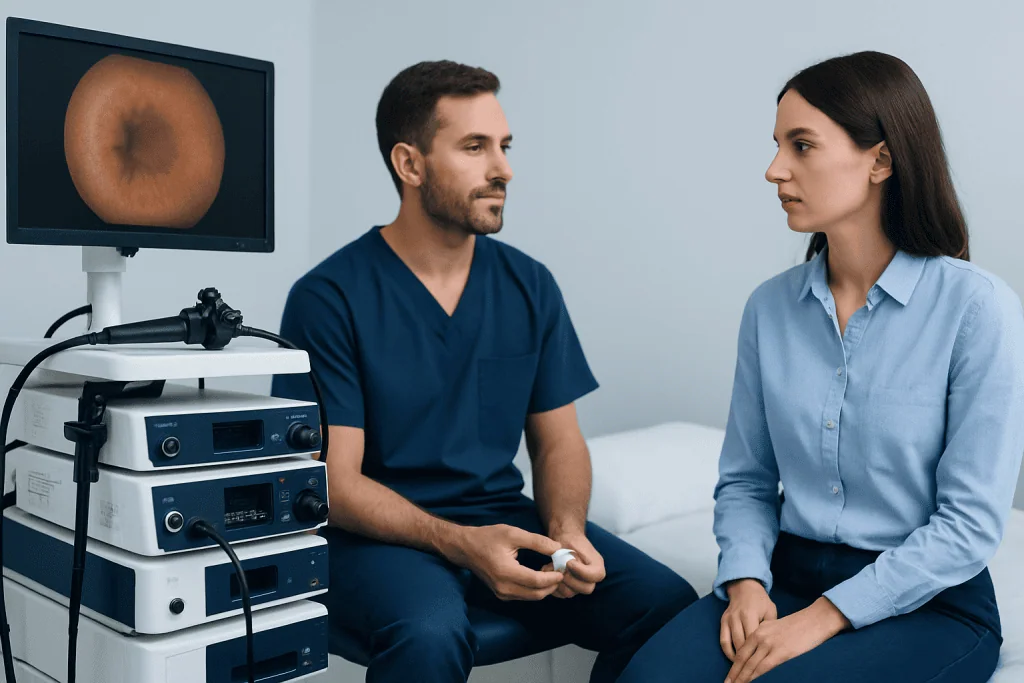
Doctors most often recommend capsule endoscopy when there is a need to evaluate the small intestine in more detail. A common reason is suspected small-bowel bleeding, sometimes called obscure gastrointestinal bleeding, especially when upper endoscopy and colonoscopy have not found the cause. This may appear as iron deficiency anemia, black stools, or hidden blood in stool tests.
Capsule endoscopy may also be used when Crohn’s disease is suspected but standard tests are inconclusive. It can show inflammation, ulcers, narrowing, or other changes in the lining of the small intestine. In selected patients, it may also help assess the extent of known inflammatory bowel disease.
Other possible reasons include evaluation of suspected small-bowel tumors, polyps, celiac disease complications, medication-related injury, or unexplained abdominal symptoms when a specialist believes small-bowel imaging is appropriate. The decision depends on the patient’s symptoms, history, blood tests, and results of previous investigations.
How the Procedure Works
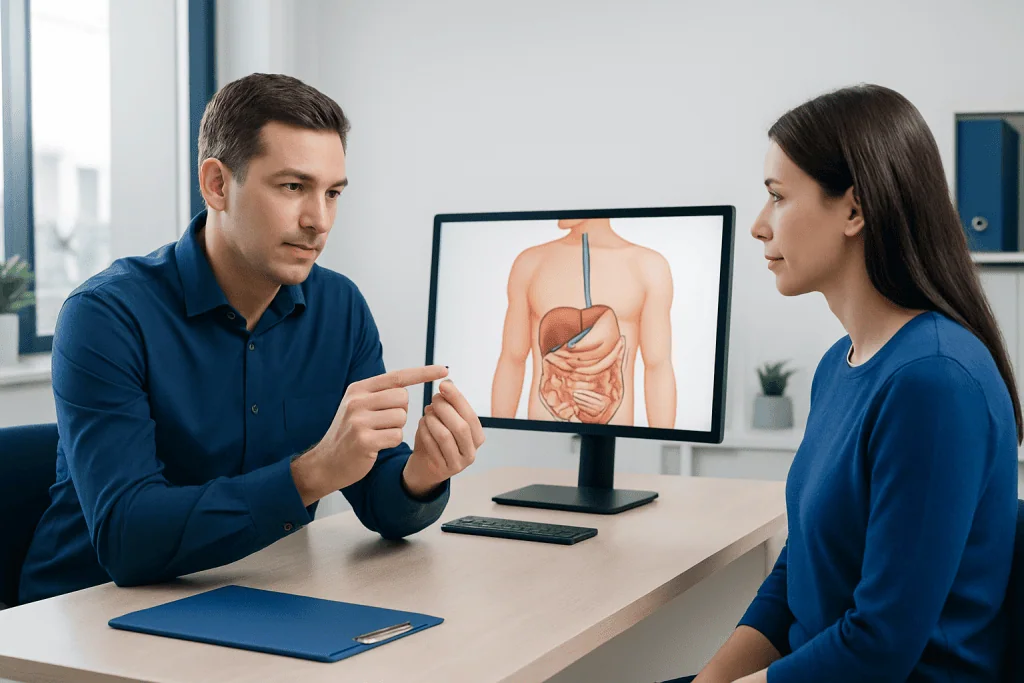
The capsule is usually about the size of a large vitamin pill. Inside it are a camera, light source, battery, and transmitter. After the capsule is swallowed, it moves through the digestive tract by normal intestinal contractions. The patient does not control or feel the capsule moving.
During the test, the patient wears a small recorder that receives images from the capsule. The recording period often lasts several hours, depending on the system used and the area being examined. Most people can leave the clinic and continue light daily activities during the recording time, following the instructions given by the healthcare team.
After the study is complete, the recording equipment is returned. The capsule itself is passed naturally in the stool, usually without being noticed, and does not need to be retrieved. A gastroenterologist later reviews the images using specialized software, which can take time because thousands of images may need to be assessed carefully.
Preparation Before the Test
Good preparation helps improve the quality of the images. The healthcare team will provide specific instructions, which may include dietary changes the day before the test, fasting for several hours, and sometimes taking a bowel preparation or anti-foaming medicine. Patients should follow the exact instructions from their clinic, as protocols can vary.
Before capsule endoscopy, the doctor will review medical history and current medications. It is important to mention previous abdominal surgery, bowel obstruction, Crohn’s disease, swallowing difficulty, implanted electronic devices, pregnancy, or any known narrowing of the intestine. Some medications may need timing adjustments on the day of the test, but this should only be done under medical guidance.
In patients at higher risk of capsule retention, the doctor may recommend additional evaluation before the test. This may include cross-sectional imaging such as CT or MRI enterography, or a dissolvable patency capsule that helps check whether the digestive tract is open enough for the camera capsule to pass safely.
What to Expect During and After Capsule Endoscopy
On the day of the procedure, sensors or a recorder may be attached according to the device used. The patient then swallows the capsule with water. Most people do not need sedation, anesthesia, or a hospital stay, which makes the test comfortable for many patients.
While wearing the recorder, the patient should avoid activities that could damage the equipment or interfere with the signal. The healthcare team may advise avoiding strenuous exercise, bending repeatedly, or going near certain strong electromagnetic fields. Eating and drinking are usually restarted gradually according to the clinic’s instructions.
After the recording is finished, the equipment is returned and the patient can usually resume normal activities. The capsule passes in a bowel movement. If the capsule is not seen, this is often not a problem, but patients should contact their doctor if they develop abdominal pain, vomiting, bloating, fever, or if they are told that the capsule did not pass.
Benefits, Limitations, and Risks
The main benefit of capsule endoscopy is that it can visualize the lining of the small intestine in a noninvasive way. It does not require a tube passed through the mouth or rectum and usually does not require sedation. For many patients, it provides important information after other tests have not explained symptoms or abnormal blood results.
However, capsule endoscopy has limitations. It may not identify every abnormality, and image quality can be affected by food residue, slow movement, or rapid transit through part of the bowel. The capsule cannot take tissue samples, treat bleeding, or remove growths. If an abnormal finding is seen, another procedure may be needed to confirm or treat it.
The most important uncommon risk is capsule retention, meaning the capsule becomes stuck in a narrowed area of the intestine. This is more likely in people with strictures, tumors, prior bowel obstruction, radiation injury, or some cases of Crohn’s disease. Many retained capsules can be managed with observation, medication, endoscopic removal, or rarely surgery, depending on the cause and symptoms.
Results and Follow-Up
Results are not immediate because the images require careful review by a trained gastroenterologist. The report may describe whether the capsule reached the colon, the quality of the preparation, and any findings such as bleeding, ulcers, inflammation, vascular lesions, polyps, or masses. The doctor will interpret these findings in the context of the patient’s symptoms and previous tests.
Follow-up depends on the results. If bleeding lesions are found, the doctor may recommend deep enteroscopy, medication, iron treatment, or other targeted care. If inflammation suggests Crohn’s disease, additional tests, blood work, stool tests, or treatment planning may be needed. If the test is normal, the doctor may consider other causes of symptoms or monitor the patient over time.
Patients should ask their doctor what the result means, whether further testing is needed, and which symptoms should prompt urgent contact. A normal capsule endoscopy is reassuring, but it does not replace medical follow-up if symptoms persist or worsen.
When to See a Doctor
A person should consult a qualified doctor if they have unexplained iron deficiency anemia, recurring black or bloody stools, persistent abdominal pain, ongoing diarrhea, unintended weight loss, or symptoms that have not been explained by standard tests. These symptoms do not always mean a serious condition, but they deserve proper evaluation.
Medical advice is also important before capsule endoscopy if there has been previous bowel surgery, known Crohn’s disease, a history of bowel blockage, swallowing problems, or an implanted medical device. These factors do not always prevent the test, but they may change the preparation or require extra safety checks.
Acibadem International’s multidisciplinary specialists and JCI-accredited hospitals diagnose and treat digestive conditions, including those that may require capsule endoscopy, for international patients. The best approach is individualized, based on the patient’s history, previous test results, and overall health.
Frequently asked questions
Is capsule endoscopy painful?
Capsule endoscopy is usually painless. The patient swallows the capsule like a large pill, and it moves through the digestive tract naturally. Most people do not feel it after swallowing.
Can capsule endoscopy replace colonoscopy or gastroscopy?
Capsule endoscopy does not usually replace colonoscopy or gastroscopy. It is mainly used to examine the small intestine, which is difficult to see completely with standard endoscopy. Colonoscopy and gastroscopy can also take biopsies and provide treatment, which capsule endoscopy cannot do.
How long does it take to get results?
The timing varies by clinic, but results are not instant. A gastroenterologist must review many images and prepare a report. Patients are usually given a follow-up plan once the report is available.
What happens if the capsule gets stuck?
Capsule retention is uncommon, but it can happen if there is a narrowed area in the intestine. The doctor may monitor the situation, use medication, remove the capsule with an endoscopic procedure, or rarely recommend surgery. Patients at higher risk may be tested with imaging or a patency capsule before the procedure.
Can patients eat during capsule endoscopy?
Patients are usually asked to fast before swallowing the capsule. After the test begins, clear liquids and light food may be allowed at specific times, depending on the clinic’s protocol. The healthcare team will provide exact instructions.
Who should not have capsule endoscopy?
Capsule endoscopy may not be suitable for people with suspected bowel obstruction, significant intestinal narrowing, or serious swallowing difficulty unless precautions are taken. Pregnancy and implanted electronic devices should also be discussed with the doctor. A specialist can decide whether the test is safe and appropriate.
References
- American Society for Gastrointestinal Endoscopy
- European Society of Gastrointestinal Endoscopy
- American College of Gastroenterology
- National Institute of Diabetes and Digestive and Kidney Diseases
- Mayo Clinic
This article is for general information only and is not a substitute for professional medical advice. Please consult a qualified doctor about your individual situation.
Persistent digestive symptoms? Get evaluated in Turkey
JCI-accredited · board-certified surgeons · reply within 24h
Add us as a Preferred Source to see more of our trusted health content across Google Search, AI Overviews and Discover.

Gastroenterology
Diagnosis and treatment of the digestive system and liver, with advanced endoscopy.
46 specialists in this unit