Cataract Surgery in One Eye or Both: How Doctors Decide

The decision depends on symptoms, cataract severity, and the health of each eye. If both eyes have cataracts, surgery is often recommended for both, but commonly not on the same day.
Key Takeaways
- The decision depends on symptoms, cataract severity, and the health of each eye.
- If both eyes have cataracts, surgery is often recommended for both, but commonly not on the same day.
- Doctors assess retinal health, corneal condition, eye pressure, and other vision problems before planning surgery.
- The goal is to improve daily function, comfort, and visual balance between the eyes.
- Timing between first and second eye surgery varies based on recovery, surgeon preference, and patient needs.
Doctors decide whether cataract surgery should be done in one eye or both by looking at vision symptoms, how much each cataract affects daily life, and the overall health of each eye. In many cases, both eyes are treated, but usually on separate days so healing and visual results can be assessed safely.
Overview
Cataracts happen when the eye’s natural lens becomes cloudy. This clouding can make vision blurry, faded, dim, or more sensitive to glare, especially at night. Cataract surgery removes the cloudy lens and replaces it with an artificial lens to improve visual clarity.
When a person has cataracts in both eyes, a common question is whether surgery should be done in one eye only or in both. The answer depends on several factors, including how much each eye is affected, whether symptoms are interfering with daily activities, and whether there are other eye conditions that could influence the outcome.
In most situations, if cataracts are present in both eyes and both are affecting vision, doctors eventually recommend treatment for both eyes. However, this is commonly done one eye at a time rather than both on the same day. This approach lets the surgeon confirm healing, assess the visual result of the first operation, and use that information to fine-tune care for the second eye.
A complete eye examination is the starting point. It helps the ophthalmologist understand whether vision problems are caused mainly by cataracts or whether another issue, such as retinal disease or corneal irregularity, is also playing a role.
How Doctors Decide Between One Eye or Both
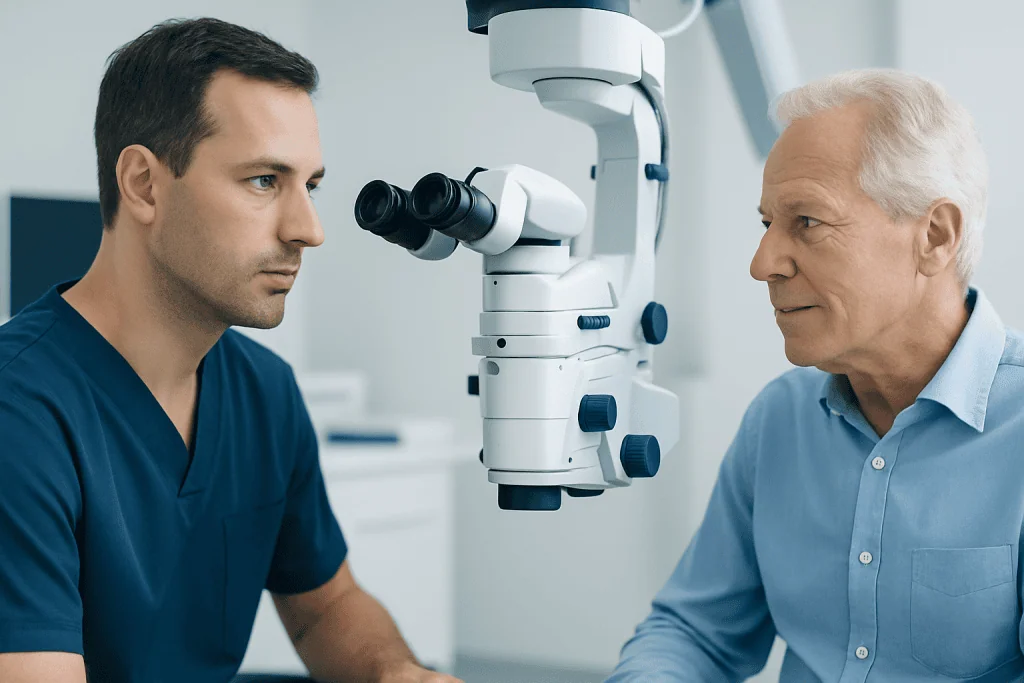
The most important question is not simply whether cataracts exist in one or both eyes, but whether they are affecting day-to-day life. Doctors ask about reading, driving, screen use, work tasks, glare from headlights, depth perception, and the ability to recognize faces. Surgery is usually considered when symptoms become bothersome or start reducing independence and safety.
If only one eye has a visually significant cataract, surgery may be recommended for that eye alone. The other eye may be monitored if its cataract is mild and not causing meaningful symptoms. On the other hand, if both eyes are affected, surgery for both may be appropriate, often staged over time.
Doctors also consider how balanced the eyes are. A large difference in vision between the two eyes can cause eyestrain, poor depth perception, headaches, or difficulty adapting to glasses after the first surgery. In those situations, operating on the second eye sooner may help restore visual balance and comfort.
The final plan is individualized. It may be shaped by work needs, travel plans, general health, the person’s goals for glasses reduction, and whether the eye doctor expects a straightforward recovery or needs extra caution because of another eye condition.
Symptoms and Everyday Clues That Surgery May Be Needed

Cataracts usually develop gradually. People may notice blurred or cloudy vision, trouble seeing at night, glare from sunlight or headlights, halos around lights, fading of colors, or needing brighter light for reading. Some notice frequent changes in their glasses prescription without much improvement.
One eye may bother a person more than the other. If one cataract is clearly more advanced, doctors may treat that eye first and observe the second. Even so, the less affected eye can still influence comfort and function. For example, if one eye sees clearly and the other is very blurred, the brain may struggle to combine the images well.
Symptoms that often matter in decision-making include:
- Difficulty driving, especially at night
- Problems reading or doing close work
- Increased glare or light sensitivity
- Reduced contrast, making steps or curbs harder to judge
- Eyestrain from unequal vision between the eyes
- Trouble with hobbies, computer work, or recognizing faces
The decision is usually based on function rather than a fixed stage of cataract. Some people do well with early cataracts, while others find even moderate clouding disruptive because of work, lifestyle, or the visual demands of daily life.
Causes, Risk Factors, and Other Eye Conditions That Affect the Plan
Age-related lens changes are the most common cause of cataracts, but cataracts can also be linked to diabetes, smoking, long-term steroid use, previous eye injury, inflammation, radiation exposure, or prior eye surgery. Cataracts often develop in both eyes, although not always at the same speed.
Doctors do more than confirm the cataract itself. They also look for conditions that may limit how much vision can improve after surgery. These include glaucoma, diabetic eye disease, corneal problems, retinal disorders, and age-related macular changes. If these are present, the conversation becomes more detailed because surgery can still help, but the final result may depend on more than the cataract alone.
For example, a person with significant retinal disease may need special testing or co-management before surgery. Someone with irregular corneal shape may need extra planning for lens selection. If there is a history of childhood lazy eye, vision in that eye may remain limited even after the cloudy lens is removed. Related concerns may be explored through services such as retina evaluation and vitreoretinal care or review of conditions like amblyopia when relevant.
These details help explain why one eye may be treated first, why the second surgery may be delayed, or why expectations may differ between eyes. The goal is to choose the safest and most effective sequence for the individual person.
How the Diagnosis and Pre-Surgery Assessment Are Done
An ophthalmologist diagnoses cataracts with a detailed eye exam. This includes checking visual acuity, examining the lens, measuring eye pressure, and looking at the retina and optic nerve. The doctor may also dilate the pupils to get a clear view of the back of the eye.
Before surgery, several measurements are taken to select the artificial lens implant. These can include corneal measurements, eye length, and calculations that help determine lens power. These steps are important whether surgery is planned in one eye or both, and they help set realistic expectations about distance vision, near vision, and possible need for glasses afterward.
The doctor may also ask about medications, general health conditions, and any previous eye procedures. Certain issues, such as severe dry eye or corneal disease, may need treatment before surgery to improve measurement accuracy and recovery. If a person has astigmatism, that may also affect lens choice and surgical planning, sometimes alongside discussion of astigmatism correction options.
When both eyes need surgery, the surgeon often uses the first eye’s experience as helpful information. Healing pattern, refractive result, and patient comfort after the first operation can guide small adjustments for the second eye where appropriate.
Treatment Options and Why Surgery Is Usually Staged
The only effective treatment for a cataract that is significantly affecting vision is surgery. Cataracts do not clear with eye drops, exercises, or glasses once the lens clouding itself becomes the main cause of symptoms. Surgery is generally performed as an outpatient procedure and is one of the most commonly performed eye operations worldwide.
In a person with cataracts in both eyes, the surgeon may recommend surgery for both eyes but usually not simultaneously. Most often, one eye is treated first, then the second eye is scheduled after a short interval once the first eye has started healing well. This staged approach adds a layer of safety and allows the doctor to confirm that there is no unexpected inflammation, infection, or refractive surprise before moving on to the second eye.
Same-day surgery on both eyes may be considered in selected settings, but it is not routine everywhere and requires strict protocols. Many ophthalmologists prefer separate procedures because each eye heals independently, and the result of the first eye can help refine the plan for the second. For most patients, this is a reassuring and practical approach.
People who are preparing for cataract surgery often also discuss lens implant choices, expected recovery time, and whether surgery may reduce dependence on glasses. Broader planning around eye surgery can help patients understand the sequence of care and what to expect at each stage.
Recovery, Prevention, and Self-care After the First Eye
After cataract surgery, vision often starts improving within days, although full stabilization may take longer. The doctor usually prescribes eye drops and gives instructions on hygiene, activity limits, and follow-up visits. Mild scratchiness, temporary blur, or sensitivity to light can happen early in recovery, but severe pain or sudden vision loss is not expected and needs urgent review.
If the second eye also has a cataract, the period after the first surgery can reveal how much visual imbalance remains. Some people feel comfortable waiting weeks or longer before the second procedure. Others notice a strong mismatch between the operated and unoperated eye and prefer to complete the second surgery sooner if the doctor agrees.
Self-care after surgery often includes:
- Using prescribed drops exactly as directed
- Avoiding rubbing the eye
- Protecting the eye from dust and accidental bumps
- Following advice about exercise, swimming, and lifting
- Attending all follow-up appointments
- Telling the doctor about new floaters, flashes, increasing redness, or worsening vision
Cataracts themselves cannot always be prevented, but healthy habits may support long-term eye health. These include not smoking, managing diabetes well, protecting the eyes from ultraviolet light, and having regular eye checkups as age increases.
When to See a Doctor
A person should arrange an eye assessment if blurred vision, glare, trouble reading, or difficulty driving begins to affect daily life. Even if the symptoms seem mild, a professional exam is useful because not all vision changes are caused by cataracts. Other eye conditions can look similar and may need different treatment.
Urgent medical attention is important if vision changes happen suddenly, if there is severe eye pain, flashes of light, a curtain-like shadow in vision, sudden double vision, or marked redness with discharge. These symptoms are not typical of routine cataract progression and should be checked promptly.
People who have already been told they have cataracts should return for follow-up if their glasses no longer help, if night driving becomes difficult, or if there is increasing imbalance between the eyes. These are common reasons the discussion shifts from monitoring to planning surgery.
Near the end of the care journey, some patients may wish to explore treatment abroad. Acibadem International’s multidisciplinary eye specialists and JCI-accredited hospitals diagnose and treat cataracts for international patients, with evaluation tailored to whether one eye or both eyes need surgery.
Frequently asked questions
If both eyes have cataracts, will both need surgery?
Often, yes. If cataracts in both eyes are affecting vision and daily activities, doctors commonly recommend surgery for both eyes, though usually not at the same time. The timing depends on symptoms, eye health, and recovery from the first procedure.
Why do doctors usually operate on one eye first?
Operating on one eye first allows the doctor to monitor healing and confirm the visual result before treating the second eye. This staged approach can improve safety and may help fine-tune planning for the second eye. It is a common and well-established practice.
Can cataract surgery be done in both eyes on the same day?
In some settings, same-day surgery on both eyes may be considered, but it is not standard for everyone. Many surgeons prefer separate procedures because each eye can be assessed independently for healing and any unexpected issues. The best approach depends on the patient and the center’s protocols.
How long do people usually wait between first and second eye surgery?
There is no single rule. Some people have the second eye treated within days or weeks, while others wait longer depending on recovery, personal needs, and the surgeon’s plan. The timing is individualized and discussed after the first eye’s early follow-up.
What if only one eye has a cataract that bothers vision?
In that situation, surgery may be recommended only for the more affected eye. The other eye may simply be monitored until symptoms become more noticeable. Regular eye exams help determine whether and when the second eye needs treatment.
Will vision be perfect after cataract surgery in the first eye?
Many people notice a clear improvement, but results depend on overall eye health, lens choice, and whether other conditions are present. Some still need glasses for certain tasks. The doctor will explain what level of improvement is realistic for each eye.
This article is for general information only and is not a substitute for professional medical advice. Please consult a qualified doctor about your individual situation.
Cataract Surgery in Turkey — costs, top hospitals & a free quote
JCI-accredited · board-certified surgeons · reply within 24h
Add us as a Preferred Source to see more of our trusted health content across Google Search, AI Overviews and Discover.

Ophthalmology
Comprehensive eye care from laser vision correction to retina, cornea and cataract surgery.
75 specialists in this unitRelated Treatments
More from the Health Library

LASIK Side Effects: Common, Rare, and Long-Term Changes

Presbyopia: Age-Related Near Vision Changes Explained

How Expensive Is LASIK? Cost Compared With Glasses

Chalazion and Stye: Eyelid Lumps and Treatment Options

Keratoconus: Blurred Vision from Corneal Thinning