

Chin Aesthetic: Implants, Fillers, or Surgery?

Chin treatment can improve facial balance without changing a person’s natural features too dramatically. Fillers offer a temporary, non-surgical way to test a new chin shape.
Key Takeaways
- Chin treatment can improve facial balance without changing a person’s natural features too dramatically.
- Fillers offer a temporary, non-surgical way to test a new chin shape.
- Implants and surgical options are more durable and may be better for significant structural changes.
- The right choice depends on bone structure, skin quality, profile, and recovery preferences.
- A qualified specialist can explain benefits, limits, and likely results before treatment.
Chin aesthetic treatment is designed to improve chin shape, projection, and facial balance. Depending on the person’s anatomy and goals, a doctor may recommend fillers, implants, or surgery.
Overview
Chin aesthetic treatment focuses on improving the size, contour, and projection of the chin so it looks balanced with the nose, lips, and jawline. For some people, a subtle change can make the profile appear more harmonious; for others, the goal is to address a chin that looks weak, recessed, asymmetrical, or overly prominent.
There is no single best approach for everyone. Chin fillers, implants, and surgery each work differently, and each is suited to a different type of concern. A careful consultation helps the specialist understand whether the person wants a temporary enhancement, a more lasting structural change, or correction of a chin shape that affects both appearance and function.
In many cases, the discussion is not only about making the chin bigger or smaller. It is also about how the chin fits the rest of the face, how the jawline appears from the front and side, and whether the person’s goals are best met with a non-surgical or surgical option. For patients exploring related profile-balancing procedures, a doctor may also discuss cheek augmentation or aesthetic neck contouring when those areas influence overall facial balance.
Common Reasons People Seek Chin Treatment
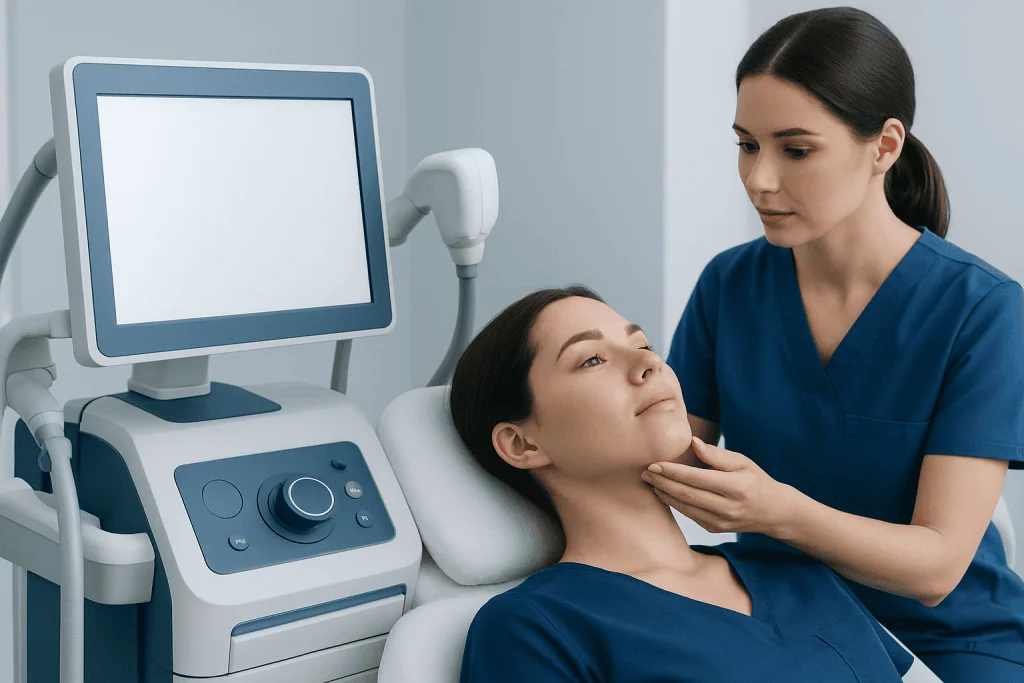
People choose chin aesthetic treatment for many reasons. Some feel that the chin is too small or set back, which can make the nose appear larger or the lower face less defined. Others want to correct a chin that is pointy, square, asymmetrical, or irregular after injury or previous surgery.
Chin treatment may also help when a person wants a more defined side profile or a stronger transition between the chin and neck. In some cases, patients are looking for a modest adjustment rather than a major transformation, and they may prefer an option that can be tailored carefully.
The desire for treatment is often personal and appearance-related, but a specialist will also check whether the chin structure affects bite alignment, jaw function, or lip closure. This is important because the best aesthetic result usually depends on understanding the face as a whole rather than focusing on one feature in isolation.
Symptoms and Cosmetic Concerns

Chin concerns are usually not medical symptoms in the traditional sense, but they can still affect confidence and self-image. A person may notice that the chin looks small in photos, that the lower face seems less defined than desired, or that the side profile feels out of balance.
Common concerns include a recessed chin, lack of projection, asymmetry, a dimpled or irregular surface, or an overly short appearance in the lower face. Some people also feel that their chin draws attention away from other facial features they want to emphasize.
After evaluation, a specialist may describe the issue using terms such as retrusive chin, underprojection, or disproportion. These descriptions help guide treatment planning and make it easier to choose between fillers, implants, or surgical correction.
Causes and Risk Factors
Chin shape is influenced by genetics, facial growth patterns, and the relationship between the chin bone and the jaw. Some people are naturally born with a smaller or more recessed chin, while others notice asymmetry or contour changes as the face matures.
Injury, prior surgery, congenital differences, and certain bite or jaw relationships can also affect chin appearance. In some situations, the chin may look less prominent because of the way the teeth and jaw are positioned, which is why an assessment may involve more than just the skin surface.
Risk factors for choosing one treatment over another are usually practical rather than medical. These include skin thickness, the amount of soft tissue in the lower face, the degree of correction needed, and whether the person wants a temporary or permanent result. Smoking, uncontrolled medical conditions, and poor healing history may also influence surgical planning.
Diagnosis and Consultation
Chin aesthetic treatment begins with a consultation. The specialist usually examines the face from multiple angles, asks about the person’s goals, and reviews medical history, prior procedures, allergies, medications, and healing concerns. Photographs may be taken to help with planning and to compare outcomes later.
The doctor may assess the chin in relation to the nose, lips, and jawline and may look at the bite, profile, and neck angle. If a structural issue is suspected, imaging or dental evaluation may be recommended to understand how bone position contributes to the appearance.
This visit is also the time to discuss whether the person wants a reversible option, such as fillers, or a longer-lasting change, such as an implant or surgery. Patients should feel comfortable asking about recovery, scarring, possible asymmetry, and the expected degree of change. A clear consultation is the foundation of a natural-looking result.
Treatment Options
Chin fillers are a non-surgical option that uses injectable dermal fillers to add shape and projection. They are often used for people who want to try a change before committing to surgery, or for those who prefer a short procedure with little downtime. Fillers can improve contour, but the result is temporary and may need maintenance over time.
Chin implants provide a more lasting change by placing a biocompatible implant over the chin bone. This option can be suitable when a person wants a clearer improvement in projection or structure. Recovery is usually longer than with fillers, and the treatment is more invasive, but it may be appropriate for those who want a stable, durable result.
Chin surgery can mean different procedures depending on the problem. In some cases, the bone is reshaped or repositioned, while in others the surgeon may combine chin correction with jaw-related procedures for better facial harmony. Surgical planning is highly individualized, and the chosen technique depends on anatomy, goals, and the specialist’s recommendation. Some patients considering broader facial balance may also benefit from a discussion of brow lift or oculoplastic treatment when the upper face or eye area is part of the overall aesthetic plan.
In a careful consultation, the specialist explains the advantages and limitations of each approach. The right choice often depends on how much correction is needed, how long the result should last, and how much recovery time the person can comfortably allow.
Recovery, Prevention, and Self-care
Recovery depends on the method used. After fillers, there may be mild swelling or tenderness for a short time, and many people return to daily activities quickly. After implants or surgery, recovery is usually more involved and may include swelling, bruising, temporary tightness, and activity limits while healing progresses.
Good self-care after treatment usually includes following the surgeon’s instructions, avoiding pressure on the chin when advised, keeping follow-up appointments, and watching for changes that seem unusual. It is also sensible to avoid smoking, because smoking can interfere with healing. People should not massage, manipulate, or apply products to the area unless their clinician says it is appropriate.
Prevention in this context means planning well rather than avoiding treatment. Choosing a qualified specialist, discussing realistic expectations, and understanding the difference between temporary and permanent options can reduce the chance of disappointment. For international patients seeking coordinated care, Acibadem International’s multidisciplinary specialists in JCI-accredited hospitals can diagnose and treat chin aesthetic concerns as part of a personalized plan.
When to See a Doctor
A doctor should be consulted when a person is considering any chin enhancement and wants to understand the safest, most suitable option. This is especially important when the concern involves facial asymmetry, bite changes, prior facial injury, or a desire for a permanent correction.
Medical review is also important if the person notices pain, numbness, jaw difficulty, or a rapidly changing facial contour, because these features may need evaluation beyond aesthetics. A specialist can help determine whether the concern is mainly cosmetic or whether an underlying structural issue should be addressed.
People should seek prompt advice after treatment if swelling, redness, increasing discomfort, or other unexpected changes develop. Even when a procedure is straightforward, follow-up care helps ensure the area is healing as expected and that the final result aligns with the original plan.
Frequently asked questions
Which is better for chin enhancement: fillers or implants?
The better choice depends on the person’s goals, anatomy, and how long they want the result to last. Fillers are temporary and useful for subtle changes or a trial look, while implants provide a more durable structural improvement. A specialist can help match the method to the face and the desired degree of correction.
Is chin filler permanent?
No. Chin fillers are temporary and gradually break down over time, so maintenance treatments may be needed. The exact duration varies by product and individual factors, which is why the treating doctor should explain what to expect.
Does chin surgery leave a scar?
Some chin surgeries involve small incisions, and any incision can leave a scar. Surgeons usually place incisions in ways that make them as discreet as possible, but the appearance of the scar depends on healing and the exact procedure used.
Can chin treatment improve the side profile?
Yes, many people seek chin treatment mainly to improve profile balance. A small change in chin projection can make the nose, lips, and jawline look more proportionate, but the result should still look natural to the rest of the face.
How long is recovery after chin implants or surgery?
Recovery varies with the procedure, the person’s healing response, and whether any additional facial work is done at the same time. Fillers usually involve little downtime, while implants and surgery generally require a longer recovery period and more careful aftercare.
Who decides whether someone needs fillers, an implant, or surgery?
A qualified facial plastic, plastic surgery, or maxillofacial specialist usually makes that recommendation after examining the face and discussing goals. The decision is based on anatomy, desired permanence, and whether the change is subtle or structural.
References
- American Society of Plastic Surgeons
- Mayo Clinic
- British Association of Aesthetic Plastic Surgeons
- Cleveland Clinic
This article is for general information only and is not a substitute for professional medical advice. Please consult a qualified doctor about your individual situation.
Chin Aesthetic in Turkey — costs, top hospitals & a free quote
JCI-accredited · board-certified surgeons · reply within 24h
Add us as a Preferred Source to see more of our trusted health content across Google Search, AI Overviews and Discover.

Related Treatments
Related Conditions
More from the Health Library



Related Specialists

Prof. Dr. Şükrü Yazar
Aesthetic Plastic & Reconstructive Surgery
Assoc. Prof. Dr. Erdem Güven (m)
Aesthetic Plastic & Reconstructive Surgery
Prof. Dr. Hakan Ağır
Aesthetic Plastic & Reconstructive Surgery
Prof. Dr. Bülent Saçak
Aesthetic Plastic & Reconstructive Surgery