Coronary Angiography: Procedure, Risks, and Results
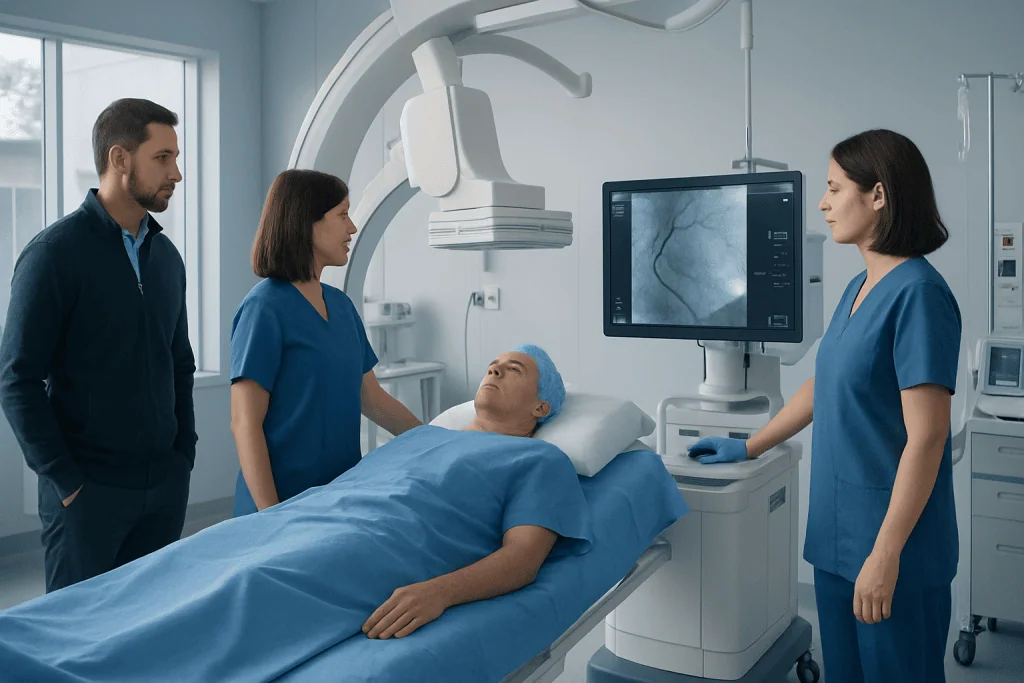
Coronary angiography is usually performed through a small catheter inserted in the wrist or groin and guided to the heart. The test helps diagnose coronary artery disease, evaluate chest pain, and guide treatment decisions such as medication, angioplasty, stenting, or bypass surgery.
Key Takeaways
- Coronary angiography is usually performed through a small catheter inserted in the wrist or groin and guided to the heart.
- The test helps diagnose coronary artery disease, evaluate chest pain, and guide treatment decisions such as medication, angioplasty, stenting, or bypass surgery.
- Most people remain awake during the procedure and can often go home the same day, depending on their condition and the findings.
- Risks are uncommon but can include bleeding, bruising, allergic reaction to contrast dye, kidney strain, abnormal heart rhythm, or, rarely, heart attack or stroke.
- Results are reviewed by a cardiologist, who explains whether the arteries are normal, narrowed, or blocked and what the next steps may be.
Coronary angiography is a diagnostic test that uses X-ray imaging and contrast dye to show how blood flows through the coronary arteries. It helps cardiologists identify narrowed or blocked arteries and plan the most appropriate treatment.
Overview
Coronary angiography, also called a coronary angiogram, is a medical imaging procedure used to look inside the coronary arteries. These arteries supply oxygen-rich blood to the heart muscle. If they become narrowed or blocked by fatty deposits, blood flow may be reduced, which can cause chest pain, shortness of breath, or a heart attack.
The procedure is a type of cardiac catheterization. A thin, flexible tube called a catheter is inserted into a blood vessel, usually in the wrist or groin, and gently guided toward the heart. A contrast dye is then injected through the catheter while X-ray images are taken. The dye makes the coronary arteries visible so the cardiologist can assess blood flow.
Coronary angiography is considered the reference test for seeing the coronary arteries directly. It is not a screening test for everyone, but it is valuable when symptoms, physical examination, blood tests, electrocardiogram findings, stress tests, or other imaging suggest that coronary artery disease may be present.
Why Coronary Angiography Is Done
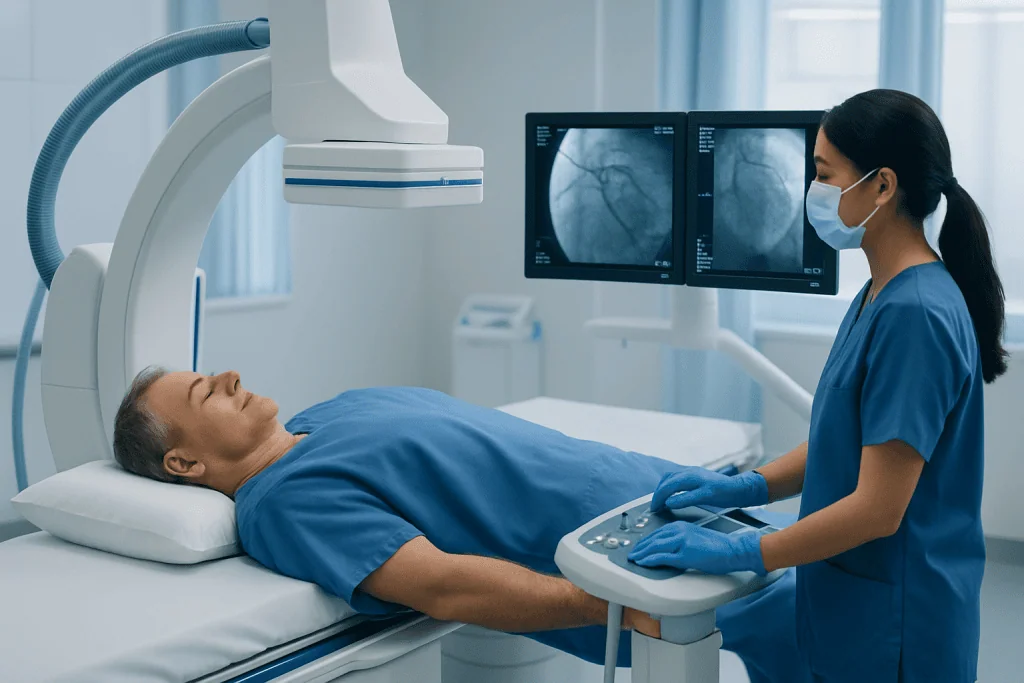
A cardiologist may recommend coronary angiography when there is a need to understand whether the coronary arteries are narrowed, where the narrowing is located, and how severe it is. This information helps guide decisions about treatment. In some cases, treatment such as balloon angioplasty or stent placement can be performed during the same procedure if it is medically appropriate.
Common reasons for coronary angiography include symptoms such as chest discomfort, pressure, tightness, unexplained shortness of breath, or pain that may spread to the arm, jaw, neck, back, or upper abdomen. It may also be used after abnormal results on a stress test, CT coronary angiography, echocardiogram, or other cardiac evaluation.
Coronary angiography may be performed urgently when a heart attack is suspected or confirmed. In non-urgent situations, it may be planned after careful assessment of symptoms, risk factors, and previous test results. The goal is to obtain clear information while choosing the safest and most useful approach for the patient.
Preparation Before the Procedure

Preparation depends on whether the procedure is scheduled or performed as an emergency. For a planned coronary angiogram, the patient is usually asked not to eat or drink for several hours beforehand. The medical team will review current medications, allergies, previous reactions to contrast dye, kidney function, and any history of bleeding problems.
Patients should tell their doctor if they take blood thinners, diabetes medications, supplements, or medicines affecting kidney function. The doctor may advise temporary changes, but patients should not stop prescribed medications unless instructed by a qualified healthcare professional. Blood tests, an electrocardiogram, and sometimes chest imaging may be done before the procedure.
It is also important to mention pregnancy or possible pregnancy, as X-rays are used during the test. Before the angiogram, the care team explains the procedure, possible benefits and risks, and obtains informed consent. An intravenous line is placed, and mild sedation may be given to help the patient relax while remaining able to respond to instructions.
What Happens During Coronary Angiography
Coronary angiography is usually performed in a catheterization laboratory by a cardiologist and a specialized team. The patient lies on an X-ray table while heart rhythm, blood pressure, and oxygen levels are monitored. The skin at the access site, most often the wrist or groin, is cleaned and numbed with local anesthetic.
A small tube is inserted into the artery, and the catheter is guided through the blood vessels to the openings of the coronary arteries. Patients generally do not feel the catheter moving inside the vessels. When contrast dye is injected, some people feel a brief warm sensation or flushing, which typically passes quickly.
X-ray images are taken from several angles to show the coronary arteries clearly. The patient may be asked to hold their breath for a few seconds or remain still while images are captured. If a significant narrowing is found and the situation is suitable, the cardiologist may discuss or proceed with angioplasty and stent placement, depending on prior consent, urgency, and clinical judgement.
After the imaging is complete, the catheter is removed. Pressure, a closure device, or a special wrist band is used to prevent bleeding from the access site. The patient is then moved to a recovery area for monitoring.
Possible Risks and Safety Considerations
Coronary angiography is a commonly performed procedure, and serious complications are uncommon. However, as with any invasive test, it has potential risks. The cardiology team weighs these risks against the expected benefit of obtaining accurate information about the heart arteries.
Possible risks include bruising, bleeding, swelling, or discomfort at the catheter insertion site. Some patients may have an allergic reaction to the contrast dye, ranging from mild itching or rash to more significant reactions that require treatment. Contrast dye can also affect kidney function, especially in people with existing kidney disease, diabetes, dehydration, or other risk factors.
Less common complications include infection at the access site, damage to a blood vessel, abnormal heart rhythms, blood clots, heart attack, stroke, or the need for emergency treatment. Radiation exposure is kept as low as reasonably possible, and the medical team uses protective measures and modern imaging techniques to reduce unnecessary exposure.
Patients can improve safety by giving a complete medical history, including allergies, kidney problems, previous contrast reactions, and all medications. After the procedure, following instructions about rest, hydration, wound care, and activity helps lower the chance of bleeding or other complications.
Understanding the Results
The cardiologist reviews the angiographic images to determine whether the coronary arteries are normal, mildly narrowed, significantly narrowed, or blocked. Results may show the location of plaque buildup, how many vessels are involved, and whether blood flow to the heart muscle is reduced.
If the arteries are normal or show only mild narrowing, treatment may focus on medication, lifestyle measures, and management of risk factors such as high blood pressure, high cholesterol, diabetes, smoking, and excess weight. If more significant narrowing is present, the cardiologist explains whether medication alone, angioplasty with stenting, or coronary artery bypass surgery may be the most appropriate option.
Angiography results are interpreted in the context of the whole patient, not as isolated pictures. Symptoms, heart function, blood test results, age, overall health, other medical conditions, and patient preferences all influence the treatment plan. Patients are encouraged to ask what the findings mean, what treatment choices exist, and what follow-up is needed.
Recovery and Self-Care After the Test
Recovery time varies depending on the access site, the patient’s health, and whether any treatment was performed during the procedure. Many people are observed for several hours and may go home the same day after a diagnostic coronary angiogram. Others may need to stay in the hospital, especially after urgent procedures or if angioplasty and stenting were performed.
The access site may feel tender or show mild bruising for a few days. Patients are usually advised to avoid heavy lifting, strenuous exercise, or sudden bending for a short period, particularly if the groin was used. Drinking fluids may be recommended to help flush contrast dye from the body, unless fluid intake is restricted for another medical reason.
General heart-healthy self-care may include taking prescribed medicines as directed, attending follow-up appointments, stopping smoking, eating a balanced diet, staying physically active within medical advice, and controlling blood pressure, cholesterol, and blood sugar. These steps can help reduce the risk of future heart problems, whether or not a blockage was found.
Patients should receive clear discharge instructions before leaving the hospital. Acibadem International’s multidisciplinary specialists and JCI-accredited hospitals diagnose and treat coronary artery disease for international patients, including evaluation, angiography, and follow-up planning when appropriate.
When to See a Doctor
People should seek medical advice if they have recurring chest discomfort, pressure, tightness, shortness of breath, unexplained fatigue with exertion, dizziness, or symptoms that are triggered by activity and improve with rest. These symptoms can have several causes, but they should be assessed, especially in people with risk factors for coronary artery disease.
Urgent medical attention is needed for severe chest pain, chest pain lasting more than a few minutes, pain spreading to the arm, jaw, neck, back, or upper abdomen, sudden shortness of breath, fainting, sweating, nausea, or a feeling of impending collapse. These may be signs of a heart attack and should not be ignored.
After coronary angiography, patients should contact their healthcare team if they notice increasing pain, swelling, redness, warmth, drainage, or bleeding at the catheter site. They should also seek urgent care for a cold or numb limb, rapidly expanding bruising, fever, chest pain, shortness of breath, weakness on one side of the body, or trouble speaking.
Frequently asked questions
Is coronary angiography painful?
Most patients do not describe the procedure as painful. The access site is numbed with local anesthetic, and patients may feel pressure during catheter insertion. A brief warm sensation can occur when contrast dye is injected.
How long does a coronary angiogram take?
The imaging part often takes less than an hour, but the total hospital time is longer because of preparation and recovery monitoring. If angioplasty or stent placement is performed at the same time, the procedure and recovery may take longer.
Can coronary angiography treat a blockage?
Coronary angiography itself is a diagnostic test, but treatment can sometimes be performed during the same catheterization. If a suitable narrowing is found, the cardiologist may use balloon angioplasty and place a stent to improve blood flow, depending on the clinical situation.
What is the difference between coronary angiography and CT coronary angiography?
Traditional coronary angiography uses a catheter placed inside an artery and provides direct images of the coronary arteries. CT coronary angiography is a non-invasive scan that uses contrast dye through a vein and CT imaging. The best choice depends on symptoms, risk level, previous test results, and the doctor’s assessment.
When can normal activities be resumed after coronary angiography?
Many people resume light daily activities within a day or two after a diagnostic angiogram, but instructions vary. The doctor may recommend avoiding heavy lifting and strenuous exercise for a short period, especially if the groin was used or if a stent was placed.
Are the results available immediately?
The cardiologist can often explain the main findings soon after the procedure because the images are viewed in real time. A more detailed report may follow after review. Patients should ask what the findings mean and what treatment or follow-up is recommended.
This article is for general information only and is not a substitute for professional medical advice. Please consult a qualified doctor about your individual situation.
Coronary Angiography in Turkey — costs, top hospitals & a free quote
JCI-accredited · board-certified surgeons · reply within 24h
Add us as a Preferred Source to see more of our trusted health content across Google Search, AI Overviews and Discover.
Check your numbers in seconds
BMI, calories, due date, blood pressure and 30+ more clinical calculators — free, instant, doctor-reviewed ranges.

Cardiology Department
Diagnosis and treatment of heart and vascular conditions, from prevention to advanced interventional procedures.
93 specialists in this unitRelated Treatments
Related Conditions
More from the Health Library

Cardiac Ablation: Who It Helps and What to Expect During Recovery

Heart Attack Warning Signs and Emergency Treatment

Syncope: Fainting Causes, Heart Evaluation, and Safety Steps

Heart Valve Disease: Repair vs Replacement

Anemia Before Coronary Bypass Surgery: Testing, Risks, and Treatment Planning