Dental Bridge vs Denture: Which Option May Suit Your Missing Teeth?
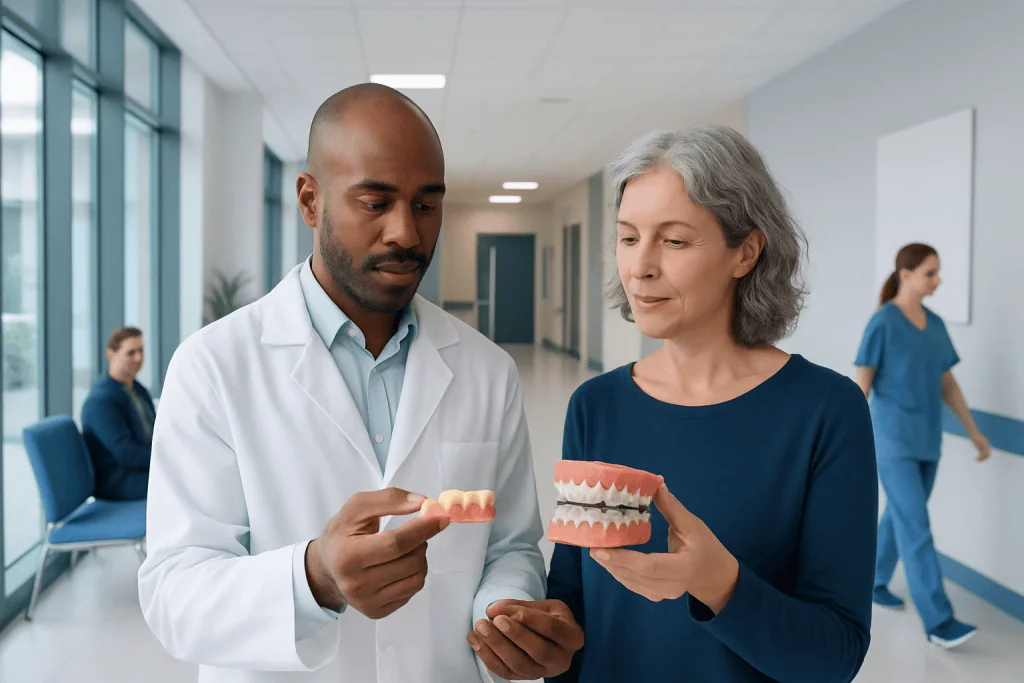
A dental bridge is fixed in place, while most dentures are removable. Bridges often suit one or a few missing teeth when nearby support teeth are healthy enough.
Key Takeaways
- A dental bridge is fixed in place, while most dentures are removable.
- Bridges often suit one or a few missing teeth when nearby support teeth are healthy enough.
- Dentures may be a practical choice when several or all teeth are missing.
- Comfort, cleaning routine, jawbone changes, and budget all affect the best choice.
- A dentist evaluates gums, bone, bite, and remaining teeth before recommending treatment.
Choosing between a dental bridge and a denture depends on the number of missing teeth, the health of nearby teeth and gums, comfort preferences, and long-term goals. Both options can restore appearance and chewing function, but each has different advantages, limitations, and care needs.
Overview: understanding dental bridges and dentures
When teeth are missing, common replacement options include a dental bridge or a denture. Both are designed to fill spaces in the smile, improve chewing, support clearer speech, and help maintain facial appearance. The right choice depends on each person’s dental condition, lifestyle, and treatment priorities.
A dental bridge is a fixed restoration that replaces one or more missing teeth by attaching an artificial tooth, or teeth, to neighboring teeth or to implants. Traditional bridges often use crowns placed on the teeth beside the gap. Because a bridge stays in the mouth, many people like the sense of stability it can provide.
A denture is a removable appliance that replaces several missing teeth or a full set of teeth. Partial dentures replace some missing teeth and usually attach around remaining natural teeth. Full dentures replace all teeth in the upper or lower jaw. Some dentures can also be supported by implants for improved retention.
Neither option is universally better. Instead, the best solution depends on how many teeth are missing, the condition of the remaining teeth and gums, jawbone support, appearance goals, manual dexterity for cleaning, and the advice of a qualified dental professional.
How a dental bridge differs from a denture
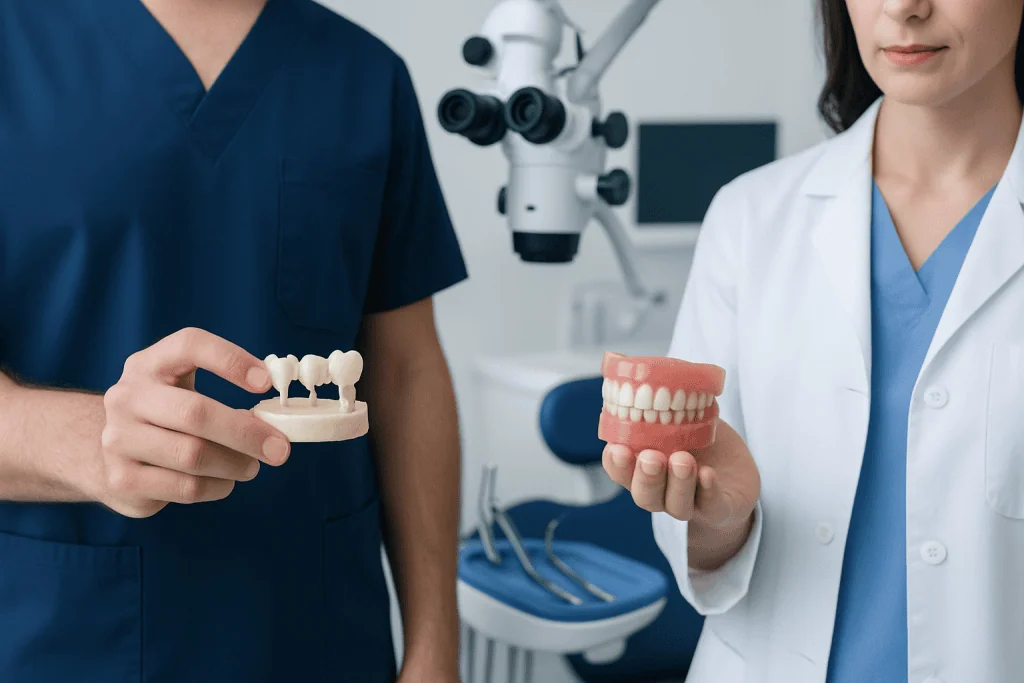
The main difference is how the restoration is worn. A bridge is usually fixed and is removed only by a dentist. A denture is usually removable and can be taken out for cleaning and, in many cases, at night. This difference affects comfort, daily routine, and how natural the replacement may feel during eating and speaking.
Bridges are often used when one tooth or a small number of teeth are missing in a row. They rely on support from adjacent teeth or implants. In many cases, treatment also involves dental crowns on the neighboring teeth to anchor the bridge securely. This can create a stable result, but it may require reshaping healthy tooth structure.
Dentures are often chosen when many teeth are missing, when missing teeth are spread across different areas, or when there are not enough healthy support teeth for a bridge. Partial dentures may be made from acrylic, metal, or flexible materials. Full dentures rest on the gums and are shaped to fit the mouth as closely as possible.
Appearance can be good with both options when they are carefully designed. Advances in digital dentistry have also helped improve fit, planning, and smile design for many patients. Still, each restoration feels different in the mouth, so personal preference matters as much as technical suitability.
Benefits and limitations of a dental bridge
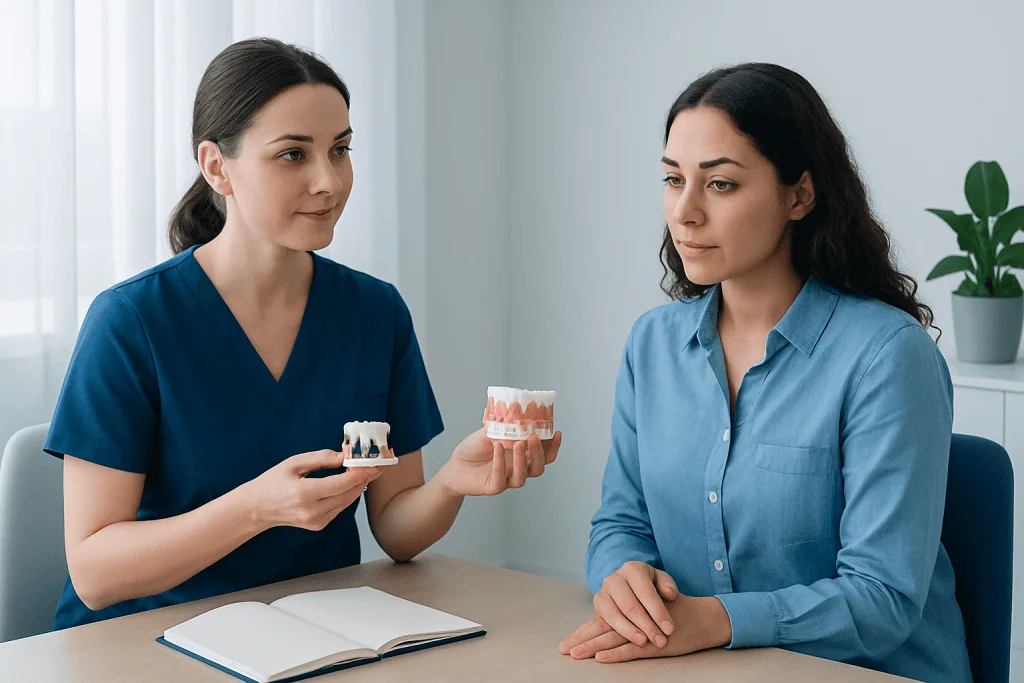
A dental bridge can offer a natural-looking, fixed solution for replacing missing teeth. Many people appreciate that it does not need to be removed for routine cleaning and that it can feel more similar to natural teeth than a removable appliance. For suitable candidates, a bridge can restore chewing efficiency and help prevent nearby teeth from drifting into the empty space.
Bridges may also be completed relatively efficiently compared with some other options. Once the supporting teeth are prepared and impressions are taken, the final bridge is placed and adjusted for bite and comfort. For a person missing one tooth with strong neighboring teeth, this can be a very practical solution.
However, bridges have limitations. A traditional bridge often requires the dentist to reduce the size of the teeth next to the gap so crowns can be placed over them. If those teeth are healthy, some patients prefer to preserve them if possible. Bridges also do not replace the tooth root, so they may not prevent jawbone changes beneath the missing tooth area over time.
Long-term success depends on careful cleaning and healthy gums. Food and plaque can collect around the margins and beneath the bridge, increasing the risk of decay or gum disease around the support teeth. People with active gum problems, such as bleeding gums, may need treatment before a bridge can be considered.
Benefits and limitations of dentures
Dentures can be an effective way to replace multiple missing teeth or a complete dental arch. They are usually less invasive than fixed bridge treatment because they do not necessarily require preparation of neighboring teeth. They can also restore facial support when many teeth have been lost, helping the lips and cheeks look fuller.
Partial dentures can be especially helpful when missing teeth are located in several areas of the mouth. Full dentures may be recommended if all teeth in one arch are missing or cannot be saved. For some people, dentures offer a practical path to restored function when remaining teeth are too weak or too few to support a bridge.
At the same time, dentures may require an adjustment period. They can feel bulky at first, and speaking or chewing may take practice. Lower dentures in particular may feel less stable because they have a smaller surface area for support. Over time, changes in the gums and jawbone can affect how well dentures fit, making relining or replacement necessary.
Removable dentures also need daily care and careful storage. They should be cleaned regularly and handled gently to avoid breakage. If fit becomes loose, irritation and sore spots may develop. In some cases, a dentist may discuss implant-supported alternatives such as dental implants to improve stability.
Who may be a better candidate for each option
A bridge may suit a person who is missing one tooth or a few neighboring teeth, has healthy teeth on either side of the gap, and wants a fixed restoration. It may also appeal to those who prefer not to remove their replacement teeth each day. Good gum health and reliable home care are important because the supporting teeth must remain strong over time.
A denture may suit someone who is missing many teeth, has gaps in different parts of the mouth, or does not have enough healthy neighboring teeth to support a bridge. It may also be chosen when a person wants a removable option or when anatomy, cost considerations, or general oral condition make a bridge less practical.
The choice can be more complex when gum disease, tooth decay, or bone loss is present. Before any replacement is made, the dentist will assess whether other problems need treatment first. This may involve improving oral hygiene, treating damaged teeth, or addressing bite-related concerns through general dentistry care.
Age alone does not determine the best treatment. Younger and older adults can do well with either approach if the indication is appropriate. What matters most is the condition of the mouth, expected long-term maintenance, and whether the person can comfortably care for the restoration each day.
Diagnosis and dental evaluation before treatment
Before recommending a bridge or denture, the dentist performs a full oral examination. This usually includes checking the teeth, gums, bite, jaw relationship, and any signs of infection or inflammation. Dental X-rays and, in some cases, digital scans help show bone levels, root condition, and the amount of support available for treatment.
The dentist will also ask about symptoms and goals. Important details include difficulty chewing, speech changes, looseness of teeth, jaw soreness, and whether appearance is a major concern. Previous dental work, teeth grinding, dry mouth, and certain medical conditions can also affect the treatment plan.
If teeth are missing because of decay, trauma, or gum disease, the underlying cause should be addressed to protect the long-term result. For example, someone who lost teeth due to an accident may need care related to dental emergency and trauma before replacement options are finalized. Treating active disease first helps reduce complications later.
The evaluation stage is also the time to discuss expectations honestly. A bridge may feel more fixed, but it is not ideal in every situation. A denture may be more versatile, but it may need adjustment as the mouth changes. Clear planning helps patients choose the option that best balances function, appearance, maintenance, and cost.
Caring for bridges and dentures
Good daily care is essential for both bridges and dentures. A bridge should be brushed just like natural teeth, and the area underneath the artificial tooth must also be cleaned. Dentists often recommend floss threaders, special brushes, or water-cleaning devices to remove food and plaque from hard-to-reach spaces.
Dentures should be cleaned every day with products recommended by a dental professional. They should be rinsed after meals when possible and brushed gently to remove debris. If the denture is removable, it is usually taken out at night unless the dentist advises otherwise. The gums, tongue, and any remaining teeth also need routine cleaning.
Regular dental visits remain important even after missing teeth have been replaced. The dentist checks whether the bridge margins are healthy, whether the denture fit has changed, and whether the bite is balanced. Professional dental hygiene support can help reduce plaque buildup, irritation, and preventable complications.
People should avoid trying to adjust or glue a broken bridge or denture at home. Poor-fitting appliances can irritate soft tissues and affect eating. If pain, looseness, cracking, bad odor, or pressure sores develop, a dentist should evaluate the problem rather than relying on temporary home fixes.
When to see a dentist and making the final decision
A dentist should be consulted when a tooth is missing, loose, badly damaged, or causing chewing and speech problems. Replacing missing teeth is not only about appearance. Empty spaces can affect bite balance, place extra stress on remaining teeth, and make cleaning more difficult. Early advice may help preserve more treatment options.
It is also important to seek care if an existing bridge or denture feels loose, painful, or no longer functions well. Ongoing soreness is not something a person should simply accept. Often, the fit or design can be adjusted, or another replacement option may better suit the mouth as conditions change over time.
The final decision between a dental bridge and a denture should be individualized. Some people value the fixed feel of a bridge. Others prioritize replacing several teeth at once with a removable prosthesis. In certain cases, implant-supported solutions or a combination approach may be discussed if they better match the person’s needs and anatomy.
For international patients seeking assessment and treatment, Acibadem International’s multidisciplinary specialists in JCI-accredited hospitals evaluate missing teeth and provide personalized dental care plans. A thoughtful consultation with a qualified dentist is the best way to decide which option offers the most comfortable, healthy, and practical long-term result.
Frequently asked questions
Is a dental bridge better than a denture?
Neither option is better for everyone. A bridge may be preferred for one or a few missing teeth when nearby support teeth are healthy, while a denture may be more suitable when many teeth are missing. The best choice depends on oral health, comfort, maintenance, and long-term goals.
Which feels more natural, a bridge or a denture?
Many people find a fixed bridge feels more like natural teeth because it stays in place. Dentures can also look natural, but they often require an adjustment period for speaking and chewing. Fit, design, and individual anatomy strongly affect comfort.
Can a denture replace just one missing tooth?
Yes, a partial denture can replace one missing tooth, especially if a bridge is not a good option. However, for a single missing tooth, dentists may also consider a bridge or an implant-supported crown depending on the surrounding teeth and bone. The recommendation is based on what will be healthiest and most stable over time.
How long do bridges and dentures last?
Both can last for years with proper care, but neither lasts forever. Bridges may need replacement if the support teeth develop decay or gum disease, while dentures may need relining or remaking as the gums and jawbone change. Regular dental checkups help extend their lifespan.
Are dentures cheaper than bridges?
In many cases, dentures may have a lower upfront cost, especially when several teeth are missing. Bridges can be more costly per area because they are fixed restorations and may involve crowns on neighboring teeth. Actual cost varies by materials, complexity, and the overall treatment plan.
Do bridges or dentures affect eating?
Both aim to improve chewing compared with leaving teeth missing. A bridge often feels steadier for biting, while dentures may require practice and gradual adaptation, particularly with harder foods. Dentists usually recommend starting with softer foods after placement and building confidence gradually.
References
- American Dental Association
- National Institute of Dental and Craniofacial Research
- NHS
- Mayo Clinic
- FDI World Dental Federation
This article is for general information only and is not a substitute for professional medical advice. Please consult a qualified doctor about your individual situation.
Dental Bridge in Turkey — costs, top hospitals & a free quote
JCI-accredited · board-certified surgeons · reply within 24h
Add us as a Preferred Source to see more of our trusted health content across Google Search, AI Overviews and Discover.

Dental & Oral Health
Full-scope dental care from implants and aesthetics to oral and maxillofacial surgery.
151 specialists in this unitRelated Treatments
More from the Health Library



Related Specialists

Assoc. Prof. Dr. Ferit Bayram
Oral & Dental Health
Assoc. Prof. Dr. Yeliz Çavuşoğlu Yüce
Oral & Dental Health
Assoc. Prof. Dr. Mutlu Keskin
Oral & Dental Health
Prof. Dr. Ülkü Noyan
Oral & Dental Health