Deviated Septum: Nasal Obstruction and Septoplasty Explained

A deviated septum is common and may be present from birth or develop after nasal injury. Symptoms can include one-sided nasal blockage, congestion, nosebleeds, snoring, and reduced airflow during exercise or sleep.
Key Takeaways
- A deviated septum is common and may be present from birth or develop after nasal injury.
- Symptoms can include one-sided nasal blockage, congestion, nosebleeds, snoring, and reduced airflow during exercise or sleep.
- Diagnosis is usually made by an ENT specialist using a medical history, nasal examination, and sometimes nasal endoscopy or imaging.
- Medications can reduce swelling from allergies or inflammation, but they cannot straighten the septum itself.
- Septoplasty is a surgical procedure designed to reposition or remove obstructing parts of the septum to improve nasal airflow.
A deviated septum occurs when the wall between the two nasal passages is off-center, which can contribute to a blocked nose, mouth breathing, snoring, or recurrent sinus symptoms. Many cases are managed with medicines and self-care, while septoplasty may be considered when structural blockage causes persistent breathing difficulty.
Overview
The nasal septum is the thin wall of cartilage and bone that separates the right and left nasal passages. Ideally, it sits near the center of the nose, allowing air to flow through both sides. A deviated septum means this wall is shifted, bent, or irregular in shape. In some people, the deviation is mild and causes no symptoms; in others, it narrows one or both nasal passages and contributes to ongoing nasal obstruction.
A deviated septum can be present from birth or develop after an injury to the nose, including sports accidents, falls, or previous nasal trauma. It is also possible for normal growth of the nose and face to make an existing deviation more noticeable over time. Because the inside of the nose also contains soft tissues called turbinates, even a moderate septal deviation can feel worse when allergies, infection, or irritation cause swelling.
Many people with a deviated septum describe a blocked nose that is worse on one side, difficulty breathing through the nose during sleep, or a habit of breathing through the mouth. Treatment depends on the severity of symptoms, the degree of structural obstruction, and whether other conditions such as allergic rhinitis or chronic sinusitis are also present.
Symptoms of a Deviated Septum

Symptoms vary widely. Some people discover they have a deviated septum during an ENT examination for another reason, while others seek care because nasal blockage affects daily comfort, sleep, exercise, or quality of life. The most typical symptom is nasal obstruction, which may be constant or may switch sides depending on congestion and the natural nasal cycle.
Common symptoms associated with a deviated septum include:
- Difficulty breathing through one or both nostrils
- A sensation of a persistently blocked nose
- Mouth breathing, especially during sleep
- Snoring or noisy breathing at night
- Dryness, crusting, or recurrent nosebleeds on the more exposed side
- Reduced tolerance for exercise because nasal breathing feels limited
- Facial pressure or recurrent sinus symptoms in some patients
A deviated septum does not always cause sinus infections, headaches, or sleep apnea by itself. However, it may contribute to poor airflow, difficulty clearing mucus, or sleep-related breathing discomfort in selected patients. When symptoms are persistent, an ENT specialist can assess whether the septum is the main cause or whether allergies, enlarged turbinates, nasal polyps, or other conditions are involved.
Causes and Risk Factors
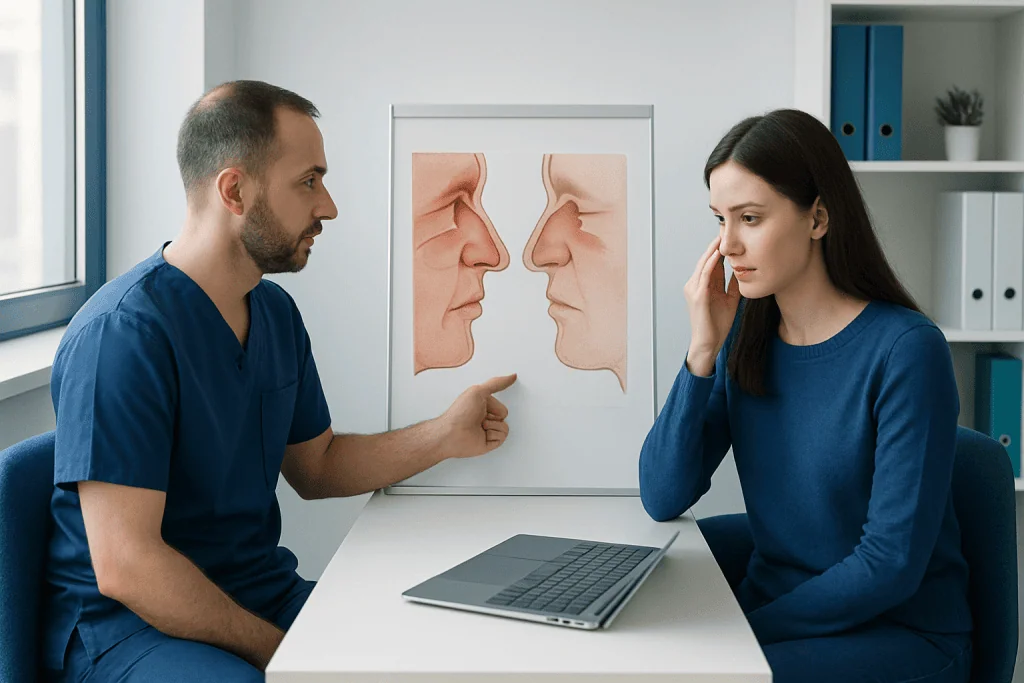
The most common causes of a deviated septum are developmental factors and trauma. Some people are born with a septum that is not centered, or the deviation develops as the nose grows during childhood and adolescence. In other cases, an injury shifts or fractures the nasal bones and cartilage, leaving the septum crooked after healing.
Risk factors include contact sports, accidents, falls, and any activity that increases the chance of nasal trauma. Not wearing appropriate protective equipment during sports may increase the risk of nasal injury. Previous nasal surgery or fractures can also affect the shape and support of the septum, although many patients with nasal injuries heal without developing significant obstruction.
It is important to understand that the severity of symptoms does not always match how the nose looks from the outside. A nose may appear straight externally while the internal septum is significantly deviated. Conversely, a visible bend in the outer nose does not always mean the internal airway is severely blocked. This is why a focused nasal examination is essential before deciding on treatment.
Diagnosis and ENT Evaluation
Diagnosis begins with a detailed medical history. The doctor may ask when the blockage started, whether it is worse on one side, what triggers congestion, whether there is a history of allergies or nasal injury, and whether symptoms affect sleep. Information about previous treatments, such as nasal sprays or antihistamines, helps determine whether inflammation is contributing to the obstruction.
During the examination, the ENT specialist inspects the outside and inside of the nose. A small instrument may be used to gently open the nostril and view the septum, turbinates, and nasal lining. In many cases, this is enough to identify a deviated septum. Nasal endoscopy, which uses a thin camera, may be recommended when the doctor needs a clearer view of the deeper nasal passages, sinus drainage areas, or possible polyps.
Imaging is not always necessary for a simple deviated septum. A CT scan may be considered if chronic sinusitis, complex anatomy, previous surgery, or additional sinus disease is suspected. The goal of evaluation is not only to confirm the deviation, but also to determine whether it explains the patient’s symptoms and whether medical or surgical treatment is appropriate.
Non-Surgical Treatment Options
Medicines cannot straighten a deviated septum, but they can reduce swelling and improve airflow when inflammation is part of the problem. This is especially common in people with allergic rhinitis, non-allergic rhinitis, or irritation from dry air, smoke, or pollution. A patient may notice meaningful improvement if congestion around the deviation is treated effectively.
Non-surgical options may include saline rinses or sprays to moisturize the nasal passages and help clear mucus. Doctors may recommend nasal corticosteroid sprays, antihistamines, or other allergy treatments depending on symptoms and examination findings. Decongestant sprays can provide short-term relief in some situations, but they should be used only as directed because overuse may worsen congestion.
Self-care measures may also help. Keeping the bedroom air comfortably humid, avoiding tobacco smoke, treating allergies, and using protective equipment during sports can reduce irritation and prevent further injury. If symptoms remain significant despite appropriate medical treatment, the structural narrowing caused by the septum may need to be discussed in more detail.
Septoplasty: What the Procedure Involves
Septoplasty is a surgical procedure that corrects the internal nasal septum to improve airflow. It is considered when a deviated septum causes persistent nasal obstruction, affects sleep or daily activities, contributes to recurrent symptoms, or interferes with access needed for other nasal or sinus procedures. The aim is functional improvement rather than cosmetic change, although septoplasty may be combined with nasal reshaping surgery in selected cases when both breathing and external nasal structure need attention.
During septoplasty, the surgeon works through the nostrils, so external incisions are usually not needed for standard cases. The nasal lining is lifted, and the bent portions of cartilage or bone are repositioned, reshaped, or partially removed while preserving support for the nose. The exact technique depends on the location and severity of the deviation. Sometimes turbinate reduction is performed at the same time if enlarged turbinates are also contributing to obstruction.
Septoplasty is commonly performed under general anesthesia or, in selected cases, local anesthesia with sedation. Most patients go home the same day, depending on the surgical plan and individual health factors. The surgeon provides instructions about nasal care, activity restrictions, follow-up visits, and when to restart any regular medicines. As with any operation, septoplasty has potential risks, including bleeding, infection, septal perforation, changes in sensation, persistent blockage, or the need for further treatment, but careful evaluation and follow-up help reduce these risks.
Recovery and Self-Care After Septoplasty
Recovery is usually gradual. Nasal stuffiness is common during the first days to weeks because of swelling, crusting, and healing tissues. Some patients have soft splints inside the nose for a short time, while others do not. Bruising is typically limited unless other nasal procedures are performed at the same time. Breathing often improves as swelling settles, but the full benefit may take several weeks or longer.
Patients are usually advised to rest, keep the head elevated, avoid heavy lifting and strenuous exercise for the period recommended by the surgeon, and avoid blowing the nose until it is safe to do so. Saline sprays or rinses may be recommended to keep the nose moist and support healing. It is important to follow all instructions about medications, cleaning, and follow-up appointments.
Recovery experiences differ, especially when septoplasty is combined with sinus surgery, turbinate surgery, or cosmetic rhinoplasty. Patients should contact their doctor if they develop heavy bleeding, fever, worsening pain, vision changes, clear watery drainage that is unusual, or any symptom that feels concerning. Most recovery concerns can be addressed effectively when discussed early with the care team.
When to See a Doctor
A person should consider seeing an ENT specialist if nasal obstruction is persistent, mainly affects one side, interferes with sleep, or does not improve with appropriate allergy or congestion treatment. Evaluation is also recommended after a significant nasal injury, especially if breathing changes, the nose appears displaced, or swelling does not improve as expected.
Medical care is also appropriate when nasal blockage is associated with frequent nosebleeds, recurrent sinus infections, chronic facial pressure, reduced smell, or loud snoring with daytime tiredness. These symptoms may have several causes, and an examination helps identify the most suitable treatment. Not every blocked nose needs surgery, and not every deviated septum requires correction.
For international patients seeking evaluation, Acibadem International provides access to multidisciplinary ENT specialists and JCI-accredited hospitals for diagnosis and treatment planning, including septoplasty when appropriate. Patients should discuss expected benefits, alternatives, recovery, and possible risks with a qualified doctor before deciding on any procedure.
Frequently asked questions
Can a deviated septum heal or straighten on its own?
A deviated septum does not usually straighten on its own because it involves the shape and position of cartilage and bone. Symptoms may improve if swelling from allergies or infection is treated. When the structural blockage remains significant, septoplasty may be considered.
How can someone tell if nasal blockage is from a deviated septum or allergies?
Allergies often cause sneezing, itching, watery discharge, and congestion that changes with seasons or triggers. A deviated septum more often causes a persistent sense of blockage, frequently worse on one side. Many people have both, so an ENT examination is the best way to identify the main cause.
Is septoplasty the same as rhinoplasty?
No. Septoplasty is performed to correct the internal septum and improve nasal breathing. Rhinoplasty changes the external shape of the nose. In some patients, both procedures may be combined when functional and structural or cosmetic concerns are present.
Will septoplasty completely stop snoring?
Septoplasty may reduce snoring in some people if nasal obstruction is a major contributor. However, snoring can also come from the throat, soft palate, tongue position, weight-related factors, or sleep apnea. A doctor may recommend further evaluation if snoring is loud, frequent, or associated with pauses in breathing or daytime sleepiness.
Is septoplasty painful?
Most patients describe pressure, congestion, and mild to moderate discomfort rather than severe pain. Symptoms are usually managed with the medications and care instructions provided by the surgeon. Pain that worsens or is not controlled should be reported to the medical team.
How long does it take to breathe better after septoplasty?
Some improvement may be noticed once early swelling and any internal splints are resolved. However, nasal tissues continue to heal over several weeks, and the final breathing result may take longer. Follow-up visits help the surgeon monitor healing and address crusting or swelling.
Can a deviated septum come back after surgery?
Septoplasty aims to create a straighter, more open airway, and results are generally stable when healing is uncomplicated. However, persistent swelling, scar tissue, cartilage memory, or a new nasal injury can affect breathing later. If symptoms return, an ENT specialist can reassess the nose and discuss options.
References
- American Academy of Otolaryngology-Head and Neck Surgery
- Mayo Clinic
- Cleveland Clinic
- National Health Service
- Merck Manual Professional Edition
This article is for general information only and is not a substitute for professional medical advice. Please consult a qualified doctor about your individual situation.
Septoplasty in Turkey — costs, top hospitals & a free quote
JCI-accredited · board-certified surgeons · reply within 24h
Add us as a Preferred Source to see more of our trusted health content across Google Search, AI Overviews and Discover.

Otorhinolaryngology (ENT)
Care for ear, nose, throat and head-and-neck conditions, including hearing and balance disorders.
126 specialists in this unitRelated Treatments
Related Conditions
More from the Health Library



Related Specialists
Prof. Dr. Nazim Korkut
Otorhinolaryngology
Prof. Dr. Hasan M. Tanyeri
Ear Nose & Throat
Prof. Dr. Güler Berkiten
Otorhinolaryngology
Assoc. Prof. Dr. A. Erdem Kilavuz
Ear Nose & Throat