Does LASIK Hurt? What You Feel During and After Surgery

LASIK is typically not painful during the procedure because the eye is numbed with drops. Many people feel pressure, touch, or brief discomfort rather than sharp pain.
Key Takeaways
- LASIK is typically not painful during the procedure because the eye is numbed with drops.
- Many people feel pressure, touch, or brief discomfort rather than sharp pain.
- Mild burning, tearing, grittiness, and light sensitivity are common for several hours after LASIK.
- Following aftercare instructions helps reduce discomfort and supports healing.
- Severe pain or worsening vision after LASIK is not typical and should be assessed promptly by an eye doctor.
Most people do not feel pain during LASIK because numbing eye drops are used before the procedure. After surgery, mild burning, watering, light sensitivity, or a gritty sensation are common for a few hours, and these symptoms usually improve quickly.
Overview: Does LASIK Hurt?
For most patients, LASIK does not hurt during the procedure. Before surgery begins, the ophthalmologist places numbing eye drops on the surface of the eye. These drops greatly reduce sensation, so patients usually feel pressure, gentle touch, or movement rather than pain.
LASIK is a type of laser vision correction used to treat refractive errors such as astigmatism, nearsightedness, and farsightedness. The procedure is quick, and the laser treatment itself usually lasts only seconds. Although the idea of eye surgery can feel stressful, many people are surprised by how brief and manageable the experience is.
After LASIK, it is common to notice temporary discomfort rather than true pain. The eyes may burn, water, sting, or feel as if something is in them for several hours. These symptoms are part of the normal early healing process and usually improve by the next day.
What LASIK Feels Like During Surgery
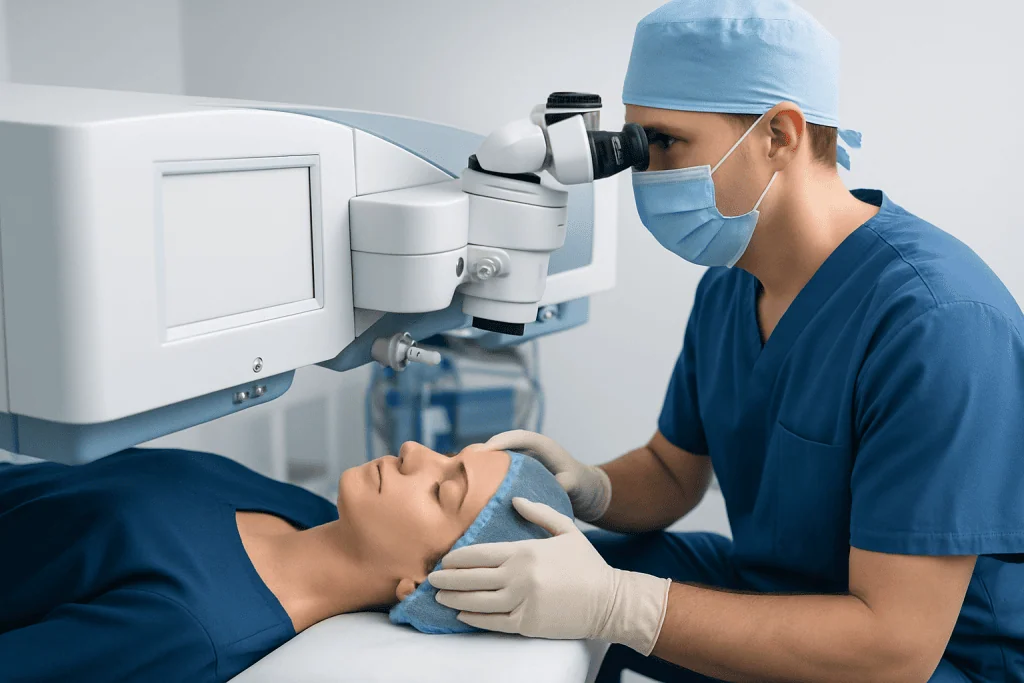
Patients are awake during LASIK, but the eye is numb. A small device is used to keep the eyelids open so the patient does not need to worry about blinking. This can feel unusual, but it should not be painful. The surgeon gives simple instructions throughout the procedure to help the patient stay comfortable and focused.
During the first steps, some people notice pressure around the eye for a short time. Vision may become blurry or dim temporarily while the surgeon positions the eye and prepares the cornea. When the laser is used, patients may hear clicking sounds and see lights, but they usually do not feel the laser itself.
Some patients describe the sensation as odd or slightly uncomfortable rather than painful. Anxiety can make normal sensations seem stronger, so it often helps to know what to expect beforehand. A careful preoperative eye examination and a clear conversation with the surgeon can help answer questions and reduce worry.
- Numbing drops prevent most pain sensations.
- Pressure is more common than pain.
- The treatment is usually very brief.
- The care team guides the patient step by step.
What to Expect Right After LASIK
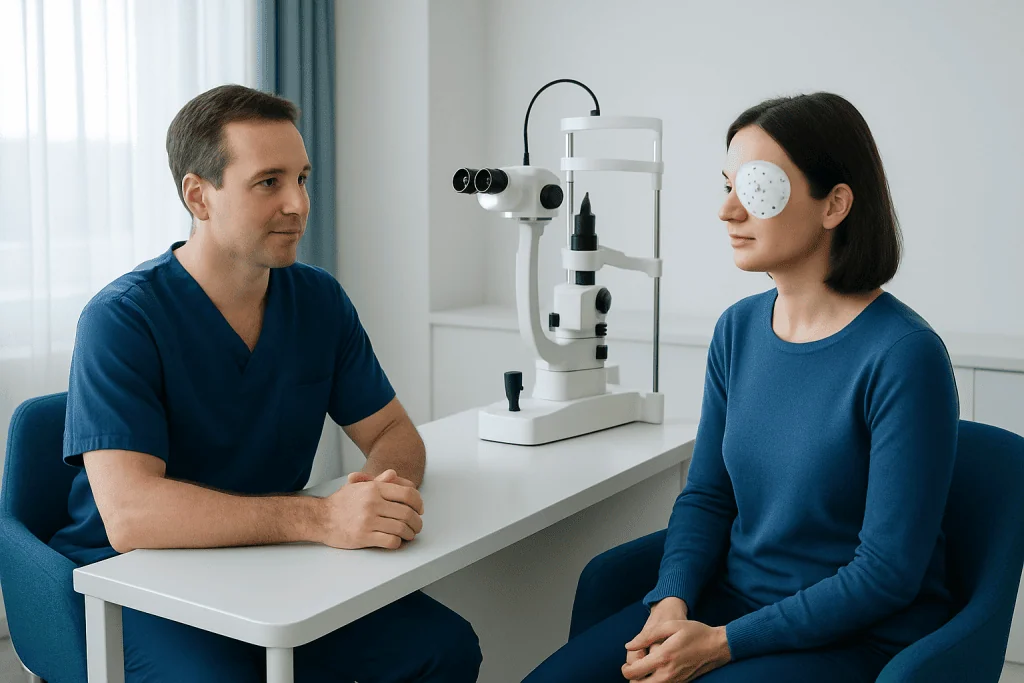
Once the numbing drops begin to wear off, mild discomfort is common. Patients may notice burning, tearing, stinging, watering, light sensitivity, or a gritty feeling, like an eyelash or speck of dust is in the eye. These symptoms are often strongest in the first few hours after surgery.
Vision may also be hazy or fluctuate early on. This can happen even when healing is going normally. Many people prefer to go home, rest with their eyes closed, and avoid screens for the first part of the day because this often makes the recovery period more comfortable.
Doctors usually provide lubricating drops and other postoperative instructions to support healing. The eye should not be rubbed, even if it feels irritated. Rubbing can disturb the healing corneal surface and may increase the risk of complications. Most patients feel significantly better by the next day, although mild dryness can last longer.
Why Some Discomfort Happens After LASIK
LASIK reshapes the cornea, the clear front surface of the eye, to improve how light focuses. To do this, the surgeon creates a thin corneal flap and uses a laser underneath it. Even though the procedure is precise and minimally painful, the eye still needs time to heal, and that healing process can cause temporary irritation.
Dry eye is one of the most common reasons for discomfort after LASIK. The surface nerves of the cornea can be temporarily affected during treatment, which may reduce tear signaling for a period of time. As a result, the eyes may feel dry, tired, or scratchy, especially when reading, using digital screens, or being in air-conditioned or windy environments.
Not every patient is the same. People with pre-existing dry eyes, sensitive eyes, or certain corneal conditions may notice more symptoms during recovery. This is why a detailed assessment is important before LASIK or other vision correction procedures such as LASEK/PRK. The surgeon uses this evaluation to decide whether a patient is a good candidate and which method may be the safest and most comfortable.
How Long Does LASIK Discomfort Last?
For many people, the most noticeable discomfort lasts only a few hours. By the following day, the eyes often feel much better, and many patients are able to return to everyday activities with the guidance of their doctor. However, mild dryness, glare, halos, or fluctuating vision can continue for days to weeks while healing progresses.
Recovery time varies from person to person. The speed of healing can depend on the eye’s natural tear film, the corneal surface, the degree of vision correction, and how closely aftercare instructions are followed. Some people recover very quickly, while others improve more gradually.
It is also helpful to remember that different laser vision correction methods can feel slightly different during recovery. For example, ReLEx SMILE and other procedures may have different healing patterns from LASIK. A surgeon can explain what is most likely based on the chosen technique and the patient’s eye health.
Ways to Reduce Discomfort and Support Healing
Good aftercare can make recovery smoother and more comfortable. Doctors usually recommend resting the eyes, using prescribed drops exactly as directed, and attending follow-up visits. Sunglasses can help with light sensitivity outdoors, and keeping the eyes well lubricated often eases dryness and grittiness.
Patients are usually advised to avoid eye rubbing, swimming, hot tubs, eye makeup for a period, and dusty or smoky environments during early healing. Taking breaks from screens can also help because staring at devices tends to reduce blinking, which may worsen dryness.
Simple self-care steps often help in the first days after surgery:
- Use lubricating or prescribed eye drops on schedule.
- Rest with the eyes closed if they feel irritated.
- Wear protective shields if advised for sleeping.
- Avoid getting water, soap, or shampoo in the eyes.
- Follow the surgeon’s guidance about returning to work, exercise, and driving.
If symptoms seem stronger than expected, it is best to contact the eye care team rather than guessing. In some cases, discomfort may relate to dryness or surface irritation that can be managed with additional care.
When Pain Is Not Typical
Mild discomfort is common after LASIK, but severe pain is not typical. Strong or worsening pain, marked redness, sudden drop in vision, increasing light sensitivity, or discharge should be evaluated promptly. These symptoms do not always mean a serious problem, but they should not be ignored.
Rare complications can include infection, significant inflammation, flap-related problems, or dryness that needs more treatment. Early assessment helps protect vision and allows the doctor to address problems quickly. Patients should always use the emergency contact instructions given by their clinic if they are concerned.
People considering laser vision correction should also know that LASIK is not the right option for everyone. The safest approach starts with a full assessment of the cornea, tear film, and overall eye health. At Acibadem International, multidisciplinary specialists in JCI-accredited hospitals evaluate and treat international patients with personalized ophthalmic care.
Is LASIK Right for Everyone?
LASIK can be an effective option for many adults, but candidacy depends on more than just a glasses prescription. The surgeon considers corneal thickness, eye surface health, refractive stability, pupil size, pregnancy status, and certain medical conditions. People with untreated dry eye or some corneal disorders may need a different approach.
Patients who are not ideal candidates for LASIK may still have other options. Depending on the eye findings, alternatives may include other laser procedures or different forms of vision correction. A detailed consultation helps match the treatment to the person’s eyes, lifestyle, and visual goals.
Questions about comfort are completely reasonable and should be part of the discussion before surgery. Knowing what LASIK feels like, what symptoms are normal, and when to ask for help can make the experience feel much less intimidating. An informed patient is often a more relaxed patient, which can also make the day of treatment easier.
Frequently asked questions
Is LASIK painful during the procedure?
Usually, no. Numbing eye drops are used before surgery, so most patients feel pressure or touch rather than pain. The procedure is typically very quick, which also helps make it easier to tolerate.
What does LASIK feel like right after surgery?
For several hours, the eyes may burn, tear, sting, or feel gritty. Light sensitivity and blurry vision are also common at first. These symptoms usually improve noticeably by the next day.
How long do dry eyes last after LASIK?
Dryness often improves over time, but the duration varies between patients. Some people notice it for days to weeks, while others may need longer-term lubrication. Following the surgeon's instructions and using recommended drops can help.
Can someone go blind from LASIK pain or complications?
Serious vision-threatening complications from LASIK are uncommon, especially when patients are carefully selected and followed closely. Pain itself does not cause blindness, but severe pain or sudden visual changes after surgery should be checked urgently. Prompt evaluation helps address any problem early.
When should someone call the doctor after LASIK?
A doctor should be contacted if there is severe pain, worsening redness, sudden decrease in vision, increasing sensitivity to light, or discharge. Mild irritation and tearing are common, but symptoms that are getting worse rather than better should be assessed. It is always safer to ask if something feels unusual.
Is LASIK more uncomfortable than wearing contact lenses?
The experience is different for each person. Some people find the brief LASIK recovery easier than ongoing irritation from contact lenses, while others are more sensitive during the first day after surgery. A doctor can help compare these options based on eye health and lifestyle.
This article is for general information only and is not a substitute for professional medical advice. Please consult a qualified doctor about your individual situation.
LASIK in Turkey — costs, top hospitals & a free quote
JCI-accredited · board-certified surgeons · reply within 24h
Add us as a Preferred Source to see more of our trusted health content across Google Search, AI Overviews and Discover.

Related Treatments
More from the Health Library

How to Choose a LASIK Surgeon for Safe Results

Vision Laser Treatment: Options for Clearer Sight

Blepharitis: Eyelid Inflammation and Long-Term Care

Femto LASIK Recovery: When Vision Clears and When You Can Travel

Strabismus: Crossed Eyes, Double Vision, and Treatment