Endovascular Aneurysm Repair Recovery: Hospital Stay, Walking, and Follow-Up Scans

Most patients start walking soon after EVAR, often within the first day if their care team advises it. Hospital stay is usually shorter than with open aneurysm surgery, but recovery time varies by age, overall health, and the reason for repair.
Key Takeaways
- Most patients start walking soon after EVAR, often within the first day if their care team advises it.
- Hospital stay is usually shorter than with open aneurysm surgery, but recovery time varies by age, overall health, and the reason for repair.
- Follow-up imaging is essential after EVAR because the stent graft must be checked over time.
- Mild tiredness, bruising, and groin discomfort are common in the early recovery period.
- Urgent medical attention is needed for severe pain, leg problems, chest symptoms, fainting, or signs of infection.
Endovascular aneurysm repair recovery is often faster than recovery after open surgery, but healing still requires careful monitoring. Most people go home within a few days, begin walking early, and need regular follow-up scans to make sure the stent graft stays in the right position and works well.
Overview of Endovascular Aneurysm Repair Recovery
Endovascular aneurysm repair, often called EVAR, is a minimally invasive procedure used to treat certain aortic aneurysms. During the procedure, doctors place a stent graft inside the artery through small incisions, usually in the groin, to reinforce the weakened section of the aorta. Because the abdomen or chest is not opened in the same way as in traditional surgery, recovery is often quicker and the hospital stay is usually shorter.
Even so, endovascular aneurysm repair recovery is not something to rush. The body still needs time to heal from the procedure, anesthesia, and the underlying vascular condition. Patients also need ongoing imaging after treatment because EVAR repairs require long-term surveillance to make sure the graft remains sealed and positioned correctly.
Recovery differs from person to person. Age, kidney function, heart health, mobility before surgery, and whether the aneurysm was treated electively or urgently can all affect how quickly someone returns to normal activities. People treated for an underlying blood pressure condition or other cardiovascular disease may also need closer monitoring during recovery.
What to Expect During the Hospital Stay
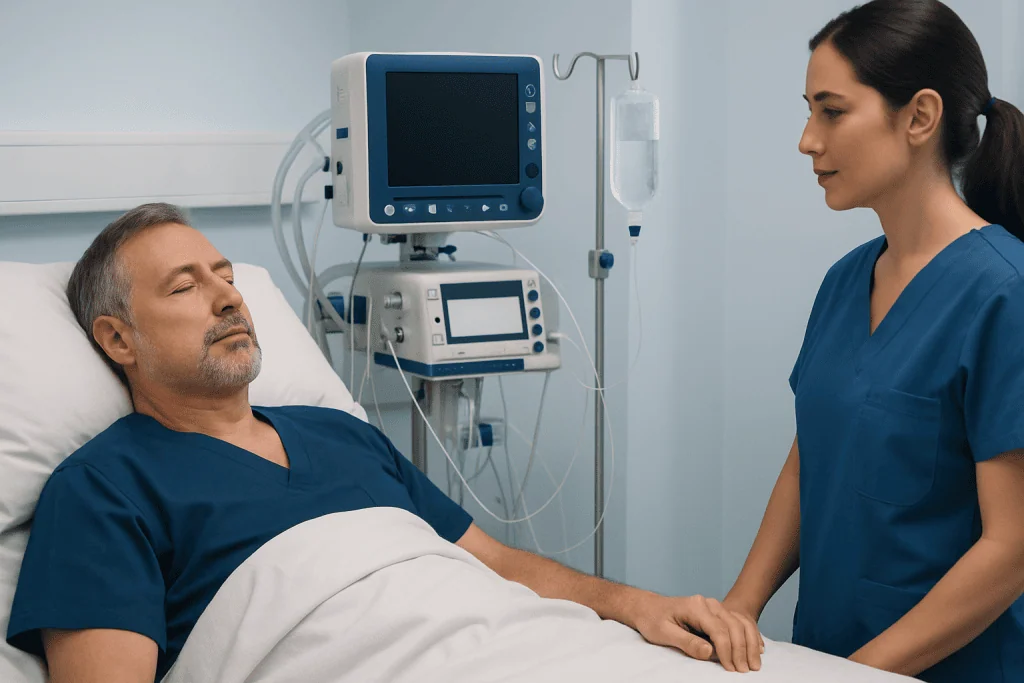
After EVAR, patients are moved to a recovery area where blood pressure, heart rhythm, oxygen level, urine output, and circulation in the legs are monitored. Some people spend time in a high-dependency or intensive care setting, especially if they have other medical problems or if the aneurysm repair was complex. Others may recover on a regular hospital ward once they are stable.
The length of stay is often about one to several days, although this varies. The care team checks for pain control, bleeding at the catheter entry sites, kidney function, bowel function, and the ability to eat, drink, and walk safely. Before discharge, doctors also review medications, wound care, and plans for follow-up imaging.
It is common to feel sleepy, tired, or mildly sore in the first day or two. There may be bruising, tenderness, or a small lump near the groin puncture site. The team may encourage compression stockings, breathing exercises, and early movement to lower the risk of complications such as clots, particularly in people with risk factors for deep vein thrombosis care.
Many patients also leave hospital with instructions about blood pressure control, smoking cessation, and activity limits. These measures support healing and help protect the repaired artery as well as the rest of the vascular system.
Walking and Early Activity After EVAR
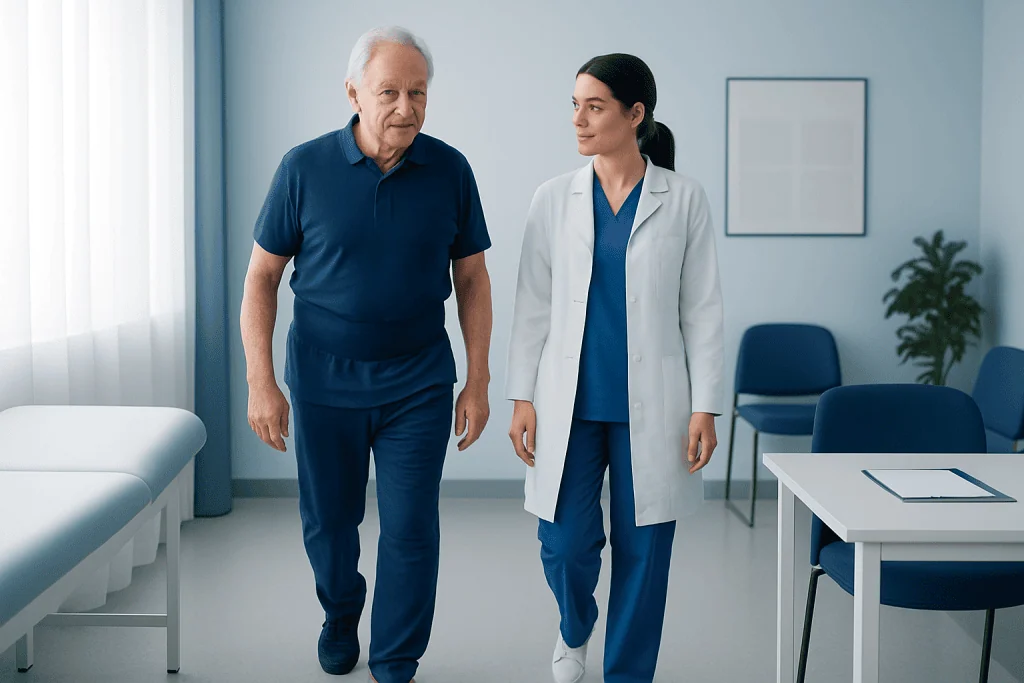
Walking is an important part of recovery after EVAR. In many cases, patients are helped out of bed and encouraged to walk within the first 24 hours, depending on their overall condition and the doctor’s advice. Early walking improves circulation, supports lung function, and reduces the chance of prolonged weakness from bed rest.
Activity usually begins gradually. A person may first sit up, stand, and take a few short walks with assistance. Over the next several days, walking distance is increased as comfort and stamina improve. Short, frequent walks are often better than one long walk in the early period.
Most people are advised to avoid heavy lifting, intense exercise, and straining for a period recommended by their surgeon. Driving may also be restricted for a short time, especially if pain medicines cause drowsiness or if sudden movement could stress the groin area. Gentle movement is encouraged, but it should be balanced with rest.
If a patient has reduced fitness before surgery, the recovery plan may be more structured. In some cases, supervised support similar to cardiac rehabilitation principles can help patients rebuild endurance safely, although the exact program depends on the center and the patient’s needs.
Common Symptoms During Recovery and Warning Signs
Some symptoms are expected in the days after EVAR. Fatigue is common, and many people feel less energetic than usual for a short time. Mild pain or soreness in the groin, bruising around the puncture sites, reduced appetite, and temporary changes in bowel habits can also occur. These usually improve gradually as healing progresses.
However, some symptoms should never be ignored. Severe or increasing abdominal, back, chest, or leg pain can be a warning sign. New numbness, weakness, coldness, or color change in a leg may suggest a circulation problem. Fever, redness, swelling, pus, or worsening pain at the incision site may point to infection.
Patients should also seek urgent medical help for shortness of breath, fainting, sudden dizziness, or heavy bleeding from the wound. Decreased urine output or significant swelling may need prompt medical assessment as well. Because EVAR involves the aorta and the blood vessels supplying the body, new symptoms should always be reported promptly.
It can also help to remember that not every ache means something serious. Many patients notice normal healing discomfort and become understandably anxious. Clear discharge instructions and timely contact with the care team can provide reassurance while making sure true warning signs are not missed.
Follow-Up Scans After EVAR
Follow-up scans are one of the most important parts of endovascular aneurysm repair recovery. Unlike open surgical repair, EVAR leaves a stent graft inside the artery that must be monitored over time. Imaging helps doctors confirm that blood is flowing through the graft properly, that the aneurysm sac is not enlarging, and that there are no leaks around the graft.
Patients are often scheduled for imaging in the early weeks or months after the procedure and then at regular intervals afterward. The exact timing varies according to the type of graft used, the anatomy of the aneurysm, kidney function, and findings on previous scans. Common imaging tests include CT angiography, ultrasound, and sometimes plain X-rays, depending on the surveillance plan.
One reason these scans matter is that some EVAR-related problems may not cause immediate symptoms. For example, an endoleak is persistent blood flow into the aneurysm sac outside the graft. Some endoleaks only need monitoring, while others may require another procedure. Imaging can also detect graft movement, blockage, or changes in the size of the aneurysm.
Patients should try not to miss follow-up appointments, even if they feel well. Long-term surveillance is a standard part of care after endovascular surgery and helps doctors address problems early. For many people, continued monitoring is the key reason EVAR remains a safe and effective option for aortic aneurysm treatment.
Treatment Aftercare, Medicines, and Long-Term Self-Care
Recovery does not end when the patient leaves the hospital. At home, the care team may recommend medicines to control blood pressure, cholesterol, or blood clotting, depending on the patient’s overall vascular health. It is important to take medications exactly as prescribed and to ask before stopping or changing them.
Wound care is usually straightforward, but the puncture sites should be kept clean and observed for swelling, redness, discharge, or expanding bruising. Showering may be allowed after a certain time, while soaking in baths or pools may need to wait until the skin has healed. Patients should follow their surgeon’s instructions closely.
Long-term self-care also focuses on protecting the heart and blood vessels. This often includes smoking cessation, regular walking, healthy eating, weight management, and careful blood pressure control. Management of conditions such as diabetes, kidney disease, or coronary artery disease can also improve overall outcomes after aneurysm repair.
People who have questions about exercise, travel, work, or sexual activity should ask their doctor directly, since advice can vary. Toward the end of recovery, some patients benefit from follow-up with vascular specialists, cardiologists, imaging teams, and primary care clinicians. At centers such as Acibadem International, multidisciplinary specialists in JCI-accredited hospitals diagnose and treat vascular conditions for international patients and coordinate follow-up care when needed.
When to See a Doctor After Going Home
Routine follow-up is expected after EVAR, but patients should contact a doctor sooner if something does not feel right. Ongoing nausea, inability to eat or drink, reduced urination, persistent constipation, worsening fatigue, or new swelling can all deserve medical advice. It is better to ask early than to wait and hope a symptom goes away on its own.
Urgent medical evaluation is especially important for sudden severe pain in the abdomen, back, chest, or groin; fainting; shortness of breath; heavy bleeding; fever; or signs of poor circulation in the legs. New confusion, weakness, or severe dizziness also need immediate attention. These symptoms are not typical parts of routine healing.
Patients should keep a written list of their medications, procedure date, surgeon’s name, and follow-up scan schedule. This can be helpful if they need emergency care away from their usual hospital. Family members or caregivers should also know what warning signs to watch for.
Regular review with a vascular specialist remains important even after the early recovery period has passed. EVAR is designed to reduce the risk from an aneurysm, but long-term success depends on imaging surveillance, risk factor control, and prompt attention to new symptoms.
Frequently asked questions
How long is the hospital stay after endovascular aneurysm repair?
Many patients stay in the hospital for one to several days after EVAR. The exact length depends on overall health, kidney function, mobility, the complexity of the repair, and whether there were any early complications.
When can a person start walking after EVAR?
Walking often begins quite early, sometimes within the first 24 hours if the care team feels it is safe. Patients usually start with short assisted walks and gradually increase activity over the following days.
Why are follow-up scans needed after EVAR?
Follow-up scans are needed to make sure the stent graft stays in the correct position and continues to seal the aneurysm properly. Imaging can also detect problems such as endoleaks, graft movement, or changes in aneurysm size, even before symptoms appear.
Is recovery from EVAR easier than recovery from open aneurysm surgery?
Recovery from EVAR is often faster and usually involves less pain and a shorter hospital stay than open surgery. However, EVAR still requires careful follow-up over time because the graft needs lifelong surveillance.
What symptoms are normal after endovascular aneurysm repair?
Mild groin soreness, bruising, tiredness, and reduced energy are common in the early recovery period. These symptoms should gradually improve, while severe pain, heavy bleeding, fever, or leg circulation changes should be assessed urgently.
When can normal activities resume after EVAR?
Light daily activity usually returns fairly soon, but heavy lifting and strenuous exercise are often restricted for a period advised by the surgeon. Timing varies, so patients should follow individualized instructions rather than compare themselves with others.
This article is for general information only and is not a substitute for professional medical advice. Please consult a qualified doctor about your individual situation.
Heart care in Turkey — expert evaluation and treatment
JCI-accredited · board-certified surgeons · reply within 24h
Add us as a Preferred Source to see more of our trusted health content across Google Search, AI Overviews and Discover.
Check your numbers in seconds
BMI, calories, due date, blood pressure and 30+ more clinical calculators — free, instant, doctor-reviewed ranges.

Cardiology Department
Diagnosis and treatment of heart and vascular conditions, from prevention to advanced interventional procedures.
93 specialists in this unitRelated Treatments
Related Conditions
More from the Health Library

Peripheral Angioplasty and Stenting: What to Expect for Leg Artery Narrowing

Coronary Stent vs Balloon Valvuloplasty: Why They Treat Different Heart Problems

Pulmonary Hypertension: Early Symptoms and When to See a Doctor
Echocardiogram: Heart Ultrasound Findings Explained

Hypertension: Why High Blood Pressure Should Not Be Ignored