Essential Tremor vs Parkinson’s Disease: Which Features Point to Each?

Essential tremor usually appears during action, such as writing, eating, or holding the arms out. Parkinson’s disease tremor often starts at rest and may improve when the person begins to move.
Key Takeaways
- Essential tremor usually appears during action, such as writing, eating, or holding the arms out.
- Parkinson’s disease tremor often starts at rest and may improve when the person begins to move.
- Parkinson’s disease commonly includes slowness, stiffness, and balance changes, while essential tremor often does not.
- Head and voice tremor are more typical of essential tremor than Parkinson’s disease.
- Diagnosis is based mainly on medical history and neurological examination, though imaging may be used in selected cases.
- Both conditions can often be managed with medication, therapy, lifestyle strategies, and in some cases advanced procedures.
Essential tremor and Parkinson’s disease can both cause shaking, but they are different conditions with different patterns, causes, and treatments. The timing of the tremor, the body parts involved, and the presence of other movement symptoms often help doctors distinguish between them.
Overview
When a person notices shaking in the hands or other body parts, one of the first questions is whether it is essential tremor or Parkinson’s disease. These two conditions can look similar at first, but they are not the same. Each affects movement in a different way and tends to produce a different pattern of symptoms over time.
Essential tremor is a common movement disorder that causes rhythmic shaking, most often in the hands and arms. It is usually most noticeable when a person is doing something, such as lifting a cup, using utensils, writing, or holding the hands out against gravity. It may also affect the head, voice, or less commonly other body parts.
Parkinson’s disease is a progressive neurological condition. Although tremor is a well-known symptom, Parkinson’s disease involves more than shaking alone. It can also cause slowness of movement, muscle stiffness, changes in walking, reduced facial expression, and balance difficulties. Not every person with Parkinson’s disease has a tremor, and not every tremor means Parkinson’s disease.
Because both conditions can affect daily tasks and confidence, a careful evaluation is important. A neurologist, especially one experienced in movement disorders, can usually tell the difference by listening to the person’s history, observing the tremor, and checking for other neurological signs.
What Features Point More Toward Essential Tremor or Parkinson’s Disease?
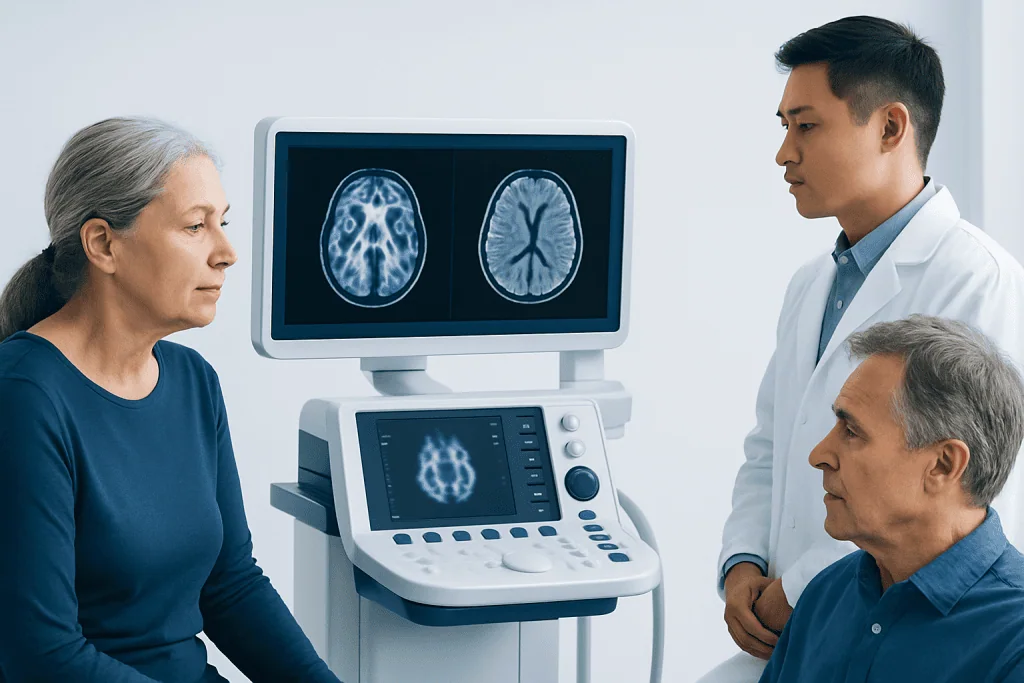
The most helpful clue is when the tremor happens. In essential tremor, shaking usually appears during action or posture. This means it tends to occur while writing, eating, shaving, applying makeup, using tools, or holding the arms stretched forward. In Parkinson’s disease, tremor is often strongest at rest, such as when the hands are relaxed in the lap, and may lessen once movement begins.
The body areas affected also offer clues. Essential tremor commonly affects both hands, though one side may be worse. Head tremor and voice tremor are relatively common in essential tremor. Parkinson’s disease more often begins on one side of the body and may stay more pronounced on that side for some time. Head and voice tremor are less typical in Parkinson’s disease.
Another important difference is the presence of other movement symptoms. Parkinson’s disease often causes bradykinesia, which means slowness and reduced amplitude of movement. A person may notice smaller handwriting, slower walking, difficulty turning in bed, reduced arm swing, or stiffness in the limbs. Essential tremor generally does not cause these hallmark Parkinsonian features.
Doctors also consider how the tremor looks and feels in daily life. Essential tremor may become more obvious with fine motor tasks and stress, fatigue, or caffeine. Parkinson’s tremor often has a classic rhythmic, resting quality and can be accompanied by stiffness, soft speech, constipation, sleep changes, or changes in smell. These patterns help guide whether symptoms are more consistent with Parkinson’s disease or essential tremor.
Symptoms and How They Affect Daily Life

Essential tremor often starts gradually and may remain mild for years, though it can also become more noticeable over time. Common symptoms include shaky hands when drinking from a glass, difficulty threading a needle, messy handwriting, or trouble carrying a plate without spilling. Some people develop a tremulous voice or a head tremor that may look like a gentle nodding or shaking motion.
Parkinson’s disease symptoms can be more varied. In addition to tremor, people may notice slower movements, muscle rigidity, softer speech, reduced blinking, a stooped posture, and a shuffling or hesitant gait. Everyday tasks such as buttoning clothes, getting out of a chair, or turning while walking may become harder.
Both conditions can affect emotional well-being, social confidence, and independence. A person may feel embarrassed eating in public, signing documents, or speaking if the voice trembles. Worry about symptoms can make tremor feel more intense, even though stress itself is not the underlying cause.
Symptoms do not always fit neatly into one pattern, especially early on. For that reason, changes over time are important. A tremor that seems isolated at first may later be recognized as part of a broader movement disorder, which is why follow-up with a clinician is valuable when symptoms persist.
Causes and Risk Factors
Essential tremor and Parkinson’s disease have different underlying mechanisms. Essential tremor is thought to involve abnormal activity in brain circuits that coordinate movement, particularly networks involving the cerebellum. The exact cause is not always known, but essential tremor often runs in families, suggesting a genetic contribution in many cases.
Parkinson’s disease is linked to the gradual loss of dopamine-producing nerve cells in parts of the brain that help regulate movement. This affects the smooth control of motion and contributes to tremor, slowness, and stiffness. Genetics can play a role in some people, but most cases likely result from a combination of age, biology, and environmental influences.
Age is a risk factor for both conditions, especially Parkinson’s disease, which becomes more common later in life. Essential tremor can begin at almost any age, including younger adulthood, though it also becomes more common with increasing age. A family history may strongly point toward essential tremor, but it does not rule out Parkinson’s disease.
It is important to remember that not all shaking is due to either of these disorders. Tremor can also be linked to thyroid problems, medication side effects, anxiety, excess caffeine, low blood sugar, or other neurological conditions. That is one reason a proper medical evaluation matters before assuming the cause.
How Doctors Diagnose the Difference
There is no single blood test that definitively distinguishes essential tremor from Parkinson’s disease. Diagnosis usually begins with a detailed medical history and a neurological examination. The doctor may ask when the tremor appears, what makes it worse or better, whether one side is more affected, and whether there are symptoms such as stiffness, slowness, balance problems, constipation, or sleep changes.
During the examination, the clinician may watch the hands at rest, with the arms outstretched, and during tasks such as writing, drawing a spiral, or touching the finger to the nose. Walking, posture, facial expression, muscle tone, and speed of movement are also assessed. These findings often provide the clearest clues.
In some cases, tests are used to rule out other causes or to support the diagnosis. Blood tests may help identify thyroid disease, metabolic problems, or medication-related causes. Selected patients may have brain imaging, and a dopamine transporter scan can sometimes help when the distinction remains uncertain after examination, though it is not needed for everyone.
Because symptoms can evolve, diagnosis may become clearer over time. Follow-up visits are sometimes the best way to confirm the pattern. If symptoms are complex or the diagnosis is uncertain, referral to a movement disorders specialist can be especially helpful.
Treatment Options for Each Condition
Treatment depends on the diagnosis, the severity of symptoms, and how much daily life is affected. Mild essential tremor may not need immediate treatment if it does not interfere with function. When symptoms become troublesome, doctors may recommend medication to reduce tremor, along with practical strategies such as weighted utensils, choosing cups with lids, or adjusting how tasks are performed.
Parkinson’s disease treatment often focuses on improving dopamine-related movement symptoms and supporting daily function. Medications may help reduce tremor, stiffness, and slowness, although the response varies from person to person. Physical, occupational, and speech therapy can also be very valuable for maintaining mobility, communication, and independence.
For selected people whose symptoms are significant despite medication, advanced therapies may be considered. These can include deep brain stimulation for carefully evaluated patients with either essential tremor or Parkinson’s disease. In some cases, doctors may also discuss focused procedural options within a broader neurology care plan tailored to the individual.
When symptoms are changing or the diagnosis is still being clarified, regular neurological follow-up helps ensure treatment stays appropriate. Near the end of the care journey, some international patients may seek evaluation at centers such as Acibadem International, where multidisciplinary specialists and JCI-accredited hospitals diagnose and treat movement disorders with individualized planning.
Prevention, Self-care, and Living Well
Neither essential tremor nor Parkinson’s disease can always be prevented, but healthy habits can support overall brain and body function. Good sleep, regular physical activity, balanced nutrition, and stress management may help people cope better with symptoms. Reducing triggers such as excess caffeine can lessen tremor severity for some people, particularly in essential tremor.
Exercise is especially helpful in maintaining strength, flexibility, balance, and confidence. People with Parkinson’s disease often benefit from structured movement programs, stretching, gait training, and exercises that emphasize posture and coordination. Those with essential tremor may benefit from occupational therapy techniques that improve hand control during daily tasks.
At home, practical adjustments can make life easier. Useful strategies may include using heavier cups or utensils, resting the elbows during grooming tasks, allowing extra time for handwriting or meal preparation, and organizing the environment to reduce rushing. Support from family members can also make a meaningful difference.
Emotional health matters too. Persistent tremor or movement changes can feel frustrating or isolating, but support groups, counseling, and education often help. Learning more about physical therapy and rehabilitation or broader neurosurgical treatment options may also be part of long-term planning for selected patients when recommended by a specialist.
When to See a Doctor
A person should see a doctor if a tremor is new, persistent, worsening, or beginning to interfere with everyday activities. Medical attention is also important if shaking appears together with slowness, stiffness, changes in walking, falls, weakness, numbness, or speech changes. Even when symptoms seem mild, an early evaluation can provide reassurance and direction.
Prompt assessment is especially wise if the tremor starts on one side, occurs mostly at rest, or is accompanied by a smaller handwriting, reduced facial expression, or decreasing arm swing while walking. These features may suggest Parkinson’s disease or another neurological cause that deserves specialist review. A family history of tremor can be helpful information to share, but should not be used to self-diagnose.
Urgent medical attention may be needed if tremor begins suddenly, especially with confusion, severe headache, weakness, trouble speaking, or loss of balance. Those symptoms are not typical of essential tremor and may point to another acute neurological problem.
For many people, the biggest step is simply starting the conversation. Tremor is common, and evaluation is usually straightforward. A clear diagnosis helps people understand what to expect and choose the treatments and self-care strategies that best support daily life.
Frequently asked questions
What is the main difference between essential tremor and Parkinson’s disease tremor?
The main difference is usually when the tremor happens. Essential tremor is typically most noticeable during action, such as writing or holding an object, while Parkinson’s tremor often appears at rest. Doctors also look for other symptoms, especially slowness and stiffness, which are more typical of Parkinson’s disease.
Can essential tremor turn into Parkinson’s disease?
Essential tremor does not simply transform into Parkinson’s disease. However, a person can develop Parkinson’s disease separately, and early symptoms may sometimes be hard to distinguish. That is why reassessment over time can be important if symptoms change.
Does Parkinson’s disease always cause tremor?
No. Some people with Parkinson’s disease have little or no tremor, especially early in the condition. Parkinson’s disease can also present with stiffness, slowed movement, balance changes, and other non-motor symptoms.
Is head tremor more common in essential tremor or Parkinson’s disease?
Head tremor is more commonly associated with essential tremor. It may appear as a rhythmic nodding or shaking movement. In Parkinson’s disease, tremor more often affects the hands or limbs and head tremor is less typical.
How do doctors confirm whether someone has essential tremor or Parkinson’s disease?
Doctors usually rely on a medical history and neurological examination rather than one single test. They observe the tremor at rest and during action, assess walking and muscle tone, and look for slowness or stiffness. In uncertain cases, additional tests or imaging may help support the diagnosis.
Can both conditions be treated?
Yes. Both essential tremor and Parkinson’s disease can often be managed with medications, therapy, and lifestyle adjustments. Some people with more severe symptoms may also be candidates for advanced treatments such as device-based or procedural therapies after specialist evaluation.
This article is for general information only and is not a substitute for professional medical advice. Please consult a qualified doctor about your individual situation.
Tremor in Turkey — costs, top hospitals & a free quote
JCI-accredited · board-certified surgeons · reply within 24h
Add us as a Preferred Source to see more of our trusted health content across Google Search, AI Overviews and Discover.

Neurology Specialists at Acibadem





More from the Health Library

Multiple Sclerosis Relapse or Not? Symptoms That Need Neurology Review

Peptic Ulcer Disease: Stomach Pain, H. pylori, and Treatment

Autism Spectrum Disorder: Early Signs, Diagnosis, and Support

ITP in Adults: Bleeding Risks, Platelet Counts, and When Treatment Starts

Cushing Syndrome: Weight Gain, High Cortisol, and How Doctors Confirm the Cause