Eye Spasm and Headache: Common Causes, Related Conditions, and When to See a Doctor

Eye spasm usually means involuntary eyelid twitching, and it is often benign and temporary. Headache and eye spasm commonly occur together with stress, poor sleep, digital eye strain, dry eyes, or migraine.
Key Takeaways
- Eye spasm usually means involuntary eyelid twitching, and it is often benign and temporary.
- Headache and eye spasm commonly occur together with stress, poor sleep, digital eye strain, dry eyes, or migraine.
- The pattern of symptoms matters: one-sided pain, vision loss, drooping, facial weakness, or prolonged spasms deserve prompt medical attention.
- Treatment depends on the cause and may include rest, hydration, trigger reduction, eye care, or treatment for migraine or other underlying conditions.
- Medical assessment is important if symptoms recur often, interfere with daily life, or happen with other neurologic or eye symptoms.
Eye spasm and headache are often linked to common triggers such as fatigue, stress, eye strain, caffeine, or migraine. Most episodes are temporary, but symptoms that are severe, persistent, one-sided, or paired with vision or neurologic changes need medical evaluation.
What eye spasm and headache can mean
Eye spasm and headache often happen together because the eyes, face, and head share nerve pathways and are affected by many of the same triggers. In many people, the “spasm” is actually a brief eyelid twitch called myokymia. This is usually harmless and tends to improve when the trigger is removed.
Common everyday causes include stress, tiredness, too much screen time, dry eyes, dehydration, and excess caffeine. Headache may develop alongside the twitch because these same factors can tense muscles, strain the eyes, or trigger a migraine.
Sometimes the combination points to a more specific condition. Migraine can cause headache with light sensitivity, eye discomfort, or visual symptoms. Less commonly, persistent or forceful spasms may reflect disorders such as benign essential blepharospasm or hemifacial spasm, especially if twitching spreads beyond the eyelid or keeps returning.
The key is to look at the whole picture: how long symptoms last, whether they affect one or both sides, and whether there are warning signs such as vision changes, weakness, drooping, fever, or a sudden severe headache. These details help doctors tell a common, temporary problem from one that needs further testing.
Common symptom patterns and what they may suggest
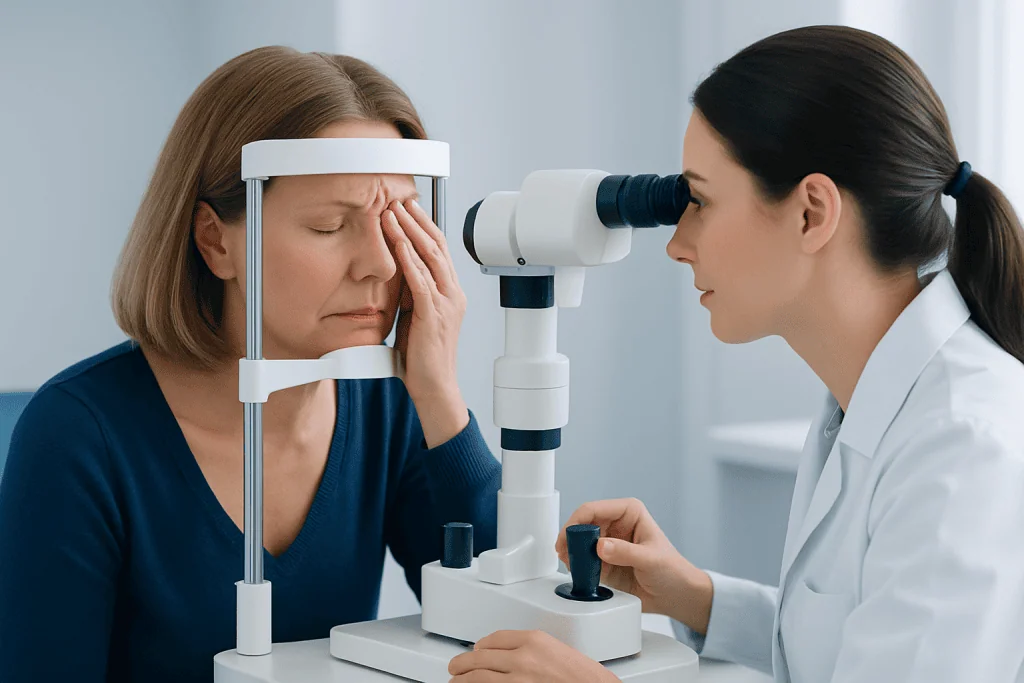
Not all eye spasms feel the same. A fine flutter in one eyelid that comes and goes for a few days is most often related to fatigue, stress, or eye irritation. A headache that feels like pressure across the forehead may point more toward tension, eye strain, or poor sleep than a serious eye disease.
If the headache throbs, worsens with activity, or comes with nausea, light sensitivity, or visual aura, migraine becomes more likely. Some people describe eye discomfort or twitching before or during a migraine attack. Others may notice that bright light and prolonged screen use trigger both symptoms at once.
Symptoms that are stronger on one side can be more significant. Repeated forceful eyelid closure, spasm of one side of the face, or twitching that involves the cheek or mouth may suggest a neurologic facial spasm rather than a simple eyelid twitch. A painful red eye, blurred vision, or double vision shifts attention toward eye conditions that need prompt review.
- Brief eyelid fluttering: often fatigue, stress, caffeine, or dry eyes
- Pressure-like headache with screen use: often digital eye strain or tension headache
- Throbbing headache with light sensitivity: often migraine
- Persistent forceful blinking or eyelid closure: may suggest blepharospasm
- One-sided facial twitching: may suggest hemifacial spasm or another neurologic issue
Common causes and related conditions

The most common cause of eye spasm is benign eyelid myokymia. This is a small, repetitive twitch of the eyelid muscle, often brought on by stress, lack of sleep, eye strain, alcohol, nicotine, or caffeine. Dry eye disease and irritation from allergies or contact lenses can also make eyelid twitching more noticeable and may contribute to headache through discomfort and squinting.
Headache with eye symptoms is frequently related to migraine, especially when symptoms recur in episodes. Migraine may cause throbbing head pain, sensitivity to light and sound, nausea, and visual disturbances such as flashing lights or blind spots. Tension-type headaches can also coexist with eye spasm, particularly in people who spend long periods concentrating or using screens.
Other related conditions include refractive errors such as uncorrected nearsightedness or astigmatism, which force the eyes to work harder. Sinus congestion can create pressure around the eyes and forehead. More persistent spasms may be due to conditions such as blepharospasm, while twitching involving one side of the face may raise concern for hemifacial spasm.
Less commonly, certain medicines, neurologic disorders, inflammation, or infections may play a role. Although many causes are not dangerous, it is important not to assume all eye twitching is harmless when the pattern changes, becomes frequent, or is accompanied by new symptoms.
How doctors evaluate eye spasm and headache
Assessment begins with a careful history. Doctors usually ask when the twitching and headache started, how often they happen, whether symptoms affect one or both eyes, and what seems to trigger them. Questions about sleep, stress, screen habits, caffeine intake, eye dryness, allergies, and migraine history are especially helpful.
A physical examination may include checking vision, eye movements, eyelids, pupil reactions, and the surface of the eye. The doctor may also look for facial asymmetry, weakness, numbness, abnormal reflexes, or other neurologic signs. This helps distinguish a simple eyelid twitch from an eye disorder or a nerve-related condition.
Not everyone needs tests. If the symptoms fit a benign pattern, testing may not be necessary. However, persistent, unusual, or one-sided symptoms may lead to specialist evaluation in ophthalmology, neurology, or neuro-ophthalmology to assess how the eyes and nervous system are working together.
Imaging or other studies may be considered when there are red flags such as double vision, facial weakness, severe new headache, recurrent one-sided spasm, or suspected structural causes. In some cases, doctors may also recommend a detailed eye examination to look for dry eye, corneal irritation, glaucoma-related concerns, or the need for updated glasses.
Treatment options depend on the cause
When the cause is a simple eyelid twitch, treatment often focuses on trigger control. Better sleep, less caffeine, more regular breaks from screens, hydration, and stress reduction are usually the first steps. If dry eye is contributing, treatment may include lubricating eye drops or addressing eyelid inflammation and environmental irritation.
Headache treatment depends on the type of headache. Tension-type headaches may improve with rest, posture changes, hydration, stretching, and limiting prolonged visual tasks. If migraine is the likely cause, a doctor may recommend lifestyle changes, headache medicines, and a plan to identify and reduce triggers. For patients with frequent attacks, migraine treatment may include preventive strategies as well as medication for acute episodes.
Persistent or disabling spasms need a different approach. Conditions such as blepharospasm may be treated by specialists with tailored therapies that reduce abnormal muscle activity. If a structural nerve problem is suspected in one-sided facial spasm, treatment is directed at the underlying cause and may involve neurologic or surgical consultation.
For people whose symptoms do not fit a simple pattern, coordinated care may be useful. In appropriate cases, evaluation by neurology and eye specialists helps identify whether the main issue is migraine, a movement disorder, a facial nerve problem, or an eye-surface condition.
Self-care and prevention in daily life
Many episodes of eye spasm and headache improve with practical daily changes. Regular sleep is one of the most helpful steps because fatigue can trigger both eyelid twitching and headache. Building in screen breaks, adjusting room lighting, and making sure glasses or contact lens prescriptions are current can also reduce strain.
Good eye comfort matters. People who work on computers or in air-conditioned spaces may blink less, which can worsen dryness and irritation. Using simple habits such as the 20-20-20 rule, blinking more often, and managing dry eye symptoms can help. Adequate hydration and moderating caffeine and alcohol intake may also reduce recurrence.
Tracking symptoms can make patterns clearer. A diary that notes sleep, stress, food, screen time, menstrual cycle, and headache features may reveal migraine or lifestyle triggers. This information is useful during medical visits and can guide more targeted treatment.
Near the end of the care pathway, some patients benefit from multidisciplinary assessment when symptoms are recurrent or difficult to explain. Acibadem International’s multidisciplinary specialists in JCI-accredited hospitals evaluate and treat eye and neurologic conditions for international patients when further assessment is needed.
When to seek medical care
Medical care is advisable if eye spasm and headache keep coming back, last more than a short period, or interfere with reading, driving, work, or sleep. A routine appointment is also sensible if over-the-counter measures and lifestyle changes do not help, or if the twitching becomes more forceful or spreads to other facial muscles.
Prompt medical attention is important for red-flag symptoms. These include a sudden severe headache, vision loss, double vision, a red painful eye, drooping of the eyelid, facial weakness, numbness, trouble speaking, confusion, fever, or head injury. These symptoms do not always mean a dangerous condition, but they should not be ignored.
If one-sided facial spasm is persistent or the eyelid closes involuntarily and repeatedly, specialist review is recommended. Early assessment can clarify whether the cause is a benign eyelid twitch, migraine-related symptoms, dry eye, or a neurologic condition that needs treatment.
Because many different conditions can produce similar symptoms, a qualified doctor is the best person to assess the overall pattern. Seeking evaluation is especially important when symptoms are new, changing, or accompanied by any problem with vision or neurologic function.
Frequently asked questions
Is eye spasm and headache usually serious?
Often it is not serious, especially when the eye spasm is a mild eyelid twitch linked to fatigue, stress, caffeine, or eye strain. However, symptoms should be checked if they are persistent, severe, one-sided, or come with vision changes or neurologic symptoms.
Can migraine cause eye twitching and headache together?
Yes. Migraine can affect the eyes and head at the same time, causing headache, light sensitivity, visual symptoms, and sometimes a sense of eye discomfort or twitching. A doctor can help distinguish migraine from tension headache or an eye-surface problem.
How long should an eyelid twitch last before seeing a doctor?
A brief twitch that settles within days is commonly benign. If it lasts for weeks, becomes frequent, forceful, or spreads to other parts of the face, medical evaluation is a good idea.
Can screen time cause eye spasm and headache?
Yes. Prolonged screen use can reduce blinking, worsen dry eyes, and increase focusing effort, which may contribute to eyelid twitching and headache. Regular breaks, good lighting, and updated vision correction can help.
What is the difference between a simple eye twitch and blepharospasm?
A simple eye twitch is usually a small, intermittent flutter of the eyelid that goes away on its own. Blepharospasm is a more persistent movement disorder that can cause repeated blinking or forceful eyelid closure and often needs specialist care.
Should one-sided eye spasm with headache be evaluated?
It can be wise to have it checked, especially if the spasm is persistent or involves the cheek or mouth as well as the eyelid. One-sided symptoms may still be benign, but they can also point to conditions such as hemifacial spasm or migraine that deserve proper assessment.
References
- American Academy of Ophthalmology
- National Eye Institute
- National Institute of Neurological Disorders and Stroke
- Mayo Clinic
- Cleveland Clinic
This article is for general information only and is not a substitute for professional medical advice. Please consult a qualified doctor about your individual situation.
Explore treatments in Turkey — costs, top hospitals & a free quote
JCI-accredited · board-certified surgeons · reply within 24h
Add us as a Preferred Source to see more of our trusted health content across Google Search, AI Overviews and Discover.