ICSI vs IVF: Which Fertilisation Approach May Be Recommended?
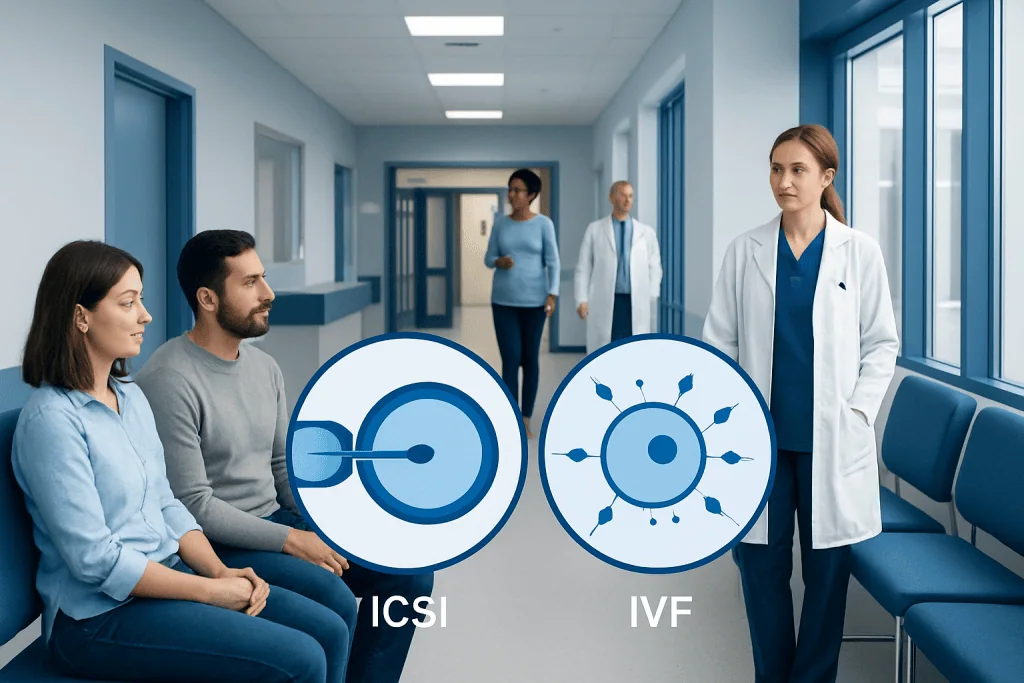
IVF and ICSI both involve collecting eggs and fertilizing them in a laboratory, but they differ in how sperm meets the egg. Standard IVF may be suitable when sperm parameters are adequate and there is no strong indication for direct sperm injection.
Key Takeaways
- IVF and ICSI both involve collecting eggs and fertilizing them in a laboratory, but they differ in how sperm meets the egg.
- Standard IVF may be suitable when sperm parameters are adequate and there is no strong indication for direct sperm injection.
- ICSI is often recommended for male factor infertility, previous fertilization failure, or when only a limited number of eggs are available.
- The choice between IVF and ICSI is individualized after fertility testing and review of treatment history.
- Success depends on many factors, including age, egg quality, sperm quality, and embryo development.
ICSI and IVF are both assisted reproduction techniques used to help fertilization happen outside the body. The best option depends on the couple’s fertility history, sperm and egg factors, and the advice of a fertility specialist.
Overview: What Is the Difference Between ICSI and IVF?
In vitro fertilization, or IVF, is a fertility treatment in which eggs are collected from the ovaries and combined with sperm in a laboratory. Fertilization is allowed to happen in a controlled dish, and the resulting embryo may later be transferred into the uterus. Intracytoplasmic sperm injection, or ICSI, is a specialized form of IVF in which a single sperm is injected directly into a mature egg.
The main difference is the method of fertilization. In standard IVF, many sperm are placed around each egg and one sperm must penetrate the egg on its own. In ICSI, an embryologist selects one sperm and injects it into the egg using a very fine needle. This can help when sperm has difficulty reaching or entering the egg naturally.
Because ICSI is performed as part of an IVF cycle, the early stages are very similar. Both approaches usually involve ovarian stimulation, egg monitoring, egg retrieval, sperm collection, laboratory fertilization, embryo culture, and embryo transfer. Patients comparing IVF treatment and ICSI are usually deciding which laboratory fertilization method is more suitable for their situation.
Neither option is automatically better for everyone. The choice is usually based on the cause of infertility, previous treatment outcomes, laboratory findings, and the specialist team’s judgment about which technique offers the best chance of successful fertilization.
When Might Standard IVF Be Recommended?

Standard IVF may be recommended when sperm count, movement, and shape are within a range that is considered suitable for natural fertilization in the laboratory. It may also be chosen when infertility is related more to the fallopian tubes, ovulation problems, unexplained infertility, or some female reproductive conditions rather than a clear sperm-related issue.
During standard IVF, the sperm and eggs are placed together so that fertilization occurs without direct injection. This process allows one sperm to enter the egg in a way that more closely resembles natural fertilization, although it still takes place outside the body. Some fertility specialists prefer standard IVF when there is no medical reason to use ICSI, especially if previous testing shows good fertilization potential.
IVF may also be considered for people whose infertility is associated with ovulation disorders, including polycystic ovary syndrome, or structural issues affecting conception. In some cases, female factors such as uterine septum or endometrial polyps may be part of the broader fertility evaluation, although these conditions may need separate management depending on the findings.
Importantly, standard IVF is not a less advanced or less effective option simply because ICSI exists. When used in the right situation, it can be an appropriate and evidence-based choice. The recommended approach depends on whether there is a real need to bypass barriers to fertilization.
When Might ICSI Be Recommended?

ICSI is most commonly recommended when there is male factor infertility. This may include low sperm count, poor sperm movement, abnormal sperm shape, or situations where sperm is difficult to obtain or limited in number. By injecting a single sperm directly into the egg, ICSI can reduce the need for sperm to penetrate the egg on its own.
It may also be advised when there has been low or failed fertilization in a previous standard IVF cycle. If eggs and sperm were brought together in the laboratory before but very few or no eggs fertilized, ICSI may be used in a later cycle to improve the chance that fertilization will occur. Some clinics also consider ICSI when only a small number of eggs are available, because each mature egg may be especially valuable.
In certain situations, ICSI may be used with frozen sperm, surgically retrieved sperm, or sperm samples with borderline quality. It can also be chosen when preimplantation genetic testing is planned, although practices vary and the decision should remain individualized. Patients undergoing evaluation for infertility or male infertility often hear about ICSI when sperm-related factors are central to the fertility problem.
Even so, ICSI is not always necessary. If sperm quality is adequate and there is no history of fertilization failure, routine use may not offer a clear benefit for every patient. The decision is best made after discussing the medical reasons, expected advantages, and any limitations with the fertility team.
How Doctors Decide Between ICSI and IVF
Choosing between IVF and ICSI usually begins with a full fertility assessment of both partners. This may include semen analysis, hormone testing, ovarian reserve assessment, ultrasound scans, and review of menstrual history, age, previous pregnancies, previous miscarriages, and prior fertility treatments. Fertility specialists look at the complete picture rather than relying on one test alone.
Sperm-related findings are often one of the biggest factors in the decision. If semen analysis suggests that sperm may have difficulty fertilizing an egg on its own, ICSI may be recommended. If sperm parameters are reassuring and there is no previous failed fertilization, standard IVF may be considered sufficient. The number and maturity of eggs collected can also influence the plan.
The cause of infertility on the female side matters too. Conditions such as reduced ovarian reserve, tubal disease, ovulation disorders, or premature ovarian insufficiency may shape the overall treatment strategy, although they do not automatically determine whether IVF or ICSI is better. Previous reproductive history, such as recurrent pregnancy loss, may also lead to a more detailed evaluation before treatment.
Many clinics discuss the choice before the cycle starts, but the final method may occasionally be adjusted based on egg number or sperm quality on the day of fertilization. This is one reason why treatment decisions are often personalized and flexible rather than the same for every patient.
What Happens During Treatment?
Both IVF and ICSI usually begin with ovarian stimulation using fertility medicines to encourage several eggs to mature in one cycle. Throughout this phase, the ovaries are monitored with ultrasound and sometimes blood tests. Once the eggs are ready, they are collected in a minor procedure called egg retrieval.
A sperm sample is then prepared in the laboratory. In standard IVF, selected sperm are placed around each egg and left to fertilize naturally in the culture dish. In ICSI, an embryologist identifies a single sperm and injects it directly into a mature egg. The eggs are checked later for signs of normal fertilization.
After fertilization, embryos are cultured for several days and monitored for development. One or more embryos may then be transferred into the uterus, depending on the treatment plan and local clinical guidance. Any additional suitable embryos may be frozen for future use. For many patients, the broader process of artificial fertilisation includes these laboratory and embryo care steps.
The patient experience before and after fertilization is often similar regardless of whether standard IVF or ICSI is used. The main technical difference happens in the laboratory. This means the question is usually not about which treatment feels easier, but which fertilization method is more appropriate medically.
Benefits, Limitations, and Success Factors
The benefit of standard IVF is that it can work well when sperm is capable of fertilizing the egg without direct assistance. It may be a suitable option when no strong male factor issue is present. The benefit of ICSI is that it helps overcome important barriers to fertilization, especially in cases of male factor infertility or previous fertilization failure.
However, neither method can solve every fertility problem. Fertilization is only one step in a complex process. Even when eggs fertilize successfully, embryo quality, implantation, uterine health, age-related factors, and general reproductive health still affect the chances of pregnancy and live birth. A successful fertilization step does not guarantee a successful pregnancy.
Age is one of the most important factors for both IVF and ICSI because egg quality and quantity usually change over time. Ovarian reserve, sperm DNA quality, embryo development, and underlying conditions can also influence outcomes. Some patients may require additional investigations or more than one treatment cycle before pregnancy is achieved.
Couples often ask whether ICSI has a higher success rate than IVF. The answer depends on why treatment is being done. In the right medical setting, ICSI may improve fertilization rates, but it is not universally superior for every patient. The best results usually come from matching the technique to the underlying fertility issue.
Questions to Ask Before Choosing ICSI or IVF
It is often helpful for patients to ask why a particular method is being recommended for them personally. Understanding whether the reason is related to sperm quality, egg number, previous fertilization failure, or another factor can make the decision clearer. Patients may also want to ask what the clinic’s plan would be if fertilization is lower than expected.
Other useful questions include whether additional testing is needed before treatment, whether both partners have had a full fertility work-up, and whether there are any uterine or hormonal issues that should be addressed first. For example, a specialist may review ovulation patterns, ovarian reserve, or structural findings before moving ahead with an IVF-based treatment cycle.
Patients should also discuss the expected number of eggs, whether embryo freezing is likely, and whether any additional procedures are being considered. A clear explanation of the timeline, possible side effects of ovarian stimulation, and what to expect during egg retrieval and embryo transfer can help couples feel more prepared.
Near the end of the decision-making process, it can be reassuring to know that experienced fertility centers use a multidisciplinary approach. Acibadem International’s specialists and JCI-accredited hospitals diagnose and treat fertility conditions for international patients, with care plans tailored to individual clinical needs.
When to Speak with a Fertility Specialist
It may be time to speak with a fertility specialist if pregnancy has not happened after a period of regular unprotected intercourse, or sooner if there are known factors such as irregular periods, very painful periods, previous pelvic infection, prior reproductive surgery, or known sperm abnormalities. People who have already had unsuccessful fertility treatment may also benefit from a more detailed review of whether IVF or ICSI is more appropriate.
Male reproductive health should not be overlooked. Because sperm-related factors are a common reason ICSI is used, semen analysis is often an important early step. A complete evaluation of both partners can help avoid unnecessary delays and identify treatable issues before a cycle begins.
Early specialist advice can also be useful for people with a history of fertility-related conditions or age-related concerns about ovarian reserve. Timely assessment may allow treatment to start with a clearer strategy and more realistic expectations. Fertility care is most effective when it is individualized, evidence-based, and guided by qualified professionals.
Whether a couple is advised to have standard IVF, ICSI, or another approach such as insemination, the choice should be based on careful testing and shared decision-making. A fertility specialist can explain the reasoning in clear terms and help the couple understand the next best step.
Frequently asked questions
Is ICSI better than IVF?
ICSI is not automatically better than standard IVF for everyone. It is usually most helpful when there is male factor infertility or a history of failed fertilization. The best option depends on the medical reason for infertility and the findings from fertility testing.
Who usually needs ICSI?
ICSI is often recommended for people with low sperm count, poor sperm movement, abnormal sperm shape, or previous IVF fertilization failure. It may also be used when sperm has been surgically retrieved or when only a small number of eggs are available. A fertility specialist decides this based on individual clinical factors.
Can standard IVF work if sperm quality is normal?
Yes, standard IVF may work well when sperm quality is considered suitable for fertilization in the laboratory. In these cases, sperm can be placed around the egg and allowed to fertilize naturally. Many specialists reserve ICSI for situations where there is a clear reason to use it.
Do IVF and ICSI have the same treatment steps?
Most of the treatment process is the same for both. Ovarian stimulation, monitoring, egg retrieval, embryo culture, and embryo transfer are usually similar. The main difference is how the sperm fertilizes the egg in the laboratory.
Does ICSI guarantee fertilization?
No fertility treatment can guarantee fertilization or pregnancy. ICSI can improve the chance of fertilization in certain situations, but embryo development and implantation still depend on many factors. These include egg quality, sperm quality, age, and uterine health.
What tests help doctors choose between IVF and ICSI?
Doctors commonly use semen analysis, hormone tests, ultrasound scans, and ovarian reserve testing. They also review menstrual history, age, previous pregnancies, and any earlier fertility treatment results. These details help them recommend the approach that best fits the couple’s situation.
References
- World Health Organization
- American Society for Reproductive Medicine
- European Society of Human Reproduction and Embryology
- Centers for Disease Control and Prevention
- National Institute for Health and Care Excellence
This article is for general information only and is not a substitute for professional medical advice. Please consult a qualified doctor about your individual situation.
ICSI in Turkey — costs, top hospitals & a free quote
JCI-accredited · board-certified surgeons · reply within 24h
Add us as a Preferred Source to see more of our trusted health content across Google Search, AI Overviews and Discover.
Check your numbers in seconds
BMI, calories, due date, blood pressure and 30+ more clinical calculators — free, instant, doctor-reviewed ranges.

Related Treatments
Related Conditions
More from the Health Library



Related Specialists

Prof. Dr. Bülent Tıraş
Gynecology & Obstetrics
Prof. Dr. Mete Güngör
Gynecology & Obstetrics
Prof. Dr. Faruk Suat Dede
Gynecology & Obstetrics
Prof. Dr. Tansu Küçük
Gynecology & Obstetrics