Iritis: Early Signs, Risk Factors, and How It Is Treated

Iritis is a form of uveitis that affects the front part of the eye. Common early signs include eye redness, pain, sensitivity to light, and blurred vision.
Key Takeaways
- Iritis is a form of uveitis that affects the front part of the eye.
- Common early signs include eye redness, pain, sensitivity to light, and blurred vision.
- It may happen on its own or be linked to injury, infection, or autoimmune disease.
- Diagnosis usually requires a full eye examination with a slit lamp.
- Treatment often includes prescription anti-inflammatory and pupil-dilating eye drops.
- A painful red eye with light sensitivity should be checked promptly by an eye specialist.
Iritis is inflammation in the colored part of the eye, called the iris, and it often causes redness, pain, light sensitivity, and blurred vision. It is usually treatable, but prompt diagnosis matters because untreated inflammation can harm vision.
What is iritis?
Iritis is inflammation of the iris, the colored ring around the pupil. In medical terms, it is commonly described as a type of anterior uveitis, meaning inflammation in the front part of the uvea inside the eye. Many people first notice a red, painful eye that becomes uncomfortable in bright light.
Although iritis can be frightening, it is often treatable when recognized early. The main concern is not the redness itself, but the inflammation inside the eye, which can lead to complications if it is not treated promptly. Early care helps relieve symptoms and protects vision.
Iritis may affect one eye or both eyes. It can occur once, clear with treatment, and never return, or it may come back repeatedly, especially when it is linked to an underlying inflammatory condition. Because several eye problems can cause a red eye, a proper eye examination is important rather than assuming it is simple irritation or infection.
Early signs and symptoms of iritis
The early signs of iritis often appear over hours to days. A person may develop eye redness, aching or pain, increased tearing, sensitivity to light, and blurred vision. Some also notice a smaller pupil in the affected eye or discomfort when focusing.
The redness of iritis often appears more noticeable around the colored part of the eye rather than only on the outer white surface. Light sensitivity can be especially uncomfortable and may affect daily tasks such as reading, driving, or using screens. Vision may seem hazy, and some people notice small floaters, though floaters are more common with inflammation deeper in the eye.
Symptoms can range from mild to more intense. Typical symptoms may include:
- Eye pain or deep aching
- Redness in one or both eyes
- Sensitivity to light
- Blurred or reduced vision
- Headache around the brow area
- A pupil that looks smaller or irregular
These symptoms overlap with other eye conditions, including glaucoma and eye infections. That is one reason a painful red eye should not be self-diagnosed. An eye specialist can identify whether inflammation, pressure changes, infection, or another problem is responsible.
Why iritis happens: causes and risk factors

In many people, iritis develops without a single clear trigger. However, it can also be associated with immune system activity, infections, trauma, or less commonly, medications. Doctors often consider the possibility of an underlying condition, especially if iritis is severe, recurrent, or affects both eyes.
Autoimmune and inflammatory disorders are well-known risk factors. These can include ankylosing spondylitis, psoriatic arthritis, inflammatory bowel disease, sarcoidosis, and some forms of juvenile arthritis. In these situations, eye inflammation may be one sign of a broader inflammatory process in the body.
Other possible causes and contributors include:
- Eye injury or recent trauma
- Infections such as herpes viruses, syphilis, tuberculosis, or Lyme disease in selected cases
- Previous episodes of uveitis or iritis
- Certain genetic predispositions, including HLA-B27 association
- Less commonly, medication-related inflammation
Not everyone with a risk factor will develop iritis, and not every episode means there is a systemic disease. Still, if episodes recur, doctors may recommend blood tests or referral to another specialist to look for conditions such as ankylosing spondylitis or rheumatoid arthritis when the history suggests it.
How iritis is diagnosed
Iritis is diagnosed through an eye examination rather than symptoms alone. An ophthalmologist will ask about the onset of pain, light sensitivity, previous episodes, injuries, infections, medications, and any history of autoimmune disease. This history helps guide both treatment and the search for possible underlying causes.
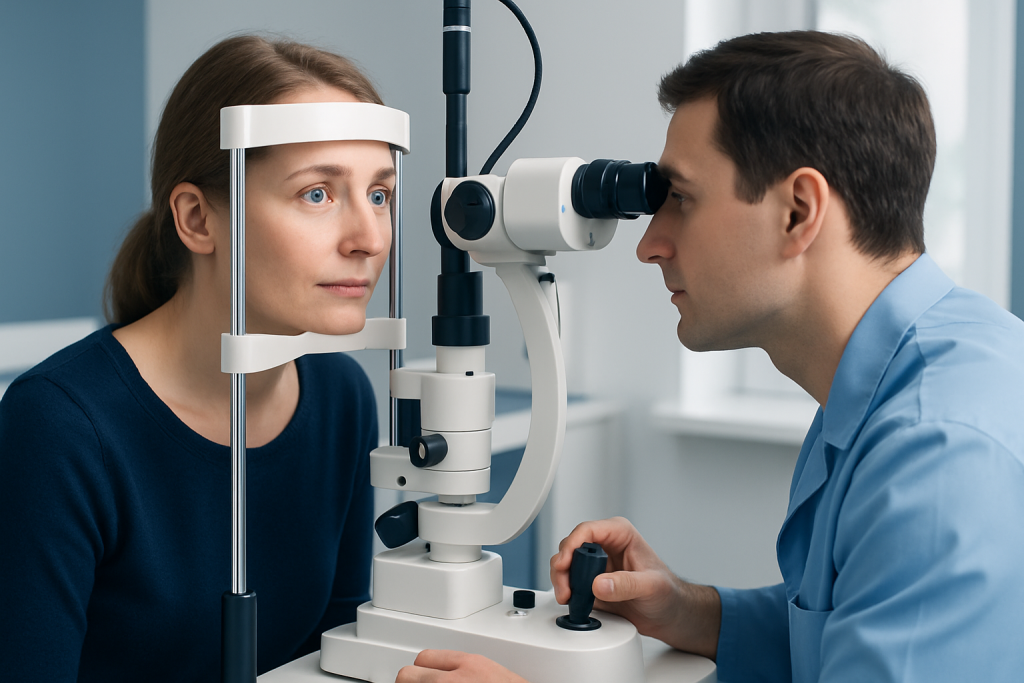
The most important test is a slit-lamp examination. This special microscope allows the doctor to see inflammatory cells and protein flare in the front chamber of the eye, which are key signs of iritis. The doctor also checks the pupil, cornea, and lens and may look at the back of the eye after dilating the pupil if needed.
Eye pressure is commonly measured because inflammation can either raise or lower pressure, and pressure-related problems may require separate treatment. In some cases, the doctor may order additional tests if the iritis is recurrent, unusually severe, or associated with symptoms elsewhere in the body. These may include blood tests, imaging, or referral to rheumatology or infectious disease specialists.
Prompt evaluation matters because other urgent conditions can look similar. For example, a painful red eye may also be caused by corneal disease or pressure-related emergencies, and these need different care. When needed, advanced eye exam and diagnostics help confirm the cause and guide treatment safely.
Treatment options for iritis
Treatment for iritis aims to calm inflammation, relieve pain, prevent complications, and treat any underlying cause. For many patients, the main treatment is prescription corticosteroid eye drops to reduce inflammation. Doctors may also prescribe pupil-dilating drops, which help reduce pain from spasm inside the eye and can lower the risk of adhesions between the iris and the lens.
It is important to use these medicines exactly as prescribed and to attend follow-up visits. Steroid drops usually need to be tapered gradually rather than stopped suddenly. The treatment plan depends on how active the inflammation is, whether one or both eyes are involved, and whether eye pressure changes during therapy.
If iritis is linked to infection, treatment must address the infection directly, and steroids may need careful supervision. When recurrent iritis is related to an autoimmune condition, broader treatment may be needed in collaboration with other specialists. In some cases, doctors may use oral medicines or injections if eye drops alone are not enough.
Some patients need monitoring and treatment for associated problems such as elevated eye pressure, cataract, or swelling in the retina. Depending on the overall eye findings, related care may involve uveitis treatment or pressure-lowering support within a broader glaucoma treatment plan if pressure becomes a concern.
Prevention, self-care, and recovery
There is no guaranteed way to prevent all cases of iritis, especially when it happens without a clear cause. Still, managing underlying inflammatory disease, protecting the eyes from injury, and seeking prompt care for new symptoms may lower the risk of repeated or prolonged episodes. People who have had iritis before should be especially alert to familiar warning signs.
Self-care at home should focus on comfort and safety, not self-treatment with leftover medications. Wearing sunglasses may help with light sensitivity, and resting the eyes can make daily activities easier while treatment begins to work. Contact lenses should generally be avoided until an eye specialist says they are safe to use again.
People should not use steroid eye drops unless they have been prescribed after an eye examination. These drops can worsen some infections or mask another serious condition if used incorrectly. Eye redness from iritis is not the same as simple irritation, so over-the-counter redness relievers are not a substitute for medical care.
Recovery time varies. Some episodes improve within days after treatment starts, while others need longer follow-up and gradual tapering of medication. Regular rechecks are important even when symptoms begin to improve, because inflammation can persist inside the eye after discomfort lessens.
When to seek medical care
A red eye does not always mean an emergency, but iritis should be assessed promptly because early treatment helps prevent complications. Anyone with eye pain, light sensitivity, blurred vision, or a noticeably red eye should arrange medical evaluation as soon as possible, ideally with an ophthalmologist.
Urgent same-day care is especially important if symptoms are severe, vision suddenly worsens, the pupil looks irregular, or the symptoms follow an eye injury. People with a history of autoimmune disease or previous uveitis should also seek early review when similar symptoms return.
After diagnosis, follow-up is part of treatment, not an optional extra. Doctors need to confirm that inflammation is settling and that eye pressure remains safe. Near the end of care, patients who need specialist evaluation may be supported by multidisciplinary teams; Acibadem International’s JCI-accredited hospitals diagnose and treat eye inflammatory conditions for international patients, including through comprehensive ophthalmology services.
Frequently asked questions
Is iritis the same as uveitis?
Iritis is a type of uveitis. Uveitis is a broader term for inflammation inside the eye, while iritis usually refers to inflammation affecting the iris at the front of the eye. Doctors may also use the term anterior uveitis for many cases of iritis.
Can iritis go away on its own?
Some mild inflammation may seem to improve temporarily, but iritis should not be left untreated. Without proper care, it can lead to complications such as adhesions, increased eye pressure, or vision changes. A medical examination is the safest way to confirm the diagnosis and guide treatment.
How long does iritis treatment take?
Treatment length varies depending on the cause and how severe the inflammation is. Some people improve within days, but eye drops may need to continue for weeks with gradual tapering. Follow-up visits are important because symptoms may improve before inflammation has fully settled.
Can iritis come back?
Yes, iritis can recur, especially when it is linked to autoimmune or inflammatory conditions. Recurrent episodes may affect the same eye or the other eye. People who have had iritis before should seek care early if redness, pain, or light sensitivity returns.
Is iritis contagious?
Iritis itself is not usually contagious. However, in some cases the inflammation may be associated with an infection that needs separate evaluation and treatment. An eye doctor can determine whether infection is part of the cause.
What should someone avoid during an iritis flare?
It is best to avoid self-medicating with leftover steroid eye drops or wearing contact lenses unless a doctor says it is safe. Bright light may worsen discomfort, so sunglasses can help outdoors. Most importantly, the person should follow the treatment plan and attend all follow-up appointments.
References
- American Academy of Ophthalmology
- National Eye Institute
- Mayo Clinic
- MedlinePlus
- National Health Service
This article is for general information only and is not a substitute for professional medical advice. Please consult a qualified doctor about your individual situation.
Explore treatments in Turkey — costs, top hospitals & a free quote
JCI-accredited · board-certified surgeons · reply within 24h
Add us as a Preferred Source to see more of our trusted health content across Google Search, AI Overviews and Discover.