Melanoma+Treatment+Bucks+County: How It Works, Results and What to Expect
Surgery is the main treatment for most early-stage melanomas and aims to remove the tumor with an appropriate margin of healthy-looking skin. A sentinel lymph node biopsy may help determine whether melanoma cells have spread beyond the original skin site.
Key Takeaways
- Surgery is the main treatment for most early-stage melanomas and aims to remove the tumor with an appropriate margin of healthy-looking skin.
- A sentinel lymph node biopsy may help determine whether melanoma cells have spread beyond the original skin site.
- Advanced melanoma may be treated with immunotherapy, targeted therapy for certain gene changes, surgery, radiation therapy, or clinical trials.
- Melanoma can change at different speeds; prompt assessment of a new or changing mole is more useful than trying to predict its growth rate.
- Follow-up skin examinations and lifelong sun protection are important after any melanoma diagnosis.
Melanoma treatment in Bucks County and elsewhere is tailored to the melanoma’s stage, location, thickness, and genetic features. Early melanoma is often treated with surgery alone, while higher-risk or advanced melanoma may require lymph-node evaluation, immunotherapy, targeted medicines, radiation therapy, or a combination of approaches.
Melanoma Treatment: How Care Is Planned
Melanoma is a type of skin cancer that begins in melanocytes, the cells that make skin pigment. Although it is less common than some other skin cancers, melanoma deserves timely medical attention because it can spread to lymph nodes or other organs if it grows deeper into the skin or is not treated.
For people searching for melanoma treatment in Bucks County, the care process generally starts with confirmation of the diagnosis and accurate staging. A dermatologist, surgical oncologist, medical oncologist, pathologist, radiologist, and other specialists may contribute to the plan. The recommended treatment depends on the melanoma’s thickness, ulceration status, location, lymph-node findings, stage, overall health, and, in advanced cases, tumor genetic testing.
Early detection often allows melanoma to be removed with a surgical procedure. If there is a higher risk of spread or evidence that melanoma has spread, treatment may include systemic medicines that work throughout the body. The aim is to remove or control the cancer while supporting function, appearance, comfort, and long-term health.
How Melanoma Treatment Works
For localized melanoma, the central treatment is usually wide local excision. During this procedure, a surgeon removes the melanoma scar or tumor along with a margin of surrounding skin. The size of that margin is based mainly on the depth of the melanoma. The tissue is examined by a pathologist to confirm whether the melanoma has been fully removed.
For some melanomas, particularly those that are thicker or have other high-risk features, a sentinel lymph node biopsy may be recommended at the time of surgery. A tracer is used to identify the first lymph node or nodes most likely to receive cells from the primary melanoma site. Testing these nodes can provide important staging information and help guide follow-up and additional treatment decisions.
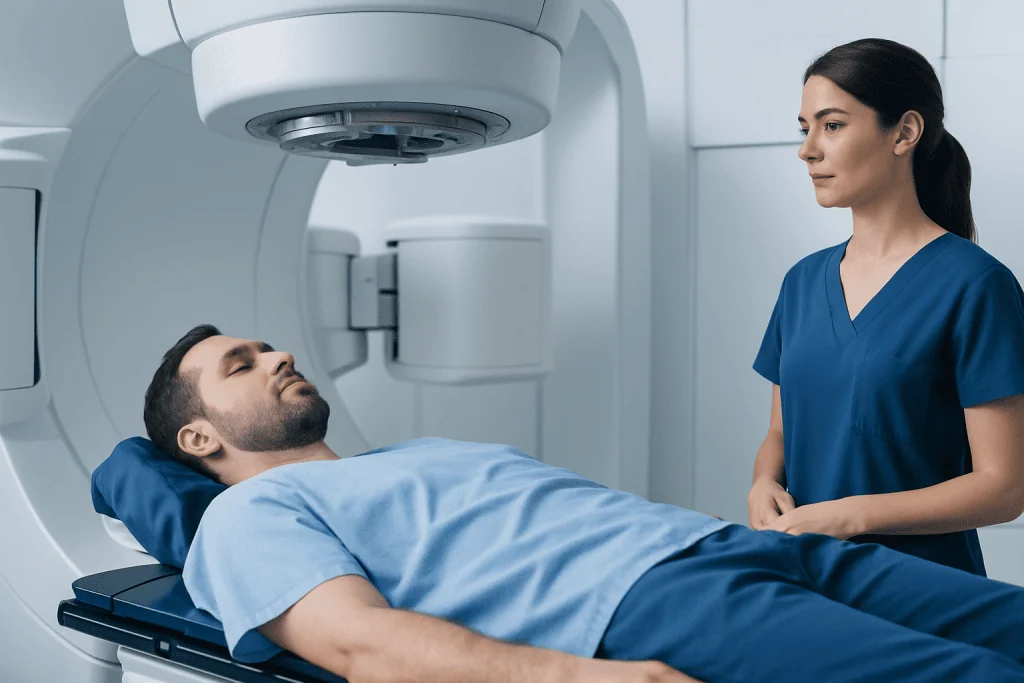
When melanoma has spread or has a substantial risk of returning, medical oncology treatments may be considered. Immunotherapy helps the immune system recognize and attack cancer cells. Targeted therapy is an option for selected melanomas with particular gene changes, most commonly a BRAF mutation. Radiation therapy may occasionally be used for a specific area, such as a site with a high risk of local recurrence or symptoms from melanoma spread.
Care is individualized rather than determined by a single test result. A multidisciplinary team reviews pathology, imaging, surgical options, and personal priorities before recommending the most appropriate sequence of treatment.
Who May Be a Candidate for Different Treatments?

Most people with confirmed melanoma are candidates for some form of treatment, but the type and intensity vary. Thin, early melanomas are often managed with surgery alone. A sentinel lymph node biopsy may be discussed when tumor depth or other pathology features suggest a meaningful possibility of spread to nearby lymph nodes.
People with stage III melanoma, recurrent melanoma, or melanoma that has spread to distant organs may be considered for immunotherapy, targeted therapy, surgery for selected sites, radiation therapy, or combinations of these treatments. Testing the tumor for genetic changes can help identify whether targeted medicines may be useful.
Overall health, existing autoimmune disease, heart, lung, liver, kidney, or neurologic conditions, pregnancy status, and current medicines can all affect treatment choices. For example, immune-based medicines can be highly valuable for some patients but require careful assessment and monitoring because they can cause inflammation in healthy organs.
Patients should ask their cancer team what stage has been assigned, what the treatment goal is, whether additional tests are needed, and how each option may affect daily life. A second opinion may also be appropriate when treatment decisions are complex.
What Happens Step by Step?
The first step is usually a skin biopsy. A doctor removes all or part of the suspicious lesion and a pathologist examines it under a microscope. The pathology report describes features such as Breslow thickness, ulceration, and cell division activity, which help estimate risk and guide staging.
If melanoma is diagnosed, the treating team discusses whether a wider excision is needed and whether lymph-node assessment is appropriate. Before surgery, the clinician reviews medical history, allergies, medications, and anesthesia considerations. On the day of the procedure, the area may be treated under local anesthesia, sedation, or general anesthesia depending on the location and extent of surgery.
After the melanoma is removed, the wound may be closed directly, or it may require a skin graft or flap if a larger area needs reconstruction. If a sentinel lymph node biopsy is performed, a small incision is made near the identified lymph-node basin, such as the armpit, groin, or neck. Results are reviewed after pathology processing is complete.
If systemic treatment is recommended, patients have baseline assessments and periodic monitoring during care. Infusion appointments, scans, blood tests, symptom review, and skin examinations are scheduled according to the treatment plan. The team may adjust care if side effects develop or test results change.
Recovery Timeline, Benefits and Possible Risks
Recovery after a simple excision is often measured in days to a few weeks, depending on the size and location of the wound. Tenderness, mild swelling, bruising, or tightness may occur initially. People are typically given instructions about wound care, activity limits, bathing, scar care, and when stitches should be removed if non-dissolving sutures were used.
Recovery may take longer after a larger excision, skin graft, flap reconstruction, or lymph node surgery. The treating team may advise temporary limits on vigorous exercise, lifting, or movements that stretch the surgical area. Contact the care team for increasing redness, warmth, drainage, fever, worsening pain, wound separation, or swelling of an arm or leg.
The main benefit of surgery is removal of the known melanoma, and it can be curative for many early-stage cases. Potential surgical risks include bleeding, infection, delayed healing, scarring, numbness, changes in sensation, and, after lymph-node procedures, fluid collection or lymphedema. The likelihood of each risk varies by procedure and body location.
Immunotherapy and targeted therapy can reduce recurrence risk for some patients and can help control advanced melanoma. However, they can also cause side effects that range from fatigue, rash, diarrhea, or fever to less common but serious immune-related inflammation of organs. Symptoms should be reported promptly so the oncology team can assess and manage them safely.
How Long Does It Take for Melanoma to Go From Stage 1 to 4?
There is no reliable fixed timeline for melanoma to progress from stage I to stage IV. Some melanomas may grow or spread over months, while others can remain localized for longer periods. The rate depends on the melanoma subtype, depth, ulceration, biology of the tumor, immune response, and whether it is recognized and removed early.
Stage is not simply a measure of how long a mole has been present. It reflects features found at diagnosis, including tumor thickness, ulceration, lymph-node involvement, and spread to distant sites. A person cannot determine stage by looking at a lesion or by estimating how quickly it has changed.
Rather than waiting to see whether a spot changes further, it is best to arrange a clinical assessment for a new, unusual, changing, itchy, bleeding, or non-healing skin lesion. Early evaluation gives the best opportunity for diagnosis and treatment before melanoma becomes more advanced.
What Is the 2 Week Rule for Melanoma?
The “2 week rule” is not a universal medical rule that can diagnose melanoma or safely exclude it. In some healthcare settings, it refers to an urgent referral pathway intended to help people with suspected cancer be assessed quickly, often within about two weeks. Referral practices differ by country, health system, and individual clinical circumstances.
For melanoma, the more important principle is prompt assessment of a concerning skin change. The ABCDE guide can be useful: asymmetry, irregular border, varied color, diameter that is increasing or is larger than many ordinary moles, and evolution or change. Some melanomas do not follow every ABCDE feature, so any lesion that looks different from a person’s other spots should be checked.
A new rapidly growing bump, a mole that changes in shape or color, a lesion that bleeds without clear injury, or a sore that does not heal warrants medical review. A clinician can examine the skin with dermoscopy and determine whether biopsy is needed.
Is Melanoma One of the Worst Cancers to Have?
Melanoma can be serious because it has the potential to spread beyond the skin, especially when it is thicker, ulcerated, or diagnosed at a later stage. However, it is not helpful or medically accurate to rank cancers as simply “worst.” Each cancer behaves differently, and outlook depends on the specific type, stage, biology, available treatments, and a person’s overall health.
Many melanomas found early can be treated successfully with surgery. Even when melanoma has spread, treatment options have expanded substantially, including immune checkpoint inhibitors and targeted therapies for eligible tumors. These treatments have changed how advanced melanoma can be managed for many patients.
Receiving a melanoma diagnosis can be emotionally difficult. Clear communication with the treatment team, support from family or trusted friends, and access to counseling or support services can help patients navigate decisions and follow-up care.
What Is the 5-Year Survival Rate for Patients With Melanoma?
Five-year survival for melanoma varies widely by stage at diagnosis. Population-level data consistently show that people diagnosed with localized melanoma have a much more favorable outlook than those diagnosed after the disease has spread to regional lymph nodes or distant organs. Exact figures differ across registries, countries, treatment eras, age groups, and melanoma subtypes.
Survival statistics describe groups of people and cannot predict an individual outcome. They may also lag behind current practice because newer immunotherapy and targeted treatments have improved options for many people with advanced disease. A treating oncologist can explain how stage, pathology findings, imaging, treatment response, and overall health relate to an individual prognosis.
It can be useful to ask whether a statistic refers to relative survival or overall survival, which stage grouping was used, and when the data were collected. These details provide important context and can prevent broad numbers from being misunderstood.
When to Seek Medical Care
Seek a prompt appointment with a dermatologist or doctor for a new or changing mole, a spot that looks unlike the others, or a lesion that changes in size, shape, color, texture, or sensation. Itching, tenderness, bleeding, crusting, or a sore that does not heal should also be assessed, especially if there is no clear explanation.
People with a previous melanoma, many atypical moles, a strong family history of melanoma, or a weakened immune system may need regular professional skin examinations. The appropriate schedule should be set with a dermatologist or oncology team based on personal risk.
After melanoma treatment, contact the care team for new swollen lymph nodes, persistent unexplained symptoms, or a new suspicious skin lesion. These symptoms often have causes other than melanoma, but they should not be ignored in someone with a history of the disease.
Acibadem International’s multidisciplinary specialists and JCI-accredited hospitals support international patients with diagnosis, treatment planning, surgery, medical oncology care, and follow-up for melanoma.
Frequently asked questions
Can melanoma be treated with surgery alone?
Yes. Many early-stage melanomas are treated with surgery alone, usually with a wide local excision to remove the tumor and a surrounding margin of skin. Whether additional treatment is needed depends on pathology findings, lymph-node status, and stage.
Does every melanoma require a sentinel lymph node biopsy?
No. Sentinel lymph node biopsy is not needed for every melanoma. It is generally considered when melanoma thickness or other high-risk features make lymph-node staging likely to provide useful information.
Can melanoma come back after it has been removed?
Melanoma can recur locally, in nearby lymph nodes, or elsewhere in the body, although recurrence risk varies by stage and tumor features. Regular follow-up and self-skin checks help identify new concerns early.
What does a melanoma scar look like after surgery?
A surgical scar may initially appear red, raised, firm, or tender and usually changes gradually over months. The final appearance depends on the surgical site, wound size, closure method, skin type, healing, and whether reconstruction was needed.
Can sunscreen prevent melanoma?
Sunscreen is an important part of reducing ultraviolet exposure, but it should be used together with shade, protective clothing, sunglasses, and avoiding tanning beds. No prevention method eliminates all melanoma risk, so skin awareness remains important.
Should family members be checked if someone has melanoma?
Family members may have an increased risk when there is a strong family history of melanoma or atypical moles. They should discuss their personal and family history with a dermatologist, who can advise on skin examinations and sun-protection habits.
References
- National Cancer Institute
- American Cancer Society
- American Academy of Dermatology
- National Comprehensive Cancer Network
- World Health Organization
This article is for general information only and is not a substitute for professional medical advice. Please consult a qualified doctor about your individual situation.
Melanoma in Turkey — costs, top hospitals & a free quote
JCI-accredited · board-certified surgeons · reply within 24h
Add us as a Preferred Source to see more of our trusted health content across Google Search, AI Overviews and Discover.

Medical Oncology Department
Medical treatment of cancer with chemotherapy, immunotherapy and targeted therapies under a multidisciplinary tumor board.
60 specialists in this unit