Meniscus Surgery: Benefits, Risks, and Recovery — A Complete Guide

Meniscus surgery is not the first treatment for every meniscus tear; many people improve with non-surgical care. The two main surgical approaches are meniscus repair and partial meniscectomy, and the choice depends on tear pattern, location, age, and knee health.
Key Takeaways
- Meniscus surgery is not the first treatment for every meniscus tear; many people improve with non-surgical care.
- The two main surgical approaches are meniscus repair and partial meniscectomy, and the choice depends on tear pattern, location, age, and knee health.
- Arthroscopic techniques use small incisions and are commonly performed as minimally invasive procedures.
- Meniscus repair usually preserves more cartilage but often requires a longer recovery than trimming the torn part.
- Rehabilitation is an essential part of recovery and helps restore knee motion, strength, and stability.
- A doctor should assess persistent knee pain, locking, swelling, or trouble bearing weight.
Meniscus surgery is used to treat a torn meniscus when knee pain, swelling, locking, or limited movement does not improve with rest, physical therapy, and other non-surgical care. The procedure is usually done arthroscopically and may involve repairing the torn cartilage or removing the damaged portion, with recovery depending on the type of surgery and the tear itself.
Overview: What Meniscus Surgery Is and Why It Is Done
Meniscus surgery treats a torn meniscus, a common knee injury involving the C-shaped cartilage that cushions and stabilizes the joint. In answer to the most common question, meniscus surgery can help reduce pain, improve knee function, and address symptoms such as catching or locking when non-surgical treatment has not been enough. It is most often performed using arthroscopy, a minimally invasive approach with small incisions and a camera.
The meniscus has an important role in distributing weight across the knee, absorbing shock, and helping the joint move smoothly. When it tears, symptoms may range from mild discomfort to more disruptive problems, especially during walking, twisting, squatting, or sports. Some tears occur after a sudden pivoting injury, while others develop gradually as the tissue becomes weaker with age.
Meniscus surgery is not automatically needed for every tear. Doctors first consider the person’s symptoms, activity level, age, examination findings, and imaging results. Treatment may start with rest, ice, medication, activity modification, and rehabilitation. Surgery is usually considered when symptoms continue, the knee repeatedly locks, or the tear is unlikely to heal well on its own.
Because meniscus injuries often overlap with other knee problems, evaluation may also consider conditions such as knee pain and related cartilage or ligament damage. For patients who need an operation, the main goal is to preserve as much healthy meniscal tissue as possible while improving comfort and mobility.
Who May Need Meniscus Surgery
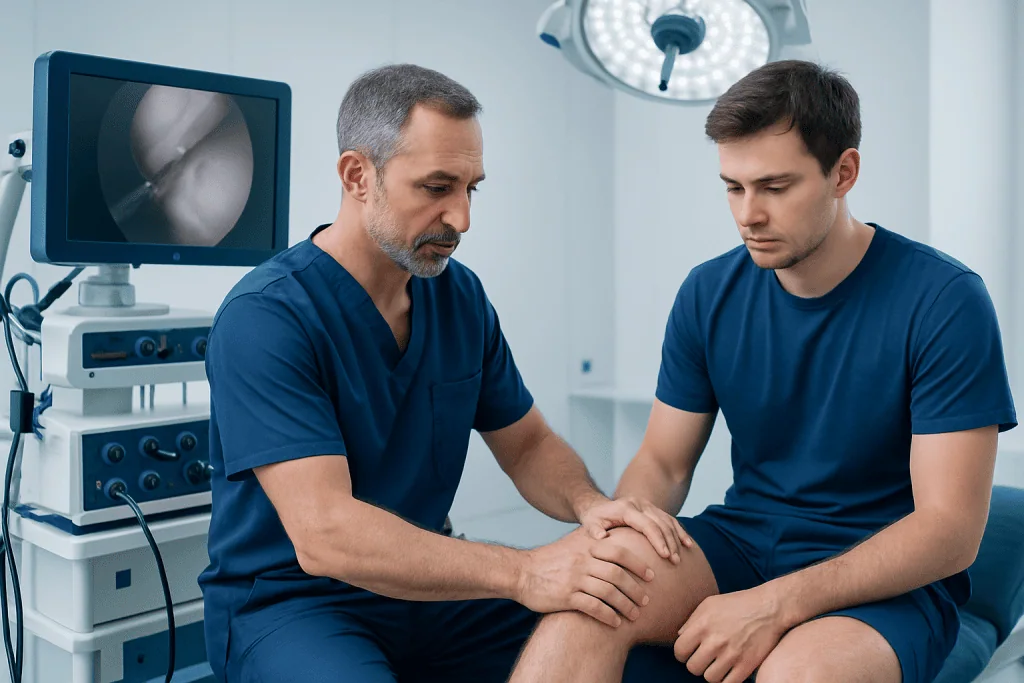
A person may be a candidate for meniscus surgery if they have ongoing knee pain, swelling, reduced range of motion, or mechanical symptoms like catching, clicking, or locking that interfere with daily life or sports. Surgery becomes more likely when symptoms continue despite a trial of non-surgical care, especially if imaging confirms a tear that matches the symptoms.
The type of tear matters. Tears near the outer edge of the meniscus may have a better blood supply and a better chance of healing if repaired. Complex, degenerative, or frayed tears in areas with poor blood flow may be less suitable for repair and may instead be treated by trimming the damaged portion. The surgeon also considers whether the tear is stable or likely to worsen.
Age alone does not decide candidacy. Younger people with acute sports injuries may be stronger candidates for meniscus repair, especially when preserving cartilage is important for long-term knee health. Older adults can also benefit from surgery, but if the tear is degenerative and accompanied by osteoarthritis, non-surgical treatment may remain the preferred first step.
Associated injuries can affect the decision as well. A meniscus tear may occur alongside ligament damage, including an ACL tear, and this can influence both timing and surgical planning. A careful orthopedic assessment helps determine whether surgery is appropriate and which technique offers the best balance of benefit and recovery.
How the Procedure Works: Main Types of Meniscus Surgery

Meniscus surgery is usually performed arthroscopically. This means the surgeon makes small incisions around the knee and inserts a thin camera and specialized instruments. The camera displays the inside of the joint on a screen, allowing the surgeon to examine the tear and treat it with less disruption to surrounding tissue than open surgery.
There are two main approaches. Meniscus repair involves stitching or securing the torn cartilage so it can heal. This option is generally preferred when the tear pattern and location make healing possible because preserving the meniscus may better protect the knee over time. In some cases, devices such as sutures or anchors are used to hold the tissue together while it heals.
The second common option is partial meniscectomy, which removes only the damaged part of the meniscus while keeping as much healthy tissue as possible. This may be recommended when the tear cannot be repaired reliably. Total meniscectomy, or removal of the whole meniscus, is uncommon today because keeping meniscal tissue is important for long-term joint protection.
In selected cases, treatment may be part of broader knee surgery planning if there are additional structural problems in the joint. The exact technique is individualized after the surgeon reviews symptoms, examination findings, MRI results, and what is seen directly during arthroscopy.
Step by Step: What Happens Before, During, and After Surgery
Before surgery, the patient typically has a consultation, physical examination, and imaging review, often including MRI. The surgeon discusses goals, expected recovery, alternatives to surgery, and possible risks. Patients may be advised about fasting, medication adjustments, and plans for crutches, a brace, or physical therapy after the procedure.
On the day of surgery, anesthesia may be general, regional, or sometimes local with sedation, depending on the case and medical history. After cleaning the knee, the surgeon makes small incisions and inserts the arthroscope. Sterile fluid is used to expand the joint and improve visibility. The torn meniscus is then repaired or trimmed based on the findings.
If the meniscus is repaired, the surgeon places sutures or fixation devices to hold the tear in position. If a partial meniscectomy is performed, unstable torn fragments are removed and the remaining edges are smoothed. The surgeon may also inspect the cartilage surfaces, ligaments, and other structures inside the knee before closing the small incisions.
After surgery, patients usually spend a short time in recovery before going home the same day. Instructions commonly include pain control, wound care, icing, leg elevation, and guidance on walking or weight-bearing. Many patients then begin a rehabilitation program, sometimes through physical therapy and rehabilitation, to support safe healing and a gradual return to activity.
Benefits, Risks, and Possible Complications
The benefits of meniscus surgery depend on the type of tear and the operation performed. Potential benefits include reduced pain, less swelling, improved knee motion, better joint stability, and relief from locking or catching. For active people, surgery may also support a return to work, exercise, or sports after symptoms have limited function.
Meniscus repair has the important advantage of preserving more natural cartilage. This may help maintain the knee’s shock-absorbing function over time. However, because the tissue needs time to heal, repair usually involves more restrictions during recovery than partial meniscectomy. Partial meniscectomy often allows a faster early recovery, but it removes tissue that helps protect the joint.
As with any procedure, there are risks. These include infection, bleeding, blood clots, stiffness, persistent pain, swelling, nerve or vessel injury, and problems related to anesthesia. There is also a chance that symptoms may not fully resolve, especially if there is underlying arthritis or other knee damage.
Meniscus repair carries a specific risk that the tear may not heal completely or could tear again. Partial meniscectomy may relieve symptoms but can increase contact stress in the knee because less cushioning tissue remains. A surgeon helps weigh these benefits and risks based on the person’s anatomy, symptoms, and long-term joint health goals.
Recovery Timeline and Rehabilitation
Recovery after meniscus surgery varies considerably depending on whether the meniscus was repaired or partially removed. After a partial meniscectomy, many people begin walking relatively quickly, often with temporary support, and may resume everyday activities within a few weeks. Recovery after meniscus repair is usually slower because the repaired tissue needs protection while it heals.
In the first days after surgery, swelling control and pain management are priorities. Patients are often advised to elevate the leg, use ice packs as directed, and perform simple exercises to maintain circulation and prevent stiffness. Some people need crutches for a short time, while others, especially after repair, may need a brace and limits on weight-bearing or knee bending for several weeks.
Rehabilitation usually progresses in stages. Early therapy focuses on reducing swelling and restoring gentle range of motion. Later phases strengthen the quadriceps, hamstrings, and hip muscles, improve balance, and retrain movement patterns. Return to running, pivoting sports, or high-impact activity is guided by healing, strength, knee control, and the surgeon’s advice.
Timelines are individualized, but in general, recovery after meniscus repair may take several months, while partial meniscectomy recovery is often shorter. Following postoperative instructions closely is important because doing too much too soon can delay healing, especially after repair. For patients seeking coordinated care, Acibadem International’s multidisciplinary specialists at JCI-accredited hospitals diagnose and treat meniscus injuries for international patients.
Self-care, Prevention, and Long-term Knee Health
Not every meniscus tear can be prevented, especially those related to age-related tissue changes. Still, good knee habits may lower injury risk and support joint health over time. Regular strengthening of the thigh and hip muscles helps the knee absorb force more effectively, while flexibility and balance training can improve movement control.
During sports or exercise, warming up properly and using correct technique may reduce strain during sudden turns, squats, or jumps. Gradually increasing intensity is usually safer than sudden spikes in training load. Supportive footwear and attention to playing surfaces may also help limit stress on the knees.
After surgery or after a non-surgical knee injury, returning to activity too quickly can raise the risk of ongoing symptoms or reinjury. Sticking to a rehabilitation plan, respecting pain and swelling, and building strength step by step are often more effective than rushing back to full activity.
Weight management can also support long-term knee health by reducing repeated load through the joint. If knee discomfort persists, a structured evaluation may be useful to understand whether symptoms are related to the meniscus, ligaments, alignment, or other conditions requiring targeted treatment.
When to Seek Medical Care
Medical evaluation is important if knee pain starts after a twist, pivot, fall, or sports injury and does not settle with rest. A doctor should also assess swelling that keeps returning, difficulty fully straightening or bending the knee, or a feeling that the joint is catching or locking.
Urgent assessment may be needed if the person cannot bear weight, the knee is very unstable, or there is marked swelling soon after injury. Fever, redness, warmth, severe calf pain, or shortness of breath after surgery also need prompt medical attention because they may indicate a complication.
People with persistent symptoms despite medication, exercise therapy, or activity modification should ask whether further evaluation is needed. Imaging and an orthopedic review can help clarify whether symptoms are due to a meniscus tear, arthritis, ligament injury, or another cause.
When surgery is advised, patients may wish to discuss arthroscopic options such as arthroscopic surgery and whether repair or partial meniscectomy is more appropriate. Understanding the expected recovery, restrictions, and rehabilitation plan helps people make informed decisions with their care team.
Frequently asked questions
Is meniscus surgery always necessary for a torn meniscus?
No. Many meniscus tears improve with rest, activity modification, physical therapy, and other non-surgical treatments. Surgery is usually considered when symptoms persist, the knee locks, or the tear pattern is unlikely to heal well without an operation.
What is the difference between meniscus repair and meniscectomy?
Meniscus repair aims to stitch the torn cartilage back together so it can heal. Partial meniscectomy removes only the damaged portion when repair is not likely to succeed. Repair preserves more tissue but usually requires a longer recovery.
How long does recovery take after meniscus surgery?
Recovery depends on the procedure and the individual patient. Partial meniscectomy often allows a quicker return to daily activity, while meniscus repair usually takes longer because the tissue needs time to heal. A doctor and physical therapist can provide a timeline based on progress.
Will a person need physical therapy after meniscus surgery?
In many cases, yes. Physical therapy helps restore movement, strength, balance, and confidence in the knee. It also supports a safer return to walking, work, exercise, and sports.
Can a repaired meniscus tear again?
Yes, a repaired meniscus can re-tear, especially if the tissue does not heal fully or the knee is stressed too early. Following weight-bearing limits, brace instructions, and rehabilitation guidance can help protect the repair.
Is meniscus surgery done under general anesthesia?
It can be done under general anesthesia, but some patients have regional anesthesia or sedation depending on the procedure and their medical situation. The anesthesia plan is discussed before surgery. The goal is to keep the patient comfortable and safe during the operation.
References
- American Academy of Orthopaedic Surgeons
- National Institute of Arthritis and Musculoskeletal and Skin Diseases
- American Orthopaedic Society for Sports Medicine
- MedlinePlus
- OrthoInfo
This article is for general information only and is not a substitute for professional medical advice. Please consult a qualified doctor about your individual situation.
Meniscus Surgery in Turkey — costs, top hospitals & a free quote
JCI-accredited · board-certified surgeons · reply within 24h
Add us as a Preferred Source to see more of our trusted health content across Google Search, AI Overviews and Discover.

More from the Health Library



Related Specialists

Prof. Dr. Sinan Karaoğlu
Orthopedic Surgery & Traumatology
Assoc. Prof. Dr. Serap Şahin Önder
Otorhinolaryngology
Dr. Mehmed Fatih Yumrutaş
Inpatient Clinic Physicians Clinical Service
Dr. İlksen Özlü
Radiology