Misaligned Eye Surgery: Procedure, Recovery and Results

Strabismus surgery changes the pull of selected eye muscles; it does not directly operate on the inside of the eye. Children and adults may be candidates when eye misalignment causes double vision, head turning, visual symptoms or cosmetic concerns.
Key Takeaways
- Strabismus surgery changes the pull of selected eye muscles; it does not directly operate on the inside of the eye.
- Children and adults may be candidates when eye misalignment causes double vision, head turning, visual symptoms or cosmetic concerns.
- Most people go home the same day, with redness and irritation improving gradually over several weeks.
- Surgery can improve alignment and symptoms, but glasses, prism lenses, vision therapy or further treatment may still be needed.
- A new eye turn or double vision after cataract surgery should be assessed by an ophthalmologist to identify its cause.
Misaligned eye surgery, also called strabismus or eye muscle surgery, repositions one or more eye muscles to help the eyes point in the same direction. It may reduce double vision, improve abnormal head posture and enhance appearance, although the effect on vision itself depends on the underlying cause.
Overview: What Is Misaligned Eye Surgery?
Misaligned eye surgery is a procedure that treats strabismus, a condition in which the eyes do not look in the same direction at the same time. The surgeon works on the muscles attached to the outside of the eye, weakening, strengthening or repositioning selected muscles so the eyes can align more effectively. It is commonly called strabismus surgery or eye muscle surgery.
The procedure can be performed in childhood or adulthood. Its goals may include improving the position of the eyes, reducing double vision, relieving compensatory head tilting or turning, and improving confidence about eye appearance. The surgical plan is individualized because the direction, size and cause of the misalignment differ from person to person.
Eye alignment surgery does not correct every cause of reduced vision. For example, if one eye has longstanding amblyopia, retinal disease or optic nerve damage, muscle surgery cannot restore vision lost from that condition. However, improved alignment may still provide important functional and social benefits.
How Eye Muscle Surgery Works and Who May Benefit
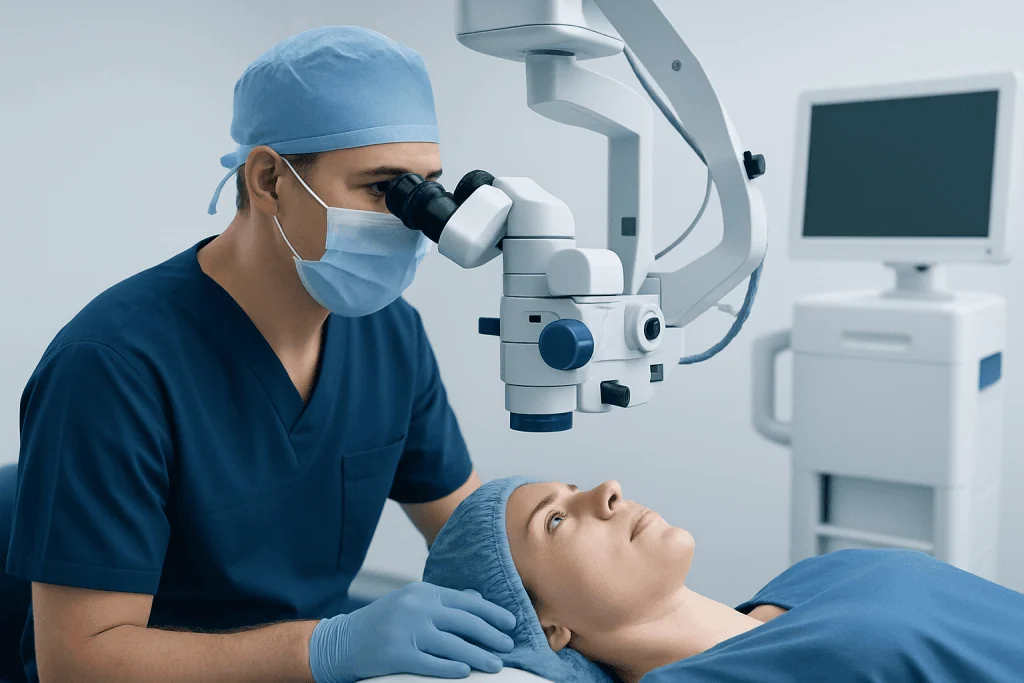
Six muscles move each eye. In strabismus, the balance between these muscles or the nerve signals controlling them may be altered. During surgery, an ophthalmologist with expertise in strabismus changes the tension or attachment point of one or more muscles. A recession moves a muscle farther back to reduce its pull, while a resection or plication strengthens its effect. Some adults may be offered adjustable sutures, which allow fine adjustment of alignment shortly after surgery.
Potential candidates include children or adults with an inward, outward, upward or downward eye turn; persistent or troubling double vision; a compensatory head posture; or eye misalignment affecting daily life. Surgery may be recommended after a full eye examination and measurement of alignment, sometimes following a trial of glasses, prism lenses, patching in selected children or treatment of an underlying eye condition.
Misaligned eyes after cataract surgery can occur when cataract removal reveals a pre-existing tendency for the eyes to drift, changes how the brain uses visual input, or is associated with another eye-muscle or nerve problem. Misalignment after cataract surgery is not automatically an indication for surgery. An ophthalmologist should first determine whether the change is temporary, related to the prescription difference between the eyes, or due to a condition requiring other care.
Assessment and Planning Before Surgery

Planning begins with a detailed eye examination. The ophthalmologist checks vision in each eye, refraction for glasses needs, eye movements, eyelid position and the size of the deviation at near and distance. Measurements may be repeated on different visits because alignment can vary with fatigue, focus and general health.
For adults with new-onset double vision or a sudden eye turn, the assessment may include evaluation for neurologic, thyroid-related, muscle or orbital causes. Blood tests, imaging or consultation with another specialist may be appropriate when symptoms or examination findings suggest an underlying condition. This careful assessment helps ensure that surgery addresses the correct problem.
Before the procedure, patients should provide a full medication list and report allergies, bleeding disorders, sleep apnea, diabetes or prior eye surgery. The surgical and anesthesia teams give individualized instructions about eating, drinking and medicines before surgery. Patients should ask when to pause or continue blood-thinning medicines rather than making changes on their own.
Step by Step: What Happens During the Procedure
Strabismus surgery is usually an outpatient procedure, meaning the person returns home the same day. Children commonly receive general anesthesia. Adults may receive general anesthesia or, in selected settings, local anesthesia with sedation. The approach depends on the patient’s age, health, planned operation and preferences.
The surgeon makes a small incision in the conjunctiva, the thin clear tissue covering the white part of the eye. The eye itself is not removed, and surgery does not involve the retina or optic nerve. The surgeon identifies the planned muscle or muscles and moves, shortens, folds or reattaches them as needed to change their action.
Absorbable stitches are often used. The conjunctiva is then repositioned, and the eye may be treated with antibiotic ointment or drops. Surgery length varies with the number of muscles and complexity of the alignment, but many procedures take less than a few hours from preparation through recovery. Strabismus surgery should be discussed with a qualified ophthalmologist who can explain the plan for the individual eye movement pattern.
Recovery Timeline and What to Avoid After Strabismus Surgery
After surgery, the eye commonly feels scratchy, watery or mildly painful, and the white of the eye is usually red. Temporary blurred vision, light sensitivity, eyelid swelling and a small amount of blood-tinged tearing can occur. These effects typically improve over days, while redness may take several weeks to fade completely.
In the first day or two, rest and prescribed eye drops or ointment are usually recommended. Many people can resume light daily activities within a few days, depending on comfort and their clinician’s advice. Follow-up appointments are important because the eye position, healing tissues and vision need to be checked.
What can you not do after strabismus surgery? Patients are generally advised not to rub or press on the eye and to avoid swimming, hot tubs and potentially contaminated water until the surgeon confirms healing. Contact sports, heavy exertion and activities that increase the chance of eye injury may need to be postponed for a short period. Eye makeup, driving and return to work or school should follow the clinician’s specific guidance, especially if vision is blurred or double.
- Use medicines exactly as prescribed and wash hands before applying drops.
- Protect the eye from dust, accidental rubbing and trauma.
- Attend scheduled reviews, even if the eye seems to be healing well.
- Contact the surgical team promptly if symptoms worsen rather than improve.
Benefits, Limits and Possible Risks
The main benefit of misaligned eye surgery is better eye alignment. For some people, this reduces double vision, improves the ability to maintain eye contact or helps them hold their head in a more comfortable position. In children, alignment may support normal visual development alongside other treatments. In adults, treatment can improve everyday function and quality of life even when the misalignment has been present for many years.
Can you see better after strabismus surgery? Some people see more comfortably because double vision decreases or the eyes work together more effectively. However, the surgery does not directly correct refractive error, cataract, retinal disease or optic nerve disease. Glasses or contact lenses may still be needed, and vision improvement cannot be predicted without understanding the cause of reduced vision.
Risks are uncommon but include infection, bleeding, scarring, persistent redness, allergic reaction to medicines or anesthesia, and temporary or persistent double vision. The alignment may be undercorrected or overcorrected, and some people need glasses, prism treatment, botulinum toxin treatment or another operation. Rarely, serious complications can affect vision; urgent evaluation is important for severe pain, rapidly worsening vision or marked swelling.
Is Adult Strabismus Surgery Worth It?
Whether adult strabismus surgery is worth it depends on the person’s symptoms, goals, examination findings and likelihood of a stable result. Adults may benefit when misalignment causes double vision, eye strain, difficulty with certain tasks, abnormal head posture or distress about appearance. Age alone is not a reason to avoid assessment or treatment.
The decision is best made after discussion with a strabismus specialist. The clinician can explain whether the deviation is likely to respond to surgery, whether adjustable sutures are appropriate, and whether glasses or prisms could help first. In some cases, the safest or most useful approach is observation or non-surgical management.
How painful is strabismus surgery? Pain during the operation is prevented with anesthesia. Afterwards, most people describe irritation, grittiness, soreness or a pulling sensation rather than severe pain. Prescribed or clinician-approved pain relief, cool compresses when recommended, and rest can help; severe or increasing pain should be reported promptly.
When to Seek Medical Care
Arrange an eye examination for a persistent eye turn, recurring double vision, new head tilting, difficulty focusing or concern about eye appearance. Children with suspected eye misalignment should be assessed promptly, as early identification of vision problems can be important for visual development. Adults should not assume that a new eye deviation is only cosmetic.
Seek urgent medical attention for sudden double vision, sudden eye misalignment, vision loss, severe headache, weakness, facial drooping, difficulty speaking, severe eye pain, fever or significant swelling around the eye. These symptoms can sometimes indicate a problem beyond the eye muscles and need timely evaluation.
After surgery, contact the treating team promptly for worsening redness, discharge, fever, increasing pain, a marked decline in vision, persistent vomiting or other concerning symptoms. Acibadem International’s multidisciplinary specialists and JCI-accredited hospitals assess and treat strabismus and related eye-movement concerns for international patients.
Frequently asked questions
What is misaligned eye surgery called?
Misaligned eye surgery is most often called strabismus surgery or eye muscle surgery. It changes the position or strength of selected muscles on the outside of the eye to improve eye alignment.
Can strabismus surgery be performed on adults?
Yes. Adults can have strabismus surgery when it is appropriate for their eye-movement problem and general health. It may help with double vision, abnormal head posture, visual comfort and appearance, but individual results depend on the cause of the misalignment.
How long does it take to recover from strabismus surgery?
Many people return to light activities within a few days, although comfort and visual clarity can vary. Eye redness and mild irritation may last several weeks, and the surgeon will advise when activities such as swimming, exercise and driving can safely resume.
Can cataract surgery cause eye misalignment?
Cataract surgery can occasionally make a pre-existing eye alignment tendency more noticeable or contribute to double vision in susceptible individuals. New misalignment after cataract surgery should be evaluated because causes may include prescription changes, reduced fusion between the eyes or a separate nerve or muscle condition.
Will I need glasses after strabismus surgery?
Possibly. Eye muscle surgery changes alignment, but it does not usually remove the need for glasses used to correct refractive errors such as nearsightedness, farsightedness or astigmatism. Some people may also use prism lenses for residual double vision.
Can strabismus come back after surgery?
An eye turn can recur or change over time, particularly when the underlying condition changes or when the original deviation is complex. Follow-up helps identify residual or recurrent misalignment, and some patients may benefit from glasses, prisms, additional treatment or repeat surgery.
References
- American Academy of Ophthalmology
- American Association for Pediatric Ophthalmology and Strabismus
- National Eye Institute
- Mayo Clinic
This article is for general information only and is not a substitute for professional medical advice. Please consult a qualified doctor about your individual situation.
Eye Surgery in Turkey — costs, top hospitals & a free quote
JCI-accredited · board-certified surgeons · reply within 24h
Add us as a Preferred Source to see more of our trusted health content across Google Search, AI Overviews and Discover.

Ophthalmology
Comprehensive eye care from laser vision correction to retina, cornea and cataract surgery.
75 specialists in this unitMore from the Health Library



Related Specialists

Prof. Dr. Hüseyin Hayrı Kertmen
Neurosurgery
Dr. Süreyya Fethi Paksoy
Pediatrics
Dr. Mukhtar Shahgaldıyev
Physical Medicine & Rehabilitation
Prof. Dr. Mert İlker Hayıroğlu
Cardiology