Myopia: A Complete Medical Overview
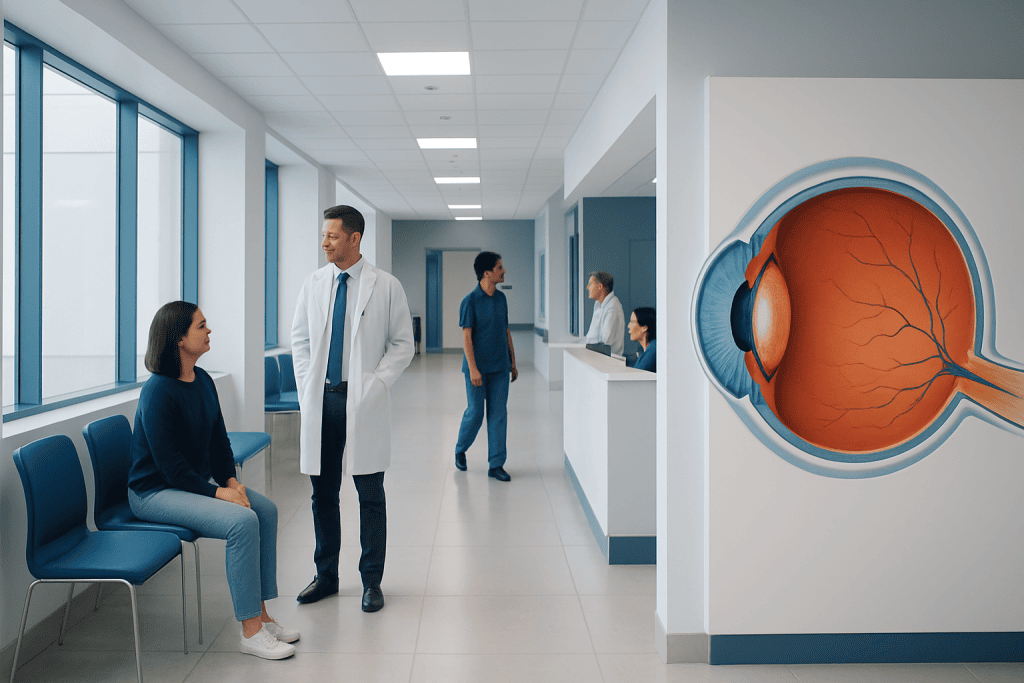
Myopia, also called nearsightedness, causes blurred distance vision. It often begins in childhood and may progress during school-age years.
Key Takeaways
- Myopia, also called nearsightedness, causes blurred distance vision.
- It often begins in childhood and may progress during school-age years.
- Glasses, contact lenses, and some vision correction procedures can improve sight.
- Regular eye exams are important, especially for children and people with high myopia.
- High myopia can raise the risk of retinal and other eye complications.
Myopia is a common vision condition in which nearby objects are clear but distant objects appear blurry. It usually develops when the eye focuses light in front of the retina, and it can often be managed effectively with regular eye care and appropriate treatment.
Overview of myopia
Myopia is the medical term for nearsightedness. A person with myopia usually sees close objects clearly, but objects farther away may look blurred. This happens because light entering the eye is focused in front of the retina instead of directly on it.
In many people, myopia develops gradually during childhood or adolescence and may continue to change for several years. It is one of the most common eye conditions worldwide and can range from mild to severe. For many patients, it is easily corrected with glasses or contact lenses.
Although myopia is often manageable, it should not be dismissed as only an inconvenience. Higher degrees of myopia can increase the risk of certain eye problems later in life, including retinal changes, glaucoma, and cataracts. This is why regular eye examinations remain important even when vision seems stable.
Symptoms and how myopia affects daily life
The main symptom of myopia is blurry distance vision. A person may have difficulty seeing road signs, classroom boards, presentation screens, or faces across a room. Close-up tasks such as reading, writing, or using a phone are often easier.
Other signs can be subtle. Some people squint to see more clearly, sit very close to a television, or hold digital devices very near their face. Children may not realize their vision is different, so teachers or family members are sometimes the first to notice a problem.
Myopia can also contribute to eye strain, headaches, and visual fatigue, especially when a person is trying to focus on distant objects for long periods. Typical symptoms may include:
- Blurred vision when looking far away
- Frequent squinting
- Headaches related to visual effort
- Eye strain, especially after school or driving
- Difficulty seeing clearly at night, in some cases
When corrected properly, most people with myopia can perform normal daily activities comfortably. However, a noticeable change in vision should prompt an eye examination to confirm the cause and rule out other conditions.
Causes and risk factors
Myopia usually occurs when the eyeball is slightly too long from front to back or when the cornea is too curved. In either case, light rays do not focus correctly on the retina. Instead, they come to a focus in front of it, making distant objects appear out of focus.
Both genetic and environmental factors can play a role. Myopia often runs in families, and a child may have a higher chance of developing it if one or both parents are nearsighted. At the same time, modern lifestyle factors such as prolonged near work and limited time outdoors are also being studied for their influence on myopia development and progression.
Risk factors associated with myopia may include:
- Family history of nearsightedness
- Childhood or teenage years, when the eye is still growing
- Frequent close-up work, such as reading or screen use
- Limited outdoor activity
- Existing progression to moderate or high myopia
It is also important to distinguish common myopia from other eye conditions that affect vision. An eye specialist may evaluate whether blurred vision is due to simple refractive error or another problem, such as cataract or retinal disease. In some patients, high myopia may need closer follow-up because it can overlap with other retinal conditions.
How myopia is diagnosed
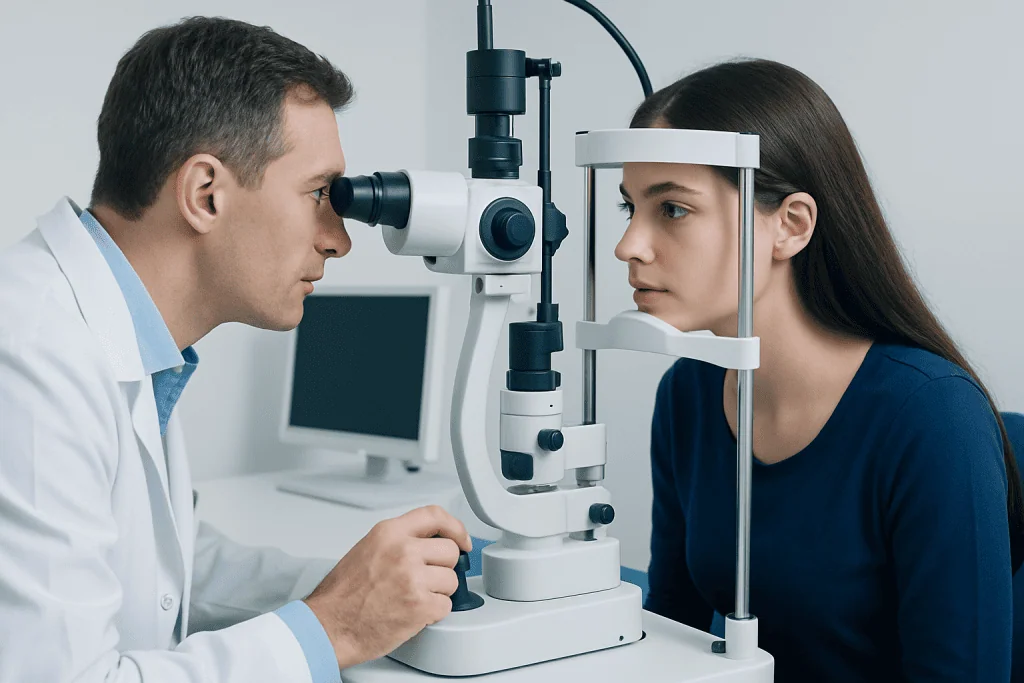
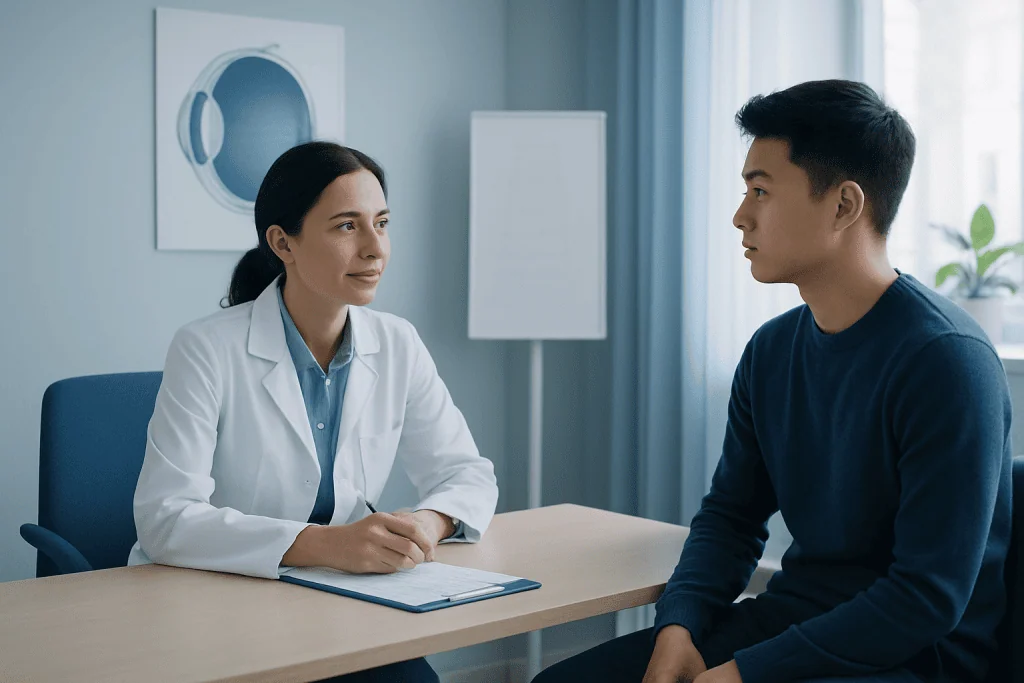
Myopia is diagnosed through a comprehensive eye examination. This usually includes a review of symptoms, visual acuity testing, and refraction to determine the lens power needed for clearer vision. The doctor may also examine the front and back of the eye to assess overall eye health.
For children, vision screening can suggest a problem, but a full eye exam is needed to confirm the diagnosis. Early evaluation is helpful because untreated myopia can affect school performance, attention, and confidence. Adults may seek assessment after noticing trouble driving, reading signs, or seeing at a distance.
In some cases, the eye doctor may measure eye length or evaluate the retina more closely, especially if myopia is strong or progressing quickly. This is particularly important in high myopia, where the retina and other structures may be under greater stress.
Diagnosis is also an opportunity to discuss the best correction approach and how often follow-up is needed. If there are signs of another eye disorder, additional testing may be recommended, including a more detailed eye examination.
Treatment options for myopia
The main goal of myopia treatment is to focus light properly on the retina so distance vision becomes clearer. The most common and straightforward options are prescription glasses and contact lenses. These methods do not cure myopia, but they can correct vision effectively for daily life.
For some people, refractive surgery may be an option after the eyes have finished growing and the prescription has become stable. Procedures such as laser eye surgery can reshape the cornea to improve how light is focused. Suitability depends on several factors, including corneal thickness, prescription level, age, and overall eye health.
Children with progressing myopia may be offered management strategies aimed at slowing progression, depending on the ophthalmologist’s assessment. These can include specific optical approaches or other evidence-based interventions chosen on an individual basis. The best plan depends on the child’s age, degree of myopia, and rate of change over time.
People with very high myopia may need long-term monitoring in addition to corrective treatment. If the eye specialist sees changes in the retina or other structures, they may recommend closer follow-up or referral for care related to retinal disease treatment.
Prevention, self-care, and living well with myopia
There is no guaranteed way to prevent myopia in every person, especially when heredity is involved. However, healthy visual habits may support eye comfort and may be helpful for children at risk of progression. Parents and patients can focus on practical steps rather than trying to rely on unproven remedies.
Helpful self-care measures include wearing the correct prescription, attending regular eye exams, taking breaks during prolonged near work, and spending time outdoors when appropriate. For children, consistent follow-up is especially important because their vision can change quickly during growth.
Simple habits that may support eye health include:
- Using prescribed glasses or contact lenses as directed
- Taking regular breaks from reading and screen use
- Maintaining good lighting during close work
- Encouraging outdoor activity for children
- Reporting any sudden vision changes promptly
Adults with myopia should also protect general eye health by managing chronic conditions, avoiding smoking, and seeking routine care. Nearsightedness itself is common, but any sudden change in flashes, floaters, or a shadow in vision needs prompt medical evaluation because it can signal a retinal problem.
When to seek medical care
A routine appointment is appropriate when distance vision becomes blurry, a child begins squinting, or glasses no longer seem to work well. Early evaluation can improve quality of life and help detect progression before it causes avoidable difficulties at school, work, or while driving.
Urgent medical care is needed if vision changes suddenly or if symptoms suggest a more serious eye problem. Warning signs include sudden flashes of light, a rapid increase in floaters, a curtain-like shadow over part of the vision, eye injury, severe pain, or sudden major loss of sight.
People with high myopia should be especially careful about regular follow-up because they may have a greater risk of complications affecting the retina and other eye structures. If specialist care is needed, multidisciplinary eye teams can coordinate diagnosis and treatment. Acibadem International’s JCI-accredited hospitals care for international patients with myopia and related eye conditions, including advanced ophthalmic assessment and treatment planning.
Frequently asked questions
What is myopia?
Myopia is a refractive error, also called nearsightedness, that makes distant objects look blurry while nearby objects are easier to see. It happens when light focuses in front of the retina instead of directly on it.
Can myopia get worse over time?
Yes, myopia can progress, especially during childhood and adolescence while the eyes are still growing. Regular eye exams help track changes and guide the best correction or management plan.
Is myopia the same as needing glasses?
Not everyone who needs glasses has myopia, but myopia is one common reason for wearing them. Glasses or contact lenses can correct blurred distance vision caused by myopia.
Can screen time cause myopia?
Screen time alone is not considered the only cause, but prolonged near work may contribute to myopia development or progression in some people. Balance with breaks and outdoor activity is commonly recommended, especially for children.
Is myopia dangerous?
Mild or moderate myopia is often manageable and does not usually cause serious problems by itself. However, high myopia can increase the risk of complications such as retinal problems, so regular specialist follow-up is important.
Can myopia be cured permanently?
Glasses and contact lenses correct vision but do not cure the underlying refractive error. In selected adults, refractive procedures may reduce dependence on glasses, but suitability must be assessed carefully by an eye specialist.
References
- American Academy of Ophthalmology
- National Eye Institute
- World Health Organization
- American Optometric Association
This article is for general information only and is not a substitute for professional medical advice. Please consult a qualified doctor about your individual situation.
Myopia in Turkey — costs, top hospitals & a free quote
JCI-accredited · board-certified surgeons · reply within 24h
Add us as a Preferred Source to see more of our trusted health content across Google Search, AI Overviews and Discover.

More from the Health Library
Related Specialists

Dr. Adnan Abbasoğlu
Orthopedic Surgery & Traumatology
Dr. Sevim Buzkan Ertuğrul
Acibadem Life Clinical Service
Dr. Cem Tangay
Orthopedic Surgery & Traumatology
Dr. Mehmethan Turan
Pulmonary Medicine