Pain with Pancreas: Possible Causes and When to Seek Care

Pain related to the pancreas is often felt in the upper middle or upper left abdomen and may radiate to the back. Acute pancreatitis, chronic pancreatitis, gallstones, alcohol use, high triglycerides, and some medicines are common causes.
Key Takeaways
- Pain related to the pancreas is often felt in the upper middle or upper left abdomen and may radiate to the back.
- Acute pancreatitis, chronic pancreatitis, gallstones, alcohol use, high triglycerides, and some medicines are common causes.
- Nausea, vomiting, fever, bloating, and pain after eating can help point to pancreatic or nearby digestive problems.
- Sudden severe pain, jaundice, dehydration, fainting, or trouble breathing need urgent medical care.
- Diagnosis often combines a medical history, blood tests, and imaging such as ultrasound, CT, MRI, or endoscopic studies.
- Treatment depends on the cause and may range from fluids, pain control, and diet changes to endoscopic or surgical procedures.
Pain with pancreas usually refers to pain in the upper abdomen that may spread to the back and can happen with pancreatitis, gallstones, digestive disorders, or less commonly pancreatic tumors. Because pancreatic pain overlaps with many other conditions, persistent, severe, or worsening symptoms should be evaluated by a doctor.
Overview: What pain with pancreas can mean
Pain with pancreas most often means pain that seems to come from the pancreas or the organs around it. The pancreas sits deep in the upper abdomen, behind the stomach, and helps with digestion and blood sugar control. When it becomes inflamed or blocked, the pain is commonly felt in the upper middle abdomen and may travel through to the back.
This symptom does not always mean a pancreatic disease. Problems in the gallbladder, stomach, liver, small intestine, or even the chest can sometimes feel similar. For that reason, location alone cannot confirm the cause, and the whole symptom pattern matters.
A useful way to think about pancreatic pain is as a clue rather than a diagnosis. Mild discomfort after a heavy meal may have a very different explanation from constant severe pain with vomiting or fever. Medical evaluation helps separate urgent causes from less serious digestive problems.
How pancreatic pain usually feels

People often describe pancreas-related pain as a deep, steady ache or a sharp, intense pain in the upper abdomen. It may be centered just below the breastbone or slightly to the left, and it can spread to the back. Some people notice that the pain is worse after eating, especially after fatty meals, or when lying flat.
In acute inflammation, the pain may begin suddenly and become severe within hours. In longer-term pancreatic disease, discomfort may come and go at first, then gradually become more frequent. Eating can trigger symptoms because the pancreas releases digestive enzymes in response to food.
Other symptoms may appear at the same time and help doctors narrow the cause. Common associated symptoms include:
- Nausea or vomiting
- Fever or chills
- Bloating or abdominal tenderness
- Loss of appetite
- Diarrhea or oily, hard-to-flush stools
- Unexplained weight loss
- Yellowing of the skin or eyes
Not everyone has the same pattern. Some people have prominent back pain, while others mostly notice digestive upset, early fullness, or weakness. Because the pancreas is located deep in the abdomen, the pain can feel vague or difficult to point to exactly.
Possible causes of pain with pancreas
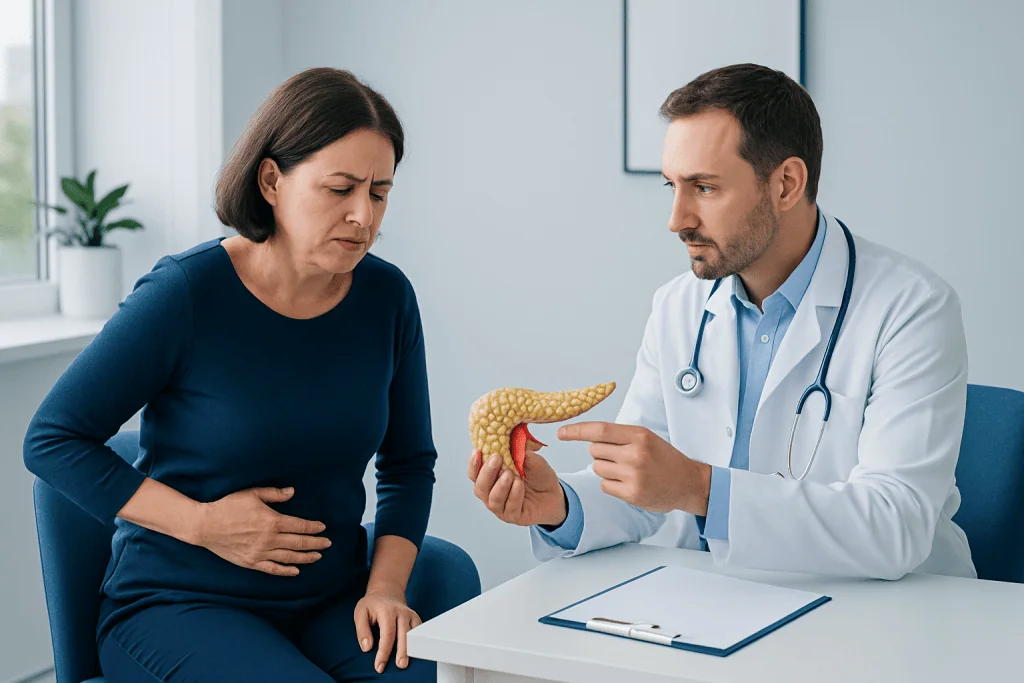
The most common direct cause is pancreatitis, which means inflammation of the pancreas. Pancreatitis can be acute, appearing suddenly, or chronic, developing over time. In both forms, inflammation can interfere with normal digestion and cause significant upper abdominal pain.
Gallstones are another frequent cause because they can block the pancreatic duct or the shared outlet where bile and pancreatic enzymes drain into the intestine. Alcohol use, very high triglyceride levels, some medicines, abdominal injury, certain infections, and autoimmune conditions can also lead to pancreatic inflammation. In some cases, no clear cause is found even after testing.
Less common causes include pancreatic cysts, duct narrowing, inherited pancreatic disorders, and pancreatic tumors. Pancreatic cancer is not the most likely explanation for pancreatic-type pain, but doctors may consider it when pain is persistent or accompanied by jaundice, unexplained weight loss, or new digestive changes.
It is also important to remember that upper abdominal pain may come from nearby organs rather than the pancreas itself. Gallbladder disease, peptic ulcers, severe acid reflux, liver disease, bowel conditions, and sometimes heart problems can produce similar symptoms. This overlap is one reason self-diagnosis is often unreliable.
Risk factors and warning patterns
Certain factors raise the chance that pancreatic pain is linked to real pancreatic disease. These include a history of gallstones, heavy alcohol use, smoking, high triglycerides, obesity, prior episodes of pancreatitis, and a family history of pancreatic disorders. Diabetes, some genetic conditions, and certain medications may also play a role in selected patients.
The way symptoms behave can offer useful clues. Severe pain that starts suddenly, especially with vomiting or fever, may suggest acute pancreatitis or a blocked duct. Recurrent pain after meals, unintended weight loss, greasy stools, or ongoing diarrhea can point toward chronic pancreatic problems that affect digestion.
Jaundice is an especially important warning sign. When the skin or eyes turn yellow, bile flow may be blocked by a gallstone, inflammation, or another structural problem. Dark urine, pale stools, and intense itching can occur along with jaundice and should be assessed promptly.
How doctors diagnose the cause
Diagnosis starts with a detailed history and physical examination. A doctor will ask where the pain is, when it began, whether it spreads to the back, what makes it worse, and whether symptoms such as fever, vomiting, alcohol use, or recent weight loss are present. They will also ask about medicines, gallstones, triglyceride levels, and family history.
Blood tests often help identify pancreatic inflammation or complications. These may include pancreatic enzyme tests, liver tests, blood sugar, triglycerides, markers of infection, and checks for dehydration or organ stress. Abnormal blood work alone does not always explain the full picture, so imaging is often needed.
Imaging may include abdominal ultrasound, CT, MRI, or MRCP to look at the pancreas, gallbladder, bile ducts, and surrounding organs. In selected cases, doctors use endoscopic procedures to view the digestive tract more closely or to treat a blockage at the same time, such as ERCP. Endoscopic ultrasound may also be used when a closer look at the pancreas or ducts is needed.
If symptoms suggest complications or a structural problem, further testing can assess pancreatic function, drainage, or masses. The goal is not only to confirm whether the pancreas is involved, but also to determine the exact reason for the pain so treatment can be tailored appropriately.
Treatment options for pancreatic pain
Treatment depends entirely on the underlying cause. For acute pancreatitis, early care often includes fluids, pain relief, rest for the digestive system, and close monitoring. If a gallstone or blocked duct is responsible, removing the obstruction may be necessary to allow pancreatic drainage and reduce inflammation.
When pain is linked to gallstones, treatment may involve gallbladder surgery once the person is stable and the cause is confirmed. If there is a duct blockage, stone, or narrowing, endoscopic treatment such as ERCP may be recommended. In selected cases with recurrent or chronic disease, surgery or drainage procedures can help relieve symptoms and prevent complications.
For chronic pancreatitis, care often focuses on symptom control and protecting digestion. This may include avoiding alcohol and smoking, changing the diet, treating diabetes if present, and supporting digestion with pancreatic enzyme replacement when prescribed. Some patients also need help managing long-term pain or nutrition problems.
If testing finds a mass, cyst, or another structural problem, treatment may involve specialist evaluation in gastroenterology, surgery, oncology, or radiology. When a pancreatic operation is needed, options may include pancreatic surgery depending on the diagnosis, location, and overall health of the patient.
Self-care and prevention
Self-care cannot replace medical assessment for severe or ongoing pancreatic-type pain, but healthy habits can lower risk and support recovery. Avoiding alcohol, not smoking, and maintaining a balanced diet can help reduce strain on the pancreas. People with high triglycerides or diabetes should work with a doctor to keep these conditions well controlled.
Eating smaller, lower-fat meals may reduce discomfort in some people who have chronic digestive symptoms. Good hydration is also important, especially after vomiting or poor oral intake. However, fasting or major diet changes should not be started without guidance if pain is severe or recurrent.
People who have had pancreatitis before should follow their care plan closely and attend follow-up visits. This may include blood tests, imaging, nutrition support, or monitoring for diabetes and digestive insufficiency. Persistent digestive symptoms, greasy stools, or weight loss should not be ignored.
Near the end of the care journey, some patients may benefit from multidisciplinary assessment, particularly if symptoms are recurrent or the cause is complex. Acibadem International’s multidisciplinary specialists and JCI-accredited hospitals diagnose and treat pancreatic and digestive conditions for international patients.
When to seek medical care
Medical care should be sought promptly for pain with pancreas that is severe, lasts more than a few hours, keeps returning, or interferes with eating and drinking. A doctor should also assess pain that is associated with repeated vomiting, fever, bloating, dehydration, or marked tenderness in the abdomen.
Urgent care is especially important if symptoms include jaundice, fainting, confusion, trouble breathing, chest pain, or signs of shock such as weakness and clammy skin. These symptoms can point to serious inflammation, infection, blockage, or another emergency condition that should not be managed at home.
Even when the pain is milder, an appointment is wise if there is unexplained weight loss, greasy stools, new diabetes, or ongoing back pain with upper abdominal discomfort. Early evaluation can identify treatable causes before complications develop and can also rule out non-pancreatic problems that may need different care.
Frequently asked questions
Where is pain with pancreas usually felt?
It is usually felt in the upper middle abdomen or upper left side of the abdomen. The pain may also spread through to the back and sometimes becomes worse after eating or when lying flat.
Does pain with pancreas always mean pancreatitis?
No. Pancreatitis is one important cause, but similar pain can also come from gallstones, stomach ulcers, gallbladder disease, liver problems, bowel conditions, or other causes. A medical evaluation is often needed to tell these apart.
Can pancreatic pain come and go?
Yes, especially in chronic pancreatic conditions or when symptoms are triggered by meals. However, repeated episodes should still be checked because ongoing inflammation or duct problems can lead to complications over time.
What symptoms with pancreatic pain are most concerning?
Severe persistent pain, vomiting, fever, jaundice, dehydration, confusion, fainting, or trouble breathing are all warning signs. These symptoms can suggest significant inflammation, infection, or a blockage and need urgent medical attention.
How is the cause of pancreatic pain confirmed?
Doctors usually combine a physical examination with blood tests and imaging. Ultrasound, CT, MRI, and sometimes endoscopic procedures can help show whether the pancreas, bile ducts, or nearby organs are involved.
Can diet help with pain with pancreas?
Diet can support treatment, especially in chronic pancreatic disease, but it is not a substitute for diagnosis. Some people feel better with smaller, lower-fat meals and by avoiding alcohol, yet severe or new pain still needs medical review.
References
- National Institute of Diabetes and Digestive and Kidney Diseases
- American College of Gastroenterology
- National Health Service
- Mayo Clinic
- Merck Manual Consumer Version
This article is for general information only and is not a substitute for professional medical advice. Please consult a qualified doctor about your individual situation.
Persistent digestive symptoms? Get evaluated in Turkey
JCI-accredited · board-certified surgeons · reply within 24h
Add us as a Preferred Source to see more of our trusted health content across Google Search, AI Overviews and Discover.

More from the Health Library



Related Specialists

Prof. Dr. Meriç Şengöz
Radiation Oncology
Prof. Dr. İnan Anaforoğlu
Endocrinology
Dr. Birgül Karakoç
Gynecology & Obstetrics
Prof. Dr. Süleyman Çetinkünar
General Surgery