Premium vs Standard Lens Options in Cataract Surgery

Standard monofocal lenses are the most common option and usually provide clear vision at one main distance. Premium lenses may reduce dependence on glasses by correcting astigmatism or supporting vision at more than one distance.
Key Takeaways
- Standard monofocal lenses are the most common option and usually provide clear vision at one main distance.
- Premium lenses may reduce dependence on glasses by correcting astigmatism or supporting vision at more than one distance.
- The best lens choice depends on eye health, daily activities, visual expectations, and budget.
- Not every patient is a good candidate for every premium lens type, especially if other eye conditions are present.
- A detailed eye examination and discussion with an ophthalmologist help match the lens to the patient’s needs.
Choosing a lens for cataract surgery is an important part of treatment planning. Standard and premium intraocular lenses can both restore clearer vision, but they differ in how they address distance, near vision, astigmatism, and the need for glasses after surgery.
Overview
Cataract surgery removes the eye’s cloudy natural lens and replaces it with a clear artificial lens called an intraocular lens, or IOL. This is one of the most commonly performed eye procedures, and it can greatly improve blurred vision caused by cataracts. The replacement lens stays inside the eye permanently.
When planning cataract surgery, many patients learn that they may choose between standard and premium lens options. Both types are designed to improve vision, but they do not work in exactly the same way. A standard lens usually corrects vision at one focal point, while premium lenses may address additional visual needs, such as astigmatism or seeing at more than one distance.
The term “premium” does not mean that a lens is automatically better for every person. Instead, it means the lens has added optical features beyond a standard monofocal lens. For some patients, these features can be very helpful. For others, a standard lens may provide the most predictable and comfortable result.
The decision is best made after a careful eye examination and a detailed discussion about lifestyle, hobbies, work, driving habits, and expectations about wearing glasses after surgery.
Understanding Standard and Premium Lens Types
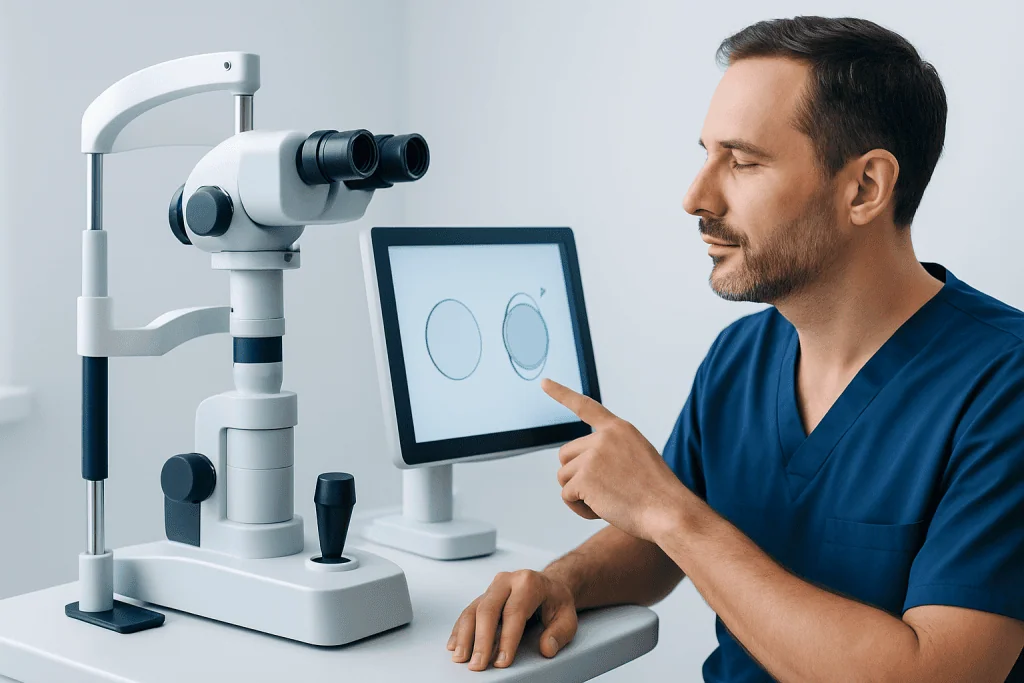
A standard lens in cataract surgery is usually a monofocal IOL. “Monofocal” means it is set to focus clearly at one main distance, most often distance vision. Many people with a monofocal lens still need glasses for reading, computer work, or other close-up tasks. Some patients choose monovision, in which one eye is set more for distance and the other more for near, but this is not suitable for everyone.
Premium IOLs include several categories. Toric lenses are designed to correct corneal astigmatism, which can sharpen vision by reducing blur caused by an uneven corneal shape. Multifocal and trifocal lenses are intended to improve vision at multiple distances. Extended depth-of-focus lenses create a broader range of focus, often supporting distance and intermediate vision, with some help for near tasks.
These lens designs use different optical strategies, so their benefits and trade-offs vary. Some premium lenses can reduce the need for glasses, but they may also increase the chance of visual symptoms such as glare, halos, or reduced contrast sensitivity, especially at night. Not all patients notice these effects in the same way.
Patients who also have conditions such as significant astigmatism may benefit from a toric lens, while those hoping for less dependence on glasses may ask about multifocal or extended range options. The lens choice should be individualized rather than based on price or popularity alone.
How Lens Choice Affects Everyday Vision
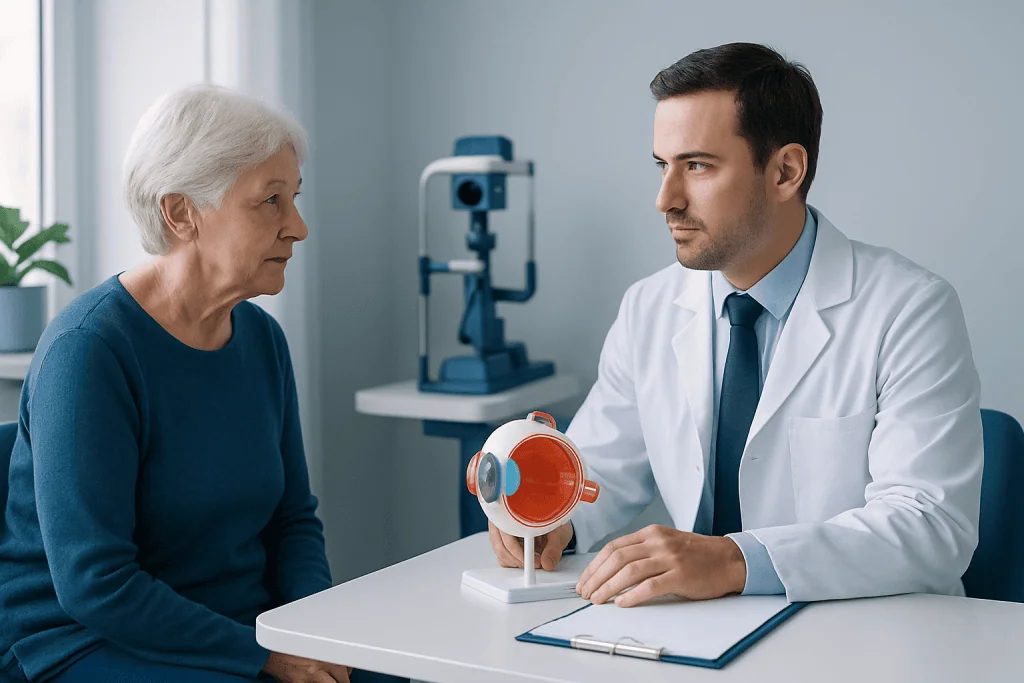
The main question many patients ask is whether they will still need glasses after surgery. With a standard monofocal lens, the answer is often yes for at least some tasks. If the lens is set for clear distance vision, reading glasses are commonly needed. If it is set for near vision, glasses may still be needed for driving or watching distant objects clearly.
Premium lenses may reduce spectacle dependence, but they do not always eliminate it. A toric lens can improve clarity by correcting astigmatism, yet reading glasses may still be necessary if the toric lens is also monofocal. Multifocal, trifocal, and extended depth-of-focus lenses may allow more freedom from glasses, but some patients still use glasses for very small print, prolonged reading, or in dim lighting.
Lifestyle plays a major role in satisfaction. A person who drives often at night may be more sensitive to halos or glare and may prefer a simpler lens design. Someone who spends many hours reading or using digital screens may prioritize a strong near or intermediate range. Patients who value the sharpest possible contrast in low light may also lean toward monofocal lenses.
Visual goals should be realistic. Cataract surgery can greatly improve clarity when a cloudy lens is the main problem, but it cannot fully overcome every age-related change in the eye. If other eye problems are present, they may continue to affect the final quality of vision regardless of lens type.
Who May Be a Good Candidate for Premium Lenses
Premium lenses are often considered for patients who want to reduce their dependence on glasses and who have otherwise healthy eyes. A person with regular corneal astigmatism may be a good candidate for a toric lens. A person hoping to see well across several distances may ask about multifocal, trifocal, or extended depth-of-focus lenses.
However, candidacy depends on more than personal preference. The surface of the eye, tear film quality, corneal health, pupil behavior, and retinal function all influence the visual outcome. Conditions affecting the cornea, optic nerve, or retina may reduce the benefit of certain premium lenses. For example, people with significant retinal disease may not be ideal candidates for multifocal optics because these lenses can reduce contrast sensitivity.
Surgeons also look closely at whether the patient has other eye conditions such as cataracts combined with macular or retinal changes. In some situations, a standard monofocal lens gives more predictable quality of vision. Premium options may be avoided if they are likely to create unwanted trade-offs.
For patients who have additional eye concerns, an ophthalmologist may recommend further assessment with specialists, including retina evaluation when needed. The goal is not simply to choose the most advanced lens, but to choose the lens most likely to support comfortable, useful vision.
Diagnosis and Preoperative Assessment
Before cataract surgery, the ophthalmologist performs a detailed assessment to decide whether surgery is appropriate and which lens is most suitable. This usually includes measuring vision, examining the cataract, evaluating the cornea and retina, and checking the overall health of the eye. Special measurements are used to calculate IOL power so the chosen lens matches the eye as accurately as possible.
Corneal curvature is especially important when considering toric lenses or planning for reduced dependence on glasses. Ocular surface problems such as dry eye may need treatment before measurements are finalized because they can affect accuracy. Patients are often surprised to learn that a smooth, healthy eye surface is important for obtaining the best result from any lens type.
The surgeon will also ask practical questions about daily routines. Important topics include reading habits, screen use, hobbies, occupation, sports, and whether the patient drives at night. This conversation helps define which trade-offs are acceptable. A patient who strongly dislikes reading glasses may accept some nighttime halos, while another may feel the opposite.
Preoperative counseling is one of the most important parts of success. When patients understand what a lens can and cannot do, satisfaction is usually higher. Careful planning helps align the surgical approach with the patient’s real priorities rather than assumptions.
Treatment Approach and What to Expect After Surgery
The treatment for a visually significant cataract is surgical removal of the cloudy lens and insertion of the chosen IOL. The operation is typically performed through a very small incision. Recovery is usually gradual over days to weeks, although many people notice improved brightness and clarity soon after surgery.
After surgery, the eye needs time to heal and adapt. Vision may fluctuate early on, and the exact benefit of a premium lens may become clearer once healing is more complete. The surgeon checks for inflammation, confirms the lens position, and monitors visual progress. If both eyes need surgery, the second eye may be planned after the first eye’s result is reviewed.
Even with careful planning, a small residual prescription can sometimes remain. In some cases, glasses are still the easiest solution. In selected patients, further refinement may be discussed, depending on the eye’s status and goals. Patients should also know that premium lenses do not prevent normal age-related eye conditions from developing later.
People comparing lens types may benefit from reviewing the basics of eye surgery and discussing all options in plain language with their surgeon. Near the end of planning, the doctor will usually summarize the expected benefits, possible visual side effects, and the likely need for glasses for specific activities.
Self-care, Questions to Ask, and When to Seek Medical Advice
Good preparation starts with asking clear questions. Patients may want to ask which lens type is being recommended, what kind of vision it is designed for, whether glasses will still be needed, and what side effects are most common. It is also helpful to ask how other eye conditions might affect the result and whether the patient’s lifestyle makes one option more suitable than another.
After surgery, following the surgeon’s instructions is essential. This usually includes using prescribed eye drops, avoiding rubbing the eye, protecting it as advised, and attending follow-up visits. Patients should report warning signs such as worsening pain, increasing redness, sudden drop in vision, flashes, or many new floaters, as these symptoms need prompt medical evaluation.
In the longer term, regular eye care remains important. Cataract surgery treats the cloudy lens, but it does not replace routine screening for glaucoma, retinal disease, or other vision problems. If reading, computer use, or night driving remain difficult, a follow-up review can help identify whether glasses, dry eye treatment, or another issue is contributing.
For international patients seeking evaluation, Acibadem International’s multidisciplinary eye specialists and JCI-accredited hospitals diagnose and treat cataract-related vision problems with individualized planning. A thoughtful discussion of goals and eye health helps patients choose between standard and premium lenses with greater confidence.
Frequently asked questions
What is the main difference between a standard and a premium lens in cataract surgery?
A standard lens is usually a monofocal lens that gives clear vision at one main distance. A premium lens may also correct astigmatism or provide a broader range of vision, which can reduce the need for glasses in some patients.
Will a premium lens mean glasses are never needed again?
Not always. Premium lenses can reduce dependence on glasses, but some people still use glasses for reading small print, prolonged close work, or certain lighting conditions. The result depends on the lens type, the eye itself, and the patient’s visual needs.
Are premium lenses better for everyone?
No. Some patients do very well with premium lenses, while others are better suited to standard monofocal lenses. Other eye conditions, especially involving the retina or cornea, can make a standard lens the more appropriate choice.
What is a toric lens, and who may need one?
A toric lens is a type of intraocular lens designed to correct astigmatism during cataract surgery. It may be helpful for patients whose corneal shape causes blurred or distorted vision, but proper measurements are important for good results.
Do premium lenses cause side effects?
Some premium lenses, especially multifocal designs, can be associated with halos, glare, or reduced contrast sensitivity in certain situations. Many patients adapt well, but these effects should be discussed before surgery so expectations are realistic.
How does a doctor decide which lens is right?
The decision is based on the patient’s eye measurements, overall eye health, presence of astigmatism, lifestyle, and preferences about glasses. A detailed consultation helps balance the benefits and trade-offs of each option.
This article is for general information only and is not a substitute for professional medical advice. Please consult a qualified doctor about your individual situation.
Cataract Surgery in Turkey — costs, top hospitals & a free quote
JCI-accredited · board-certified surgeons · reply within 24h
Add us as a Preferred Source to see more of our trusted health content across Google Search, AI Overviews and Discover.

Ophthalmology
Comprehensive eye care from laser vision correction to retina, cornea and cataract surgery.
75 specialists in this unitRelated Treatments
More from the Health Library
Neuro-Ophthalmology: When Vision Problems May Be Linked to the Brain or Nerves

Who Is a Good Candidate for Femto LASIK?
When to Go to Urgent Care for Eye Problems

Keratoconus: Blurred Vision from Corneal Thinning

Chalazion and Stye: Eyelid Lumps and Treatment Options