Presbyopia: Age-Related Near Vision Changes Explained

Presbyopia is not a disease; it is a natural change in the eye lens and focusing system that affects near vision with age. Common signs include holding reading material farther away, eye strain, headaches, and difficulty seeing small print in dim light.
Key Takeaways
- Presbyopia is not a disease; it is a natural change in the eye lens and focusing system that affects near vision with age.
- Common signs include holding reading material farther away, eye strain, headaches, and difficulty seeing small print in dim light.
- A comprehensive eye exam confirms presbyopia and checks for other eye conditions that can also affect vision.
- Treatment options include reading glasses, bifocals, progressive lenses, multifocal contact lenses, and, for some people, surgical procedures.
- Regular eye check-ups are important because vision changes may also be related to cataract, glaucoma, diabetes, or retinal conditions.
Presbyopia is a normal age-related change in which the eyes gradually lose the ability to focus clearly on close objects. It is common after age 40 and can usually be corrected with glasses, contact lenses, or selected procedures after an eye examination.
Overview
Presbyopia is the gradual loss of the eye’s ability to focus on nearby objects. It usually becomes noticeable in the early to mid-40s, although the timing can vary. A person may find that phone screens, books, menus, or medication labels are no longer clear at the usual reading distance.
This change happens because the natural lens inside the eye becomes less flexible over time. In younger eyes, the lens changes shape easily to focus at different distances. With age, this focusing adjustment becomes slower and less effective, making close-up tasks more difficult.
Presbyopia is a normal part of aging and is not caused by reading too much, using screens, or poor eye habits. It affects people whether they have never worn glasses before or already have nearsightedness, farsightedness, or astigmatism. The good news is that presbyopia can usually be managed very well with simple optical correction or, in selected cases, medical procedures.
Symptoms of Presbyopia
The most typical symptom of presbyopia is blurred near vision. Many people first notice it when reading small print, sewing, checking messages on a phone, or working at a computer. Text may appear clearer when held farther away, which is why presbyopia is sometimes informally described as needing longer arms to read.
Symptoms can be more obvious in low light or when the eyes are tired. A person may need brighter lighting for close work or may avoid reading for long periods because it feels uncomfortable. Eye strain does not usually mean the eyes are being damaged, but it is a sign that focusing is requiring extra effort.
Common symptoms include:
- Difficulty reading small print at a normal distance
- Holding books, phones, or labels farther away to see clearly
- Eye fatigue or aching around the eyes after close work
- Headaches after reading or computer use
- Needing more light for near tasks
- Temporary blur when shifting focus between near and far objects
Presbyopia usually develops gradually. Sudden vision loss, severe eye pain, new flashes or floaters, or a dark curtain in the vision are not typical of presbyopia and should be assessed urgently.
Causes and Risk Factors
The main cause of presbyopia is age-related change in the crystalline lens and the muscles that help the lens focus. The lens becomes stiffer and less able to change shape. As a result, light from nearby objects is not focused precisely on the retina, leading to blurred near vision.
Age is the most important risk factor. Most people notice some degree of presbyopia after 40, and near focusing ability continues to change for several years before stabilizing. People who are farsighted may notice symptoms earlier, while people who are mildly nearsighted may be able to read without glasses for longer when they remove their distance correction.
Some medical and lifestyle factors can influence near vision or make symptoms feel more noticeable. These include diabetes, certain medications that affect focusing or tear production, uncorrected vision problems, dry eye, prolonged close work, and inadequate lighting. These factors do not necessarily cause presbyopia, but they may add to visual discomfort.
Because several eye conditions can cause blurred vision, it is important not to assume that all near vision changes are only due to aging. Cataract, glaucoma, macular disease, diabetic eye disease, and dry eye can also affect clarity and comfort, especially in adults over 40.
How Presbyopia Is Diagnosed
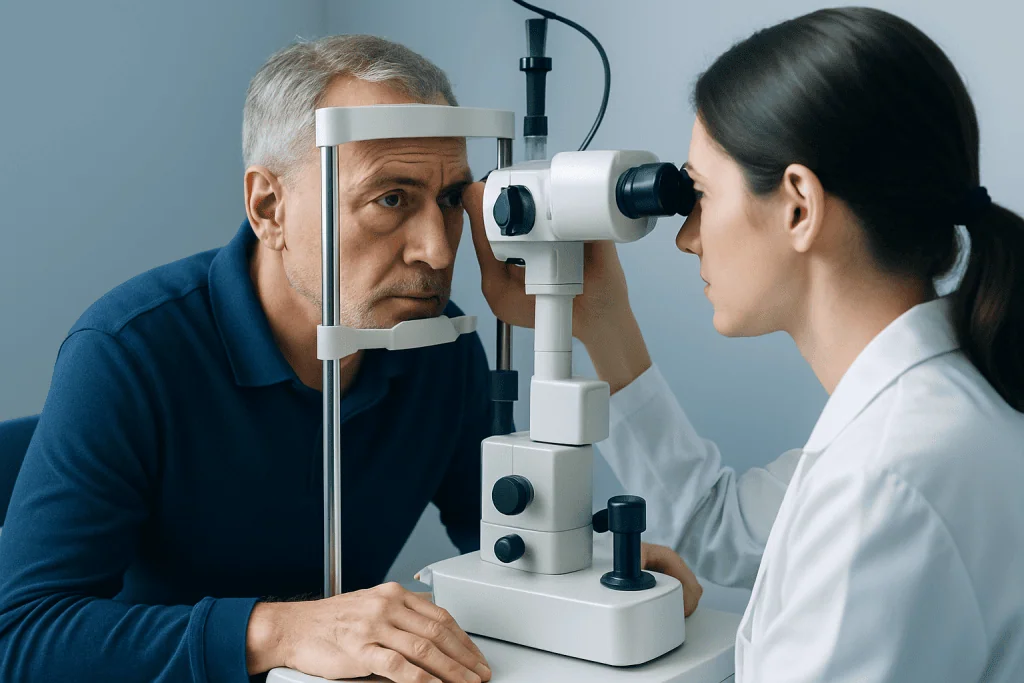
Presbyopia is diagnosed during a routine comprehensive eye examination. The eye doctor asks about symptoms, daily visual needs, previous glasses or contact lens use, general health, medications, and any family history of eye disease. This information helps determine whether symptoms fit presbyopia or whether another condition should be considered.
Vision testing usually includes measuring clarity at distance and near, checking the refractive error, and determining the amount of near focusing support needed. The doctor may place different lenses in front of the eyes to find the prescription that provides comfortable near vision while maintaining good distance vision.
A complete exam may also include evaluation of eye pressure, the front surface of the eye, the lens, and the retina. Pupil dilation may be recommended, especially for people with diabetes, high myopia, a family history of eye disease, or unexplained symptoms. These checks help identify conditions that may not cause obvious symptoms in the early stages.
Regular eye exams are valuable even when vision correction seems straightforward. They provide an opportunity to update prescriptions, discuss screen and reading comfort, and detect eye diseases early when management is often more effective.
Treatment Options
The goal of presbyopia treatment is to restore comfortable near vision for daily activities. The best option depends on the person’s age, existing prescription, eye health, work habits, hobbies, and preference for glasses, contact lenses, or procedures. An eye care professional can explain the advantages and limitations of each choice.
Glasses are the most common and simplest solution. People who see well in the distance may only need reading glasses for close tasks. Those who already wear glasses may benefit from bifocal, trifocal, or progressive lenses, which combine different focusing powers in one pair. Progressive lenses provide a gradual transition from distance to intermediate and near vision, but they may require an adaptation period.
Contact lens options may include multifocal contact lenses or monovision, where one eye is corrected mainly for distance and the other for near. These approaches can reduce dependence on glasses but may not be suitable for everyone. Good tear film, careful hygiene, and realistic expectations are important for contact lens comfort and safety.
Procedural options may be considered for selected patients. These can include refractive laser approaches, corneal inlays in some settings, or lens-based surgery such as cataract surgery with multifocal or extended-depth-of-focus intraocular lenses when cataract is also present. No procedure is ideal for every eye, and possible trade-offs such as glare, halos, dry eye, or reduced contrast sensitivity should be discussed carefully with an ophthalmologist.
Prevention and Self-Care
Presbyopia itself cannot be prevented because it is part of the normal aging process. However, good eye care habits can reduce strain, support overall eye health, and make near tasks more comfortable. Proper lighting is especially helpful; bright, even light reduces the effort needed to read or do detailed work.
Using the correct prescription is important. Over-the-counter reading glasses may be helpful for some people, but they are not a substitute for an eye exam, especially if the two eyes have different prescriptions, astigmatism, or other eye conditions. People who already wear glasses or contact lenses should avoid self-adjusting their correction without professional advice.
Helpful self-care measures include:
- Taking regular breaks during prolonged screen or reading tasks
- Positioning screens at a comfortable distance and reducing glare
- Using adequate lighting for reading, cooking, and detailed hobbies
- Managing dry eye symptoms with medical guidance if burning or irritation occurs
- Wearing sunglasses that block ultraviolet light when outdoors
- Keeping diabetes, blood pressure, and other chronic conditions well controlled
A healthy lifestyle can also support long-term vision. Not smoking, eating a balanced diet rich in vegetables and nutrients, staying physically active, and attending regular medical and eye check-ups are sensible steps for protecting eye health with age.
When to See an Eye Doctor
An eye examination is recommended when near vision becomes difficult, reading causes headaches, or current glasses no longer feel comfortable. Adults over 40 should have periodic eye exams even if symptoms are mild, because early eye conditions may be present without noticeable warning signs.
Medical attention should be sought promptly for symptoms that do not fit typical presbyopia. These include sudden vision loss, eye pain, double vision, new flashes of light, a sudden increase in floaters, a shadow or curtain over vision, or significant redness with reduced vision. These symptoms may require urgent assessment.
People with diabetes, a history of eye surgery, high myopia, glaucoma, retinal disease, or a strong family history of eye conditions may need more frequent monitoring. An eye doctor can recommend an examination schedule based on individual risk and findings.
For international patients seeking evaluation, Acibadem International’s multidisciplinary specialists and JCI-accredited hospitals diagnose and treat presbyopia and related eye conditions. Treatment planning should always be individualized after a full eye examination and discussion with a qualified ophthalmologist or optometrist.
Frequently asked questions
Is presbyopia the same as farsightedness?
No. Presbyopia is an age-related loss of focusing flexibility, while farsightedness is a refractive error related to the shape and optical power of the eye. Both can cause difficulty with near vision, and they can occur together. An eye exam can distinguish them and determine the right correction.
At what age does presbyopia usually start?
Most people begin to notice presbyopia in their 40s, although symptoms may appear a little earlier or later. The need for near correction often increases gradually over several years. By the 50s, many people require some form of reading or multifocal correction.
Can eye exercises reverse presbyopia?
Eye exercises cannot restore the flexibility of the natural lens, which is the main reason presbyopia develops. Some habits may reduce eye strain, such as taking breaks and improving lighting, but they do not reverse the underlying age-related change. A proper prescription remains the most reliable way to improve near vision.
Are over-the-counter reading glasses safe?
Over-the-counter reading glasses can be useful for people with otherwise healthy eyes and similar focusing needs in both eyes. However, they may not correct astigmatism or different prescriptions between the eyes. A comprehensive eye exam is recommended to confirm that blurred near vision is due to presbyopia and not another condition.
Will presbyopia keep getting worse?
Presbyopia usually progresses gradually for a number of years after it first appears. The near prescription may need periodic adjustment during this time. It often becomes more stable later, although other age-related eye changes can still affect vision.
Can surgery eliminate the need for reading glasses?
Some surgical and lens-based procedures can reduce dependence on reading glasses for selected people. However, every option has benefits, limitations, and possible side effects, and no procedure can guarantee complete freedom from glasses. A detailed ophthalmic evaluation is needed to decide whether a procedure is appropriate.
This article is for general information only and is not a substitute for professional medical advice. Please consult a qualified doctor about your individual situation.
Explore treatments in Turkey — costs, top hospitals & a free quote
JCI-accredited · board-certified surgeons · reply within 24h
Add us as a Preferred Source to see more of our trusted health content across Google Search, AI Overviews and Discover.

Related Treatments
More from the Health Library
Cataracts: Cloudy Vision, Lens Surgery, and Recovery Expectations
Cataracts: Symptoms, Diagnosis, and Surgery Explained

Regenerative Ophthalmology: What Stem Cell and Tissue-Based Eye Treatments Aim to Do

Is LASIK Permanent? How Stable Are the Results?

Femto LASIK Recovery: When Vision Clears and When You Can Travel