Risks of Brain and Spine Contrast Scans: What Patients Should Know
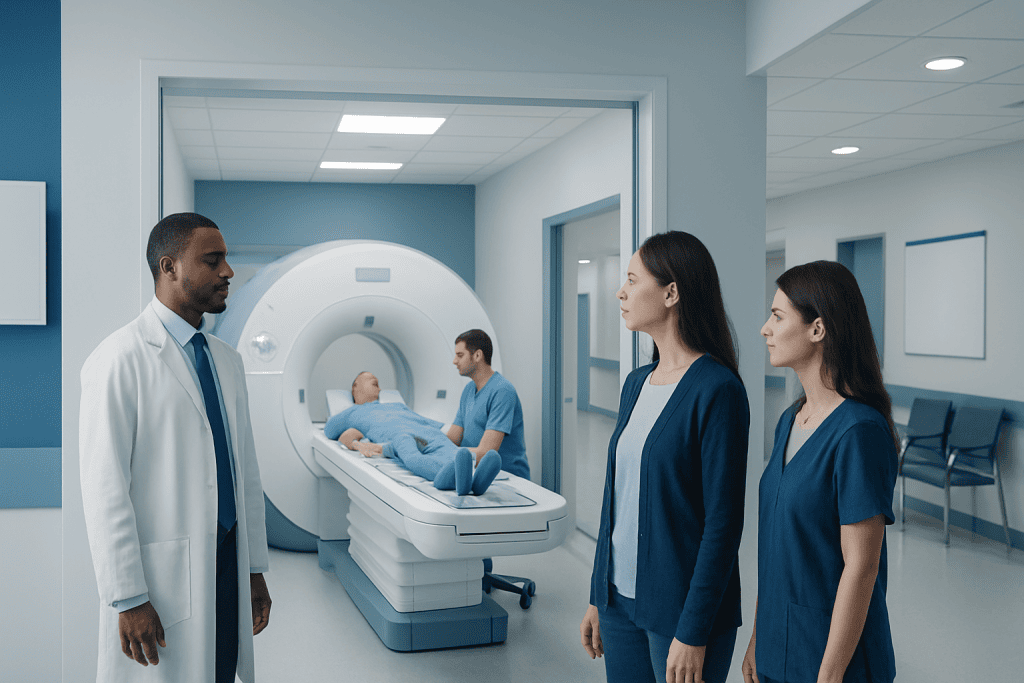
Most brain and spine contrast scans are completed safely after routine screening. Risks depend on the type of contrast used, such as gadolinium for MRI or iodine-based contrast for CT.
Key Takeaways
- Most brain and spine contrast scans are completed safely after routine screening.
- Risks depend on the type of contrast used, such as gadolinium for MRI or iodine-based contrast for CT.
- Mild side effects are more common than serious reactions and often pass quickly.
- Kidney function, prior contrast reactions, pregnancy, and certain medical conditions should be discussed before imaging.
- Patients should seek medical help promptly if they develop breathing difficulty, swelling, or severe symptoms after contrast.
Brain and spine contrast scans are commonly used to improve the detail seen on MRI or CT images. For most people, contrast agents are safe, but patients should understand possible side effects, allergy-like reactions, and kidney-related precautions before a scan.
Overview: What a contrast scan means
A contrast scan is an imaging test that uses a special substance, called contrast material or contrast agent, to make certain tissues, blood vessels, inflammation, or tumors easier to see. In brain and spine imaging, contrast may be used with MRI or CT when a doctor needs more detail than a non-contrast scan can provide. This can help clarify findings related to infection, inflammation, bleeding, tumors, blood vessel problems, or changes after surgery.
Brain and spine contrast scans are important tools in neuroradiology because they can improve diagnostic accuracy and guide treatment decisions. A contrast-enhanced study may help distinguish between active disease and older scar tissue, show how a lesion behaves, or reveal areas where the blood-brain barrier is disrupted. In many situations, the benefit of getting clearer information outweighs the small risk linked to the contrast itself.
The exact risk depends on the type of scan. MRI usually uses gadolinium-based contrast agents, while CT usually uses iodinated contrast. These are different substances with different side-effect profiles. Patients often hear the word “contrast” as if it refers to one thing, but understanding which type will be used helps make the discussion clearer and more reassuring.
Common side effects and what patients may feel
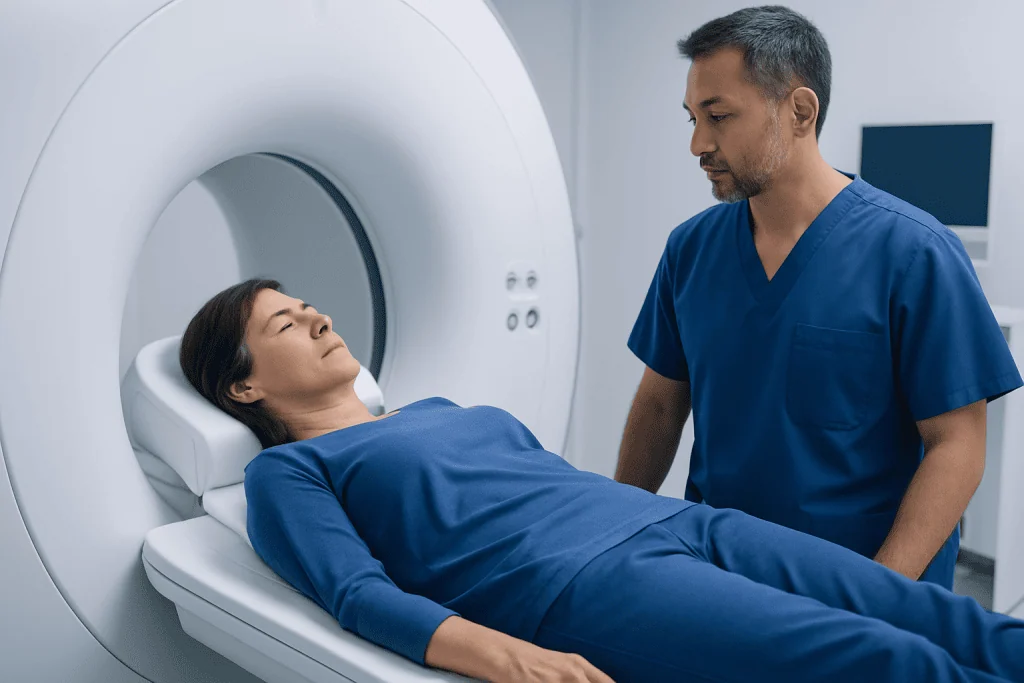
Most people have no significant problems during or after a contrast scan. When side effects do happen, they are usually mild and short-lived. Some patients notice a cool sensation in the arm during injection, a metallic taste in the mouth, mild nausea, warmth spreading through the body, or a brief headache. These effects often settle within minutes and do not usually require treatment.
MRI contrast with gadolinium is generally well tolerated. Mild symptoms may include nausea, dizziness, local discomfort at the injection site, or a temporary feeling of coldness. CT contrast, especially iodine-based contrast given into a vein, may be more likely to cause a warm flushing sensation or a brief feeling as though urination has occurred, even when it has not.
Injection-site issues can also occur with either type of contrast. If contrast leaks outside the vein, a patient may have pain, swelling, or redness around the needle site. This is called extravasation. It is usually minor, but staff should be told immediately if there is burning, marked discomfort, or swelling during the injection.
- Mild nausea or stomach upset
- Metallic taste or warmth during CT contrast injection
- Headache or dizziness
- Temporary injection-site discomfort
- Brief flushing or lightheadedness
More serious risks: allergic reactions, kidney concerns, and rare complications

Serious reactions to contrast are uncommon, but they are the main reason patients are screened beforehand. Allergy-like reactions can range from mild itching or hives to more severe symptoms such as wheezing, facial swelling, low blood pressure, or difficulty breathing. These reactions can happen with both gadolinium and iodinated contrast, although they are rare. Imaging teams are trained to recognize and treat them quickly.
Kidney function is another important consideration. Iodinated contrast used in CT may pose a greater concern in people with significantly reduced kidney function, especially if they are dehydrated or have other medical problems. Gadolinium-based MRI contrast also requires caution in advanced kidney disease because of the rare risk of nephrogenic systemic fibrosis, a serious condition linked mainly to certain older gadolinium agents in patients with severe renal impairment.
Patients may also hear about gadolinium retention, which means very small amounts of gadolinium can remain in the body after some MRI contrast studies. The clinical significance of this in people with normal kidney function remains uncertain, and current use is guided by careful benefit-risk assessment. Radiology teams generally choose the safest appropriate agent and use contrast only when it is likely to add meaningful information.
Rarely, contrast may trigger delayed symptoms hours later, such as rash, nausea, or flu-like discomfort. Although uncommon, delayed reactions should still be reported to a doctor, especially if symptoms are progressing or involve breathing, swelling, or significant weakness.
Who may have a higher risk
Certain patients need extra review before a brain or spine contrast scan. A history of a previous reaction to contrast is one of the most important factors. This does not automatically mean contrast can never be used again, but it may change the plan. The radiology team may recommend a different type of contrast, closer monitoring, or, in some cases, premedication depending on the situation and the urgency of the scan.
People with kidney disease, diabetes, dehydration, multiple myeloma, or severe heart disease may need additional assessment before receiving contrast, particularly iodinated CT contrast. Recent blood test results, especially kidney function tests, may be requested. Patients who are on dialysis or who have had a kidney transplant should always mention this before imaging.
Pregnancy and breastfeeding should also be discussed. In general, contrast is used in pregnancy only when clearly needed. For breastfeeding patients, recommendations vary by the type of contrast, but interruption of breastfeeding is often not necessary after many commonly used contrast agents. Patients should still ask their doctor or radiologist for advice based on the exact scan and contrast planned.
Other factors that may affect planning include asthma, severe allergies, thyroid disease, and medications such as metformin in selected CT situations. These do not always prevent a scan, but they may influence how the scan is prepared and monitored.
How doctors reduce the risks before and during the scan
Safety starts with good screening. Before a contrast scan, patients are usually asked about prior reactions, kidney problems, allergies, pregnancy, medications, and implanted medical devices if an MRI is planned. This helps the team decide whether contrast is needed, which agent is best, and whether any special precautions are required. In some cases, a non-contrast MRI or another test may answer the question without added contrast exposure.
If contrast is appropriate, the smallest necessary amount is used, and patients are observed during and after the injection. Modern radiology departments are equipped to manage reactions promptly. This is one reason it is important for patients to report symptoms right away rather than waiting until the scan is over. If a patient has had a previous reaction, the team may tailor the approach to lower risk.
Hydration may be encouraged before and after certain contrast studies, especially for patients with borderline kidney function. If a doctor is evaluating a condition such as a brain tumor or possible spinal tumor, contrast may be especially valuable because it can show patterns that influence diagnosis and treatment planning.
When further care is needed, imaging findings may guide referrals for neurosurgery, radiation oncology, or medical oncology. The contrast itself does not treat disease, but it often helps doctors choose the most appropriate next step.
What patients can do before and after the scan
Patients can help make their scan safer by sharing a complete medical history. It is useful to mention any previous reaction to MRI or CT contrast, kidney disease, dialysis, asthma, severe allergies, pregnancy, and all regular medicines. If recent kidney blood tests were done elsewhere, bringing those results may help avoid delays.
Following the preparation instructions matters. Some scans require fasting for a few hours, while others do not. Patients should wear comfortable clothing, arrive on time, and ask questions if anything is unclear. For MRI, all metal safety instructions should be followed carefully because MRI involves a powerful magnet, separate from the issue of contrast risk.
After the scan, most people can return to normal activities right away unless they were given sedation. Drinking fluids may be advised in some cases, although individual instructions vary. Patients should watch for symptoms such as a spreading rash, worsening swelling at the injection site, shortness of breath, or persistent vomiting and seek medical advice if these occur.
Near the end of the care pathway, patients may also want to understand how the imaging result fits into the broader plan. At centers such as Acibadem International, multidisciplinary specialists in JCI-accredited hospitals evaluate brain and spine imaging findings and coordinate care for international patients when further assessment or treatment is needed.
When to contact a doctor after contrast imaging
Most symptoms after contrast imaging are mild, but patients should not ignore warning signs. Urgent medical help is needed for trouble breathing, wheezing, swelling of the lips or throat, fainting, chest pain, or severe weakness. These can suggest a serious reaction and should be treated quickly.
Patients should also contact a doctor if they develop a significant rash, fever, persistent vomiting, worsening pain or swelling at the injection site, or reduced urination after the scan. These symptoms do not always mean a dangerous problem, but they deserve medical advice, especially in people with kidney disease or other health conditions.
For patients with questions about whether contrast was truly necessary, it can help to ask what the scan was looking for and how contrast changed the answer. In many brain and spine conditions, the added detail is clinically important. Clear communication with the referring doctor and radiology team helps patients feel informed and confident about the decision.
Frequently asked questions
Are brain and spine contrast scans generally safe?
Yes. For most patients, brain and spine contrast scans are safe, and serious complications are uncommon. Imaging teams screen for risk factors beforehand to make the test as safe as possible.
What is the difference between MRI contrast and CT contrast?
MRI usually uses gadolinium-based contrast, while CT usually uses iodinated contrast. They work differently and have different risk profiles, especially in relation to kidney function and the type of side effects patients may notice.
Can contrast damage the kidneys?
Contrast can be a concern in people with significantly reduced kidney function, especially with iodinated CT contrast. This is why kidney history and sometimes blood tests are reviewed before the scan. Many patients with normal kidney function can receive contrast without kidney problems.
What if a patient had a previous reaction to contrast?
A previous reaction should always be reported before the scan. It does not always mean contrast must be avoided, but the radiology team may choose a different agent, add precautions, or consider an alternative imaging plan.
Is gadolinium left in the body after MRI?
Small amounts of gadolinium can remain in the body after some contrast MRI studies. The health effect of this in people with normal kidney function is still not fully clear, so doctors use contrast only when it is expected to provide important diagnostic benefit.
Should breastfeeding stop after a contrast scan?
In many cases, breastfeeding does not need to be interrupted after commonly used MRI or CT contrast agents. Still, advice can vary depending on the exact contrast used and the clinical situation, so patients should confirm with their doctor or radiology team.
References
- World Health Organization
- American College of Radiology
- Radiological Society of North America
- National Institute of Diabetes and Digestive and Kidney Diseases
- U.S. Food and Drug Administration
This article is for general information only and is not a substitute for professional medical advice. Please consult a qualified doctor about your individual situation.
Joint and spine care in Turkey — expert assessment & treatment
JCI-accredited · board-certified surgeons · reply within 24h
Add us as a Preferred Source to see more of our trusted health content across Google Search, AI Overviews and Discover.
Check your numbers in seconds
BMI, calories, due date, blood pressure and 30+ more clinical calculators — free, instant, doctor-reviewed ranges.