Ruptured Ovarian Cyst — Explained by Medical Evidence, Not Myths

A ruptured ovarian cyst commonly causes sudden pelvic pain, often on one side. Many uncomplicated cyst ruptures improve with rest, monitoring, and pain relief.
Key Takeaways
- A ruptured ovarian cyst commonly causes sudden pelvic pain, often on one side.
- Many uncomplicated cyst ruptures improve with rest, monitoring, and pain relief.
- Doctors use history, examination, pregnancy testing, blood tests, and pelvic ultrasound to confirm the cause and rule out emergencies.
- Severe pain, fainting, heavy bleeding, fever, or signs of internal bleeding need urgent medical care.
- Treatment depends on symptoms, bleeding, cyst type, and whether complications are present.
A ruptured ovarian cyst happens when a fluid-filled sac on or inside the ovary breaks open. It often causes sudden one-sided pelvic pain, and while many cases settle with observation and pain relief, heavy bleeding, dizziness, fever, or worsening pain need prompt medical evaluation.
What a Ruptured Ovarian Cyst Means
A ruptured ovarian cyst means that a sac filled with fluid, blood, or other material on the ovary has broken open. This can release fluid into the pelvis and irritate surrounding tissues, leading to sudden pain. In many people, the cyst is functional, meaning it formed as part of the normal menstrual cycle and may go away on its own after rupturing.
Not every ovarian cyst is dangerous, and not every rupture is an emergency. Some ruptures cause only brief discomfort, while others lead to heavier bleeding into the abdomen or severe pain that needs urgent assessment. The symptoms can overlap with other conditions, so the main medical question is not only whether a cyst has ruptured, but also whether there is significant bleeding or another cause of acute pelvic pain.
This distinction matters because a ruptured ovarian cyst can resemble problems such as ectopic pregnancy, appendicitis, ovarian torsion, or pelvic infection. A careful evaluation helps guide the next steps and avoids assuming that all pelvic pain is caused by a simple cyst. When symptoms are mild and stable, doctors may recommend observation; when symptoms are intense or vital signs are unstable, more urgent treatment may be needed.
Symptoms and How They Can Feel
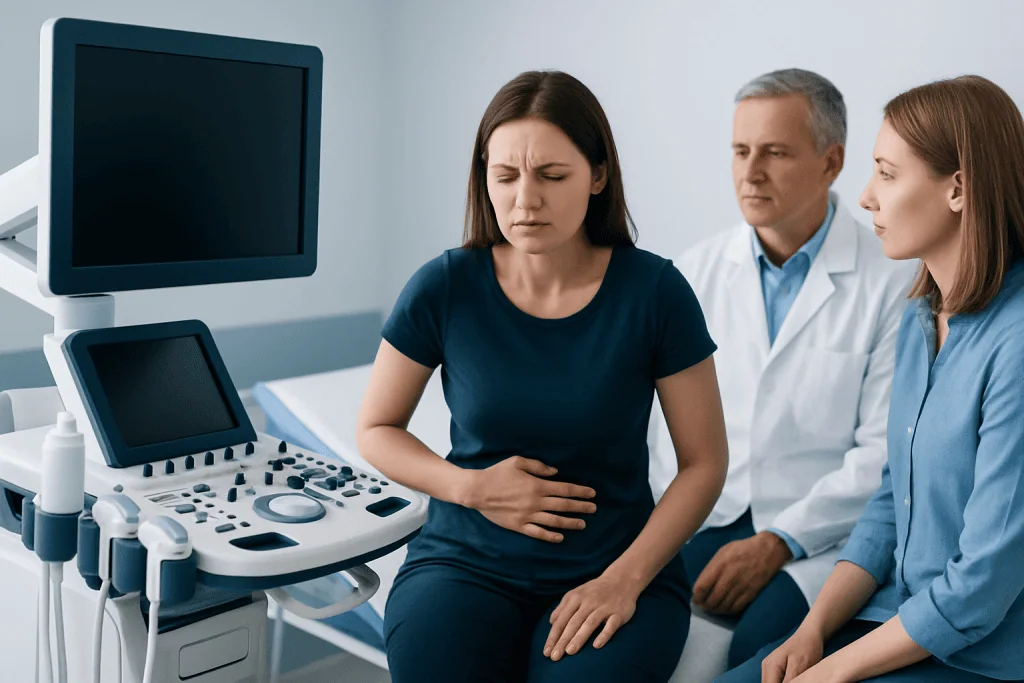
The most common symptom of a ruptured ovarian cyst is sudden pelvic pain, often on the right or left side. Some people describe a sharp pain that starts during exercise, sex, or normal daily activity, while others notice a more gradual ache that becomes stronger over hours. Pain may stay on one side or spread across the lower abdomen.
Other symptoms can include light vaginal spotting, bloating, nausea, or a feeling of pressure in the pelvis. If blood or fluid irritates the lining of the abdomen, the pain may feel worse with movement. Some people also notice discomfort during bowel movements or urination, although these symptoms are not specific to a cyst rupture.
Certain symptoms suggest the situation may be more serious. These include severe or worsening pain, weakness, shoulder pain, fainting, rapid heartbeat, heavy vaginal bleeding, or marked dizziness. Fever may point to infection or another diagnosis rather than a simple rupture. Because symptoms overlap with other gynecologic and abdominal conditions, new severe pelvic pain should not be self-diagnosed.
- Sudden one-sided pelvic or lower abdominal pain
- Spotting or light vaginal bleeding
- Bloating or pelvic pressure
- Nausea or vomiting
- Dizziness, fainting, or weakness in more serious cases
Why Ovarian Cysts Rupture and Who Is More Likely to Have One

Many ovarian cysts form during ovulation. Functional cysts, including follicular cysts and corpus luteum cysts, are the most common types and may rupture spontaneously. Rupture can happen around the middle or second half of the menstrual cycle, when hormonal changes affect the ovary. Physical activity, sexual intercourse, or trauma may sometimes trigger pain from a rupture, but many cysts rupture without an obvious reason.
Some cysts are more likely to bleed when they rupture, especially corpus luteum cysts, which can contain blood. Other nonfunctional cysts, such as endometriomas or dermoid cysts, can also cause symptoms, though their management may differ. Conditions like ovarian cysts and endometriosis can increase the likelihood of recurring pelvic pain or complex cysts that need closer follow-up.
Risk may be higher in people who ovulate regularly, have a history of ovarian cysts, use fertility medications, or have bleeding disorders or take blood-thinning medicines. Pregnancy changes the evaluation because pelvic pain and bleeding require doctors to exclude ectopic pregnancy. Age, menstrual history, past pelvic surgery, and family history can also help doctors understand whether a cyst is likely to be simple and self-limited or more complex.
How Doctors Confirm the Diagnosis
Diagnosis starts with the pattern of pain, menstrual timing, and whether there is bleeding, dizziness, fever, or pregnancy risk. During the examination, the clinician checks abdominal tenderness, pelvic findings, heart rate, blood pressure, and any signs of internal bleeding. The goal is to understand both the likely cause and the urgency of the situation.
A pregnancy test is a key first step in anyone of reproductive age with acute pelvic pain. This helps rule out ectopic pregnancy, which can be life-threatening and may look similar at first. Blood tests may also be ordered to assess hemoglobin levels, check for blood loss, and look for signs of infection or inflammation when the diagnosis is uncertain.
Pelvic ultrasound, often performed as a transvaginal ultrasound, is the main imaging test. It can show whether a cyst is present, whether there is fluid in the pelvis, and whether the ovary has features that suggest bleeding, torsion, or another problem. In selected cases, additional imaging such as CT may be used if the symptoms could be coming from the appendix, bowel, urinary tract, or another non-gynecologic cause. If ongoing concerns remain, gynecological evaluation and tailored imaging help guide safe next steps.
Treatment Options and What Recovery Usually Looks Like
Treatment depends on the severity of symptoms, the amount of bleeding, the type of cyst, and the person’s overall stability. When pain is mild to moderate and vital signs are normal, doctors often recommend observation, fluids, rest, and pain relief. Follow-up may include repeat examination or ultrasound to ensure symptoms are improving and that no new concern has developed.
If pain is significant, symptoms are persistent, or the diagnosis is not fully clear, hospital observation may be appropriate. Doctors may monitor blood counts, repeat imaging, and watch for signs that bleeding is continuing. If there is severe internal bleeding, hemodynamic instability, or concern for another urgent condition such as torsion, surgical treatment may be necessary. In some cases, minimally invasive laparoscopy is used to control bleeding, remove a problematic cyst, or confirm the diagnosis.
Recovery after an uncomplicated ruptured ovarian cyst is often measured in days rather than weeks, although pelvic soreness can last longer in some people. Returning to normal activities is usually gradual and guided by symptoms. If cysts recur, clinicians may discuss strategies to reduce future ovulation-related cyst formation or recommend further assessment by gynecology specialists if there are repeated episodes, complex cysts, or concerns about underlying conditions.
When to Seek Medical Care
Mild pelvic pain that improves over a short period may still deserve a medical appointment, especially if it is new, happens repeatedly, or interferes with daily life. A doctor can help determine whether the pain was likely caused by a simple cyst rupture or whether more follow-up is needed. This is especially important if there is uncertainty about pregnancy, menstrual changes, or a history of ovarian cysts.
Urgent medical care is needed for severe pain, fainting, marked dizziness, rapid heartbeat, trouble standing, heavy vaginal bleeding, fever, or vomiting that prevents fluids from staying down. These symptoms can signal significant bleeding, infection, ovarian torsion, or another emergency. Sudden pelvic pain during pregnancy always needs prompt evaluation.
People sometimes delay care because the pain improves slightly after the first sharp episode. However, if symptoms return, become more diffuse, or are accompanied by weakness or shoulder pain, medical review is important. For international patients who need assessment and treatment, Acibadem International’s multidisciplinary specialists and JCI-accredited hospitals provide diagnosis and care for gynecologic conditions in a coordinated setting.
Prevention, Monitoring, and Practical Self-Care
It is not always possible to prevent a ruptured ovarian cyst, particularly when cysts form as part of normal ovulation. Still, understanding one’s own pattern of pelvic pain and menstrual cycles can help. Keeping a simple record of when pain occurs, how long it lasts, and whether it is linked to exercise or intercourse may make future evaluation more accurate.
Follow-up matters if cysts are recurrent, complex, or found incidentally on imaging. Depending on age, symptoms, and ultrasound findings, doctors may advise repeat ultrasound or a gynecologic review. In some situations, hormonal treatment may be discussed to reduce ovulation-related cyst formation, although this is individualized and not appropriate for everyone.
At home, practical self-care after a mild rupture may include rest, hydration, and using pain medicine only as advised by a clinician. A heating pad may ease cramping for some people. It is safest to avoid intense physical activity until pain clearly improves, and to seek medical advice rather than relying on home remedies if pain persists, worsens, or is associated with bleeding, fever, or dizziness.
Frequently asked questions
Is a ruptured ovarian cyst always an emergency?
No. Many ruptured ovarian cysts cause pain but settle with observation and symptom relief. It becomes urgent when there are signs such as severe or worsening pain, fainting, dizziness, heavy bleeding, or possible pregnancy.
How long does pain from a ruptured ovarian cyst last?
Pain can be sudden and intense at first, then improve over hours to a few days in uncomplicated cases. Some pelvic soreness may last longer, especially if there was bleeding or irritation in the abdomen. Persistent or worsening pain should be checked by a doctor.
Can a ruptured ovarian cyst cause internal bleeding?
Yes, some cysts can bleed when they rupture, especially hemorrhagic or corpus luteum cysts. Small amounts of bleeding may resolve without surgery, but heavier bleeding can be serious and may require hospital care. Symptoms such as weakness, fainting, or rapid heartbeat need urgent assessment.
How is a ruptured ovarian cyst different from ovarian torsion?
A ruptured ovarian cyst happens when a cyst breaks and releases fluid or blood. Ovarian torsion means the ovary twists on its supporting tissues and can lose blood supply, which is a surgical emergency. Both can cause sudden pelvic pain, so imaging and examination are important.
Can someone still have a ruptured ovarian cyst if the ultrasound no longer shows a cyst?
Yes. After rupture, the cyst may partially or completely collapse, so the main ultrasound clue may be fluid in the pelvis rather than a large visible cyst. Doctors interpret the scan together with symptoms, examination findings, and blood tests.
Will a ruptured ovarian cyst affect fertility?
Most simple ruptured cysts do not cause long-term fertility problems. Fertility concerns depend more on the underlying cause, such as endometriosis, repeated surgery, or other ovarian disorders. A gynecologist can advise if there are recurrent cysts or concerns about ovarian health.
This article is for general information only and is not a substitute for professional medical advice. Please consult a qualified doctor about your individual situation.
Ovarian Cyst in Turkey — costs, top hospitals & a free quote
JCI-accredited · board-certified surgeons · reply within 24h
Add us as a Preferred Source to see more of our trusted health content across Google Search, AI Overviews and Discover.
Check your numbers in seconds
BMI, calories, due date, blood pressure and 30+ more clinical calculators — free, instant, doctor-reviewed ranges.

Gynecology & Obstetrics
Women’s health across pregnancy, gynecologic surgery and high-risk pregnancy care.
186 specialists in this unitMore from the Health Library

Mediums: An Evidence-Based Guide for Patients

Benign Mole: An Evidence-Based Guide for Patients

Optometrist — Explained by Medical Evidence, Not Myths

Prostate Massage Medical 33314: A Complete Medical Overview

Anti Inflammatory Essential Oils: What Patients Need to Know

Jump Rope Benefits: What Patients Need to Know
Gynecology & Obstetrics Specialists at Acibadem

Dr. Elif Avşaroğlu
Gynecology & Obstetrics
Dr. Elif Demir
Gynecology & Obstetrics
Assoc. Prof. Dr. Elif Ganime Aygün
Gynecology & Obstetrics
Dr. Elif Külahçı Aslan
Gynecology & Obstetrics