

Scleritis: Symptoms, Causes, and Treatment Options

Scleritis is deeper and usually more serious than common surface eye irritation or conjunctivitis. Typical symptoms include severe eye pain, redness, tearing, and sensitivity to light.
Key Takeaways
- Scleritis is deeper and usually more serious than common surface eye irritation or conjunctivitis.
- Typical symptoms include severe eye pain, redness, tearing, and sensitivity to light.
- Many cases are associated with autoimmune or inflammatory conditions, though infections can also cause it.
- Treatment depends on the cause and may include anti-inflammatory medicines, immune-modifying therapy, or infection-specific treatment.
- Early diagnosis and follow-up with an eye specialist help protect vision and reduce complications.
Scleritis is an inflammation of the sclera, the tough white outer coat of the eye. It often causes deep eye pain, redness, and light sensitivity, and it usually needs prompt evaluation because it can be linked to autoimmune disease and may threaten vision if untreated.
What is scleritis?
Scleritis is inflammation of the sclera, the dense white outer layer of the eye. It is more than a simple red eye. In many people, it causes deep, aching pain and significant tenderness, and it can affect one or both eyes. Because the sclera helps maintain the eye’s shape and protects the structures inside, inflammation in this area requires medical attention.
Scleritis is different from episcleritis, which affects a more superficial tissue on top of the sclera and is usually milder. Scleritis tends to be more painful, more persistent, and more likely to be associated with systemic inflammatory disease. This distinction matters because treatment and follow-up are different.
Doctors often classify scleritis by where the inflammation occurs. Anterior scleritis affects the front of the eye and is more common. Posterior scleritis affects the back of the eye and can be harder to detect because the redness may be less obvious, while symptoms such as pain, blurred vision, or headache may be more prominent.
How scleritis feels and looks
The most common symptom of scleritis is severe eye pain. People often describe it as deep, boring, or aching pain that may spread to the temple, brow, jaw, or face. The pain may worsen with eye movement or during the night, and it can be out of proportion to how the eye looks from the outside.
Redness is also common, but it is usually a deeper, more violaceous red than the bright surface redness seen in conjunctivitis. The eye may water, feel tender to touch, and become sensitive to light. Some people notice blurred vision, decreased vision, or a sense of pressure in the eye.
Symptoms can vary depending on the type. Diffuse anterior scleritis causes broad redness and pain. Nodular scleritis may produce a tender raised area on the sclera. Necrotizing scleritis is the most severe form and may damage the sclera and nearby tissues. Posterior scleritis may lead to pain, double vision, reduced vision, or headache without dramatic front-of-eye redness.
- Deep, persistent eye pain
- Red or purple-red eye
- Light sensitivity
- Tearing
- Blurred or reduced vision
- Pain with eye movement
Why scleritis happens

Scleritis can develop for different reasons, but many cases are linked to an overactive immune response. Autoimmune and connective tissue diseases are important causes. These include rheumatoid arthritis, granulomatosis with polyangiitis, lupus, inflammatory bowel disease, and other systemic inflammatory disorders. In some people, eye symptoms may appear before the underlying condition has been diagnosed.
Less commonly, scleritis is caused by infection. Bacteria, viruses, fungi, or parasites can be responsible, especially after eye surgery, trauma, or a foreign body injury. This is why a careful history is important. Treatment for infectious scleritis is very different from treatment for immune-mediated disease, and using the wrong approach may worsen the problem.
Sometimes no clear cause is found, and the condition is called idiopathic scleritis. Even in these cases, doctors often look for hidden inflammatory disease through a review of symptoms, blood tests, and sometimes imaging. Understanding the cause helps guide treatment and lowers the risk of recurrence or complications.
Who is at risk and what complications can occur
Scleritis can affect adults of different ages, but it is seen more often in middle adulthood and is somewhat more common in women, partly because many autoimmune diseases are more common in women. A personal history of inflammatory disease increases risk. Previous eye surgery, eye trauma, or infection can also raise the chance of developing certain forms of scleritis.
If inflammation is not controlled, scleritis can affect nearby eye structures. Complications may include keratitis, uveitis, glaucoma, cataract, thinning of the sclera, retinal problems, or damage to the optic nerve. These complications are the reason prompt diagnosis and regular monitoring are so important.
Vision loss is not inevitable, and many people do well with timely care. The outlook depends on the type of scleritis, how quickly treatment begins, whether an underlying disease is present, and how well inflammation responds. Ongoing follow-up helps doctors adjust treatment and watch for recurrence.
How doctors diagnose scleritis
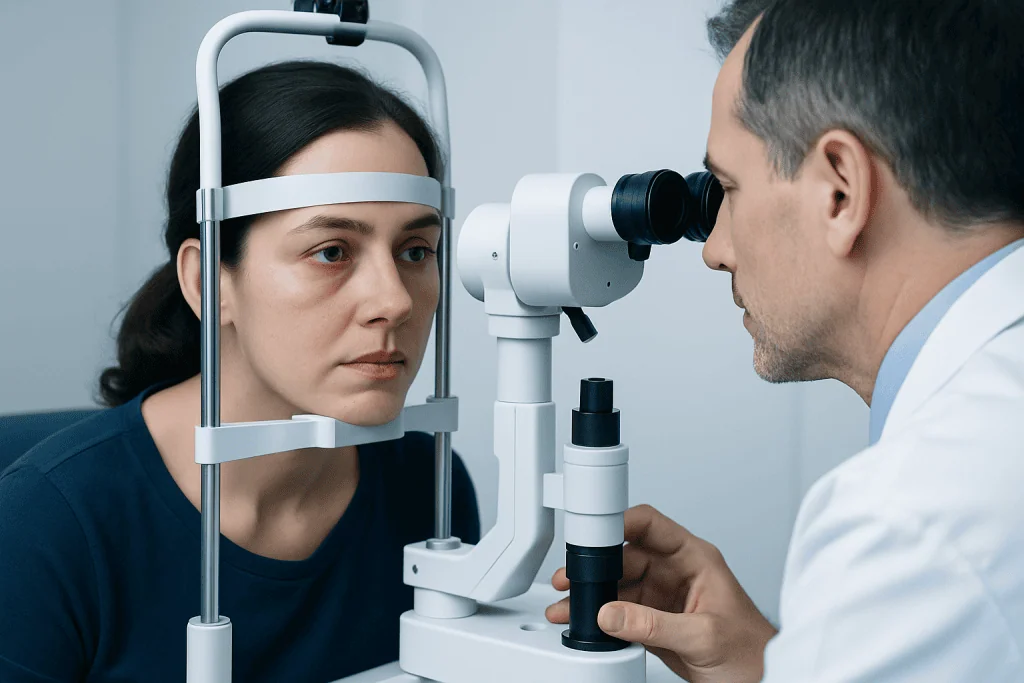
Diagnosis begins with a detailed eye examination by an ophthalmologist. The doctor asks about the type of pain, onset of symptoms, changes in vision, recent illness, surgery, trauma, and any history of autoimmune disease. During the exam, the doctor looks closely at the sclera and surrounding structures to determine whether the inflammation is superficial or deep and whether one or both eyes are involved.
Additional testing may be needed to identify the cause and check for complications. This can include slit-lamp examination, eye pressure measurement, dilated retinal examination, and imaging studies if posterior scleritis is suspected. Ultrasound, optical coherence tomography, or other imaging may help assess deeper inflammation and retinal involvement.
Because scleritis is often associated with systemic disease, blood tests may be recommended to look for autoimmune or infectious causes. Some patients also need evaluation by rheumatology or other specialists. In centers with comprehensive eye services, tests used for broader eye examination and eye check-up can help assess the full impact of inflammation and support ongoing monitoring.
Treatment options for scleritis
Treatment is tailored to the cause, the severity of inflammation, and whether other parts of the eye are involved. Mild to moderate noninfectious cases may start with anti-inflammatory medication, while more severe disease often requires stronger therapy to control inflammation quickly and protect vision. Doctors may use oral medicines, local therapy, or systemic immune-modifying treatment depending on the pattern of disease.
If an autoimmune disorder is present, treatment may involve coordination with rheumatology. Corticosteroids and steroid-sparing immunosuppressive medicines are commonly used for noninfectious scleritis when needed, but the exact plan varies by patient. The goal is to quiet inflammation while minimizing medication side effects through close follow-up and stepwise adjustment.
Infectious scleritis must be treated by targeting the organism causing the problem. That may involve antibiotic, antiviral, or antifungal therapy and, in selected cases, surgical management. It is important not to self-treat a painful red eye with leftover steroid drops because this can delay proper care or worsen an undiagnosed infection.
If complications affect the cornea, retina, or deeper eye tissues, ophthalmologists may involve additional subspecialists. Related inflammatory eye conditions such as uveitis may need parallel treatment. In some patients, advanced evaluation or treatment in an ophthalmology service helps coordinate diagnosis, medication monitoring, and protection of vision over time.
Self-care and preventing recurrence
There is no guaranteed way to prevent scleritis, especially when it is driven by autoimmune disease. However, controlling the underlying condition can reduce the chance of repeated flares. People who already have a diagnosed inflammatory disorder should keep regular appointments, take prescribed medicines as directed, and tell their doctor promptly about new eye symptoms.
Self-care at home does not replace medical treatment, but it can support comfort. Resting the eyes, reducing bright-light exposure with sunglasses, and avoiding eye rubbing may help. Contact lenses should generally not be worn until an eye specialist says they are safe to use again. Over-the-counter redness-relief drops are not a treatment for scleritis.
General eye protection also matters. Protective eyewear can lower the risk of trauma-related problems during work, sports, or home projects. For patients with recurrent or complex disease, multidisciplinary follow-up may be useful. Acibadem International’s multidisciplinary specialists at JCI-accredited hospitals diagnose and treat eye inflammatory conditions for international patients when coordinated care is needed.
When to seek medical care
Any person with a painful red eye should seek medical care promptly, especially if the pain is deep, severe, or accompanied by blurred vision or light sensitivity. Scleritis is not the same as typical irritation, and waiting for it to go away on its own can increase the risk of complications.
Urgent assessment is especially important if symptoms start after eye surgery or injury, if there is a history of autoimmune disease, or if vision changes develop. Fever, discharge, marked swelling, or worsening pain despite initial treatment should also be evaluated without delay. In some cases, doctors may need to rule out other serious eye conditions, including retinal detachment when symptoms include sudden visual disturbance.
Follow-up visits matter even after symptoms improve. Scleritis can recur, and treatment may need to be tapered carefully. A qualified ophthalmologist can confirm the diagnosis, monitor the response to treatment, and decide whether additional testing for systemic disease is needed.
Frequently asked questions
Is scleritis an emergency?
Scleritis is not always an emergency in the sense of needing an ambulance, but it does need prompt medical evaluation. A painful red eye with light sensitivity or blurred vision should be assessed quickly by an eye specialist to protect vision and identify the cause.
What is the difference between scleritis and conjunctivitis?
Conjunctivitis affects the thin surface membrane of the eye and often causes irritation, discharge, and bright redness. Scleritis affects a deeper layer, usually causes much stronger pain, and is more likely to be linked to autoimmune disease or serious inflammation.
Can scleritis go away on its own?
Scleritis should not be assumed to resolve without treatment. Some cases may improve, but many require medication and monitoring because the inflammation can damage eye tissues and affect vision if left untreated.
Does scleritis mean someone has an autoimmune disease?
Not always, but autoimmune disease is a common association. Some people have no known systemic illness, while others are diagnosed with an underlying inflammatory condition after the eye problem is investigated.
Can scleritis cause vision loss?
Yes, it can affect vision if inflammation spreads to nearby structures or causes complications such as keratitis, glaucoma, or retinal involvement. Early treatment improves the chances of preserving sight and reducing long-term damage.
How long does scleritis treatment take?
Treatment length varies depending on the cause and severity. Some people improve over weeks, while others with autoimmune-related or recurrent scleritis need longer-term treatment and follow-up to keep inflammation under control.
References
- American Academy of Ophthalmology
- National Eye Institute
- Merck Manual Professional Edition
- Mayo Clinic
- National Organization for Rare Disorders
This article is for general information only and is not a substitute for professional medical advice. Please consult a qualified doctor about your individual situation.
Explore treatments in Turkey — costs, top hospitals & a free quote
JCI-accredited · board-certified surgeons · reply within 24h
Add us as a Preferred Source to see more of our trusted health content across Google Search, AI Overviews and Discover.

More from the Health Library



Related Specialists

Dr. Belinda İrem Ardal
Acibadem Life Clinical Service
Dr. Ceyda Perçinoğlu
Gynecology & Obstetrics
Dr. Burak Boynuk
Orthopedic Surgery & Traumatology
Prof. Dr. Simay A. Kara
Interventional Radiology