Sitting on Knees: An Evidence-Based Guide for Patients

Sitting on knees is not automatically harmful, but comfort and joint tolerance matter. Brief kneeling is often well tolerated; prolonged or repeated kneeling can irritate knees, ankles, and feet.
Key Takeaways
- Sitting on knees is not automatically harmful, but comfort and joint tolerance matter.
- Brief kneeling is often well tolerated; prolonged or repeated kneeling can irritate knees, ankles, and feet.
- Pain, swelling, locking, or numbness during kneeling should not be ignored.
- Simple changes such as cushions, posture adjustments, and gradual exposure may improve comfort.
- People with arthritis, prior injury, or limited flexibility may need medical assessment and tailored advice.
Sitting on knees is a common kneeling posture that many people use for daily activities, prayer, stretching, or rest. It is usually safe when comfortable and done for short periods, but pain, stiffness, numbness, or swelling can suggest poor mechanics, tissue irritation, or an underlying knee problem.
Overview: Is sitting on knees safe?
Sitting on knees is a kneeling posture in which the body rests back over the lower legs, placing the knees in deep flexion. For many healthy people, this position is a normal movement pattern and can be safe for short periods if it does not cause pain. The key question is less whether sitting on knees is “good” or “bad” in general, and more whether a person’s joints, muscles, and nerves tolerate the position comfortably.
This posture places pressure on the front of the knees and requires flexibility in the knee joints, ankles, feet, and the muscles around them. Some people can sit on knees easily because of their anatomy, lifelong habits, or training. Others may feel tightness, pressure, or discomfort even without a clear injury. That difference is common and does not necessarily mean anything is wrong.
Problems are more likely when kneeling is prolonged, repeated many times a day, or done despite pain. People who work on the floor, participate in activities involving frequent kneeling, or already have joint disease may be more prone to irritation. In these cases, the posture can act as a trigger for symptoms rather than the sole cause of a condition.
A practical way to think about sitting on knees is as a tolerance-based activity. If it can be done briefly, with normal sensation and no lingering symptoms afterward, it is usually acceptable. If it causes sharp pain, swelling, numbness, or difficulty standing up afterward, the body may be signaling overload or an underlying issue that deserves attention.
What a person may feel in this position
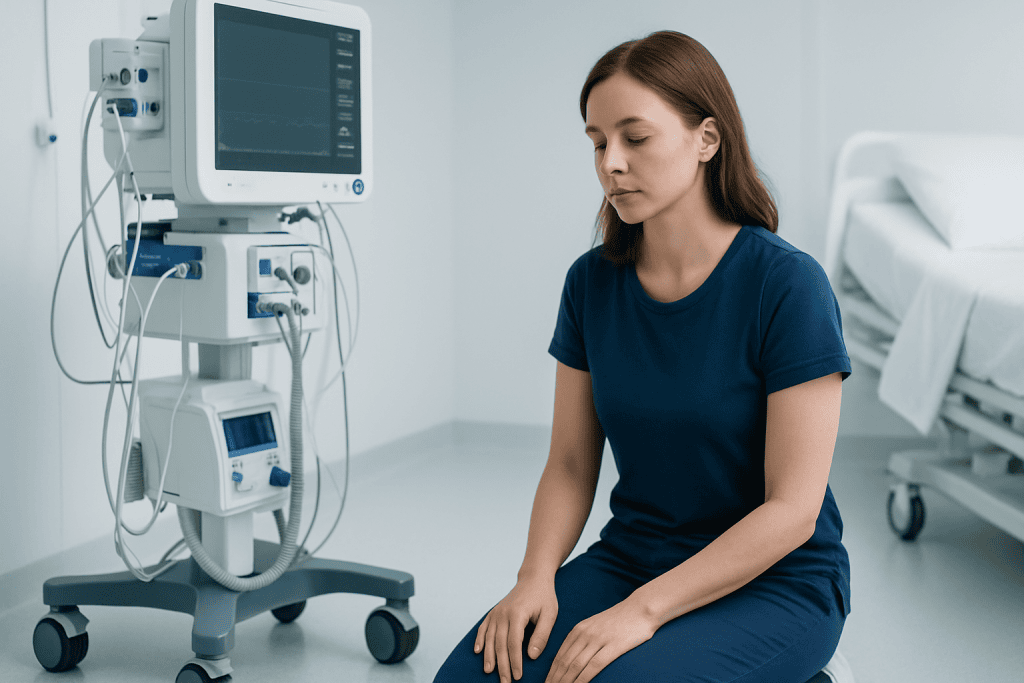
When sitting on knees is comfortable, the usual sensations are mild stretching in the front of the ankles, the tops of the feet, and sometimes the thighs. There may also be a feeling of pressure over the kneecaps due to body weight being transferred through the front of the knees. These sensations should remain mild and should ease soon after changing position.
Symptoms that are more concerning include pain inside the knee joint, a catching or locking sensation, visible swelling, a feeling that the knee may give way, or pain that continues after getting up. Tingling, pins and needles, or numbness in the lower legs or feet may happen if nerves or blood flow are compressed in the position, especially when kneeling is held too long.
Some people notice that only one side is uncomfortable. This can happen with differences in hip rotation, ankle flexibility, old injuries, or early joint wear. Others may feel strain mainly in the feet or ankles rather than the knees, which suggests that limited flexibility lower down the chain is changing how force is distributed.
- Usually acceptable: mild stretch, light pressure, no after-effects
- Less typical: sharp pain, swelling, locking, instability
- Needs caution: numbness, tingling, skin color change, persistent pain afterward
Why sitting on knees may hurt: causes and risk factors
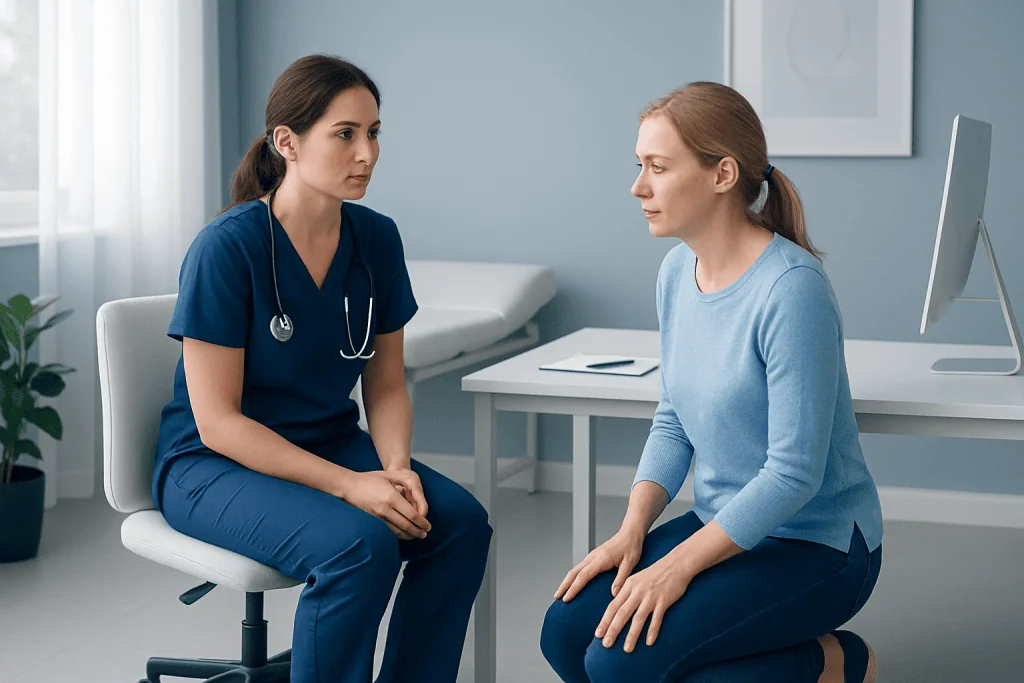
Discomfort in this posture can come from several different structures. The kneecap and surrounding tissues may be compressed when the knee bends deeply. The joint lining and soft tissues at the front of the knee can also become irritated. In some people, the source is not the knee itself but tightness in the ankles, quadriceps, or hips, which makes deep bending harder and shifts pressure to sensitive areas.
Past injuries are an important risk factor. A previous meniscus tear, ligament injury, kneecap tracking problem, or surgery can leave the knee less tolerant of kneeling. Conditions such as knee arthritis may also make deep flexion uncomfortable because the joint surfaces and surrounding tissues are already inflamed or worn. Bursitis, tendon irritation, and scar sensitivity can produce pain when body weight presses directly on the knee.
Work and lifestyle matter too. Repetitive kneeling on hard surfaces can aggravate tissues over time, especially without pads or breaks. Extra body weight may increase pressure through the knees, while low activity can reduce flexibility and strength that help distribute load well. Age can play a role, but discomfort is not an inevitable part of getting older.
Less commonly, kneeling pain may reflect inflammatory joint disease, infection, or referred pain from the hip or lower back. These causes are not the most frequent, but they become more important if symptoms are severe, involve warmth and swelling, affect multiple joints, or are associated with fever or feeling generally unwell.
How doctors evaluate knee discomfort from kneeling
Medical evaluation usually begins with a careful history. A doctor may ask when the pain started, whether it affects one or both knees, exactly where it is felt, and whether there is swelling, instability, locking, or numbness. It also helps to describe how long a person can sit on knees, whether symptoms resolve quickly after standing, and if stairs, squatting, or sports trigger similar discomfort.
The physical exam often includes checking alignment, swelling, tenderness, range of motion, kneecap movement, ligament stability, and the ability to squat or kneel. The hips, ankles, and gait may also be assessed because restricted movement elsewhere can contribute to knee loading patterns. If numbness is present, circulation and nerve function may be examined as well.
Imaging is not always needed. Many cases can be understood from symptoms and examination alone. X-rays may be considered if arthritis, bone changes, or longstanding pain is suspected. MRI can be helpful when meniscus injury, cartilage damage, or internal derangement is a concern. Ultrasound may sometimes be used for bursitis or soft-tissue irritation.
When symptoms are persistent or function is limited, specialist assessment may be appropriate. Depending on the cause, this can include guidance from physical therapy and rehabilitation or a focused orthopedic review. The goal is not simply to label the problem, but to identify why the position is provocative and how to restore safe movement where possible.
Treatment and practical ways to improve comfort
Treatment depends on the reason sitting on knees is uncomfortable. If symptoms come from simple tissue sensitivity or lack of flexibility, the first steps are often conservative: reducing time in the position, using a cushion or knee pad, changing posture more often, and gradually rebuilding tolerance. Ice after aggravating activity may help some people, while others benefit more from gentle movement and heat for stiffness.
Exercises may focus on hip and thigh strength, ankle mobility, and gradual knee flexion exposure. Strengthening the quadriceps, hamstrings, gluteal muscles, and calf complex can improve control and reduce stress on the front of the knee. Guided rehabilitation is especially useful after injury or surgery, when confidence and movement quality may need to be rebuilt systematically.
If there is a specific structural problem, treatment may be more targeted. For example, people with recurrent swelling, locking, or internal joint pain may need assessment for meniscus tear or cartilage injury. Persistent kneecap-related pain may benefit from activity modification, taping, bracing, or supervised exercise. Arthritis care can include weight management, therapeutic exercise, and other individualized options.
When symptoms do not improve with conservative care, an orthopedic specialist may discuss additional interventions. In selected cases, imaging-guided procedures or surgery may be considered, including knee arthroscopy for appropriate internal knee problems or knee replacement for advanced joint damage. The best approach depends on diagnosis, symptom severity, activity goals, and overall health.
Prevention and self-care for safer kneeling
People who want to continue sitting on knees comfortably can often do so by reducing mechanical stress. A folded towel, yoga mat, or cushioned kneeling pad decreases direct pressure on the front of the knees. Alternating positions, standing up regularly, and avoiding very long holds can also lower the chance of irritation.
Technique matters. Instead of dropping quickly into deep flexion, it may help to lower into the position slowly and use the hands for support. Keeping body weight evenly distributed and stopping before pain develops is more joint-friendly than forcing the position. If the tops of the feet or ankles are the limiting factor, a small support under the shins or ankles may improve comfort.
Regular movement helps maintain tolerance. Gentle stretching for the quadriceps, calves, and ankles, along with strength work for the legs and hips, can support everyday kneeling. People returning after a painful episode should increase exposure gradually, starting with just a few seconds or a modified kneeling posture.
General joint health also matters. Healthy body weight, appropriate footwear during daily activities, and avoiding repeated kneeling on hard surfaces can all reduce stress over time. For people whose work requires kneeling, ergonomic modifications and scheduled breaks are practical and important preventive steps.
When to seek medical care
A person should consider medical care if sitting on knees causes repeated pain, visible swelling, or symptoms that last after the activity ends. It is also sensible to seek evaluation if kneeling has become newly difficult, if only one knee is affected, or if day-to-day movements such as walking, stairs, or standing from a chair are also painful.
Urgent assessment is important when there is sudden major swelling, inability to bear weight, a knee that locks and cannot fully straighten, fever with a hot swollen joint, or numbness and color change in the foot or leg. These features can point to a more significant injury or a condition that needs prompt treatment.
Children, older adults, and people with inflammatory arthritis, diabetes, circulation problems, or prior knee surgery may need earlier review because symptoms can be harder to interpret and complications may be more likely. A clinician can help separate normal pressure sensations from signs of injury or disease.
Near the end of the care pathway, some patients may need coordinated specialist input for diagnosis, imaging, rehabilitation, or surgery. Acibadem International’s multidisciplinary specialists in JCI-accredited hospitals evaluate knee symptoms for international patients and can provide appropriate care when conservative measures are not enough.
Frequently asked questions
Is sitting on knees bad for the knees?
Not necessarily. For many healthy people, sitting on knees briefly is a normal position and does not cause harm. It becomes a concern if it causes pain, swelling, numbness, or symptoms that continue after changing position.
Why do knees hurt when sitting on knees?
Pain can come from pressure on the front of the knee, reduced flexibility, tissue irritation, or an underlying problem such as arthritis, bursitis, or a meniscus injury. The exact cause depends on where the pain is felt and whether there are other symptoms like swelling or locking.
Can sitting on knees damage cartilage or meniscus?
Brief kneeling does not usually damage healthy cartilage or meniscus on its own. However, deep flexion can aggravate an existing knee problem and make symptoms more noticeable. Persistent joint-line pain, clicking, or locking should be assessed by a doctor.
How long is it safe to sit on knees?
There is no single time limit that fits everyone. In general, it is safer to keep the position brief, change posture regularly, and stop before discomfort builds. If symptoms appear after only a short time, the person may need a modified position or medical advice.
What can make sitting on knees more comfortable?
A padded surface, gradual lowering into the position, and shorter periods of kneeling can help. Improving ankle, thigh, and hip flexibility and strengthening the legs may also reduce strain. If comfort does not improve, a clinician or physical therapist can help identify the limiting factor.
Should a person avoid sitting on knees with arthritis?
Not everyone with arthritis needs to avoid it completely, but many people with knee arthritis find deep kneeling uncomfortable. It is usually better to respect pain, use cushioning, and choose modified positions when needed. A doctor can advise whether kneeling is reasonable based on joint changes and symptoms.
References
- American Academy of Orthopaedic Surgeons
- National Institute of Arthritis and Musculoskeletal and Skin Diseases
- National Health Service
- Mayo Clinic
- American Physical Therapy Association
This article is for general information only and is not a substitute for professional medical advice. Please consult a qualified doctor about your individual situation.
Joint and spine care in Turkey — expert assessment & treatment
JCI-accredited · board-certified surgeons · reply within 24h
Add us as a Preferred Source to see more of our trusted health content across Google Search, AI Overviews and Discover.