Snellen Chart: A Complete Medical Overview
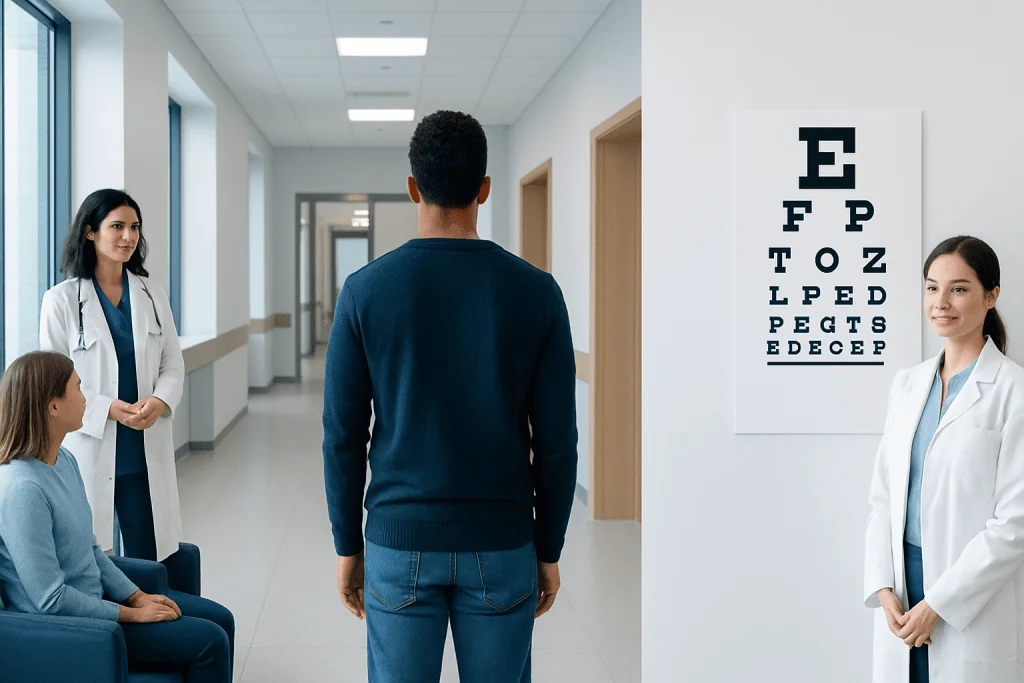
The Snellen chart measures distance visual acuity, not overall eye health. Results such as 20/20 describe clarity of vision at a set distance.
Key Takeaways
- The Snellen chart measures distance visual acuity, not overall eye health.
- Results such as 20/20 describe clarity of vision at a set distance.
- A Snellen chart can suggest refractive errors or other vision problems, but it does not diagnose the cause by itself.
- Children and adults may need different visual tests depending on age, language, and symptoms.
- Blurred vision, sudden changes, eye pain, or vision loss need prompt medical assessment.
A Snellen chart is the familiar eye chart with rows of letters in decreasing sizes, used to measure distance visual acuity. It helps clinicians and screening programs check how clearly a person sees at a standard distance, but it is only one part of a complete eye assessment.
Overview: what a Snellen chart is and what it shows
A Snellen chart is a standardized eye chart used to measure distance visual acuity, or how clearly a person can see letters from a specific distance. It is commonly used in clinics, schools, occupational screenings, and routine eye exams. The chart usually has a large letter at the top and progressively smaller rows underneath, allowing clinicians to compare a person’s reading ability with a standard reference.
The result is often written as a fraction such as 20/20 or 6/6, depending on the measurement system used. In simple terms, this describes how well a person sees at a given distance compared with what is expected in normal vision. A Snellen chart is helpful for screening and follow-up, but it does not assess every aspect of sight, such as peripheral vision, depth perception, color vision, or the health of the retina and optic nerve.
This distinction is important because someone may have a normal Snellen score and still have an eye disease, while another person may have reduced acuity simply because they need glasses. For that reason, clinicians use Snellen chart results together with symptoms, medical history, refraction testing, and a full eye examination when needed.
How the Snellen chart works
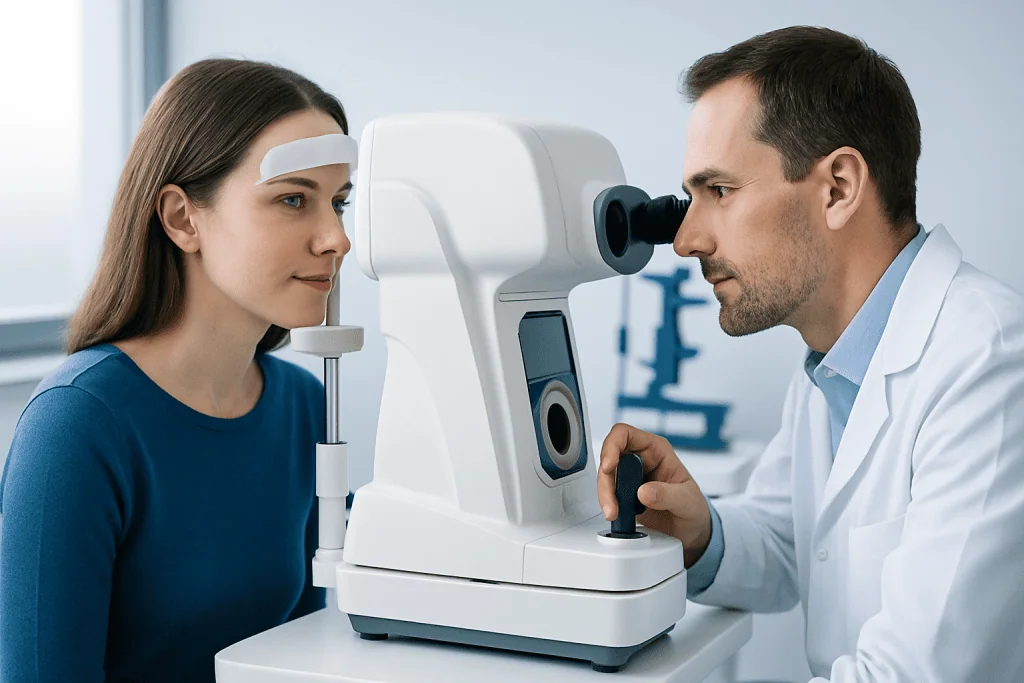
The Snellen chart is designed so that each line of letters represents a different visual size when viewed from a fixed distance. The person covers one eye, then reads the smallest line they can identify accurately. The test is then repeated with the other eye and often with both eyes together. It may be performed with current glasses or contact lenses, and sometimes again without them.
In the United States, the test is commonly performed at 20 feet, while many other settings use 6 meters. A result of 20/20 means the person can see at 20 feet what a person with standard visual acuity is expected to see at 20 feet. A result such as 20/40 means the person must be at 20 feet to see what a person with standard vision could see from 40 feet away.
Accuracy matters. Lighting, chart design, testing distance, fatigue, and even guessing can affect the result. For this reason, visual acuity testing is most useful when it is done in a standardized way and interpreted by a qualified professional. If a result is lower than expected, the next step is usually a fuller eye assessment rather than relying on the chart alone.
What Snellen chart results can and cannot tell you
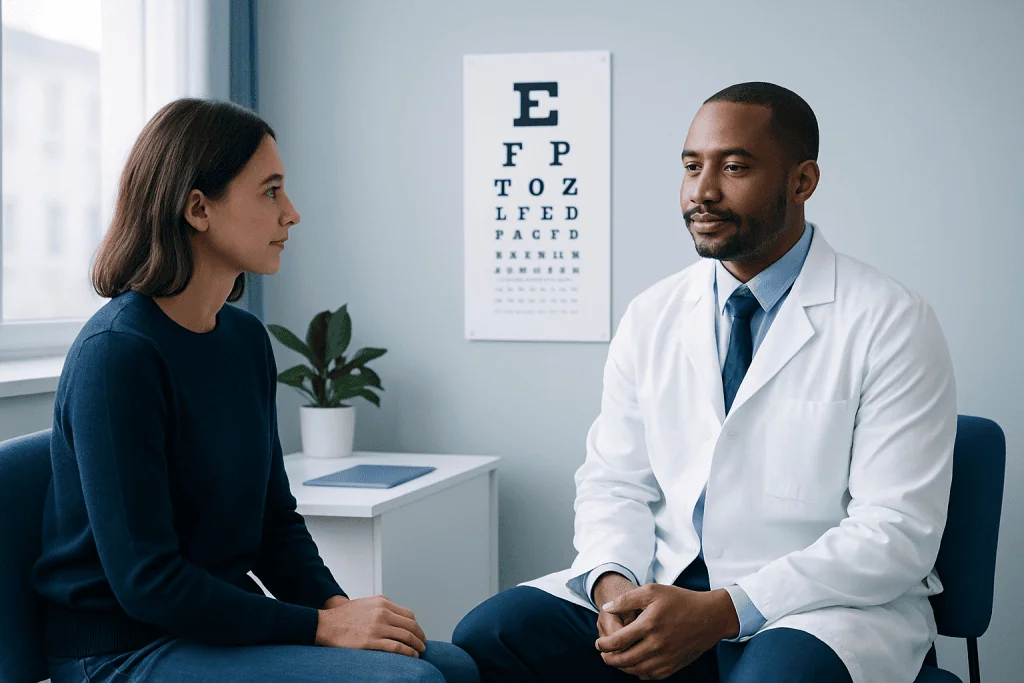
A Snellen chart can show whether distance vision is sharp, reduced, or changing over time. This is useful for identifying possible refractive errors such as nearsightedness, farsightedness, or astigmatism. It can also help monitor vision before and after treatment, after an eye injury, or during routine checkups.
However, reduced visual acuity is a finding, not a diagnosis. Many conditions can lower a Snellen score, including dry eye, cataracts, corneal problems, retinal disease, optic nerve disorders, or poorly controlled blood sugar. In some cases, the chart may be the first clue that a person needs assessment for a condition such as glaucoma or cataract.
The test also has limitations in real-world vision. Reading letters on a high-contrast chart does not fully reflect how someone functions in dim light, bright glare, or crowded environments. That is why clinicians may add contrast sensitivity testing, refraction, slit-lamp examination, intraocular pressure measurement, or retinal imaging when symptoms or risk factors suggest something more than a simple refractive issue.
Who may need a Snellen chart test
People of almost any age may have visual acuity checked, although the exact chart or method can differ by age and communication ability. Adults often have a Snellen chart test during routine eye exams, general health screenings, driver’s license assessments, and evaluations for headaches, eye strain, or blurred vision.
Children also benefit from vision screening, but very young children may need picture-based or symbol-based charts instead of standard letter charts. In children, visual acuity testing can help identify refractive errors, lazy eye, or other problems early, when treatment may be more effective. Screening does not replace a comprehensive pediatric eye evaluation if there are concerns.
Some people need testing more often than others. This includes those with diabetes, a family history of eye disease, previous eye surgery, prolonged screen use with symptoms, contact lens wear, or medications that may affect vision. Visual changes in these groups should not be dismissed as a normal part of aging or tiredness alone.
Conditions linked with abnormal Snellen chart results
The most common reason for reduced acuity on a Snellen chart is an uncorrected refractive error. This means the eye is not focusing light properly, often due to myopia, hyperopia, or astigmatism. In many cases, glasses or contact lenses significantly improve the result once the correct prescription is found.
Other causes involve the structures of the eye itself. The cornea may be irregular or inflamed, the natural lens may become cloudy, or the retina may not process images normally. Conditions such as macular degeneration can reduce central vision, while glaucoma may affect vision in ways that are not always obvious on a standard acuity chart early on.
Reduced acuity may also result from temporary issues such as dry eye, infection, or medication side effects. Less commonly, neurological conditions affecting the optic nerve or brain can impair vision. Because the chart does not identify which structure is responsible, persistent or unexplained changes usually lead to a broader eye and sometimes neurological evaluation.
- Common causes: refractive errors, dry eye, cataracts
- Important medical causes: retinal disease, glaucoma, corneal disorders
- Less common causes: optic nerve disease, neurological disorders, medication effects
Diagnosis beyond the chart
If Snellen chart results are lower than expected or symptoms are present, clinicians usually look beyond the chart to understand why. A refraction test checks whether lenses improve vision, which helps identify the correct glasses or contact lens prescription. An eye exam may also include pupil assessment, eye movement testing, slit-lamp evaluation of the front of the eye, and examination of the retina and optic nerve.
Additional tests depend on the person’s age, symptoms, and risk factors. Someone with reading difficulties may need a near-vision assessment. A person with suspected glaucoma may need pressure measurement, optic nerve assessment, or visual field testing. Someone with reduced acuity not explained by glasses may need retinal imaging or evaluation by an ophthalmologist.
This broader approach matters because good care is not only about measuring vision but also understanding its cause. If treatment is needed, it may range from a simple lens prescription to management of a specific eye condition. In some settings, further evaluation may include a comprehensive eye examination or planning for procedures such as cataract surgery when clinically appropriate.
Treatment, prevention, and self-care
Treatment depends on the reason for the abnormal result. If the cause is a refractive error, prescription glasses or contact lenses may restore clearer vision. If the cause is dry eye, corneal disease, cataract, retinal disease, or glaucoma, management is directed at that specific condition rather than the chart result itself.
Prevention focuses on routine eye care and protecting long-term vision. Adults should have periodic eye examinations based on age, risk factors, and symptoms. Children should follow recommended vision screening schedules. Eye protection at work or during sports, good contact lens hygiene, diabetes control, smoking cessation, and UV protection can all support eye health.
At home, people should not rely on online or printed charts as a substitute for a professional test. Informal self-checks may be useful for noticing change, but they are not standardized and can be misleading. If vision is becoming blurrier, if glasses seem less effective, or if one eye appears different from the other, a professional assessment is the safest next step.
For patients who need specialist evaluation, Acibadem International’s multidisciplinary specialists and JCI-accredited hospitals diagnose and treat eye conditions for international patients, including services related to refractive vision correction and broader ophthalmic care when appropriate.
When to seek medical care
A routine appointment is appropriate if vision seems gradually blurrier, reading the chart at a screening is difficult, headaches occur with visual tasks, or an older glasses prescription no longer feels effective. These situations often have treatable causes, but they still deserve proper evaluation.
Prompt medical care is needed for sudden vision loss, new flashes or floaters, a curtain-like shadow over vision, eye pain, severe redness, double vision, or sudden worsening in one eye. These symptoms are not explained by a Snellen chart result alone and may indicate an urgent eye problem.
People with diabetes, previous eye disease, eye trauma, or a strong family history of serious eye conditions should be especially careful not to delay assessment. When in doubt, it is safer to ask an eye specialist whether symptoms require urgent attention than to wait for them to settle on their own.
Frequently asked questions
What is a Snellen chart used for?
A Snellen chart is used to measure distance visual acuity, which means how clearly a person can see at a standard distance. It is commonly used in screenings and eye exams to check for vision changes and the possible need for further assessment.
Does 20/20 vision mean the eyes are perfectly healthy?
No. A 20/20 result means distance vision is clear under the test conditions, but it does not rule out all eye diseases. Problems such as glaucoma, retinal disease, or early cataracts may still be present even if visual acuity is good.
Can a Snellen chart diagnose eye disease?
Not by itself. The chart shows whether vision is reduced, but it does not identify the exact cause. Diagnosis usually requires a full eye exam and sometimes additional tests.
Is a Snellen chart the same for children and adults?
Not always. Older children and adults often use standard letter charts, while younger children may use pictures, symbols, or matching tests. The goal is still the same: to measure visual acuity in a reliable way for that age group.
Can someone use a Snellen chart at home?
A home chart may help a person notice a change in vision, but it is not a substitute for a professional assessment. Testing distance, lighting, print quality, and chart format can all affect the result and make it less reliable.
What if one eye reads much worse than the other?
A significant difference between the two eyes should be evaluated by an eye care professional. It may be caused by a refractive error, but it can also reflect a more specific problem affecting one eye.
This article is for general information only and is not a substitute for professional medical advice. Please consult a qualified doctor about your individual situation.
Explore treatments in Turkey — costs, top hospitals & a free quote
JCI-accredited · board-certified surgeons · reply within 24h
Add us as a Preferred Source to see more of our trusted health content across Google Search, AI Overviews and Discover.

More from the Health Library

Skin Graft — Explained by Medical Evidence, Not Myths

Nose Tingly: An Evidence-Based Guide for Patients

Vaccine Shedding: An Evidence-Based Guide for Patients
Ligament: An Evidence-Based Guide for Patients
Eye Doctor: What Patients Need to Know