Spasticity After Stroke: Treatment Options From Therapy to Neuromodulation

Spasticity after stroke happens when the brain can no longer regulate muscle tone normally, leading to stiffness and involuntary muscle overactivity. Symptoms may affect the arm, hand, leg, foot, or multiple muscle groups and can interfere with walking, dressing, hygiene, sleep, and comfort.
Key Takeaways
- Spasticity after stroke happens when the brain can no longer regulate muscle tone normally, leading to stiffness and involuntary muscle overactivity.
- Symptoms may affect the arm, hand, leg, foot, or multiple muscle groups and can interfere with walking, dressing, hygiene, sleep, and comfort.
- Treatment often combines rehabilitation therapy, stretching, positioning, splints or braces, medications, and targeted injections.
- Advanced options such as nerve-based treatments or implanted therapies may be considered for severe or persistent spasticity.
- Early evaluation is important because timely treatment may help prevent pain, joint stiffness, and long-term contractures.
Spasticity after stroke is a common movement problem that causes muscles to feel tight, stiff, or difficult to control. With early assessment and a personalized treatment plan, many people can improve comfort, mobility, daily function, and quality of life.
Overview
Spasticity after stroke is a condition in which certain muscles become abnormally tight or overactive. It develops because a stroke can damage the pathways in the brain that normally help control muscle tone and coordinated movement. Instead of relaxing smoothly, affected muscles may resist stretching, pull a limb into a fixed position, or tighten suddenly during movement.
This problem can appear days, weeks, or months after a stroke. Some people notice only mild stiffness, while others develop more severe tightness that affects the shoulder, elbow, wrist, fingers, hip, knee, or ankle. The pattern varies depending on which part of the brain was injured and how the nervous system recovers.
Post-stroke spasticity is not the same as simple weakness, although the two often occur together. A person may have weakness on one side of the body but also have muscles that tighten involuntarily. Understanding this difference is important because treatment focuses not only on strengthening but also on reducing excessive muscle activity and preserving joint movement.
Symptoms and How It Affects Daily Life
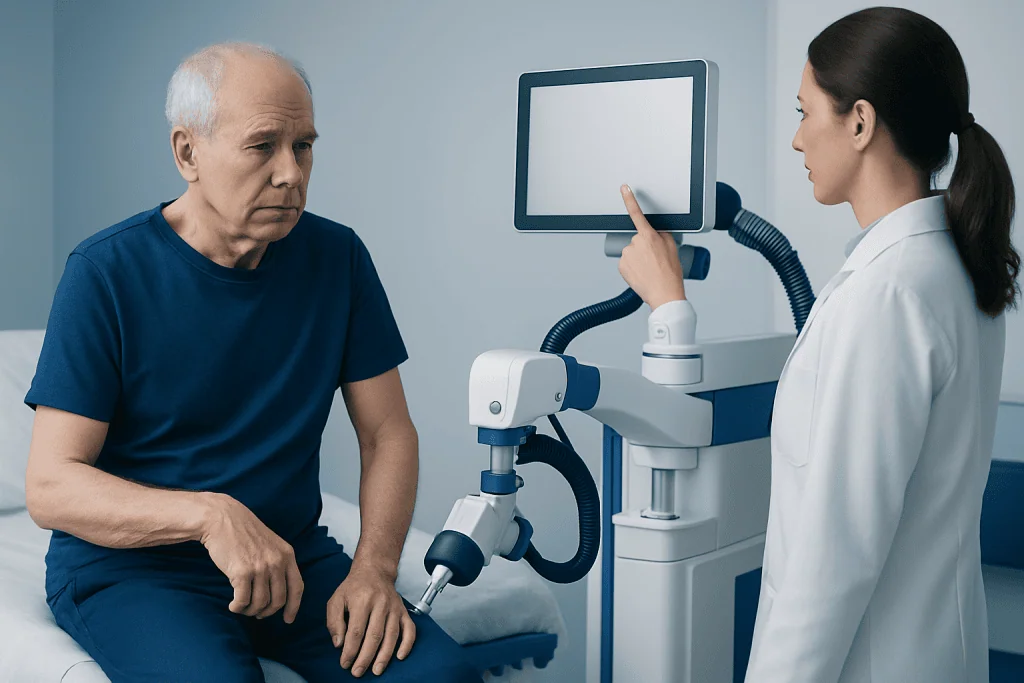
The most common symptom of spasticity after stroke is muscle stiffness. A person may feel that the arm or leg is hard to move, especially during walking, dressing, bathing, or reaching. The hand may clench into a fist, the elbow may stay bent, or the foot may point downward, making balance and walking more difficult.
Other symptoms can include muscle spasms, jerking, cramping, pain, or a feeling that the limb is pulling inward. Stiff muscles may worsen with fast movement, emotional stress, fatigue, infection, or skin irritation. In some cases, the tightness fluctuates during the day.
Spasticity can affect everyday independence in many ways. It may make personal hygiene harder, interfere with sleep, limit use of the hand, or increase the risk of falls. If it is not addressed, prolonged muscle overactivity can lead to shortening of soft tissues and joint contractures, which may become more difficult to reverse.
- Tight or rigid muscles
- Resistance when a limb is stretched
- Involuntary spasms or sudden tightening
- Painful posture of the arm, hand, or foot
- Difficulty walking or using the affected hand
- Problems with dressing, hygiene, or sleep
Causes and Risk Factors

A stroke can interrupt the brain signals that normally balance muscle contraction and relaxation. When inhibitory control is reduced, the spinal reflexes that trigger muscle tightening can become overactive. This is why some muscles begin to contract too strongly in response to movement or stretching.
Not everyone who has a stroke develops clinically significant spasticity. The risk may be higher in people who have more severe weakness, limited early movement, or damage affecting motor pathways. Reduced mobility after stroke can also contribute because muscles and connective tissues may shorten when they are not moved regularly.
Several related problems can make spasticity more noticeable. Pain, bladder or bowel issues, pressure injuries, poorly fitting braces, infection, and other medical stressors may trigger more muscle tightness. Because symptoms can have multiple causes, a careful medical evaluation helps guide treatment and identify anything that is making the spasticity worse.
Diagnosis and Assessment
Diagnosis begins with a medical history and physical examination. The doctor will ask when the stiffness started, which activities are affected, whether pain is present, and what makes symptoms better or worse. A neurological and musculoskeletal examination helps distinguish spasticity from weakness, joint disease, or other movement problems.
Clinicians often assess passive range of motion, limb posture, reflexes, and how much resistance is felt when the muscle is stretched. They may also evaluate walking, hand use, transfers, balance, and personal care tasks. In rehabilitation settings, standardized scales may be used to track severity and response to treatment over time.
Assessment should be practical and goal-based. For one person, the main goal may be easier walking; for another, it may be reducing pain, opening the hand for hygiene, or improving comfort for caregiving. Imaging or other tests are not always needed specifically for spasticity, but they may be used when doctors are evaluating the broader effects of stroke or looking for other causes of symptoms.
Treatment Options: From Therapy to Neuromodulation
Treatment for spasticity after stroke is usually individualized and often combines more than one approach. Physical therapy and occupational therapy are central to care. Therapy may include guided stretching, range-of-motion exercises, strengthening of opposing muscle groups, gait training, task-specific practice, positioning, and techniques to support safer movement during daily activities. Many patients benefit from structured physical therapy and rehabilitation as part of a broader stroke recovery plan.
Splints, orthoses, and supportive seating may help maintain joint alignment and reduce abnormal postures. For example, an ankle-foot orthosis may improve foot position during walking, while a hand splint may help with comfort or hygiene in selected cases. Regular home exercises are often recommended to maintain flexibility between therapy sessions.
When spasticity is more troublesome, doctors may consider oral medications that relax muscles. These medicines can be helpful for some people but may also cause side effects such as sleepiness, weakness, dizziness, or reduced alertness, so treatment needs careful supervision. In focal spasticity affecting specific muscle groups, targeted injections such as botulinum toxin treatment may reduce overactivity for a period of time and can be especially useful when combined with therapy afterward.
For severe, generalized, or treatment-resistant cases, more advanced interventions may be discussed. These may include nerve-directed procedures, intrathecal medication delivery, or selected neuromodulation strategies in carefully evaluated patients. The best option depends on the person’s functional goals, pattern of muscle involvement, overall health, and stage of recovery. If spasticity is part of a broader movement disorder picture, specialists may also evaluate related conditions such as Parkinson’s disease when clinically relevant, though post-stroke spasticity has a different cause.
Prevention, Self-care, and Rehabilitation Support
Although spasticity cannot always be prevented, early rehabilitation may reduce its impact. Gentle range-of-motion exercises, regular changes in position, and guided movement of the affected limbs can help preserve flexibility and support recovery. Families and caregivers often play an important role by learning safe handling and positioning techniques from rehabilitation professionals.
Good self-care also includes paying attention to triggers that can worsen tightness. Skin problems, constipation, urinary issues, poor sleep, pain, and emotional stress may all increase muscle overactivity in some people. Managing these factors can make the overall treatment plan more effective.
Home programs should be realistic and consistent rather than overly intense. Stretching should be done as instructed, without forcing a painful movement. People recovering from stroke may benefit from coordinated care that includes physiatrists, neurologists, therapists, nurses, and orthotics specialists. Near the end of the care journey, some international patients choose centers such as Acibadem International, where multidisciplinary specialists in JCI-accredited hospitals assess and treat complex post-stroke conditions.
When to See a Doctor
A doctor should evaluate new or worsening muscle stiffness after a stroke, especially if it interferes with walking, hand use, hygiene, sleep, or comfort. Prompt assessment is also important if the limb becomes painful, difficult to clean, or increasingly hard to straighten. Early treatment may help prevent contractures and reduce the impact on daily life.
Urgent medical attention is needed if symptoms are accompanied by signs of a new stroke, such as sudden facial drooping, new weakness, new trouble speaking, severe imbalance, or sudden vision changes. It is also important to seek medical review if there is fever, significant swelling, skin breakdown, or a sudden unexplained increase in spasms, since these may signal another medical problem.
Regular follow-up is often part of long-term care because spasticity can change over time. Treatment plans may need adjustment as recovery progresses, goals shift, or new therapies become appropriate. A qualified stroke or rehabilitation specialist can help determine which options are most suitable.
Frequently asked questions
Is spasticity after stroke permanent?
It can be temporary for some people and longer lasting for others. The course depends on the location and severity of the stroke, the pattern of recovery, and how early treatment begins. Even when it does not fully disappear, symptoms can often be managed effectively.
When does spasticity usually start after a stroke?
Spasticity may begin within days or weeks after a stroke, but it can also develop later during recovery. Mild stiffness may be the first sign, and the pattern can gradually become more noticeable. Any new tightening should be discussed with a doctor or rehabilitation specialist.
Can exercise help post-stroke spasticity?
Yes, guided exercise and rehabilitation are often key parts of treatment. Stretching, range-of-motion work, strengthening, and task-specific therapy may improve flexibility and function. Exercises should be tailored by a professional so they are safe and appropriate for the person’s recovery stage.
Are botulinum toxin injections useful for spasticity after stroke?
They can be helpful when spasticity affects specific muscle groups, such as the wrist, fingers, calf, or shoulder region. These injections reduce overactivity in targeted muscles for a limited period and are usually combined with therapy for best results. A specialist can determine whether they are appropriate.
What happens if spasticity is left untreated?
Untreated spasticity may lead to pain, difficulty with hygiene and dressing, reduced mobility, and problems using the affected limb. Over time, muscles and tendons may shorten, and joints may become fixed in uncomfortable positions. Early management can help reduce these risks.
Is spasticity the same as a muscle spasm?
Not exactly. Spasticity refers to ongoing increased muscle tone and resistance to stretching, while a spasm is a sudden involuntary muscle contraction. The two can occur together, but they are not the same problem.
This article is for general information only and is not a substitute for professional medical advice. Please consult a qualified doctor about your individual situation.
Neuromodulation in Turkey — costs, top hospitals & a free quote
JCI-accredited · board-certified surgeons · reply within 24h
Add us as a Preferred Source to see more of our trusted health content across Google Search, AI Overviews and Discover.

More from the Health Library

How Is a Stroke Diagnosed? Brain Scans, Exams, and Emergency Tests

How to Prevent Another Stroke: Medicines, Blood Pressure Control, and Daily Habits

Stroke ICU Care: What Happens in the First 24 to 48 Hours
Stroke vs Migraine Aura: When Sudden Numbness or Vision Changes Need Emergency Help
What Is a Stroke? Types, Brain Effects, and Why Every Minute Matters