Tremor vs Parkinsonism: How Movement Disorder Specialists Tell the Difference

A tremor is a symptom, while parkinsonism is a group of movement features that may include tremor, slowness, and stiffness. Parkinson disease often causes a resting tremor, but not every tremor means Parkinson disease.
Key Takeaways
- A tremor is a symptom, while parkinsonism is a group of movement features that may include tremor, slowness, and stiffness.
- Parkinson disease often causes a resting tremor, but not every tremor means Parkinson disease.
- Essential tremor commonly appears during action or posture, such as holding a cup or writing.
- Diagnosis relies mainly on a careful neurological exam, medical history, and review of medications.
- Some people may need imaging or specialist testing when the diagnosis is unclear.
- Treatment depends on the cause and can include medication, therapy, and selected procedures.
Tremor and parkinsonism can look similar at first, but they are not the same. Movement disorder specialists tell the difference by looking at when shaking happens, what other movement changes are present, and how symptoms evolve over time.
Overview: Tremor and Parkinsonism Are Related but Different
When people notice shaking in a hand, head, or voice, a common first worry is Parkinson disease. However, a tremor is only one possible sign of a movement disorder. Parkinsonism is a broader clinical syndrome that usually includes slowness of movement, muscle stiffness, and sometimes balance changes. Tremor may be part of parkinsonism, but it is not required for the diagnosis.
Specialists begin by separating a symptom from a syndrome. A tremor is a rhythmic, involuntary movement of part of the body. It can happen at rest, while holding a position, or during movement. Parkinsonism refers to a pattern of neurological signs, especially bradykinesia, which means slowness with reduced amplitude or speed of repeated movements. This distinction is one of the most important steps in understanding tremor vs parkinsonism.
There are several causes of tremor. One of the most common is essential tremor, which often affects the hands during action and may also involve the head or voice. Parkinsonism can be caused by Parkinson disease, certain medications, vascular changes, atypical neurodegenerative disorders, or other neurological conditions. Because the causes differ, the evaluation also differs.
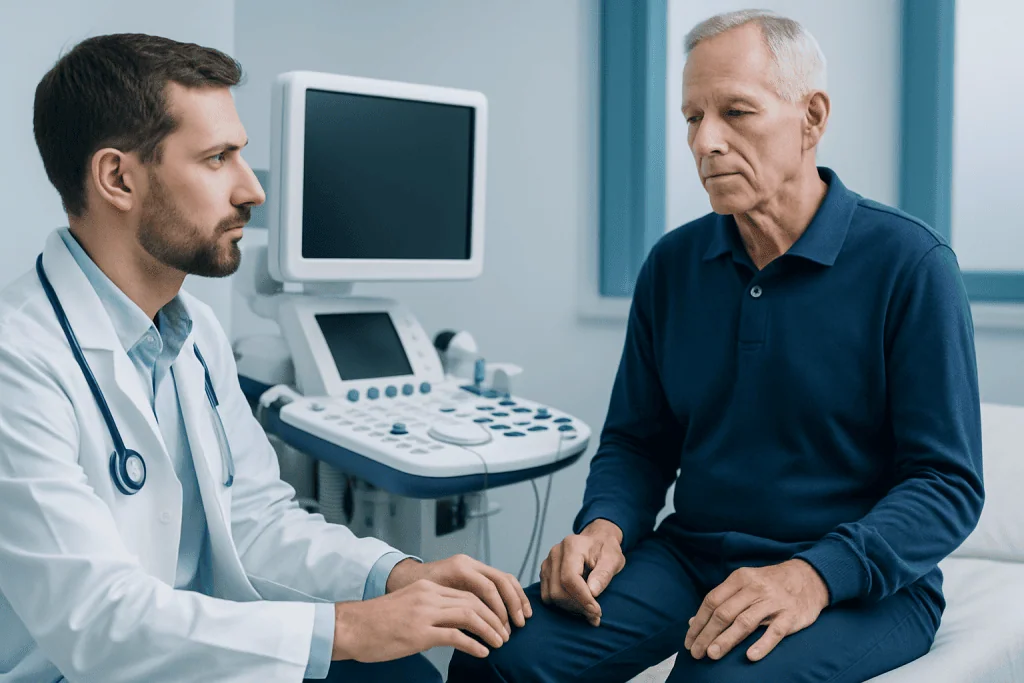
A movement disorder specialist has advanced experience in recognizing these patterns. In clinics focused on movement disorders, the diagnosis is usually made through a detailed conversation and a careful neurological examination rather than a single blood test or scan.
Symptoms: What Specialists Look for in the Exam Room
The timing of the shaking often provides the first clue. Parkinsonian tremor typically appears most clearly at rest, such as when the hand is relaxed in the lap, and may decrease with voluntary movement. Essential tremor usually becomes more noticeable when a person is using the hands, holding the arms out, eating, drinking, or writing. Some people can have mixed patterns, which is why the full exam matters.
Specialists also look beyond tremor. Parkinsonism usually includes bradykinesia, seen when finger taps, hand opening and closing, or foot taps become slow and smaller over repeated attempts. Stiffness in the limbs or neck may be present, and walking may show reduced arm swing, a shuffling pattern, or trouble turning. Balance problems can occur later in Parkinson disease, but early falls may suggest another cause of parkinsonism.
By contrast, essential tremor often affects both hands and may involve the head or voice. Handwriting may become shaky but not necessarily small. In Parkinson disease, handwriting often becomes unusually small, a change called micrographia. Facial expression may also become reduced in parkinsonism, and the voice may sound softer.
Other symptoms can help. People with Parkinson disease may report loss of smell, constipation, dream-enactment behavior during sleep, or subtle mood changes long before movement symptoms are obvious. Tremor alone, especially without slowness or stiffness, points specialists to consider causes other than Parkinson disease, including enhanced physiological tremor, medication-related tremor, anxiety, thyroid problems, or dystonia.
Causes and Risk Factors Behind Each Pattern

Essential tremor is a common neurological condition and often runs in families, although it can also occur without a clear family history. Its exact cause is not fully understood, but it is thought to involve abnormal signaling in movement circuits of the brain. It usually develops gradually and may become more noticeable with stress, fatigue, caffeine, or lack of sleep.
Parkinsonism has a wider range of causes. Parkinson disease is the most common form and is a progressive neurodegenerative disorder. But parkinsonism can also result from medications that block dopamine pathways, especially some antipsychotic or anti-nausea drugs. Vascular injury from small strokes may cause lower-body parkinsonism, and less common atypical disorders can look similar but follow a different course.
Age is an important risk factor for both essential tremor and Parkinson disease, although either can appear earlier in adulthood. Family history can increase the likelihood of essential tremor and, in some cases, Parkinson disease. Exposure to certain toxins, a history of repeated head injury, or underlying neurological disease may also influence risk in selected patients.
Because many conditions can affect movement, specialists keep an open mind. They may consider whether symptoms fit Parkinson disease or another condition within neurodegenerative diseases, whether a medicine could be contributing, or whether a structural or vascular brain problem should be investigated.
How Diagnosis Is Made
There is no single test that definitively separates all forms of tremor from all forms of parkinsonism. Diagnosis starts with a detailed history: when symptoms began, which body parts are affected, what makes the shaking worse or better, whether symptoms are one-sided or both-sided, and whether there are other movement or non-movement changes. A medication review is essential because drug-induced parkinsonism is common and treatable.
The neurological examination is the core of diagnosis. The specialist observes the tremor at rest, with posture, and during action. They assess tone, speed of repetitive movements, walking, turning, posture, balance, facial expression, voice, and handwriting. The pattern over time is often as informative as the first visit, so follow-up appointments can be important when signs are subtle.
Blood tests may be used to look for reversible contributors such as thyroid disease, metabolic disturbances, or medication effects. Brain imaging is not always needed, but MRI may help rule out structural causes if the presentation is unusual. In selected situations, dopamine transporter imaging can support the evaluation by showing whether dopamine-related nerve pathways appear reduced, although it does not by itself diagnose a specific condition.
Some patients benefit from additional assessment in programs that combine expertise in neurophysiology and movement disorders. These tools are used to clarify difficult cases, not to replace the clinical exam. A diagnosis may become clearer over time as symptoms respond to treatment or evolve in a characteristic way.
Treatment Options: Why the Correct Diagnosis Matters
Treatment depends on the cause, severity, and the person’s daily needs. Essential tremor may be managed with lifestyle adjustments and, when symptoms interfere with eating, writing, work, or social activities, medication. Some people need treatment only for situations that worsen tremor, while others benefit from more regular symptom control.
Parkinson disease treatment often focuses on improving slowness, stiffness, and tremor with medications that support dopamine pathways. Physical therapy, exercise, speech therapy, and occupational therapy are also important because they help maintain mobility, communication, and independence. If symptoms are due to a medication, adjusting or replacing that medicine may improve drug-induced parkinsonism under medical supervision.
For selected patients with disabling symptoms that do not respond well enough to medication, procedural options may be considered. These can include forms of neuromodulation such as deep brain stimulation for carefully chosen cases of Parkinson disease or essential tremor. The decision is individualized and based on symptoms, overall health, and treatment goals.
Because tremor and parkinsonism can arise from different neurological pathways, the right treatment for one condition may not help another. This is why a precise diagnosis matters. For example, treatment plans for Parkinson disease are usually built around a different set of goals than plans for isolated action tremor.
Self-care, Monitoring, and Everyday Support
Although self-care does not replace medical treatment, it can make symptoms easier to manage. Regular sleep, hydration, stress reduction, and limiting personal triggers such as excessive caffeine may reduce tremor in some people. A symptom diary can be helpful, especially if tremor varies during the day or seems connected to medications, meals, anxiety, or fatigue.
Exercise is especially valuable in parkinsonism. Walking, stretching, balance training, strength work, and activities that challenge coordination can support mobility and confidence. For people with tremor, practical changes such as weighted utensils, cups with lids, larger-handled pens, or voice strategies may reduce day-to-day frustration.
Monitoring is important because symptoms can change. A tremor that begins as a mild inconvenience may become more troublesome over time, or new features such as stiffness, slowness, or balance issues may appear. Follow-up with a neurologist helps ensure that the diagnosis is still the best fit and that treatment remains appropriate.
Near the end of the care journey, some people also seek coordinated assessment across specialties. Acibadem International’s multidisciplinary specialists in JCI-accredited hospitals diagnose and treat movement disorders for international patients when advanced evaluation is needed.
When to See a Doctor
A new tremor should be discussed with a doctor, especially if it persists, worsens, or interferes with work, eating, writing, dressing, or sleep. Medical attention is also important when shaking is accompanied by slowness, stiffness, changes in walking, falls, or one-sided symptoms. These features can help distinguish tremor from parkinsonism and may guide earlier treatment.
Urgent evaluation is needed if movement changes begin suddenly, especially with weakness, numbness, facial droop, severe headache, confusion, speech difficulty, or vision loss. In those situations, a stroke or other emergency must be considered, including stroke. A sudden change is not typical for essential tremor or most forms of Parkinson disease.
It is also wise to seek review if symptoms start after a new medication or dosage change. Some drugs can trigger tremor or parkinsonism, and a clinician can determine whether an adjustment is safe. People who already have a diagnosis should return sooner if they develop frequent falls, swallowing difficulty, hallucinations, rapid progression, or poor response to treatment.
Most importantly, people should remember that many causes of tremor are manageable, and not every tremor means Parkinson disease. A calm, structured evaluation by a qualified neurologist or movement disorder specialist is the best way to find answers and plan treatment.
Frequently asked questions
Is every tremor a sign of Parkinson disease?
No. Tremor has many possible causes, including essential tremor, medication effects, anxiety, thyroid problems, and Parkinson disease. The pattern of the tremor and the presence or absence of slowness and stiffness help doctors tell the difference.
What is the main difference between essential tremor and parkinsonian tremor?
Essential tremor usually appears during action or when holding a posture, such as lifting a cup or writing. Parkinsonian tremor is often most noticeable at rest and is more likely to be accompanied by slowness, rigidity, and changes in walking.
Can someone have Parkinson disease without a tremor?
Yes. Not everyone with Parkinson disease has a clear tremor, especially early on. Some people mainly develop slowness, stiffness, reduced arm swing, or smaller handwriting.
Are there tests that confirm parkinsonism?
Diagnosis is mainly clinical, which means it is based on history and neurological examination. Imaging or other tests may support the evaluation or rule out other causes, but they usually do not replace the specialist’s exam.
Can medications cause parkinsonism?
Yes. Certain medicines, especially some that affect dopamine pathways, can cause symptoms that resemble Parkinson disease. This is one reason why a full medication review is an important part of the assessment.
When should a person see a movement disorder specialist?
A specialist is especially helpful when the diagnosis is uncertain, symptoms are progressing, or standard treatment is not working as expected. They can also help if procedural options or more advanced therapies need to be considered.
References
- National Institute of Neurological Disorders and Stroke
- Parkinson's Foundation
- International Parkinson and Movement Disorder Society
- National Health Service
- Mayo Clinic
This article is for general information only and is not a substitute for professional medical advice. Please consult a qualified doctor about your individual situation.
Tremor in Turkey — costs, top hospitals & a free quote
JCI-accredited · board-certified surgeons · reply within 24h
Add us as a Preferred Source to see more of our trusted health content across Google Search, AI Overviews and Discover.

Neurology
Diagnosis and treatment of disorders of the brain, spinal cord, nerves and muscles.
51 specialists in this unit