

What Does Aesthetic Mean? A Patient Guide to the Word and Its Medical Use

Aesthetic means related to appearance, balance, and beauty. In medicine, aesthetic care focuses on improving how a body part looks, often while preserving function.
Key Takeaways
- Aesthetic means related to appearance, balance, and beauty.
- In medicine, aesthetic care focuses on improving how a body part looks, often while preserving function.
- Aesthetic and reconstructive treatments can overlap, especially after injury, surgery, or congenital differences.
- Good aesthetic care should be individualized, evidence-based, and performed by qualified specialists.
- Patients should ask about goals, risks, recovery, and realistic outcomes before any procedure.
The word “aesthetic” refers to beauty, appearance, and visual harmony. In medicine, it is used to describe treatments and specialties that aim to improve how a person looks while keeping health, safety, and function in mind.
Overview
The word aesthetic comes from the idea of beauty, form, and how something is perceived by the eye. In everyday language, it may describe style, design, or a pleasing appearance. In medicine, the term is used more specifically to refer to care that improves appearance while keeping health and natural function in mind.
That is why people may hear phrases such as aesthetic surgery, aesthetic medicine, or aesthetic dermatology. These terms usually describe treatments that address features a person wishes to change, such as facial contours, skin texture, breast shape, or body proportions. In many cases, the goal is not to “perfect” a body part, but to create a result that looks more balanced and feels appropriate for the individual.
Aesthetic medicine is closely connected to reconstructive care. For example, after injury, surgery, or a congenital difference, treatment may aim to restore both function and appearance. Procedures such as breast reconstruction or ear reconstruction often sit at the intersection of these two fields.
How the word is used in medicine
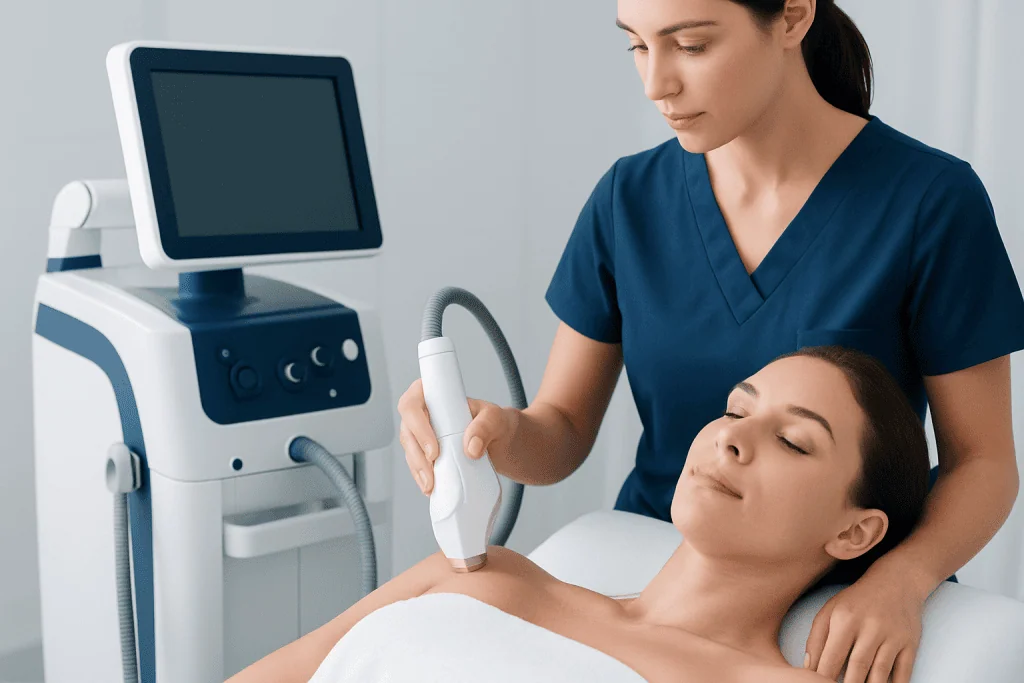
In a medical setting, aesthetic usually describes treatments, specialists, or outcomes that focus on appearance. This may include surgical procedures, non-surgical treatments, or follow-up care designed to refine a result. The word does not automatically mean a treatment is elective or unnecessary; it simply signals that appearance is an important part of the goal.
Patients may also hear the term in specific specialty names. For example, aesthetic breast surgery can include procedures such as breast lift, breast reduction, or augmentation, depending on the person’s needs and anatomy. In the same way, facial aesthetic procedures may involve the nose, eyelids, chin, cheeks, or neck, and each plan is tailored to the individual rather than based on a single standard look.
The word is sometimes confused with “cosmetic,” and in daily conversation they are often used similarly. In medicine, however, some teams prefer “aesthetic” because it can feel broader and more balanced, especially when treatments are planned to support confidence, function, or repair after illness or trauma.
Common aesthetic goals and concerns

People seek aesthetic care for many reasons. Some want to soften signs of aging, such as sagging skin, volume loss, or wrinkles. Others want to improve a feature they have always felt was out of balance with the rest of the face or body. Some patients are looking for recovery after pregnancy, weight loss, injury, or previous surgery.
Common concerns may include facial shape, breast size or symmetry, skin quality, scars, body contour, hair thinning, eyelid appearance, or the shape of the ears, chin, or neck. Procedures such as brow lift, oculoplastic surgery, or acne scarring treatment may help address specific concerns when they are appropriate for the patient.
It is important to remember that aesthetic care is personal. What looks natural or desirable to one person may not be the same for another. A good consultation focuses on the patient’s own goals, facial or body proportions, health history, and realistic expectations.
Causes & risk factors for wanting aesthetic treatment
Aesthetic concerns do not always have a single medical “cause.” They may arise from normal aging, genetics, hormonal changes, pregnancy, weight changes, sun exposure, injuries, or previous procedures. In some cases, birth differences or medical conditions also influence appearance and function.
Risk factors for noticing aesthetic changes can include smoking, chronic sun exposure, repeated skin inflammation, large weight fluctuations, and some inherited traits. Lifestyle and overall health can also affect healing, skin quality, and surgical risk. For example, people considering body-shaping options after major weight loss may ask about bariatric contouring because the body’s skin and soft tissue may not tighten fully on their own.
Not every concern needs a procedure. Sometimes reassurance, skincare, styling changes, physical therapy, or time are enough. When a treatment is considered, the decision should be based on a careful discussion of benefit, recovery, and whether the result is likely to improve both appearance and quality of life.
Diagnosis and consultation
There is no single test for an “aesthetic” concern. Instead, the process starts with a consultation. A clinician reviews the patient’s medical history, medications, previous surgeries, and any symptoms such as pain, breathing difficulty, vision changes, or skin irritation. The specialist then examines the area of concern and asks what result the patient hopes to achieve.
Photographs, measurements, or imaging may sometimes be used to plan treatment, compare symmetry, or assess anatomy. In facial and eye-area planning, specialists may evaluate both appearance and function. For example, a patient interested in eyelid or surrounding-eye changes may be assessed by an oculoplastic team to determine whether treatment is suited to the eyelids, tear ducts, or nearby structures.
Good consultation also includes a discussion of limits. A surgeon or clinician should explain what can and cannot be changed, how visible scars may heal, how long recovery may take, and whether more than one step is needed. This helps patients choose a treatment plan that fits their goals and health status.
Treatment options
Aesthetic treatment options range from non-surgical care to surgery. Non-surgical choices may include skincare plans, injectables, energy-based devices, scar therapies, or body contouring methods. These can be useful for patients who want gradual improvement or less downtime, although results are often more modest and may need maintenance.
Surgical options are considered when a more durable or structural change is desired. These may include facial contouring, eyelid surgery, breast procedures, body contouring, ear reconstruction, or other specialized operations. The best option depends on the anatomy involved, the patient’s goals, and whether the focus is on appearance alone or appearance plus function. Procedures such as chin aesthetic surgery or aesthetic neck contouring may be part of a broader facial harmony plan.
Recovery varies widely. Some treatments involve little interruption to daily life, while others require swelling management, wound care, activity limits, and follow-up visits. Patients should ask about expected discomfort, scars, support garments, and the time needed before results settle into their final appearance.
Prevention & self-care
Not all aesthetic concerns can be prevented, but healthy habits can support skin quality, healing, and long-term results. Sun protection helps reduce premature aging and uneven pigmentation. Avoiding smoking supports circulation and wound healing. A balanced diet, adequate hydration, and stable weight can also help maintain surgical results and overall appearance.
Self-care before and after an aesthetic procedure should follow the clinician’s instructions closely. This may include stopping certain medications or supplements when advised, keeping the skin clean, attending follow-up appointments, and limiting exercise or pressure on the treated area during early recovery. For hair-related concerns, a specialist may discuss options such as aesthetic scalp surgery or other supportive approaches when appropriate.
Patients should also keep expectations realistic. The goal of aesthetic care is usually improvement, not transformation into someone else. The most satisfying results often come from shared decision-making, careful planning, and a treatment choice that matches the person’s anatomy and values.
When to see a doctor
A consultation with a qualified doctor is appropriate when a person is bothered by a feature that affects confidence, comfort, or daily life, or when a change in appearance may reflect a medical issue. This is especially important if there is pain, numbness, vision change, breathing difficulty, recurrent irritation, scarring that limits movement, or a new shape change after injury or surgery.
Patients should seek care from properly trained specialists who can explain whether a concern is best treated with observation, medical management, or a procedure. A thoughtful assessment is especially important for complex areas such as the eyes, breasts, face, body contour, and genital region. Acibadem International’s multidisciplinary specialists and JCI-accredited hospitals can diagnose and treat these concerns for international patients in a coordinated setting.
Before deciding on any procedure, patients should feel comfortable asking questions and getting a clear plan. A good doctor will discuss expected benefits, risks, alternatives, and recovery in plain language so the patient can make an informed choice.
Frequently asked questions
What does aesthetic mean in simple terms?
Aesthetic means related to beauty, appearance, or visual harmony. In medicine, it refers to care that aims to improve how a body part looks, often with attention to natural balance and function.
Is aesthetic medicine the same as cosmetic medicine?
The terms are often used in similar ways, especially in everyday speech. Some clinicians prefer “aesthetic” because it can include treatments that improve appearance while also supporting function or repair.
Does aesthetic always mean surgery?
No. Aesthetic care may include non-surgical treatments such as skincare, scar care, injectables, or device-based procedures. Surgery is only one part of the field and is chosen when a structural change is needed.
How do patients know whether an aesthetic treatment is right for them?
The best way is a consultation with a qualified specialist who can assess the concern, review medical history, and explain options. The right treatment depends on anatomy, goals, health, and recovery needs.
Can aesthetic and reconstructive care overlap?
Yes. Reconstructive care often aims to restore both appearance and function after injury, illness, or congenital differences. In many cases, the aesthetic result is an important part of the overall outcome.
What should patients ask before choosing an aesthetic procedure?
They should ask about the expected results, risks, scars, recovery time, alternatives, and whether the clinician is qualified for that specific procedure. It is also helpful to ask how the plan is tailored to their individual anatomy and goals.
References
- Merriam-Webster Dictionary
- MedlinePlus
- American Society of Plastic Surgeons
- International Society of Aesthetic Plastic Surgery
This article is for general information only and is not a substitute for professional medical advice. Please consult a qualified doctor about your individual situation.
Explore treatments in Turkey — costs, top hospitals & a free quote
JCI-accredited · board-certified surgeons · reply within 24h
Add us as a Preferred Source to see more of our trusted health content across Google Search, AI Overviews and Discover.

Related Treatments
Related Conditions
More from the Health Library



Related Specialists

Prof. Dr. Şükrü Yazar
Aesthetic Plastic & Reconstructive Surgery
Assoc. Prof. Dr. Erdem Güven (m)
Aesthetic Plastic & Reconstructive Surgery
Prof. Dr. Hakan Ağır
Aesthetic Plastic & Reconstructive Surgery
Prof. Dr. Bülent Saçak
Aesthetic Plastic & Reconstructive Surgery