What Is Gerodontology and How Is It Different From General Dental Care?

Gerodontology focuses on dental care for older adults and the effects of aging on the mouth. It takes a broader view than general dentistry by considering medical history, medications, function, and quality of life.
Key Takeaways
- Gerodontology focuses on dental care for older adults and the effects of aging on the mouth.
- It takes a broader view than general dentistry by considering medical history, medications, function, and quality of life.
- Common concerns include dry mouth, gum disease, root decay, tooth loss, ill-fitting dentures, and difficulty with oral hygiene.
- Treatment plans are often adapted to improve comfort, safety, chewing, speech, and independence.
- Regular dental visits remain important in later life, even for people with dentures or limited mobility.
Gerodontology is a branch of dentistry focused on the oral health needs of older adults. It differs from general dental care by considering aging, chronic illness, medications, mobility, cognition, and comfort when planning prevention and treatment.
Overview: What Is Gerodontology?
Gerodontology, also called geriatric dentistry, is the area of dentistry devoted to the oral health of older adults. It looks beyond the teeth alone and considers how aging, general health, medications, memory, manual dexterity, nutrition, and living situation may affect the mouth. The goal is not only to treat dental disease, but also to support comfort, chewing, speech, appearance, and overall well-being.
General dental care is designed for people of all ages and covers routine prevention and treatment. Gerodontology includes these same foundations, but it adapts them to the specific needs of later life. For example, an older adult may need a simpler oral hygiene plan, careful review of medicines that cause dry mouth, or treatment choices that fit with heart disease, diabetes, osteoporosis, or frailty.
This field is especially helpful for people who have multiple medical conditions, wear dentures, depend on a caregiver, or find dental visits physically or cognitively challenging. In practical terms, gerodontology combines routine care with a personalized, function-focused approach. Services may overlap with general dentistry while placing stronger emphasis on aging-related oral health needs.
How It Differs From General Dental Care
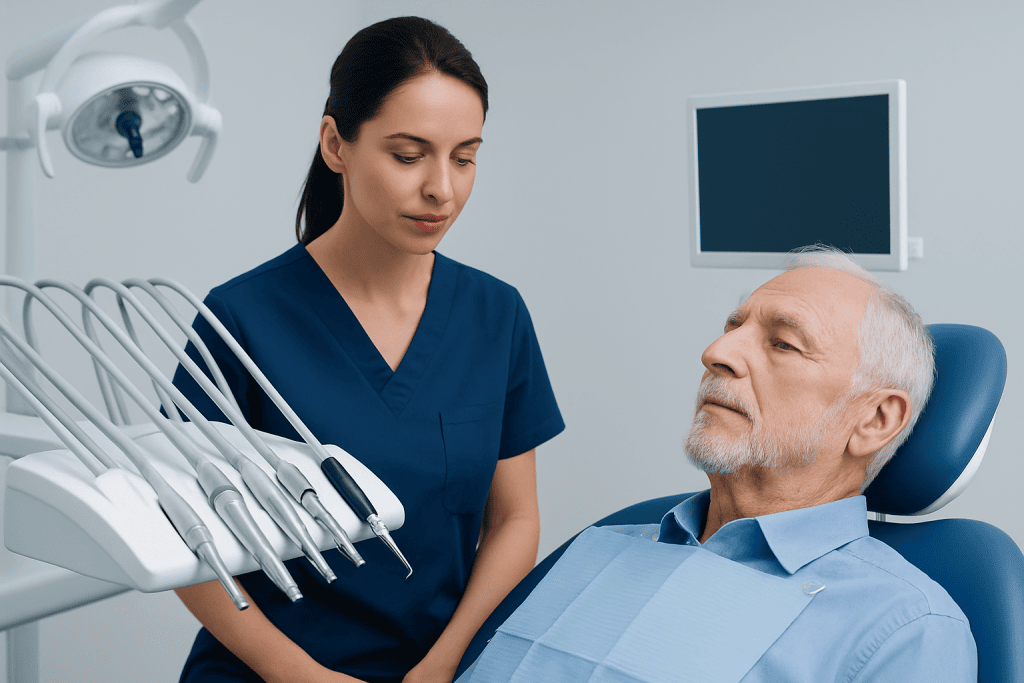
The main difference is that gerodontology is tailored to the realities of aging. A general dentist may treat a cavity, gum inflammation, or a broken filling in any adult. A gerodontology-focused clinician also asks how vision problems, arthritis, stroke, Parkinsonian symptoms, memory loss, medication use, or reduced saliva may affect both the cause of the problem and the safest way to manage it.
Another difference is the focus on function and quality of life. In older adults, treatment decisions often center on whether a person can eat comfortably, keep the mouth clean, communicate clearly, and avoid pain or infection. A highly complex procedure may not always be the best choice if a simpler option offers better comfort, easier maintenance, and lower stress.
Gerodontology also involves closer coordination with other healthcare professionals and family caregivers. Dentists may work alongside physicians, geriatric specialists, neurologists, dietitians, and carers to create a realistic care plan. This multidisciplinary approach is a defining feature of geriatric dentistry and helps align dental treatment with a person’s broader health goals.
Common Oral Health Issues in Older Adults
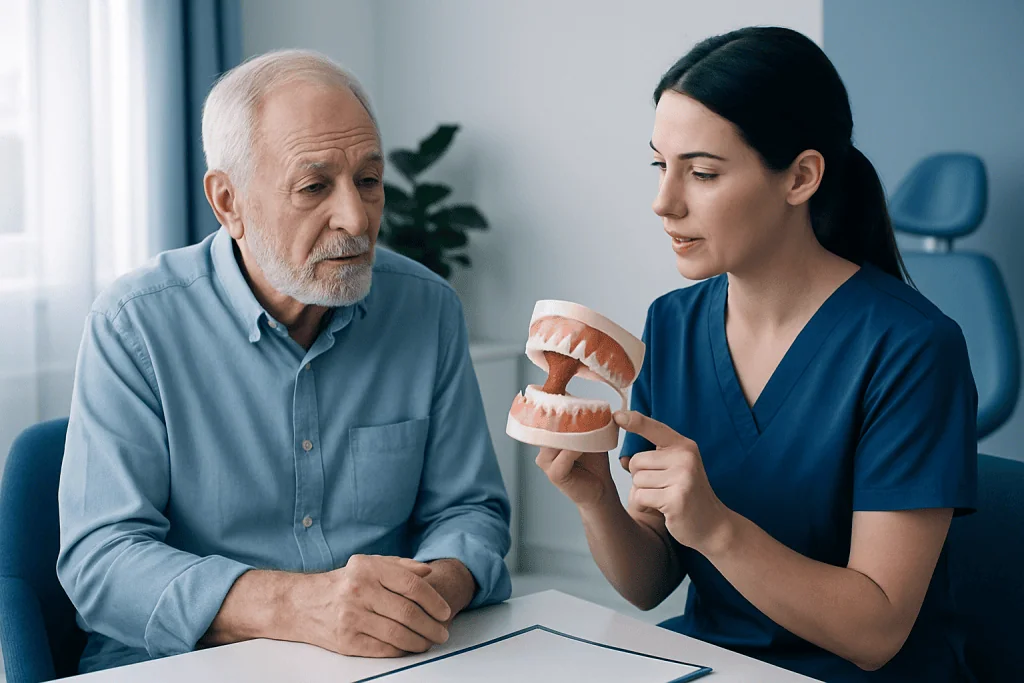
Older adults can develop the same dental problems seen at any age, but some issues become more common over time. Tooth wear, receding gums, root decay, and long-standing fillings or crowns may require more attention. Gum disease can also become more severe if brushing and flossing are difficult or if dry mouth is present.
Dry mouth is one of the most frequent concerns in later life. It is often linked to medications rather than aging itself. Reduced saliva can make it harder to chew and swallow, increase the risk of cavities, and raise the chance of oral soreness or fungal infections. Denture wearers may also experience discomfort if dentures no longer fit well as the gums and jawbone change over time.
Other common concerns include tooth sensitivity, bad breath, mouth ulcers, cracked teeth, and oral infections. Some people may have trouble wearing dentures comfortably or may need options to replace missing teeth. Preventive care, regular examinations, and support with dental hygiene can help reduce these problems and maintain day-to-day comfort.
- Gum disease and bleeding gums
- Tooth decay, especially on exposed root surfaces
- Dry mouth related to medications or illness
- Tooth loss and chewing difficulty
- Loose, worn, or uncomfortable dentures
- Oral sores, fungal infections, or irritation
Causes and Risk Factors That Shape Care
Many factors influence oral health in older age. Chronic conditions such as diabetes, cardiovascular disease, autoimmune disorders, osteoporosis, and neurological disease can affect the mouth directly or make oral hygiene more difficult. Cognitive conditions such as dementia may reduce a person’s ability to remember or cooperate with daily oral care.
Medication use is another major factor. Many commonly prescribed medicines can reduce saliva, alter taste, increase bleeding tendency, or affect healing. Because of this, a detailed medication review is an important part of gerodontology. The dentist may also need to plan treatment around anticoagulants, immunosuppressive therapy, or bone-related medicines.
Physical changes can also matter. Arthritis may make brushing hard, reduced vision can limit cleaning accuracy, and decreased mobility may make appointments more difficult. Social factors such as living alone, needing care support, or having limited access to fresh foods can further affect oral health. Gerodontology pays close attention to these everyday realities so that treatment remains safe, practical, and sustainable.
Assessment and Diagnosis in Gerodontology
Assessment usually begins with a thorough medical and dental history. The dentist asks about chronic illnesses, surgeries, medications, allergies, swallowing problems, nutrition, smoking, alcohol use, and the person’s ability to carry out daily mouth care. If needed, the clinician may also ask about memory, mobility, tremor, and whether a caregiver helps at home.
The oral examination includes the teeth, gums, tongue, cheeks, palate, dentures, bite, saliva flow, and signs of infection, trauma, or oral cancer. Existing restorations such as fillings, crowns, bridges, or implants are checked carefully. The dentist may also assess chewing efficiency, speech, pain, and any areas of repeated irritation.
Dental X-rays or digital scans may be used when necessary to detect hidden decay, bone loss, or infection. In some cases, more detailed imaging or a consultation with another specialist is helpful. Modern tools used in digital dentistry can support precise evaluation while improving efficiency and comfort for some patients.
Treatment Options and Care Planning
Treatment in gerodontology is individualized. Some patients mainly need prevention, regular cleaning, fluoride support, and help managing dry mouth. Others may need fillings, treatment for gum disease, repairs to broken teeth, root canal treatment, extractions, denture adjustment, or replacement of missing teeth. The right plan depends on symptoms, general health, life expectancy, dexterity, comfort, and personal goals.
For many older adults, minimally invasive and easy-to-maintain options are preferred. A small cavity may be treated with dental fillings, while a damaged tooth may require a restoration such as dental crowns if the tooth can be preserved. Dentures may need relining, repair, or replacement, and selected patients may be assessed for implant-based options if they are medically suitable.
Care planning often emphasizes prevention of pain and infection, preservation of natural teeth where realistic, and support for eating and speech. The dentist may also simplify home care with adapted toothbrushes, high-fluoride preventive strategies where appropriate, and caregiver instruction. In more complex cases, especially when frailty or multiple diseases are present, treatment is staged so it remains manageable and comfortable.
Near the end of the process, the team may also discuss long-term maintenance and review intervals. Acibadem International’s multidisciplinary specialists and JCI-accredited hospitals diagnose and treat age-related dental conditions for international patients, including through services related to gerodontology and broader gerontological oral health care.
Prevention and Self-care for Healthy Aging
Good oral health in later life starts with daily routines that are realistic and consistent. Brushing twice a day with fluoride toothpaste remains important, and cleaning between teeth should continue when possible. If hands are weak or painful, a powered toothbrush or modified handle may make brushing easier. Dentures should be cleaned daily and removed at night unless a dentist advises otherwise.
Hydration and dry mouth care are also important. Sipping water, avoiding tobacco, limiting alcohol, and reviewing medicines with a doctor or dentist may help. Sugar intake should be moderated, especially frequent sugary snacks or drinks, because dry mouth can raise cavity risk. A balanced diet supports both oral and general health.
Regular dental visits should continue even if a person has few natural teeth or wears full dentures. The dentist can check for gum disease, denture problems, mouth sores, and early signs of serious disease. Prevention is especially valuable because small issues are often easier to manage than advanced infections or extensive tooth loss.
- Brush twice daily with fluoride toothpaste
- Clean between teeth if possible
- Keep dentures clean and well fitted
- Attend regular dental checkups
- Discuss dry mouth and medication side effects
- Ask for caregiver-friendly oral hygiene advice when needed
When to See a Dentist or Specialist
Older adults should not assume that mouth pain, loose teeth, difficulty chewing, or denture problems are a normal part of aging. These symptoms often have treatable causes. A dental visit is advisable for bleeding gums, persistent bad breath, mouth sores that do not heal, tooth sensitivity, swelling, cracked teeth, or new trouble speaking or swallowing.
Prompt assessment is also important if there is sudden facial swelling, fever with dental pain, trauma, or a broken denture that prevents eating. People with diabetes, cancer treatment, severe dry mouth, or major changes in general health may benefit from earlier review because their oral health can change quickly.
A gerodontology-focused assessment may be especially useful when a person has frailty, dementia, Parkinsonian symptoms, stroke effects, many medications, or repeated dental problems that are hard to manage at home. In these situations, care is designed not only to treat disease, but also to reduce stress and support independence as much as possible.
Frequently asked questions
Is gerodontology only for very old adults?
No. Gerodontology may be helpful for any older adult whose oral health is affected by medical conditions, medications, reduced mobility, memory changes, or denture-related needs. It is based more on health needs and function than on age alone.
How is gerodontology different from seeing a general dentist?
A general dentist can provide routine care for adults of all ages. Gerodontology adds a stronger focus on age-related changes, chronic disease, medication effects, frailty, caregiving needs, and practical treatment planning that supports daily function and comfort.
Do people with dentures still need regular dental visits?
Yes. Even without natural teeth, regular dental examinations are important to check denture fit, oral tissues, irritation, infection, and early signs of oral disease. Dentures can also become worn or unstable over time and may need adjustment.
Why is dry mouth so common in older adults?
Dry mouth is often related to medications or health conditions rather than aging itself. It can increase the risk of tooth decay, soreness, swallowing problems, and denture discomfort, so it should be discussed with a dentist or doctor.
Can older adults still have fillings, crowns, or implants?
Many can, but the best option depends on overall health, bone condition, oral hygiene ability, comfort, and treatment goals. The dentist will weigh benefits, risks, maintenance needs, and whether a simpler option may be more suitable.
What if an older person cannot manage oral hygiene alone?
A dentist can suggest simplified routines, adapted toothbrushes, fluoride support, and caregiver techniques. Caregiver involvement can make a major difference in preventing pain, infection, and eating difficulties.
References
- World Health Organization
- FDI World Dental Federation
- American Dental Association
- National Institute of Dental and Craniofacial Research
- European College of Gerodontology
This article is for general information only and is not a substitute for professional medical advice. Please consult a qualified doctor about your individual situation.
Gerodontology in Turkey — costs, top hospitals & a free quote
JCI-accredited · board-certified surgeons · reply within 24h
Add us as a Preferred Source to see more of our trusted health content across Google Search, AI Overviews and Discover.

Dental & Oral Health
Full-scope dental care from implants and aesthetics to oral and maxillofacial surgery.
151 specialists in this unitRelated Treatments
More from the Health Library



Related Specialists

Assoc. Prof. Dr. Ferit Bayram
Oral & Dental Health
Assoc. Prof. Dr. Yeliz Çavuşoğlu Yüce
Oral & Dental Health
Assoc. Prof. Dr. Mutlu Keskin
Oral & Dental Health
Prof. Dr. Ülkü Noyan
Oral & Dental Health