

When Is IVF With Donor Eggs Recommended?

IVF with donor eggs is mainly used when egg quantity or quality is significantly reduced. Common reasons include advanced maternal age, premature ovarian insufficiency, and repeated IVF failure.
Key Takeaways
- IVF with donor eggs is mainly used when egg quantity or quality is significantly reduced.
- Common reasons include advanced maternal age, premature ovarian insufficiency, and repeated IVF failure.
- The uterus still needs evaluation, even when donor eggs are used.
- Success depends on several factors, including overall health, sperm quality, and uterine readiness.
- Counseling, legal guidance, and emotional support are important parts of treatment.
IVF with donor eggs may be recommended when a person is unlikely to conceive using their own eggs because of age, low ovarian reserve, premature ovarian insufficiency, genetic concerns, or repeated unsuccessful IVF cycles. It can offer a realistic path to pregnancy for many individuals and couples after a careful fertility evaluation.
Overview
IVF with donor eggs is a form of assisted reproduction in which eggs from a donor are fertilized in the laboratory and the resulting embryo is transferred to the intended mother’s or gestational carrier’s uterus. It is generally considered when pregnancy with a person’s own eggs is unlikely or has not been successful despite appropriate treatment. For many patients, this option becomes part of a broader fertility plan after evaluation for infertility or female infertility.
The treatment follows many of the same steps as standard IVF treatment, but the source of the eggs is different. The recipient usually takes medication to prepare the lining of the uterus, while the donor undergoes ovarian stimulation and egg retrieval. The eggs are then fertilized with sperm from a partner or donor, and one or more embryos may be transferred depending on medical guidance and local regulations.
Donor egg IVF does not mean that pregnancy is impossible with one’s own eggs in every case. Rather, it is recommended when the chance of success with one’s own eggs is very low, or when there is a significant medical reason to avoid using them. A fertility specialist helps determine whether donor eggs are the most suitable option based on age, hormone testing, prior treatment history, and reproductive goals.
When IVF With Donor Eggs Is Recommended
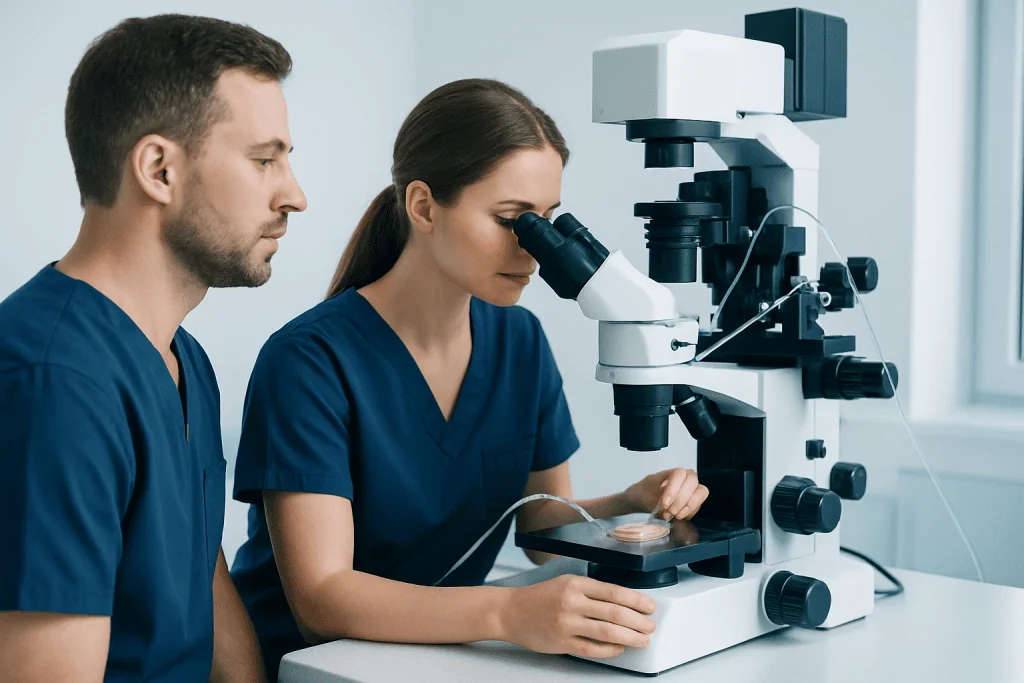
The most common reason donor eggs are recommended is diminished egg quality or quantity. This often happens with increasing age, especially in the late 30s and 40s, when both the number of remaining eggs and the likelihood of chromosomal abnormalities tend to rise. In these cases, donor eggs may offer a better chance of creating healthy embryos than repeated cycles using one’s own eggs.
Another important indication is premature ovarian insufficiency, in which the ovaries stop functioning normally before the age of 40. Donor egg IVF may also be advised after ovarian surgery, chemotherapy, radiation, or other conditions that affect ovarian reserve. Some patients with a history of very poor response to ovarian stimulation, repeatedly low egg yield, or no viable embryos after several IVF cycles may also be counseled to consider donor eggs.
Donor eggs can be appropriate when there is a known risk of passing on a serious inherited condition through the intended mother’s eggs. In addition, they may be considered for some people with repeated miscarriages related to embryo quality, including some with a history of recurrent pregnancy loss. The exact recommendation depends on a full assessment, not age alone, and should be individualized.
Who May Need Further Evaluation Before Treatment
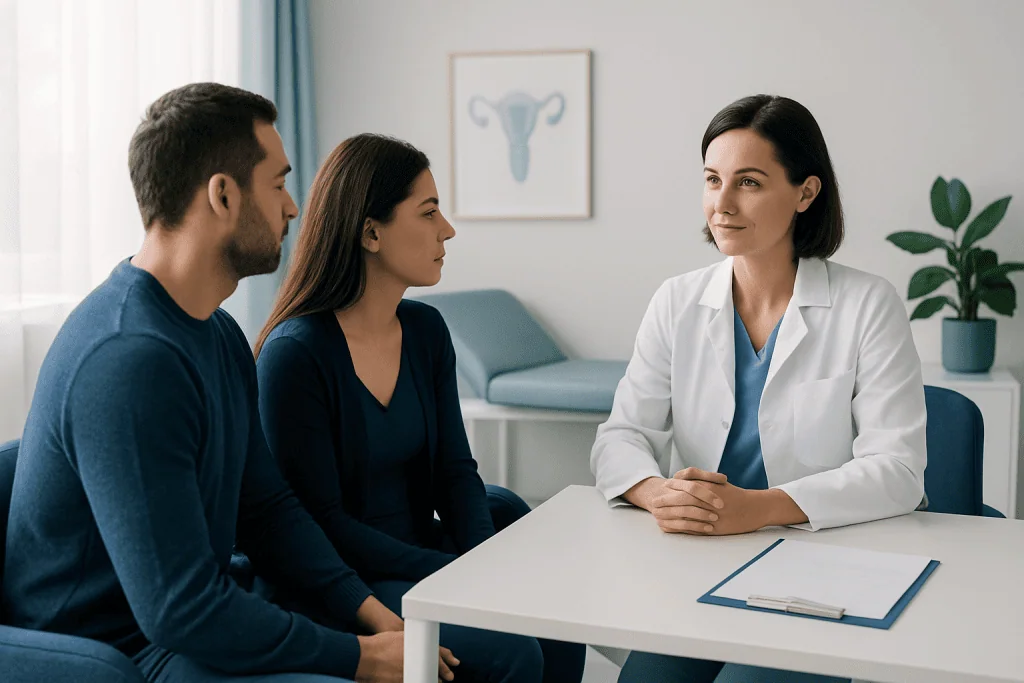
Even if donor eggs are being used, the recipient’s body still plays an important role in implantation and pregnancy. A healthy uterus and appropriately prepared endometrium are needed for embryo transfer. Because of this, doctors may investigate uterine conditions such as fibroids, adhesions, polyps, or congenital differences such as a uterine septum before treatment begins.
Hormonal health, thyroid function, body weight, chronic medical conditions, and medications may also affect readiness for treatment. If periods are irregular, absent, or linked to ovulatory disorders, additional work-up may be needed. Some patients with conditions such as polycystic ovary syndrome may still conceive with their own eggs, while others may eventually consider donor eggs after unsuccessful treatment. The recommendation depends on the whole clinical picture rather than one diagnosis alone.
Sperm evaluation is another key part of planning. Donor egg IVF can be combined with standard fertilization or with ICSI when sperm count, movement, or morphology is reduced. If there are major male-factor issues, they are addressed alongside the donor egg process to improve the chance of creating usable embryos.
How Doctors Decide If Donor Eggs Are the Best Option
Fertility specialists use a combination of medical history, age, ultrasound findings, and hormone tests to guide recommendations. Common tests include anti-Mullerian hormone (AMH), follicle-stimulating hormone (FSH), estradiol, and antral follicle count on ultrasound. These tests help estimate ovarian reserve, but they do not predict pregnancy perfectly on their own. They are interpreted alongside prior responses to stimulation and embryo development in earlier cycles.
A doctor will also review past pregnancies, miscarriages, surgeries, and any prior fertility treatment. If a patient has had several IVF cycles with poor egg yield, poor fertilization, poor embryo quality, or repeated failed implantation despite appropriate care, donor eggs may be discussed as an evidence-based next step rather than continuing low-probability treatment. This conversation is usually handled with sensitivity because it can carry emotional meaning as well as medical importance.
Counseling is often recommended before starting donor egg IVF. Patients may wish to talk through questions about genetics, family building, disclosure to children, and the practical aspects of treatment. Legal and ethical considerations differ by country, so the clinic explains the local framework, donor screening process, and consent steps in clear detail.
What the Treatment Process Involves
The donor egg IVF process begins with donor selection and screening. Donors are usually assessed for medical history, infectious diseases, and genetic factors according to local standards and clinic protocols. Once a donor is chosen, the recipient undergoes tests to confirm that the uterus is ready for embryo transfer and that any medical conditions are well managed.
The donor takes medication to stimulate the ovaries so that multiple eggs can mature, and the eggs are then collected through a minor procedure. In the laboratory, the eggs are fertilized with sperm from a partner or donor. Embryos develop for several days before one is transferred to the uterus at the most appropriate time. Additional suitable embryos may be frozen for future use if this is permitted and clinically appropriate.
The recipient often uses estrogen and progesterone to prepare and support the uterine lining. Pregnancy testing takes place about two weeks after embryo transfer. If pregnancy occurs, early follow-up scans are arranged, and routine antenatal care continues after fertility care transitions to obstetric follow-up.
Benefits, Limitations, and Emotional Considerations
One of the main benefits of donor egg IVF is that it can significantly improve the chance of pregnancy when the primary barrier is poor egg quality. Because the eggs come from a donor with better ovarian potential, embryo development may be more favorable than in cycles using eggs from someone with severely diminished reserve. This can reduce the need for repeated unsuccessful attempts with one’s own eggs when the expected benefit is very low.
At the same time, donor egg IVF does not guarantee pregnancy. Implantation can still be affected by uterine factors, embryo development, sperm quality, and general health. Age-related pregnancy risks in the recipient, such as high blood pressure, diabetes, or placental complications, also remain relevant even when the egg comes from a younger donor. Careful monitoring before and during pregnancy is still important.
Emotionally, the decision can be complex. Some people feel grief about not using their own eggs, while others feel relief at having another path to parenthood. Professional counseling and support groups can help individuals and couples process these feelings, make informed decisions, and build confidence in their chosen route.
Preparation, Self-Care, and When to See a Doctor
Good preparation can support safer and smoother treatment. Before starting, patients are usually advised to manage chronic conditions, stop smoking, limit alcohol, review medications, and maintain a balanced diet and healthy sleep. Folic acid and other supplements may be advised by a doctor depending on individual needs. Self-care cannot replace medical treatment, but it can improve overall readiness for pregnancy.
A person should see a fertility specialist if they have been trying to conceive without success, have very irregular or absent periods, have had repeated miscarriages, or have been told their ovarian reserve is low. Evaluation is also reasonable after cancer treatment, ovarian surgery, or early menopause symptoms, especially if future pregnancy is desired. Timely assessment can help preserve options and avoid delays.
It is also important to seek medical advice before treatment if there are symptoms such as pelvic pain, heavy bleeding, or known uterine abnormalities, since these may affect planning. Near the end of the treatment journey, some international patients choose centers with coordinated reproductive, obstetric, and laboratory care. Acibadem International’s multidisciplinary specialists and JCI-accredited hospitals diagnose and treat fertility conditions for international patients with individualized planning.
- Ask early about ovarian reserve testing if age or menstrual changes are a concern.
- Review personal and family genetic history with a qualified clinician.
- Discuss emotional counseling and legal guidance before choosing donor treatment.
- Follow the clinic’s medication and timing instructions closely during the cycle.
Frequently asked questions
Is IVF with donor eggs only for older women?
No. Although age-related decline in egg quality is a common reason, donor eggs may also be recommended for younger people with premature ovarian insufficiency, severe diminished ovarian reserve, or certain genetic concerns. The decision is based on medical evaluation rather than age alone.
Can someone still carry the pregnancy if donor eggs are used?
Yes, in many cases the intended mother can carry the pregnancy if the uterus is healthy and there are no medical reasons to avoid pregnancy. The uterine lining is prepared with medication before embryo transfer. Some patients may need a gestational carrier if pregnancy would be unsafe or not possible.
Are donor egg babies genetically related to the mother who carries them?
The child is not genetically related to the egg recipient because the genetic material comes from the egg donor and the sperm source. However, the recipient carries the pregnancy, gives birth, and is the intended parent. Many families find counseling helpful when thinking through genetic and emotional aspects of treatment.
What happens if previous IVF cycles have failed?
Repeated IVF failure may prompt doctors to reassess egg quality, sperm factors, embryo development, and the uterus. If poor embryo quality or low egg yield appears to be the main issue, donor eggs may be recommended as a next step. This is usually discussed after reviewing the details of previous cycles carefully.
Does donor egg IVF guarantee success?
No fertility treatment can guarantee pregnancy. Donor eggs may improve the chance of success when egg quality is the main barrier, but outcomes still depend on factors such as uterine health, sperm quality, embryo development, and overall medical health. A fertility specialist can explain the likely benefit in an individual case.
How are egg donors screened?
Screening usually includes review of medical and family history, infectious disease testing, and other assessments required by local regulations and clinic protocols. Some programs also include genetic screening and psychological evaluation. Exact processes vary by country and fertility center.
This article is for general information only and is not a substitute for professional medical advice. Please consult a qualified doctor about your individual situation.
IVF & fertility treatment in Turkey — success rates and costs
JCI-accredited · board-certified surgeons · reply within 24h
Add us as a Preferred Source to see more of our trusted health content across Google Search, AI Overviews and Discover.

Related Treatments
Related Conditions
More from the Health Library

Ectopic Pregnancy: A Complete Clinical Guide for Patients
Thyroid and Prolactin Testing Before IVF: Why Hormone Balance Matters

Infertility Tests for Women and Men: What Doctors Check First

IVF After Tubal Ligation: When Assisted Reproduction May Be Preferred

Unexplained Infertility: Tests, Treatment Choices, and IVF Decisions

Recurrent Miscarriage and IVF: Testing, PGT, and Treatment Planning
Gynecology & Obstetrics Specialists at Acibadem

Dr. Alihan Özcan
Gynecology & Obstetrics
Assoc. Prof. Dr. Alpay Yılmaz
Gynecologic Oncology
Dr. Alper Koçak
Gynecology & Obstetrics
Assoc. Prof. Dr. Arzu Yurci
Gynecology & Obstetrics