

Who Is a Good Candidate for LASIK in Turkey?

You may be a good candidate for LASIK in Turkey if you are an adult with a stable glasses prescription, healthy corneas of adequate thickness, no active eye disease, and realistic expectations. Suitability can only be confirmed in person, through corneal mapping, refraction testing and a tear film assessment carried out by an ophthalmologist before any treatment is planned.
You may already be comparing flights and clinics. The more important question comes first: will your eyes actually qualify? LASIK is not suitable for everyone, and no reputable surgeon decides from a photograph or a phone call. This guide explains who is a good candidate for LASIK in Turkey, how suitability is measured, what the procedure and recovery involve, and how to plan the trip realistically.
It also covers the honest parts that shorter guides skip: who should not have LASIK, what changes after 40, why a remote review is only a starting point, and what a quotation actually depends on.
At a glance
- Procedure type: Laser vision correction (refractive surgery)
- Purpose: To reduce dependence on glasses or contact lenses by correcting myopia, hyperopia or astigmatism
- Anaesthesia: Numbing eye drops; you stay awake
- Hospital stay: Day procedure, usually no overnight stay
- Estimated recovery: Early recovery over a few days; vision stabilises over weeks
- Return to daily life: Often within one to three days, depending on your eyes and your work
- Final result timeline: Functional vision often improves quickly; full stabilisation can take weeks to months
- Suitable department: Ophthalmology / Eye Diseases
- International patient support: Interpreter services, transfer coordination, accommodation guidance and remote follow-up support
What LASIK is and what it corrects
LASIK is a laser procedure that corrects common refractive errors: myopia (short-sightedness), hyperopia (long-sightedness) and astigmatism. The aim is to change how light focuses on your retina so that you see more clearly without glasses or contact lenses. During the procedure, the surgeon creates a very thin flap on the surface of the cornea, then reshapes the tissue underneath with an excimer laser guided by your measurements.
When people ask who is a good candidate for LASIK in Turkey, they are really asking two separate questions. The first is anatomical: is your cornea thick enough, regular enough and healthy enough to be reshaped safely? The second is practical: is your prescription stable, is your general health compatible with normal healing, and are your expectations matched to what the procedure can actually deliver? Both questions have to be answered before treatment is planned, and neither can be answered without an in-person examination.
At Acibadem, LASIK candidacy is assessed by ophthalmology specialists using a detailed examination and corneal imaging. Careful selection matters more than any single piece of technology, because some eyes are better served by a different laser technique or a lens-based procedure, and a good clinic will say so plainly.
When is it recommended?
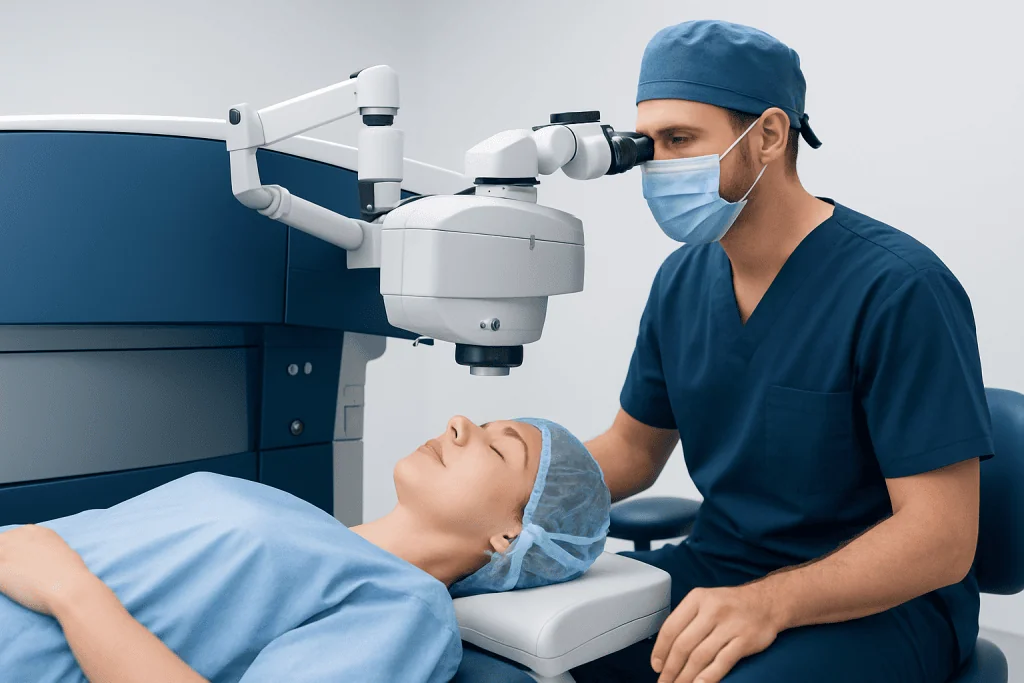
LASIK is generally considered when you want less dependence on glasses or contact lenses and your eyes meet the safety criteria for laser correction. In practice, that means an adult whose prescription has been stable — usually for at least a year — with a refractive error inside the treatable range and enough corneal thickness to allow reshaping while leaving a safe margin of tissue.
An ophthalmologist may also weigh how you use your eyes. Someone whose work or hobbies make glasses impractical has a different balance of benefit and inconvenience than someone comfortable in spectacles. The goal in every case is visual improvement, not perfect vision at every distance for the rest of your life. Some people still use glasses for specific tasks afterwards, particularly as age-related near vision changes develop.
LASIK is not usually recommended when measurements are borderline, when the corneal shape suggests weakness, when the prescription is still changing, or when certain eye or general health conditions are present. In those situations a specialist may advise postponing treatment or choosing an alternative such as PRK, SMILE or a lens-based correction, depending on what the examination shows.
Who is a good candidate for LASIK in Turkey?
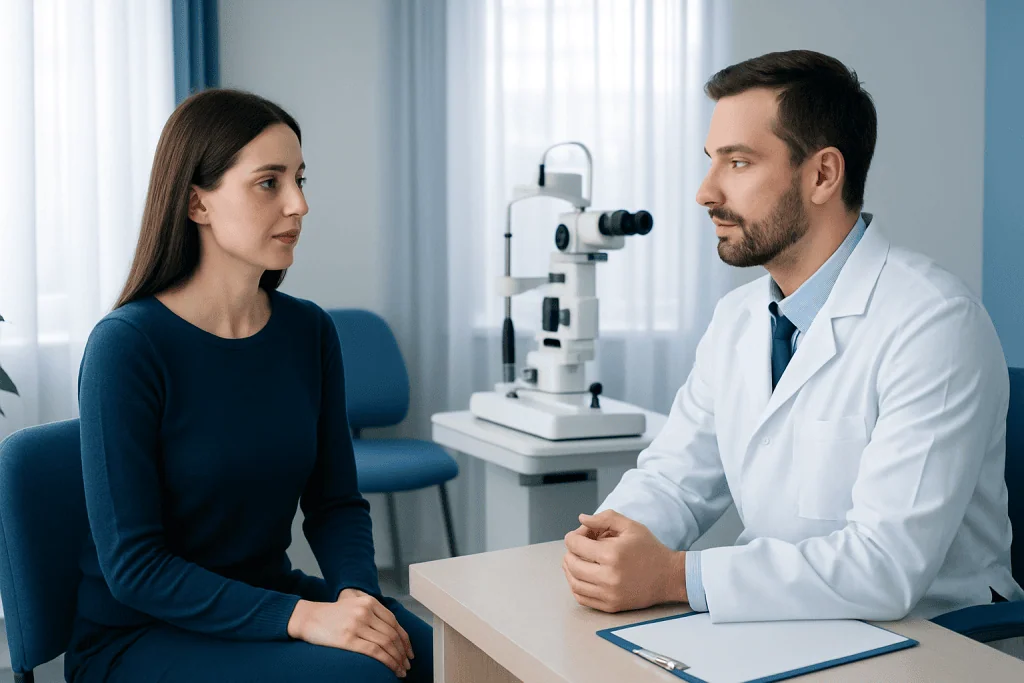
The criteria for LASIK are the same in Turkey as anywhere else — the geography changes the logistics, not the medicine. A good candidate is typically an adult with a stable prescription, a healthy cornea of adequate thickness, no active eye disease, and expectations focused on improvement rather than perfection.
- Adult age with a prescription that has been stable over time
- Healthy cornea with adequate thickness and regular shape
- No active eye infection or uncontrolled eye disease
- Mild or well-managed dry eye, if any
- General health compatible with normal healing
- Realistic expectations about what laser correction can and cannot do
- Willingness to attend the examination and follow-up visits, including after returning home
Factors that count against candidacy include uncontrolled dry eye, significant corneal scarring, and corneal shape disorders such as keratoconus or other ectatic conditions, where reshaping the cornea could worsen structural weakness. General health matters too: certain autoimmune conditions, healing problems, pregnancy-related vision fluctuation and some medications that affect healing can all shift the decision, sometimes towards waiting rather than refusing outright.
Because you are travelling, one extra criterion applies to you that does not apply to a local patient: flexibility. If the examination in Turkey shows that LASIK is not the right procedure for your eyes, a good candidate for treatment abroad is someone prepared to hear that and consider the alternative — or to go home without surgery. The broader considerations are covered in how Acibadem confirms you are a good candidate for treatment.
Treatment options: LASIK and its alternatives
LASIK is one of several refractive techniques, and being a good candidate for vision correction does not automatically mean LASIK itself is the best fit. Standard LASIK creates the corneal flap mechanically. Femto LASIK creates the flap with a femtosecond laser instead of a blade, and ILASIK combines laser flap creation with wavefront-guided treatment planning based on a detailed map of your eye. Which variant suits you depends on your measurements, not on marketing.
If your cornea is thinner than ideal, if flap creation raises concerns, or if your eye surface would tolerate a different approach better, the surgeon may discuss surface laser procedures such as PRK, which reshape the cornea without a flap. For some prescriptions and corneal profiles, SMILE or an implanted lens may be more appropriate. None of these is universally better; each has a profile of eyes it suits.
This is worth stating clearly for anyone weighing up whether they are a good candidate for LASIK in Turkey: a thorough clinic treats the examination as a matching exercise between your eyes and a range of procedures, not as a gateway to one predetermined operation.
Is LASIK worth considering over 40?
Age alone does not rule LASIK out, but it changes the conversation. From the mid-forties onwards, most people develop presbyopia — the natural stiffening of the eye’s lens that makes near focus harder. LASIK reshapes the cornea; it does not stop presbyopia. If your distance vision is corrected, you may still need reading glasses, and that need will grow with age exactly as it would have without surgery.
For some patients over 40, that trade is still worthwhile: clear distance vision with reading glasses for close work. Others may be better served by strategies such as monovision (one eye set for distance, one for near, tested first with contact lenses) or by lens-based procedures that address the ageing lens directly. An older candidate also needs screening for early cataract, because operating on the cornea shortly before a cataract needs treatment rarely makes sense. The honest answer is that value over 40 is individual, and the examination — not the birthday — decides it.
Remote review before travel — and its limits
International treatment pathways usually begin with a remote review of your existing records: previous glasses prescriptions, eye examination reports, contact lens history and any known eye conditions. This preliminary step helps the medical team judge whether an in-person assessment is worth planning and whether anything in your history already points away from LASIK.
Its limits are firm. Candidacy cannot be confirmed remotely, because the decisive measurements — corneal topography, corneal thickness, tear film quality, pupil size in low light — require equipment and an ophthalmologist in the same room as you. Some disqualifying conditions, particularly early corneal shape abnormalities, are only visible on specialised imaging. A remote review can rule LASIK out; it can never rule it in.
For international patients, Acibadem coordinates the practical side of this process: document review, appointment planning, interpreter support and travel logistics, with the final candidacy decision made by the treating ophthalmologist after examination in Istanbul or another Acibadem location.
Before the treatment
The pre-operative examination is the heart of the whole process. It typically includes refraction testing, corneal thickness measurement, corneal topography, pupil assessment, tear film evaluation and a general eye health examination. If you wear contact lenses, you may be asked to leave them out for a period before testing, because lenses temporarily alter the corneal shape and can distort the very measurements that decide your candidacy. Build that lens-free period into your travel schedule.
You will also be asked for your full medical history: previous eye surgery, dry eye symptoms, allergies, current medications, pregnancy status, and any autoimmune or chronic conditions. Details that seem trivial can matter, because they affect healing and comfort, or point towards a safer alternative procedure.
On the practical side, plan for someone to accompany you after the procedure, since you should not drive immediately afterwards. You may be advised to skip eye make-up and heavy creams around the eyes on treatment day. The team will give you exact instructions based on your findings and itinerary.
What happens during the treatment
LASIK is performed as a day procedure under numbing eye drops. You stay awake, and while the eye is anaesthetised, most people describe pressure and brief discomfort rather than pain. The team positions you under the laser and talks you through each step.
First, the thin corneal flap is created and gently lifted. The excimer laser then reshapes the underlying tissue according to your measured refractive error — this stage is typically very brief. The flap is repositioned and adheres naturally, so stitches are not usually needed. Expect the appointment to take considerably longer than the laser time itself, allowing for preparation, checks and observation afterwards.
Immediately after treatment your vision may be hazy, and your eyes may water, sting or feel gritty for several hours. Before you leave, you receive instructions on drops, eye protection and your first follow-up check.
Discharge and the recovery timeline
LASIK rarely involves an overnight stay. After a short observation period, and once the ophthalmologist is satisfied with your immediate recovery, you can usually return to your accommodation the same day, with clear instructions on drops, hygiene, rest and protecting the eyes while the flap settles.
Recovery varies with your starting prescription, your tear film and how your eyes heal. The pattern below is typical, not promised.
| Timeframe | What to expect |
|---|---|
| First 24 hours | Hazy or blurred vision, watering, mild burning and light sensitivity. Rest matters more than screens. An early follow-up check is usually scheduled. |
| First week | Vision often improves noticeably, though dryness, glare, halos and fluctuation are common. Prescribed drops continue; eye rubbing is strictly off-limits. |
| Weeks 2–4 | Comfort and clarity usually keep improving. Daily activities feel easier, but dryness or night-vision symptoms may persist in some patients. |
| Months 1–3 | Vision tends to stabilise. Your doctor assesses whether healing is on track and whether any residual refractive error is significant. |
| Final result | Functional clarity often arrives early; full stabilisation and your long-term result can take weeks to months. |
Your surgeon will tell you when to resume specific activities — exercise, swimming, make-up, longer journeys — and, importantly for travellers, when flying is appropriate in your case. Cabin air is dry, which is uncomfortable rather than dangerous after LASIK, but the timing is still your surgeon’s call. The comparison guide on flying after eye surgery explains how LASIK differs from other eye procedures on this point.
What to avoid after treatment
The single most important rule in early healing is simple: do not rub your eyes. Because LASIK involves a flap, physical pressure on the eye can interfere with healing. Dusty environments, smoke and other irritants are also best avoided while the eyes are sensitive.
For a period your doctor will specify, you may need to stay out of swimming pools, hot tubs and saunas, and keep water away from the eyes. Eye make-up, creams around the eyelids and contact sports are typically paused temporarily. These restrictions reduce irritation, infection risk and the chance of accidental trauma.
Screen use is not usually banned outright, but long sessions can worsen dryness and discomfort in the first days, so you may be advised to limit them. Follow your own surgeon’s instructions over any general guide, including this one — they are calibrated to your eyes and your healing.
Risks and possible complications
LASIK carries risks even when the patient is well selected and the procedure well performed. Common short-term effects include dryness, glare, halos, light sensitivity, fluctuating vision and temporary discomfort. These often ease over time, but the duration differs between patients, and dryness in particular can persist longer in some people.
Less common but important risks include under-correction, over-correction, regression of the effect, flap-related problems, infection, inflammation and persistent visual symptoms such as ongoing night-time halos. In rare cases, treating a cornea that was not structurally suitable can contribute to progressive weakness — which is precisely why the pre-operative imaging is so thorough and why a responsible clinic declines borderline eyes.
You reduce your own risk by giving an honest medical history, following the pre- and post-operative instructions carefully, and attending every follow-up visit, including with a local eye doctor after you return home. No provider anywhere can promise a specific result, and any clinic that implies otherwise is describing marketing, not medicine. Where a result falls short, options can include observation, dry eye management, glasses for specific tasks or, in selected stable cases, an enhancement procedure.
Results and expectations
Most people choose LASIK for freedom from glasses or contact lenses, and for a suitable candidate that is a reasonable goal. Functional vision often improves quickly, while final clarity and comfort continue to settle through the healing period. Your outcome depends on your starting prescription, corneal characteristics, tear film quality, age and individual healing.
Two expectations are worth fixing before you travel. First, LASIK corrects a refractive error at one point in time; it does not stop the eye ageing, so reading glasses may still arrive on schedule in mid-life. Second, “improvement” is the honest target, not perfection: some patients notice night-time glare or halos, particularly early on, and a minority need further management. Patients who arrive with these expectations tend to make calmer decisions, both about proceeding and about how they judge the result afterwards.
Is it safe to have LASIK in Turkey — and how do countries compare?
Safety in refractive surgery is determined at the level of the clinic, not the country. The questions that matter are the same in Istanbul, London or Sydney: how rigorous is the candidate screening, what imaging is used, who performs the surgery, what happens if a complication arises, and how is follow-up handled once you go home? Turkey has a large, experienced ophthalmology sector serving many international patients, and standards vary between providers there just as they do everywhere else.
There is therefore no single “best country” for LASIK. A well-screened patient at a thorough clinic abroad is better placed than a poorly screened patient at home, and the reverse is equally true. What travel adds is a planning burden: you need enough days for examination, treatment and at least one follow-up check, plus a clear arrangement for remote follow-up and local eye care afterwards. The general principles are set out in who is a good candidate for treatment in Turkey, and the fuller procedure context in the LASIK in Turkey treatment guide.
Cost and package structure — what a quote depends on
This guide does not list figures, because a meaningful LASIK price only exists after a medical review of your own eyes. What can be explained is the structure. A quotation typically reflects the technology used (standard, femtosecond-assisted or wavefront-guided treatment), whether one or both eyes are treated, the complexity of your refractive error, the diagnostic testing required, and the level of international patient support included.
Package inclusions commonly cover the consultation, the pre-operative examination, treatment planning, the procedure itself, standard day-case care and early follow-up visits. Items that are often not included are flights, accommodation, an extended local stay, additional tests requested after examination, treatment of unrelated eye conditions, medications after discharge, and any future enhancement. The most reliable quotation is always the one issued after a physician has reviewed your case, because the examination can change the recommended procedure — and with it, the price structure.
Medical review and disclaimer
This guide has been medically reviewed by the Acibadem International medical team. It provides general information about LASIK candidacy, treatment, recovery and travel planning for international patients.
It does not replace a personal consultation, an eye examination or professional medical advice. LASIK is not suitable for everyone, and the safest option for your eyes can only be determined after an ophthalmologist evaluates your measurements, health history and test results in person.
Step by step
- Initial contact. You contact Acibadem International and explain that you are considering LASIK in Turkey.
- Medical record submission. You share previous eye prescriptions, reports, contact lens history, medication details and any relevant test results.
- Preliminary medical review. The team reviews your information to judge whether LASIK is worth evaluating further and whether anything is missing.
- Preliminary plan and quotation. You receive an outline of the likely pathway, possible alternatives, and a personalised quotation based on the information available.
- Travel planning. Appointments are coordinated, with support for timing, accommodation guidance, airport–hospital transfers and interpreter arrangements.
- Arrival. You are guided through the hospital visit and international patient registration.
- In-person consultation. The ophthalmology team performs a full examination and detailed eye measurements for the final candidacy decision.
- Pre-operative tests. Corneal mapping, refraction, tear film assessment and other checks confirm safety and finalise planning.
- Treatment. If you are confirmed as suitable and choose to proceed, LASIK is performed as a day procedure under numbing drops.
- Observation and discharge. After a short observation period you receive drop instructions, eye protection advice and discharge guidance.
- First control. An early postoperative check lets the doctor assess healing and answer questions.
- Travel clearance. Once early recovery is satisfactory, your doctor advises on onward travel and home care.
- Remote follow-up. After returning home, follow-up continues remotely, alongside your local eye doctor where recommended.
Your checklist
- Passport or valid travel identification
- Previous glasses and contact lens prescriptions
- Recent eye examination reports, if available
- Corneal imaging or other ophthalmology test results, if available
- Full medical history, including chronic conditions
- Current medication list, including eye drops and supplements
- Known drug or material allergies
- Details of previous eye surgery or other operations
- Notes on symptoms such as dryness, glare or fluctuating vision
- Contact lens type and wearing pattern, so the lens-free period before testing can be planned
Key takeaways
- Good LASIK candidates are adults with stable prescriptions, healthy corneas of adequate thickness and realistic expectations.
- Candidacy can only be confirmed in person; remote review can rule LASIK out but never in.
- Being suitable for vision correction does not always mean LASIK is the best technique — alternatives exist for a reason.
- Over 40, presbyopia changes the calculation: LASIK does not prevent the eventual need for reading glasses.
- Safety depends on the clinic’s screening and follow-up, not on the country; plan enough days for examination, treatment and a follow-up check.
Frequently asked questions
How do I know if I am a good candidate for LASIK?
Only a full ophthalmology examination can tell you. The doctor assesses your prescription and its stability, corneal thickness and shape, tear film and general eye health. A remote review of your records is a useful starting point for planning, but it can never confirm suitability — some disqualifying conditions only show up on specialised corneal imaging.
Is it safe to get LASIK in Turkey?
Safety depends on the individual clinic, not the country. What matters is rigorous candidate screening, modern diagnostic imaging, an experienced ophthalmology team, and a clear plan for follow-up after you go home. Turkey has a large and experienced eye surgery sector, and standards vary between providers there exactly as they do in any other country.
Which country is best for LASIK eye surgery?
No country is inherently best. The decisive factors — screening quality, surgical experience, technology and aftercare — operate at clinic level. Travelling adds logistics: you need enough days for examination, treatment and an early follow-up check, plus arrangements for remote follow-up and local eye care afterwards. Judge providers, not flags.
Is LASIK worth it over 40?
It can be, but presbyopia changes the equation. LASIK corrects the cornea, not the ageing lens, so even with clear distance vision you may still need reading glasses, and that need increases with age. Some patients over 40 are better suited to monovision or lens-based procedures, and screening for early cataract becomes part of the assessment. The examination, not your age alone, settles it.
How much does LASIK cost in Turkey?
A meaningful figure only exists after a medical review of your own eyes, because the examination can change the recommended technique and therefore the price. Quotations generally reflect the laser technology used, whether both eyes are treated, the complexity of your refractive error, diagnostic testing and the support services included. Flights, accommodation, extra tests and any future enhancement are often quoted separately.
Can I have LASIK if I have dry eyes?
Possibly. Mild, well-managed dryness may be compatible with treatment, while significant or uncontrolled dry eye can make LASIK less suitable, because the procedure can worsen dryness during healing. Depending on the tear film assessment, the doctor may advise treating the dryness first or considering a different refractive technique.
How long should I stay in Turkey for LASIK?
Plan for the pre-operative examination, the treatment day and at least one follow-up visit before your doctor confirms that travel is appropriate. If you wear contact lenses, add the lens-free period needed before testing. The exact number of days depends on your findings and how your early recovery progresses, so keep some flexibility in your schedule.
Will I need glasses after LASIK?
The aim is to reduce dependence on glasses or contact lenses, and results vary between patients. Some people still use glasses for specific tasks, and reading glasses may become necessary later as natural age-related near vision changes develop. Improvement is the realistic target; perfect vision at every distance for life is not something any procedure can deliver.
Add us as a Preferred Source to see more of our trusted health content across Google Search, AI Overviews and Discover.

Update history
- PublishedJune 22, 2026
- Medical review approvedAugust 31, 2026
- Last content updateAugust 31, 2026
References3
- Laser eye surgery and lens surgery — NHS — nhs.uk
- LASIK eye surgery — MedlinePlus Medical Encyclopedia — medlineplus.gov
- LASIK Eye Surgery — Cleveland Clinic — my.clevelandclinic.org
More Patient Guides
HoLEP in Turkey: How It Compares With TURP and What Recovery Involves
HoLEP in Turkey treats enlarged prostate tissue with laser enucleation; learn how it compares with TURP, recovery, travel and follow-up.
13 min read
Porcelain Veneers in Turkey: Who Is Suitable and How Many Visits Are Needed?
Porcelain veneers in Turkey can enhance tooth shape and colour in two visits for suitable patients after a personalised dental assessment.
14 min read
How to Prepare for a Sedation Procedure in Turkey
Prepare safely for a sedation procedure in Turkey with guidance on fasting, medicines, travel, recovery and follow-up.
12 min read
Treatment Delays in Turkey: What Happens If Tests or Recovery Change Your Schedule
Treatment delays in Turkey can happen if tests or recovery change your plan. Learn how to manage appointments, travel, accommodation and follow-up.
8 min read