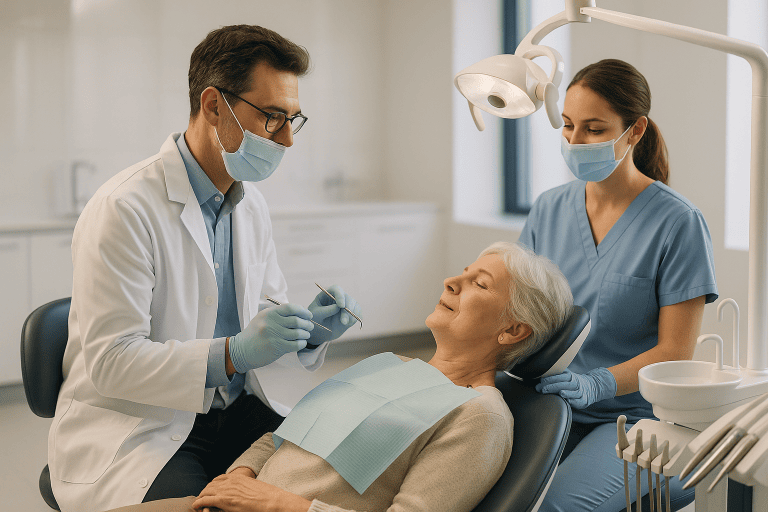
Aesthetic Dentistry
Aesthetic dentistry improves the appearance of teeth and smile through treatments such as whitening, veneers, bonding, contouring, and smile design tailored to facial features.
Quick answer
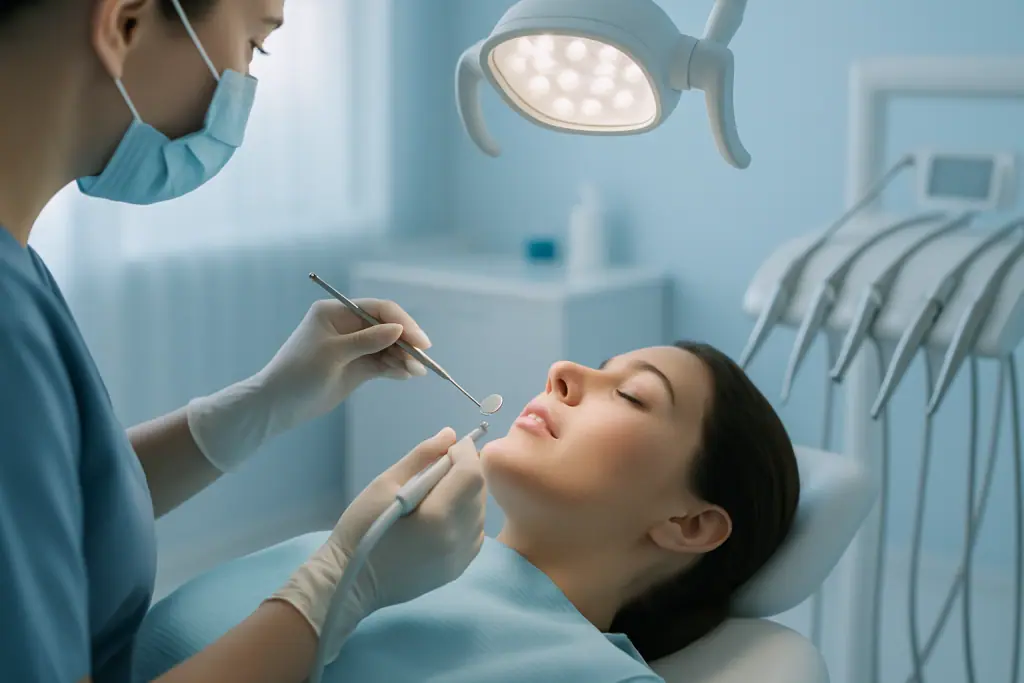
Aesthetic dentistry, also called cosmetic dentistry, covers treatments that improve the appearance of teeth and gums while protecting oral health and function. Options include professional whitening, dental bonding, enamel contouring, porcelain veneers, ceramic crowns and gum reshaping. Treatment starts with a diagnostic examination; the plan may involve one procedure or a staged combination, matched to your anatomy, bite and expectations.
Aesthetic Dentistry and the Role of the Cosmetic Dentist
Aesthetic dentistry is the branch of dental care that improves how your teeth, gums and smile look while protecting how they work. A cosmetic dentist plans and carries out these treatments, professional whitening, dental bonding, veneers, ceramic crowns, enamel contouring, gum reshaping and digital smile design, around your individual anatomy, your bite and your expectations. It is intended for adults whose mouths are healthy, or can be brought to health first, and who want a considered, medically sound improvement rather than a template smile.
A smile is more than a cosmetic detail. It affects how you speak, how you appear in photographs, how confidently you meet new people and how comfortable you feel in professional and social settings. When teeth are stained, worn, chipped, uneven, crowded, widely spaced or out of harmony with the face, the concern is often emotional as well as physical. Many people who look for a cosmetic dentist describe the same pattern: they avoid smiling fully, cover their mouth when laughing, or feel that their teeth no longer reflect their overall health and self-image. None of this is vanity. Teeth that look damaged frequently are damaged, and the appearance is simply the visible edge of a clinical problem.
If you are weighing up treatment abroad, you probably have practical questions on top of the clinical ones. Which procedure is appropriate for your teeth? Will the result look natural? How many visits are needed? Can several concerns be addressed within a limited travel schedule? What happens if an old filling, crown or bite problem is discovered during the evaluation? These are reasonable questions, and they deserve answers grounded in careful examination, clear communication and a treatment plan designed for your anatomy, preferences and oral health, not a standard package applied to every mouth.
One point is worth stating early. Aesthetic dentistry is not simply about making teeth whiter or “perfect”. The best results are usually the most balanced ones: teeth that complement the lips, gums, facial proportions, skin tone, age and personality of the person wearing them. A smile can be brighter and still look believable. Teeth can be reshaped without looking artificial. Gaps, discolouration, wear and asymmetry can often be improved in ways that preserve as much natural tooth structure as possible.
At Acibadem, aesthetic dentistry is treated as a medical and dental discipline that combines oral health, function, facial harmony and patient expectations. The goal is a smile that is not only more attractive, but also comfortable, cleanable and sustainable for the years after treatment.
What is a cosmetic dentist?
A cosmetic dentist is a fully qualified dentist who concentrates on treatments that change the appearance of teeth and gums, whitening, bonding, veneers, crowns, contouring and smile design. The title describes a clinical focus, not a separate profession. In most countries, cosmetic dentistry is not a formally regulated specialty in the way orthodontics or periodontics are, so a dentist’s skill in this area comes from additional training, close collaboration with dental laboratories and accumulated case experience. That is why it is sensible to ask about a dentist’s planning process, the materials they work with, and how they handle shade selection and bite analysis, rather than relying on the label alone.
Is a cosmetic dentist a real dentist?
Yes. Every cosmetic dentist holds the same dental qualification and licence as any other dentist, and remains responsible for the full clinical picture: decay, gum health, bite forces, jaw joints and the condition of existing restorations. Appearance-focused treatment does not exempt anyone from those responsibilities. In fact, sound aesthetic work depends on them, because veneers, bonding and crowns placed on unhealthy teeth or inflamed gums tend not to last.
What is the difference between a dentist and a cosmetic dentist?
The difference is emphasis, not qualification. A dentist working in general dentistry manages overall oral health: examinations, cleaning, fillings, extractions and the prevention and treatment of disease. A cosmetic dentist does the same work but directs particular attention to how the visible teeth and gums look, proportion, symmetry, shade, surface texture and how the smile sits within the face. The two roles overlap constantly. A dark tooth may need root canal assessment before any whitening is considered. A chipped edge may signal a grinding habit that must be managed before bonding is placed. General and aesthetic care are two lenses on the same mouth, and a responsible clinician uses both at every appointment.
Aesthetic dentistry or cosmetic dentistry, is there a difference?
In everyday use, no. Aesthetic dentistry and cosmetic dentistry dental treatments describe the same field and the same range of procedures. Some clinicians prefer “aesthetic” because it suggests harmony with the whole face rather than decoration, but you will see both terms used interchangeably in clinics, articles and patient information. What matters is not the label but the diagnostic care behind the treatment plan.
 Dr. Şule ErenMDBoard Commentary
Aesthetic dentistry is most predictable when digital planning supports, rather than replaces, sound clinical judgment. Acıbadem-affiliated prosthodontic research has contributed to the development of digital restorative workflows incorporating intraoral scanning, computer-aided design and CAD/CAM technology. These tools allow tooth proportions, restoration design and facial relationships to be evaluated before definitive treatment begins. For veneers in particular, the scientific literature also shows that preserving enamel and achieving a precise adhesive bond are major determinants of long-term performance. The objective should therefore be the most conservative treatment capable of achieving the desired aesthetic result, rather than automatically choosing veneers or crowns for every smile concern.
What Is Aesthetic Dentistry?
Aesthetic dentistry refers to dental treatments that improve the appearance of the teeth, gums and smile while also considering oral function and long-term health. It may involve a single procedure or a carefully staged combination, depending on what your mouth actually needs. Common treatments include professional teeth whitening, porcelain or composite veneers, dental bonding, enamel contouring, gum reshaping, replacement of old restorations, ceramic crowns and digital smile design.
Some of these treatments are deliberately conservative. Professional whitening lightens the natural tooth colour without altering the tooth surface. Bonding repairs small chips or closes minor spaces using tooth-coloured resin. Contouring gently smooths uneven edges. This philosophy of preserving healthy tooth structure wherever possible is shared with minimally invasive dentistry. Other treatments, such as veneers or crowns, require more planning, because they change the visible surfaces of teeth and usually involve laboratory-made restorations that cannot simply be polished away later.
Modern aesthetic dentistry is guided by proportion, symmetry, colour science, bite analysis and facial assessment. The dentist evaluates not only the teeth but also how they relate to the lips at rest and during smiling, how much gum is visible, how the upper and lower teeth meet, and whether the jaw joints and chewing muscles are working comfortably. A beautiful smile that ignores bite forces or gum health may not remain stable over time, and stability is part of the result you are paying for in effort, travel and healing.
Digital planning tools support this process by helping you preview the proposed direction of treatment. Photographs, intraoral scans, facial measurements and digital models may be used to design tooth shape, length, shade and alignment before anything irreversible happens. These tools help you and your dentist speak the same visual language, and they help the dental laboratory build restorations that match the agreed design more precisely. You can read more about these workflows on our digital dentistry page.
Above all, aesthetic dentistry is personalised. Two patients may both ask for “whiter teeth” or “a better smile”, yet leave with very different plans. One may need whitening and a little bonding. Another may need orthodontic alignment before veneers are even discussed. A third may need periodontal care, implant treatment or replacement of worn crowns before any cosmetic refinement begins. A responsible aesthetic plan starts with diagnosis, not with a menu of procedures.
Who May Need Aesthetic Dentistry?
Aesthetic dentistry may be appropriate for adults who are unhappy with the appearance of their smile and want a medically sound plan to improve it. People typically seek treatment because of discolouration, chipped teeth, uneven edges, visible old fillings, gaps between teeth, teeth that appear too small or too short, mild crowding, asymmetry, or a smile that has changed with age. Some have lived with these concerns for many years. Others notice changes after orthodontic relapse, tooth wear, dental trauma, gum recession, or previous dental work that no longer looks natural.
What does the first consultation involve?
The first step is a detailed consultation, and it is more conversation than procedure. It usually covers your concerns, expectations, medical history, dental history and lifestyle factors such as smoking, coffee or tea consumption, tooth grinding and oral hygiene habits. The dentist then examines the teeth, gums, bite, jaw movement, existing fillings or crowns, and any signs of wear or erosion. Photographs and digital scans may be taken to document the current smile and to plan possible changes.
Diagnosis matters because cosmetic concerns often have underlying causes. Short teeth may simply be their natural shape, or the result of grinding. Dark teeth may respond well to whitening, or they may be discoloured because of old trauma, root canal treatment, medication exposure or ageing restorations. Uneven gum levels may be a purely aesthetic issue, or they may indicate periodontal disease or recession. Treating the appearance without identifying the cause tends to produce results that are less stable and less satisfying.
Can treatment be timed around a wedding or a big event?
Sometimes, but the honest answer depends on the procedure. Many patients seek aesthetic dentistry before weddings, interviews, public appearances or major professional transitions. Whitening and minor bonding can often be completed quickly. Veneers, crowns, orthodontic preparation, implant-related care and gum treatments need more planning, laboratory time and follow-up. For patients travelling for treatment, a realistic schedule depends on laboratory timing, healing periods and follow-up needs, and some stages should not be compressed to fit a short stay.
Aesthetic dentistry is also not always the right first step. Active cavities, gum infection, unstable bite problems, untreated tooth grinding or significant enamel loss should be addressed before cosmetic treatment. This is not delay for its own sake; it is the foundation of a better outcome. A smile improvement should be attractive, but it should also be comfortable, cleanable and durable.
Aesthetic family dentistry: is treatment tied to age?
Aesthetic family dentistry describes practices that look after appearance-related concerns across the generations, but in clinical reality most aesthetic procedures are designed for adults with fully developed teeth and stable gum lines. In children and teenagers, enamel is still maturing and gum positions continue to change, so whitening and veneers are generally deferred; their appearance concerns are usually better addressed through prevention and orthodontics, within pediatric dentistry. At the other end of life, there is no upper age limit for aesthetic care, provided the gums, remaining tooth structure and general health can support the chosen treatment.
Smile Concerns Aesthetic Dentistry Can Address
Aesthetic dentistry can address a wide range of appearance-related dental concerns, especially when the teeth and gums are healthy or can be brought to health before treatment. The most common concerns include tooth discolouration, staining, dullness, uneven tooth size, small fractures, chipped enamel, spacing, minor shape irregularities, worn edges and visible restorations that no longer match the surrounding teeth.
Cosmetic dentistry procedures: which option suits which concern?
Cosmetic dentistry procedures are matched to concerns, not the other way round: the concern determines the tool. As a general guide:
- Professional whitening may suit generalised yellowing or staining from foods, drinks and ageing, when the teeth themselves are structurally sound.
- Veneers may be considered for deeper discolouration, irregular shape, moderate wear, small gaps or surface defects that whitening alone cannot correct.
- Bonding is used for small chips, minor spaces and localised shape corrections, typically in a single visit.
- Contouring refines slightly uneven edges or sharp corners with minimal intervention.
- Gum contouring can improve a “gummy smile” or an uneven gum line in carefully selected patients, after proper diagnosis of the cause.
- Ceramic crowns restore and protect teeth that are too weakened or worn for more conservative options.
In more complex cases, aesthetic dentistry overlaps with restorative dentistry, orthodontics, periodontics, implant dentistry and oral surgery. A patient with missing teeth may need implants or bridges before final smile design. A patient with severe crowding may benefit from orthodontic movement before veneers are considered. A patient with heavily worn teeth may need bite rehabilitation to protect any new restorations. A patient with receding gums may need periodontal evaluation before cosmetic enhancement makes sense.
Aesthetic dentistry can also improve older dental work. Stained composite fillings, metal-coloured restorations, poorly matched crowns or bulky veneers from previous treatment can often be replaced or revised. Revision cases require particular care, because the dentist must evaluate the condition of the underlying teeth, the amount of remaining enamel, gum health, and the bite forces acting on the restorations before promising any improvement.
Finally, the goal is not a uniform smile. Some patients want a subtle refresh that preserves their natural character. Others prefer a more visible change in shade, shape and symmetry. The right approach depends on your facial features, dental anatomy, age, cultural preferences and your own definition of an attractive smile, which the dentist should ask about, not assume.
How Cosmetic Dental Treatment Is Planned and Performed
Cosmetic dental treatment begins with planning, and the planning conversation is often as important as the technical work. The dentist listens to what you want to change and, just as importantly, what you want to keep. Brighter but not dramatically white. Straighter but not identical. Younger-looking but still recognisably yours. These preferences guide shade selection, tooth proportions and the overall design. A typical pathway runs as follows:
- Consultation and history. Your concerns, expectations, medical and dental history, and habits such as grinding or smoking are discussed openly.
- Clinical assessment. Oral examination, gum evaluation, bite assessment and review of existing restorations. Digital scans often replace traditional impressions, giving a more comfortable and accurate record.
- Records and imaging. High-resolution photography documents tooth colour, surface texture, smile line, lip position and facial balance. X-rays or other imaging may be recommended to check roots, bone levels, cavities, previous root canal work or hidden infection.
- Options and honest trade-offs. In many cases there is more than one valid path. A small gap might be treated with bonding, veneers or orthodontic alignment. A discoloured tooth might be improved with whitening, internal bleaching, a veneer or a crown, depending on whether it is vital, restored or structurally weakened. Each option’s advantages, limitations, maintenance needs and expected lifespan should be explained.
- Digital smile design. Simulations, wax-ups or in-mouth mock-ups let you preview the approximate result and discuss details such as tooth length, corner shape, midline position and smile width before anything irreversible is done.
- Treatment in the right order. Foundation work first, whitening before restorations, laboratory stages where needed.
- Follow-up and maintenance planning. Adjustments, hygiene guidance and protective appliances where grinding is a factor.
Why is whitening done before veneers or bonding?
Because restorations do not whiten like natural enamel. If whitening is part of your plan, it is usually performed first, and the final shade of any veneers, bonding or crowns is selected only after the natural teeth have reached a stable colour. Whitening may be carried out in the clinic, with professionally supervised home trays, or through a combined approach, depending on the case and the risk of sensitivity. Skipping this sequencing is one of the commonest causes of mismatched results.
How does dental bonding work?
The tooth surface is cleaned and prepared, often with minimal or no enamel removal. Tooth-coloured composite resin is applied in layers, shaped, hardened with a curing light and polished. Bonding is usually completed in a single visit and is well suited to small repairs and refinements. It is conservative, which is its strength, but composite can stain or chip over time and may need periodic maintenance or replacement. Your dentist should tell you this before treatment, not after.
What does a cosmetic dentist for veneers actually do?
A cosmetic dentist for veneers manages the whole sequence: assessing whether your enamel, bite and gum health can support veneers at all, planning the design, preparing the teeth, and supervising the laboratory work through to final bonding. Preparation depends on tooth position, enamel thickness, the desired change and the material chosen. Some veneers need only minimal enamel reduction; others require more preparation to create space for porcelain and achieve the planned shape. After preparation, digital or conventional impressions are taken and temporary veneers may protect the teeth while the final restorations are made. The laboratory fabricates the veneers to the planned shade, translucency and surface texture. At the fitting visit, the dentist checks fit, colour, bite and appearance before bonding the veneers with resin cement, and should be willing to send them back to the laboratory if a detail is wrong.
When is a crown better than a veneer?
A crown is usually better when the tooth is structurally weakened, heavily restored, cracked or severely worn. A veneer covers primarily the visible surface and is largely cosmetic; a crown covers and protects much more of the tooth. The choice depends on the health and strength of the tooth, not only on the appearance you want. Recommending a veneer for a tooth that needs a crown, or a crown for a tooth that only needs a veneer, is poor dentistry in both directions.
What about gum contouring?
Gum contouring reshapes gum tissue to improve symmetry or reduce excessive gum display. Before any reshaping, the dentist or periodontal specialist must work out whether the issue lies in the gum tissue itself, in how the teeth erupted, in lip movement or in jaw position, because not every gummy smile can be corrected with simple gum reshaping. Treatment may involve careful recontouring of tissue, sometimes with additional periodontal procedures if bone levels also need adjustment. Correct diagnosis here is not optional; it is the treatment.
How long does aesthetic dental treatment take?
It varies by procedure. Whitening and minor bonding may be completed in one or a few visits. Veneers usually require at least two main appointments after planning: one for preparation and impressions, one for final placement, with laboratory time in between. More complex smile design involving orthodontics, implants, gum treatment or full-mouth rehabilitation takes longer and is staged over several visits. If you are travelling for treatment, scheduling guidance should reflect laboratory timing, healing needs and follow-up, not just the days you happen to be available.
Recovery is generally mild for many aesthetic procedures, but it depends on what was done. Whitening may cause temporary sensitivity. Bonding usually involves little downtime. Veneers can bring short-term sensitivity, gum tenderness or a period of adjusting to the new bite feel. Gum procedures may need days to weeks of healing depending on their extent. You will receive specific instructions on eating, brushing, flossing, night guards if needed, and protecting the restorations.
Why Acting Early Matters
Aesthetic dental concerns usually begin subtly. A small chip becomes rougher. A filling edge stains. Teeth gradually darken. Slight wear becomes more noticeable in photographs. Because these changes are rarely painful, many people postpone an evaluation. The problem is that minor issues can quietly become complex ones, especially when the underlying cause is grinding, erosion, decay, gum disease or an unstable bite.
Early assessment often allows more conservative treatment. A small chip can be repaired with bonding before it fractures further. Mild discolouration may respond to whitening before deeper restorative treatment is needed. Early gum inflammation can usually be treated before it affects the stability and appearance of the teeth. If grinding is identified early, a protective night guard and bite management can help reduce future wear and protect any aesthetic restorations you invest in.
Delay also narrows your options. Teeth with extensive decay or fractures may require crowns rather than veneers or bonding. Gum disease can lead to recession, dark triangles between teeth, mobility or bone loss, all of which make aesthetic treatment more complex. Worn teeth may lose the enamel needed for strong adhesive bonding. Old restorations may leak or crack, compromising the tooth underneath.
For anyone planning care abroad, early consultation is particularly useful. It leaves time to review records, arrange imaging where needed, discuss expectations, plan travel sensibly and work out whether treatment fits into one visit or should be staged. That preparation is what separates a predictable care pathway from a rushed one.
Benefits of Aesthetic Dentistry
The benefits of aesthetic dentistry depend on the treatment selected, the starting condition of your teeth, and the quality of the planning and maintenance around it.
| Benefit | What It Means for You |
|---|---|
| Improved smile appearance | Colour, shape, spacing and symmetry can be refined so the smile looks brighter, more balanced and more in harmony with the face. |
| Natural-looking results | Careful shade selection, surface texture, tooth proportions and facial analysis help avoid an artificial or overly uniform look. |
| Conservative options when appropriate | Whitening, bonding and minor contouring may improve selected concerns with limited alteration of natural tooth structure. |
| Better function in selected cases | When worn, chipped or poorly shaped teeth are restored properly, chewing comfort and bite stability may improve. |
| Renewal of old dental work | Discoloured fillings, mismatched crowns or older veneers may be replaced with materials that better match the surrounding teeth. |
| Personalised treatment planning | Your care can be adapted to your facial features, oral health, time frame, aesthetic preferences and long-term maintenance needs. |
Recovery Timeline After Aesthetic Dental Treatment
Recovery after aesthetic dentistry is usually manageable, but the experience varies according to whether treatment involved whitening, bonding, veneers, crowns, gum contouring or a combination of procedures.
| Time Period | What Patients Can Expect |
|---|---|
| Day 1 | Teeth may feel sensitive after whitening, veneers or crown preparation. Local gum tenderness can occur. Most patients return to light daily activities. |
| First Week | Most sensitivity begins to settle. Patients adapt to the feel of bonding, veneers or temporary restorations. Soft foods may be advised after more extensive treatment. |
| First Month | The bite, speech and chewing usually feel more natural. Any minor adjustments to restorations can be made if needed. Gum tissues continue to mature after contouring. |
| Longer Term | Regular dental check-ups, professional cleaning, careful home care and protective appliances for grinding help maintain the appearance and function of the result. |
Factors That Influence the Outcome
A good aesthetic result depends on more than the materials used. It begins with correct diagnosis and realistic planning. The health of your gums, the strength of your teeth, the amount of enamel available, your bite forces, tooth position and oral hygiene all influence which treatments are suitable and how long the result is likely to last.
Enamel quality matters most for veneers and bonding. Adhesive dentistry works best when restorations can bond to healthy enamel. Teeth that are heavily filled, cracked, eroded or previously prepared may need different restorative options. Grinding or clenching affects both the choice of material and the need for a night guard; without managing these forces, veneers, bonding and ceramic restorations face a higher risk of chipping or debonding.
Gum health is another major factor. Inflamed or bleeding gums interfere with impressions, bonding and the final appearance of restorations. Recession, uneven gum levels or periodontal disease may need treatment before aesthetic work begins. Healthy gum tissue frames the teeth and contributes as much to the final smile as the teeth themselves.
Shade selection deserves an honest conversation. Very white teeth suit some faces and look unnatural in others. The chosen shade should reflect your skin tone, age, natural tooth colour and expectations. If only some teeth are being treated, the new restorations must harmonise with the untreated ones. Bear in mind, too, that natural teeth change colour over time while ceramic restorations stay more colour-stable: a difference that becomes visible years later if it is not planned for.
The skill of the clinical team and the quality of laboratory communication also matter. Aesthetic restorations require careful decisions on tooth length, width, contour, translucency and surface anatomy. Photographs, digital scans, shade maps and trial restorations help the dentist and laboratory work toward a shared design. Small details change the whole impression of a smile, which is exactly why planning takes time.
Your own habits influence durability. Smoking, frequent staining drinks, nail biting, chewing ice, using teeth as tools and inconsistent hygiene all shorten the life of whitening, bonding, veneers and crowns. Patients who keep up regular dental care and follow protective recommendations give their results the best chance of staying stable and attractive.
Expectations count as much as technique. Aesthetic dentistry can make meaningful improvements, but it cannot always reproduce a filtered photograph or copy another person’s smile exactly. The most satisfying outcomes come from collaboration: you explain the direction you want, and the dentist translates that goal into a plan that respects biology, function and facial harmony.
Aesthetic Dentistry at Acibadem
Aesthetic dental care at Acibadem sits within the wider Dental & Oral Health services of a hospital group, which shapes how treatment is planned. Diagnosis comes first, treatment second, and the plan is built around your oral health rather than around a list of procedures. For patients with complex medical histories, or those combining dental care with other medical consultations, the hospital setting allows coordination with other specialties where needed.
Treatment planning may involve collaboration among dentists with different areas of focus, restorative dentistry, prosthodontics, periodontics, orthodontics, implant dentistry and oral surgery. This multidisciplinary approach matters when a smile concern is not purely cosmetic. Worn teeth may need bite analysis and restorative planning. Uneven gums may need periodontal assessment. Missing teeth may need implant consultation before final smile design. Specialist input means the plan addresses the reason behind the aesthetic concern, not only its visible surface.
Diagnostic and planning pathways may include digital intraoral scanning, dental photography, radiographic imaging, smile analysis and computer-assisted design. These technologies help clinicians evaluate tooth position, gum levels, bite relationships and restoration design with precision, and they help you understand the proposed treatment visually, which matters when language, travel and time are all part of the decision.
For patients travelling from abroad, Acibadem International provides multilingual support with appointment coordination, medical record transfer, scheduling, interpretation and practical travel arrangements. This support does not replace the clinical relationship with your dentist; it exists so that the logistics of a healthcare journey do not get in the way of the medicine.
Personalisation is taken seriously because expectations of an attractive smile vary widely between cultures and individuals. Some patients want a bright, symmetrical result; others want a change so subtle that colleagues notice only a fresher appearance. During planning, the team considers facial features, age, dental anatomy, lifestyle and personal taste. The objective is a smile that belongs to you, not a standard template.
Scheduling is handled with the same honesty. Some care fits a short stay, whitening and bonding, for instance, while veneers need laboratory time and follow-up, and cases involving gum treatment, orthodontics, implants or full-mouth work need longer timelines. Sometimes the most useful outcome of an evaluation is discovering that a more conservative plan meets your goal: whitening and minor bonding instead of veneers, or foundation treatment before any cosmetics at all. The best plan is not the most extensive one; it is the one that fits your dental condition, priorities and long-term health.
A Realistic Path Toward a Healthier, More Confident Smile
Aesthetic dentistry is a meaningful choice when you want your smile to match how you see yourself. The right approach may be simple, whitening and small repairs, or more comprehensive, such as veneers, crowns, gum contouring or a coordinated smile design plan. What matters most is that treatment begins with careful diagnosis and a clear understanding of what is possible, what is advisable and what maintenance the result will need afterwards.
Many patients considering treatment abroad start by gathering their existing records, photographs, X-rays, notes on previous dental work, and seeking a professional opinion before committing to travel. A review of this material typically shows whether the goal is achievable within a planned stay, whether foundation treatment should come first, and whether an in-person evaluation is needed before any decisions are made. For most people, that first assessment brings the clarity that matters: not only how the smile can change, but how to protect oral health while pursuing that change.
Whether your goal is a subtle refresh or a comprehensive redesign, the process is the same in principle: listening, examination, honest options and a treatment plan tailored to your anatomy, your habits and your life, not to a photograph of someone else’s teeth.
Preparation
- A dental examination, oral imaging, and smile assessment are performed to evaluate tooth color, shape, alignment, and gum health. Any cavities, gum disease, or oral infections should be treated before cosmetic procedures. Your dentist will discuss suitable options such as whitening, veneers, bonding, or smile design based on your goals.
Aftercare
- Follow your dentist’s instructions on oral hygiene, eating, and temporary sensitivity management. Avoid staining foods and drinks after whitening and protect veneers or bonding from biting hard objects. Regular dental check-ups and professional cleanings help maintain long-term aesthetic results.
Frequently Asked Questions
What affects the cost of aesthetic dentistry?
Cost depends on the treatment type, the number of teeth treated, material selection, dentist experience, laboratory work, diagnostic planning, and whether any preparatory dental care is needed. A personalised consultation is the best way to understand the expected scope.
How can I get a personalised quote?
You can request a free consultation and share smile photographs, dental records, and your main concerns. A dentist will review your oral health needs and aesthetic goals before providing a tailored treatment plan and quote.
Are aesthetic dentistry packages all inclusive?
Package content varies by clinic and treatment plan. It may include consultation, digital planning, selected procedures, materials, and follow-up guidance, while travel, accommodation, additional dental care, or future maintenance may be separate.
Why can two smile design quotes be different?
Quotes can differ because of material quality, the complexity of shade matching, the number of teeth involved, laboratory standards, gum or bite considerations, and whether the plan includes whitening, bonding, veneers, crowns, or combined care.
Is the cheapest option always appropriate?
Not necessarily. Aesthetic dentistry should be planned around oral health, function, durability, and appearance. The most suitable option should be selected after examination by a qualified dental specialist.
Medically reviewed by the Acıbadem International Medical Board September 13, 2026
See our medical review board →
Update history
- PublishedJune 8, 2026
- Medical review approvedSeptember 13, 2026
- Board commentary addedAugust 26, 2026
- Last content updateSeptember 13, 2026
Trusted care for international patients
From the Acibadem Blog

How Aesthetic Dentistry Is Planned: Smile Assessment, Imaging and Treating Decay First
Aesthetic dentistry treatment planning follows a fixed order: first a full smile assessment of the teeth, gums, bite and facial proportions; then imaging such…

When Aesthetic Dentistry Makes Sense and When Gum Health Has to Come First
Cosmetic dentistry usually makes sense once your gums are healthy and stable, any decay or infection has been treated, and a specific feature of…
Living With Aesthetic Dental Work: Staining, Biting Habits and Long-Term Upkeep
Maintaining cosmetic dental work rests on three habits: protecting the bond line where restoration meets tooth, controlling biting forces such as grinding, nail-biting and…