Dental Anesthesiology
Dental anesthesiology helps control pain, anxiety, and movement during dental procedures using local anesthesia, sedation, or general anesthesia when needed. It supports safer, more comfortable dental care for adults and children.
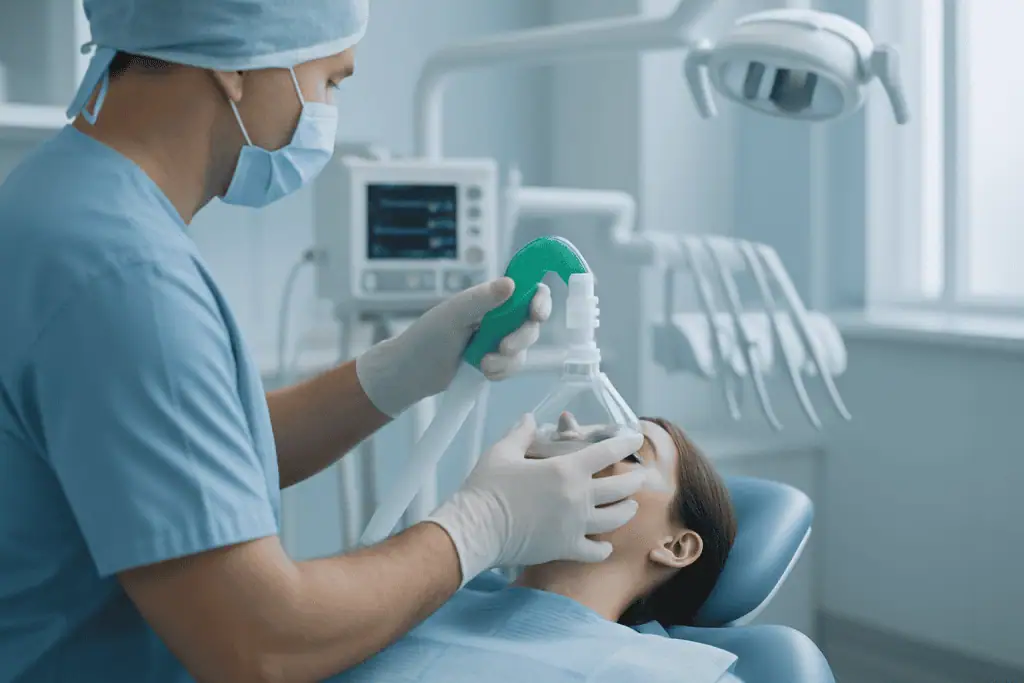
Quick answer
Dental anesthesiology is the branch of dentistry dedicated to controlling pain, anxiety, reflexes and movement during dental treatment. It ranges from local anaesthetic injections to conscious sedation and, when needed, general anaesthesia. It is used for anxious patients, young children, people with special healthcare needs, medically complex patients, and for long or surgical procedures that cannot be completed comfortably with routine numbing alone.
Dental Anesthesiology: When Dental Care Needs More Than Routine Numbing
Dental anesthesiology is the discipline that controls pain, anxiety, reflexes and movement during dental treatment — the field most patients first meet when searching for ASDA, the American Society of Dentist Anesthesiologists. It covers everything from a single local anaesthetic injection to conscious sedation and, when the situation calls for it, full general anaesthesia. It exists for people who cannot receive the dental care they need under routine numbing alone — anxious adults, very young children, patients with special healthcare needs, medically complex patients, and anyone facing long or surgical procedures. If a standard injection is enough for you, you may never think about this field. If it is not, it can change everything about how you receive dental care.
For many people, the hardest part of dental treatment is not the procedure itself. It is the anticipation: fear of pain, the feeling of losing control, worry about gagging, or the memory of a bad dental experience years ago. If you are a parent, the decision can feel even more delicate — your child needs treatment but cannot stay still or calm long enough for the dentist to work safely. If you live with a complex medical condition, the question is not only “Will this hurt?” but “How can this be done safely at all?” Dental anesthesiology answers both questions. The goal is not simply comfort. It is to make necessary dental care possible, precise and safer for patients who would otherwise struggle to tolerate it.
Delaying dental care because of fear is common, but oral health problems rarely stay still. A small cavity can progress to infection. Gum disease can advance without obvious symptoms. Impacted teeth, abscesses, injuries and persistent dental pain affect eating, sleep, school, work and general wellbeing. If you have a heart condition, diabetes, an immune disorder or a cancer treatment plan, untreated oral disease can also complicate your wider medical care. Anaesthesia support is often what makes it realistic to stop postponing and start treating.
At Acibadem, dental anesthesiology sits inside a structured clinical pathway rather than being an add-on to a dental appointment. Dentists from the Dental & Oral Health unit, specialists in Anesthesiology & Reanimation, paediatric dentists, oral and maxillofacial surgeons and other physicians collaborate when needed, planning care around your age, health status, procedure type and level of anxiety. That coordination turns a potentially stressful course of treatment into a carefully assessed, medically supervised process.
What does ASDA mean in dentistry?
In dentistry, ASDA usually stands for the American Society of Dentist Anesthesiologists — the professional body for dentists who specialise in anaesthesia — or for the American Student Dental Association, the organisation representing dental students in the United States. It has nothing to do with the British supermarket chain that shares the name. People searching for “asda dental” are almost always looking for one of these professional organisations, for information about the dental anaesthesia specialty, or for a dentist who can provide sedation — not for a dental service run by a grocery retailer.
Because two organisations share the acronym, you will sometimes see the plural ASDAs used online when both are meant, along with loose or mistyped variants such as AADA. In the context of anaesthesia for dental treatment — the subject of this page — the relevant ASDA is the society of dentist anesthesiologists: clinicians trained to deliver and supervise sedation and general anaesthesia for dental care. The acronym is worth understanding, but what matters to you as a patient is the discipline behind it, which the rest of this page explains in practical terms.
What Dental Anesthesiology Involves
Dental anesthesiology is not a single technique. It is a spectrum of methods, matched to your medical profile, the procedure being performed, and the level of cooperation or comfort required. It may involve numbing one specific area of the mouth, helping you feel relaxed but awake, providing deeper sedation, or placing you fully asleep for complex or extensive work. Understanding the levels helps you have a more useful conversation with your dental team.
Local anaesthesia
Local anaesthesia is the most familiar form. An anaesthetic is used to numb a tooth, an area of gum, or part of the jaw so that dental work can be completed without sharp pain. You remain fully awake and able to communicate throughout. Local anaesthesia is standard for dental fillings, root canal treatment, extractions, gum procedures and many minor oral surgeries. For most healthy adults having short procedures, it is all that is needed.
Sedation dentistry and anaesthetic dentistry
Anaesthetic dentistry is the everyday phrase many patients use for treatment supported by sedation, and it covers a range of depths rather than a single state. Sedation dentistry uses medication to reduce anxiety and create a calmer treatment experience. Depending on the method and dose, the effect ranges from mild relaxation — you are awake, just less worried — to a deeper state in which you may remember little of the procedure afterwards.
Some patients remain responsive throughout treatment. Others reach a depth at which breathing, oxygen levels and circulation must be observed continuously by trained staff. That difference is why sedation is planned rather than improvised: the deeper the sedation, the more monitoring and expertise it demands.
General anaesthesia
General anaesthesia is a medically controlled state of unconsciousness. It is used when dental treatment cannot be performed safely with local anaesthesia or moderate sedation alone. Typical examples include very young children, patients with severe dental phobia, people with certain developmental or neurological conditions, patients who cannot control movement, and adults who need extensive oral surgery or full-mouth rehabilitation completed in a single session. Under general anaesthesia, you are asleep and unaware of the procedure while an anaesthesia team maintains your breathing and circulation.
Above all, dental anesthesiology is a decision-making process. A well-planned approach weighs airway safety, medical history, allergies, medication use, previous anaesthesia experiences, fasting requirements, procedure length, recovery needs and post-treatment support. In hospital-based or medically supervised settings, monitoring equipment and trained personnel follow your vital signs and respond promptly to any change. The clinical question is never “How much anaesthesia can be used?” It is “What is the least intensive, safest approach that allows this treatment to be completed effectively and humanely?”
The Dentist Anesthesiologist: Role and Training
Many of the most common questions about this field are not about procedures at all — they are about the people behind them. Knowing how a dentist anesthesiologist is trained tells you a great deal about the safety culture of the specialty, so the honest answers are worth setting out plainly.
What does an anesthesiologist do during dental treatment?
An anesthesiologist plans, delivers and supervises your anaesthesia while the dentist or surgeon performs the treatment. Before the procedure, they assess your medical history, airway and risk factors, and choose the technique and medications. During the procedure, they monitor your breathing, oxygen levels, heart rate, blood pressure and depth of sedation, adjusting medication continuously. Afterwards, they oversee your recovery until you are awake, stable and ready for discharge. In dental settings, this role may be filled by a physician anaesthetist or by a dentist anesthesiologist, depending on the country, the setting and the patient.
What is dental anesthesiology as a specialty?
Dental anesthesiology is a recognised dental specialty in the United States, formally acknowledged in 2019, dedicated to advanced pain control, sedation and general anaesthesia for dental patients. Dentist anesthesiologists are trained specifically for the challenges of anaesthesia in and around the airway — the mouth is, after all, both the surgical field and the breathing passage. The American Society of Dentist Anesthesiologists is the specialty body that represents these clinicians.
How long is dental anesthesiology residency — and how long does the whole path take?
Dental anesthesiology residency typically lasts three years after dental school. Counting from the start of university-level dental education, the full path usually takes at least seven years: a dental degree followed by full-time residency training in anaesthesia, including hospital rotations in medical anaesthesiology, paediatrics and intensive care. Programme structures vary by country and institution, so exact lengths differ, but this is a substantial postgraduate commitment rather than a short certificate course — a point worth remembering when you weigh who should be responsible for your sedation.
How do you become a dental anesthesiologist?
Becoming a dental anesthesiologist follows a defined sequence:
- Complete a dental degree at an accredited dental school.
- Apply to and complete an accredited dental anesthesiology residency, which includes extensive hospital-based anaesthesia training.
- Pursue board certification through the relevant national examining body, where available.
- Maintain ongoing education, emergency-management training and clinical credentialing throughout practice.
Outside the United States, pathways differ: in many countries, deeper sedation and general anaesthesia for dental treatment are provided by physician anaesthetists working alongside the dental team in hospital settings. The label matters less than the substance — structured anaesthesia training, appropriate facilities and continuous monitoring.
How competitive is dental anesthesiology residency, and are all programs in the match?
Dental anesthesiology residency is competitive, because the number of accredited programmes is small relative to interest in the field. Most accredited programmes in the United States participate in a national matching service, though applicants are always advised to confirm the application route with each individual programme, as arrangements can change from year to year. For you as a patient, the practical takeaway is simply this: clinicians who carry this title have passed through a selective, supervised training pipeline focused entirely on anaesthesia safety.
Who May Need Dental Anesthesiology
Anaesthesia support in dentistry helps adults, adolescents, children and medically complex patients, but for different reasons. Some people need it because of anxiety. Others need it because the procedure is long, technically demanding or involves sensitive areas. In certain cases, it is not a matter of comfort or convenience — it is essential for safety and for the quality of the treatment itself.
Common situations that lead patients to ask about dental anaesthesia include intense fear before appointments, panic symptoms in the dental chair, inability to tolerate injections, a strong gag reflex, difficulty staying still, previous traumatic dental experiences, or a treatment plan involving several procedures that would be exhausting to complete over many separate visits. Severe tooth pain that makes awake treatment intolerable is another frequent trigger.
Children may need dental anaesthesia when they are too young to cooperate, have multiple cavities, require urgent dental care, or have special healthcare needs. Paediatric treatment under sedation or general anaesthesia is planned with particular care — attention to growth, airway anatomy, fasting rules, parental counselling and age-appropriate recovery are all part of the plan, not afterthoughts.
Adults may need anaesthesia support for complex implant surgery, surgical removal of impacted wisdom teeth, treatment of advanced gum disease, full-mouth rehabilitation, jaw-related procedures or extensive restorative work. It is also considered for patients with movement disorders, neurological conditions, intellectual disabilities, autism spectrum disorder, a severe gag reflex, or medical conditions in which uncontrolled stress and pain carry real risk.
Diagnosis and planning begin with a detailed consultation. The dental team evaluates your oral condition through examination and, where needed, imaging — digital dental radiographs, or three-dimensional imaging for surgical planning. The anaesthesia team reviews your medical history, current medications, allergies, prior anaesthesia experiences, heart and lung health, sleep apnoea risk, pregnancy status and any relevant laboratory or specialist findings. Where sedation or general anaesthesia is being considered, this review usually takes place at a separate pre-anaesthesia assessment, so that nothing is decided in a rush on the day of treatment.
The safest plan is always individual. A healthy adult needing a short procedure may need only local anaesthesia or mild sedation. A child with extensive decay may be better served by comprehensive treatment under general anaesthesia, replacing repeated stressful visits with one planned session. A patient with heart disease or complex medication use may require hospital-based monitoring and coordination with other specialists before dental care proceeds. None of these is the “default” — each reflects a specific risk-and-benefit assessment.
Conditions and Indications Dental Anesthesiology Addresses
Anaesthesia support spans a wide range of dental, oral surgical, paediatric and special-care indications. It is not reserved for major surgery. It may be appropriate whenever pain, anxiety, cooperation, reflex control or medical safety could compromise the quality of treatment.
- Dental anxiety and dental phobia: Patients who avoid treatment because of fear may be able to receive necessary care with an appropriate sedation plan.
- Extensive tooth decay: Multiple fillings, crowns, pulp treatments or extractions can often be completed more comfortably — and sometimes in fewer sessions — with anaesthesia support.
- Paediatric dental treatment: Young children, or children with high treatment needs, may benefit from sedation or general anaesthesia when routine chairside treatment is not realistic.
- Impacted wisdom teeth and surgical extractions: Anaesthesia improves comfort during procedures involving bone removal, multiple teeth or longer surgical time.
- Dental implant surgery: Sedation or general anaesthesia may be considered for multiple dental implants, sinus lift procedures or complex implant planning.
- Bone grafting: Dental bone grafts and related reconstructive procedures often warrant deeper anaesthesia depending on their extent.
- Periodontal and gum surgery: Procedures to treat advanced gum disease, reshape gum tissue or manage infection may need anaesthesia support depending on scope and sensitivity.
- Root canal treatment and restorative dentistry: Patients with severe pain, infection or difficulty tolerating dental instruments benefit from enhanced pain and anxiety control.
- Special healthcare needs: Patients with developmental, neurological, behavioural or physical conditions may need sedation or general anaesthesia for safe treatment.
- Strong gag reflex or movement difficulty: Anaesthesia can suppress reflexes or involuntary movement that would interfere with precise work.
- Medically complex patients: Significant heart, lung, endocrine, haematological or immune conditions may call for closer monitoring during dental procedures.
- Trauma or urgent dental infection: Acute injuries, abscesses, swelling or severe pain may require prompt dental intervention with anaesthesia support.
In every one of these situations, the method is selected according to risk and necessity — the least intensive approach that still allows the procedure to be completed properly.
How Dental Anaesthesia Is Planned and Performed
Dental anesthesiology begins before you enter the treatment room. A careful preparation phase identifies risk factors and matches the anaesthesia plan to the procedure. Medical records, dental images, medication lists and any previous anaesthesia notes are collected and reviewed in advance, so that surprises on the day are rare.
Preparation and medical assessment
During preparation, the dental team confirms the diagnosis and treatment plan. This may involve clinical examination, dental radiographs, three-dimensional imaging for surgery, photographs, bite assessment, and evaluation of any infection or inflammation. In parallel, the anaesthesia team reviews your general health: medical conditions, medication use, allergies, smoking history, sleep apnoea symptoms, previous anaesthesia reactions and recent illnesses such as respiratory infections. If you snore heavily or have diagnosed sleep apnoea, say so — airway assessment is central to sedation safety, and it overlaps with the concerns addressed in dental sleep medicine.
Before sedation or general anaesthesia, you will be given fasting instructions. These matter: food or liquid in the stomach increases the risk of aspiration during deeper anaesthesia, and if the instructions have not been followed, the procedure may be postponed rather than risked. The team will also advise you on how your regular medications fit into the plan for the day — blood thinners, diabetes medication, blood pressure drugs, herbal supplements and certain psychiatric or neurological medications all require particular attention, and any adjustment is decided by the treating doctors, never by you alone.
For children, preparation includes parental counselling: fasting rules, what behaviour to expect on the day, and how recovery at home should look. Parents are usually advised to bring familiar comfort items and to plan a quiet recovery period after discharge. For patients with special healthcare needs, the team discusses communication preferences, sensory sensitivities, mobility requirements and caregiver involvement in advance.
Local anaesthesia in practice
Local anaesthesia is usually delivered by injection near the tooth, gum or nerve supplying the treatment area. A topical numbing gel is often applied first to reduce needle discomfort. The dentist waits for the area to become numb and checks the level of anaesthesia before starting. You may still feel pressure, vibration or movement — that is normal — but you should not feel sharp pain, and additional anaesthetic can be given if needed and medically appropriate.
Local anaesthesia is also used alongside sedation and even during general anaesthesia. Numbing the surgical area reduces pain during and after the procedure, helps you wake more comfortably, and can reduce the need for stronger pain medication afterwards.
Mild and moderate sedation
Mild sedation reduces anxiety while you remain awake and responsive; it may involve inhaled sedation or oral medication, depending on you and the procedure. Moderate sedation produces deeper relaxation — you can usually still respond to verbal instructions or light touch, but you feel drowsy and may remember little of the treatment afterwards.
Monitoring scales with depth. During sedation, the care team follows your oxygen levels, heart rate, blood pressure, breathing pattern and level of consciousness. Supplemental oxygen may be used, and the treatment environment is stocked with appropriate emergency medication and airway equipment. You recover under observation before leaving the clinic or hospital — sedation ends when you are stable, not when the drill stops.
Deep sedation and general anaesthesia
Deep sedation and general anaesthesia require a higher level of medical supervision. Under general anaesthesia you are asleep and unaware; medications are given intravenously, by inhaled agents, or both, and airway support may be used to maintain safe breathing throughout. These techniques are typical for extensive paediatric dentistry, multiple surgical extractions, complex implant procedures, oral surgery, full-mouth rehabilitation, and patients who cannot cooperate safely while awake. On the day, the sequence is predictable:
- Admission checks: identity, consent, fasting status and a final health review.
- Placement of monitoring equipment and, usually, an intravenous line.
- Induction of anaesthesia by the anaesthesia specialist.
- Airway management as required for safe breathing during treatment.
- Dental treatment, with vital signs monitored and medications adjusted continuously.
- Emergence: anaesthetic medications are reduced and you begin to wake.
- Supervised recovery until you meet discharge criteria, followed by written aftercare guidance.
One practical advantage of this approach is efficiency: with a comfortable, still patient, the dental team can often complete multiple treatments in a single session when that is clinically appropriate, sparing you repeated visits and repeated anxiety.
Technology and monitoring during treatment
Modern dental anaesthesia relies on careful monitoring and diagnostic planning, not on medication alone. Digital imaging helps the dentist or oral surgeon understand tooth anatomy, jawbone structure, nerve location, infection spread and implant planning needs; three-dimensional imaging is especially useful for impacted teeth, implant placement, grafting and complex surgical anatomy.
During sedation or general anaesthesia, monitoring systems track oxygen saturation, pulse, blood pressure, heart rhythm when indicated, carbon dioxide levels during deeper anaesthesia, and temperature in longer procedures. Intravenous access allows immediate medication delivery. Airway equipment, suction, oxygen delivery and resuscitation resources are part of the standing safety environment. None of this is decoration — its purpose is to detect changes early and keep breathing and circulation stable while the dental work proceeds.
How long treatment and recovery take
Treatment length varies widely. A short restorative procedure under local anaesthesia may take less than an hour. Wisdom tooth extraction, implant surgery or paediatric dental rehabilitation take longer, especially when several procedures are combined in one appointment. General anaesthesia appointments also include pre-treatment preparation and post-anaesthesia observation, so plan for the whole visit, not just the procedure.
After local anaesthesia, you can usually leave soon after treatment, though your mouth may stay numb for several hours — take care not to bite your cheek or tongue while it is. After sedation or general anaesthesia, you recover in a monitored area until you are awake and stable. Drowsiness, mild nausea, a sore throat, dry mouth or temporary unsteadiness can occur after deeper anaesthesia. For the rest of that day you should not drive, drink alcohol, sign important documents or make major decisions, and a responsible adult escort is typically required for discharge.
Why Acting Early Matters
Dental problems progress in ways you cannot see. Pain may come and go, but the underlying cause usually keeps advancing. A cavity can reach the nerve of the tooth, ending in severe pain or an abscess. Gum inflammation can develop into periodontal disease, with bone loss and loose teeth. Impacted wisdom teeth can cause infection, cysts or damage to neighbouring teeth. A cracked tooth left too long may become impossible to restore.
If fear has kept you away from dental care, anaesthesia support can change your timeline. Instead of waiting until pain becomes unbearable — and treatment options narrow — you can receive planned care under conditions that reduce distress and make cooperation possible. Earlier treatment generally means more conservative options, shorter procedures and less extensive surgery. The same logic applies to children: one well-planned session early is almost always kinder than emergency treatment later.
Delay can also ripple into general health. Oral infections can, in rare but serious cases, spread to the jaw, face or bloodstream. If you have diabetes, oral infection can make blood sugar harder to control. If you are preparing for chemotherapy, transplantation, heart valve surgery, joint replacement or radiotherapy, dental infections often need to be resolved before that treatment can proceed — timely dental care becomes part of your broader medical readiness.
Acting early does not automatically mean choosing sedation or general anaesthesia. It means getting an assessment before the problem becomes more complex. An experienced team can tell you honestly whether local anaesthesia is sufficient, whether sedation would genuinely help, or whether hospital-based anaesthesia is the safer route.
Benefits of Dental Anesthesiology
What you gain depends on your situation and procedure, but the recurring benefits are better pain control, reduced anxiety, and the ability to complete necessary care safely — sometimes care that would otherwise never happen at all.
| Benefit | What It Means for You |
|---|---|
| Improved pain control | Local anaesthesia and, when needed, sedation or general anaesthesia reduce pain during treatment and can support a more comfortable early recovery. |
| Reduced anxiety and fear | If you have avoided dental care, treatment can take place in a calmer, more controlled environment. |
| Better cooperation during care | Children, anxious adults and patients with special healthcare needs can complete treatment safely when movement and distress are reduced. |
| Ability to complete complex treatment | Multiple procedures can sometimes be performed in one planned session, reducing repeated appointments and repeated stress. |
| Enhanced procedural precision | When you are comfortable and still, the dental team can work with greater focus — particularly during surgery and detailed restorative work. |
| Medical supervision for higher-risk patients | If you have significant health conditions, you can be monitored closely, with the anaesthesia plan adapted to your medical needs. |
Recovery Timeline After Dental Anaesthesia
Recovery depends on the type of anaesthesia, the dental procedure and your general health, but the following timeline reflects what most patients can broadly expect.
| Time Period | What Patients Can Expect |
|---|---|
| Day 1 | After local anaesthesia, numbness may last several hours. After sedation or general anaesthesia, drowsiness, mild nausea, dry mouth or unsteadiness can occur. Rest, and follow the escort and activity restrictions you were given. |
| First week | Dental soreness, gum tenderness or swelling may occur depending on the procedure. Most patients keep to a soft diet for a short period after surgical care and take prescribed medication as directed by the treating team. |
| First month | Healing continues. Follow-up visits may check surgical sites, restorations, gum health, implant healing or paediatric outcomes. Normal routines usually resume much earlier unless surgery was extensive. |
| Longer term | Preventive dental visits, good oral hygiene and completion of any staged treatment plan protect the result. If anxiety was the barrier, discuss comfort strategies for future visits before problems recur. |
What Influences Outcomes and a Good Result
A good result in dental anesthesiology is measured on several axes at once: the dental treatment is completed effectively, you remain medically stable throughout, pain and anxiety are controlled appropriately, and recovery proceeds without avoidable complications. Getting there depends on planning, communication, clinical skill — and on you.
Your medical history is the single most important input. Obstructive sleep apnoea, asthma, heart disease, high blood pressure, diabetes, obesity, neurological disorders, liver or kidney disease, bleeding disorders, pregnancy and medication allergies all influence the choice of anaesthesia. Give complete, accurate information — prescription medicines, over-the-counter drugs, supplements, recreational substances, and any previous reaction to anaesthesia. The team can only plan around what they know.
The type and extent of treatment matters equally. A small filling requires a different plan from full-mouth rehabilitation, impacted tooth surgery, or implant placement with grafting. Longer procedures tend towards deeper sedation or general anaesthesia; shorter ones can often be handled with local anaesthesia plus supportive anxiety management.
Airway assessment is decisive for sedation and general anaesthesia. The anaesthesia team evaluates factors that affect breathing support — jaw anatomy, neck mobility, mouth opening, snoring, sleep apnoea symptoms, previous airway difficulties. This assessment determines not just the technique but the setting: clinic, hospital, or a more closely monitored facility.
Preparation and fasting compliance directly affect safety. Follow the instructions you are given about food, drink, smoking and medication before sedation or general anaesthesia. If they have not been followed, the responsible course is postponement — frustrating, but far better than the alternative.
Post-treatment care shapes comfort and healing. Follow the guidance on diet, oral hygiene, activity, prescribed medication and follow-up appointments. After oral surgery, smoking impairs healing and raises the risk of complications. After sedation or general anaesthesia, the escort requirement and activity restrictions are not formalities; they exist because judgement and coordination remain impaired for hours after you feel “fine”.
Communication ties it all together. Tell the team if you have had a traumatic dental experience, needle fear, panic attacks, gagging problems, claustrophobia or difficulty with previous sedation. If you are a parent, share behavioural, developmental or sensory concerns about your child. These details let the team design a plan that is medically appropriate and emotionally considerate at the same time.
Be clear-eyed about limits: no anaesthesia is entirely without risk. Possible side effects include temporary numbness, bruising at injection sites, nausea, dizziness, drowsiness, sore throat, allergic reactions, and changes in breathing or circulation. Serious complications are uncommon in properly selected and monitored patients — but they are precisely why careful assessment and trained supervision matter, and why the depth of anaesthesia should always match your actual need and risk profile rather than convenience.
How Dental Anaesthesia Care Is Organised at Acibadem
Patients usually seek dental anesthesiology because they need more than a standard dental appointment: complex dental work, treatment that has to be coordinated with other medical care, a second opinion, or a way past years of dental avoidance. In these situations, the quality of planning and communication matters as much as the procedure itself.
At Acibadem, dental anaesthesia is provided within a broader hospital environment, with multidisciplinary collaboration where the case requires it. That matters most for patients who need sedation or general anaesthesia, for children with extensive dental needs, and for adults whose medical conditions demand careful monitoring. Depending on the case, care can involve dentists, anaesthesia specialists, paediatric dentists, oral and maxillofacial surgeons, cardiologists, endocrinologists, paediatricians or other physicians. In more complex cases, multidisciplinary discussion aligns the dental plan with wider medical needs — particularly relevant if you have heart disease, diabetes, a cancer history, bleeding risks, immune compromise or special healthcare needs.
Treatment planning is personalised rather than templated. Before an anaesthesia appointment, the team weighs your oral diagnosis, general health, previous dental experiences, expectations and recovery needs. For some patients, the recommended plan is local anaesthesia with additional comfort measures. For others, sedation or general anaesthesia is the appropriate way to complete care safely. The decision follows medical assessment, not a one-size-fits-all formula — and sometimes the honest recommendation is the lighter option, not the deeper one.
Diagnostic and monitoring pathways support both the plan and its execution. Digital dental imaging and three-dimensional evaluation define anatomy before surgery or implant treatment. During sedation and general anaesthesia, monitoring lets the team observe breathing, oxygenation, circulation and depth of sedation in real time and respond immediately, then supervise a controlled recovery.
Clear communication carries particular weight in anaesthesia care, where fasting rules, medication planning, escort requirements and post-treatment restrictions all have to be understood exactly. Each of these is explained in plain language before the day of treatment and again at discharge, in writing, so that continuity of care does not depend on memory — including a summary that can be shared with your regular dentist or physician afterwards.
Choosing anaesthesia support is often a deeply personal decision. It may be the first step back into dental care after years of avoidance. It may let a child receive necessary treatment without repeated distress, or let an adult complete complex rehabilitation in a medically supervised setting. The approach is built to meet those needs with clinical structure, careful assessment, and respect for the emotional side of the experience.
Planning the First Step
If dental fear, medical complexity, a strong gag reflex, special healthcare needs or an extensive treatment plan has made dental care difficult, dental anesthesiology offers a structured way forward. The first step is always a thorough evaluation — it determines whether local anaesthesia, sedation or general anaesthesia is appropriate, and what preparation the chosen approach requires.
That evaluation typically draws on dental images, medical records, medication lists and an account of previous dental and anaesthesia experiences. On that basis, a clinical team can set out realistic treatment options, anaesthesia considerations and what recovery is likely to involve.
Dental care should not be postponed indefinitely because of fear or uncertainty. With careful assessment and an anaesthesia plan matched to your actual needs, most patients who once believed treatment was impossible for them find that it is not — and that it can be done with comfort, dignity and proper medical oversight.
Preparation
- Before dental anesthesiology, the dentist and anesthesiology team review medical history, medications, allergies, and previous anesthesia experiences. Fasting may be required for sedation or general anesthesia. Patients should arrange an escort if sedatives are used.
Aftercare
- After the procedure, patients are monitored until they are alert and stable. Numbness, sleepiness, or mild dizziness can occur temporarily. Avoid driving, alcohol, and important decisions for the rest of the day if sedation or general anesthesia was used.
Turkey vs UK, Germany & USA
Dental anesthesiology can make dental treatment more comfortable by helping control pain, anxiety, and movement. Costs and patient experience vary by anesthesia type, dental procedure, clinical setting, and the level of coordination needed for safe care.
When comparing countries for dental anesthesiology, the main differences usually relate to provider fees, facility standards, access to sedation services, package coordination, and travel support.
| Factor | Turkey | UK | Germany | USA |
|---|---|---|---|---|
| Price drivers | Private dental clinic or hospital setting, anesthesia type, specialist involvement, and package inclusions. | Private care costs vary by clinic, anesthesia provider, and whether hospital facilities are needed. | Costs depend on clinic setting, medical indication, anesthesia complexity, and private or insured pathway. | Costs vary widely by provider, facility, anesthesia billing, and insurance network status. |
| Hospital and dentist factors | International hospitals may coordinate dental, anesthesia, imaging, and patient services in one pathway. | Care may be delivered in dental practices, private clinics, or hospital settings depending on complexity. | Specialist referral and structured planning are common, especially for complex or anxious patients. | Separate billing from dentist, anesthesiologist, and facility may influence the final quote. |
| Accreditation and quality | Some hospital groups hold JCI accreditation, with protocols for anesthesia safety and international patients. | Quality is regulated through national and professional standards; private accreditation varies by provider. | Clinics and hospitals follow regulated clinical standards; accreditation varies by institution. | Accreditation and credentialing vary by hospital, surgery center, and dental anesthesia provider. |
| Typical waiting times | Private international pathways may offer coordinated scheduling, subject to medical assessment and availability. | Private appointments may be faster than public pathways; specialist anesthesia access can affect timing. | Timing depends on referral requirements, clinic availability, and anesthesia planning needs. | Scheduling depends on provider availability, insurance approvals, and facility access. |
| Travel and language logistics | International patient teams may help with translation, transfers, hotel coordination, and treatment planning. | Less travel support is typical for local patients; international patients arrange most logistics privately. | Language support may be available in larger clinics or hospitals, but varies by location. | International coordination varies; travel, accommodation, and insurance communication may be separate. |
| What packages may include | Consultation, dental assessment, anesthesia planning, procedure support, basic coordination, and follow-up guidance may be bundled. | Quotes may separate dental treatment, anesthesia, imaging, and facility fees. | Itemised billing is common, with separate planning, procedure, anesthesia, and follow-up components. | Quotes may include several separate provider and facility charges, depending on the care setting. |
What affects your final cost
- Type of anesthesia, such as local anesthesia, sedation, or general anesthesia.
- Length and complexity of the dental procedure.
- Whether an anesthesiologist or sedation-trained specialist is required.
- Clinic, hospital, or operating room setting.
- Pre-anesthesia assessment, imaging, laboratory checks, and monitoring needs.
- Patient age, medical history, anxiety level, and ability to cooperate during treatment.
- Included services such as translation, transfers, hotel support, and follow-up communication.
Compare your options
Dental anesthesiology includes several clinical options. Suitability is decided by a dental specialist and, when needed, an anesthesiology specialist after reviewing the procedure, medical history, and patient needs.
| Option | What it is | Typical use | Key considerations |
|---|---|---|---|
| Local anesthesia | Numbing medicine applied to a specific treatment area while the patient remains awake. | Routine fillings, extractions, root canal treatment, periodontal procedures, and many restorative treatments. | Usually the simplest option; anxiety control may still be needed for some patients. |
| Topical anesthesia | A numbing gel or spray placed on the gum or soft tissue surface. | Reducing discomfort before injections, minor soft tissue procedures, or pediatric support. | Often used together with local anesthesia rather than as the only method for deeper procedures. |
| Minimal sedation | Light calming support while the patient remains responsive and able to follow instructions. | Mild dental anxiety, longer appointments, or patients who need additional comfort. | Requires appropriate screening, monitoring, and post-treatment instructions. |
| Moderate or deep sedation | Medication-assisted relaxation where awareness is reduced and closer monitoring is required. | Significant dental anxiety, complex procedures, strong gag reflex, or difficulty tolerating treatment. | May require a trained sedation provider, fasting guidance, escort arrangements, and recovery observation. |
| General anesthesia | A controlled unconscious state managed by an anesthesia professional. | Extensive dental work, certain pediatric cases, patients unable to cooperate safely, or selected medical or behavioral needs. | Requires careful assessment, appropriate facility standards, continuous monitoring, and planned recovery. |
General information only — not medical or financial advice. Final costs depend on the factors above and your individual case; request a free, personalised quote.
Frequently Asked Questions
What affects the cost of dental anesthesiology?
The final cost depends on the anesthesia method, procedure complexity, treatment duration, provider qualifications, facility setting, monitoring needs, and whether services such as imaging, consultation, translation, or transfers are included.
How can I get a personalised quote?
A personalised quote usually requires a dental treatment plan, medical history, current medications, and details about anxiety level or cooperation needs. Acibadem International can review your information through a free consultation and explain what is included.
Is sedation or general anesthesia always needed for dental treatment?
No. Many dental procedures can be completed with local anesthesia alone. Sedation or general anesthesia may be considered for severe anxiety, extensive treatment, children, strong gag reflex, special needs, or when movement control is important.
What should an international patient ask before confirming treatment?
Ask what anesthesia type is planned, who will provide it, where the procedure will take place, what monitoring is used, what is included in the package, and what follow-up support is available after returning home.
Can children receive dental anesthesia?
Children may receive local anesthesia, sedation, or general anesthesia when clinically appropriate. The decision depends on age, dental needs, cooperation, medical history, and safety assessment by the dental and anesthesia team.
Medically reviewed by the Acıbadem International Medical Board — August 31, 2026
See our medical review board →
Update history
- PublishedJune 8, 2026
- Medical review approvedAugust 31, 2026
- Last content updateAugust 31, 2026
Trusted care for international patients
Doctors Performing This Treatment

Assoc. Prof. Dr. Ferit Bayram
Oral & Dental Health
Dr. Ezgi Gülüm
Oral Dental & Maxillofacial Surgery
Dr. Emre Çengelli
Oral Dental & Maxillofacial Surgery
Dr. Arzu Morçiçek
Oral & Dental HealthDr. Deniz Turgut
Oral & Dental Health
Dr. Ceyda Sabancı
Oral & Dental Health
Dr. Çağla Su Doğangün Ayduk
Oral & Dental Health
Dr. Begüm Öykü Kesim
Oral & Dental Health
Dr. Eylül Türsen
Oral & Dental Health
Dr. Zeynep Ezgi Akan
Oral & Dental Health
Dr. Metin Kınacı
Oral & Dental Health
Dr. Duygu Yavuzer Karadeniz
PeriodontolgyDr. Ali Riza Özdurmuş
Oral & Dental Health
Dr. Bedii Ender Topçu
Oral & Dental Health
Dr. Sebiha Nihal Yılmaz
Oral Dental & Maxillofacial SurgeryDr. Seda Saygılı Özaydın
Oral & Dental Health
Dr. Zeynep Ekin Kılınç
Oral & Dental Health
Dr. Uğur Önder
Oral & Dental Health
Dr. Helin Kuşsever Topçu
Oral & Dental Health
Dr. Pelin Açık
Oral & Dental Health
Dr. İpek Saygılı
Oral & Dental Health
Dr. Halime Bayram
Oral & Dental Health
Dr. Havva Gölalan
Oral & Dental Health
Dr. Merve Ağartıoğlu
Oral & Dental HealthMedical Units
Available at These Hospitals