

Anesthesiology & Reanimation
The doctor you meet for ten minutes and who manages everything except the operation, preoperative assessment, the four kinds of anaesthesia, the airway, what is monitored while you are unconscious, recovery and acute pain, and the intensive care that reanimation means.
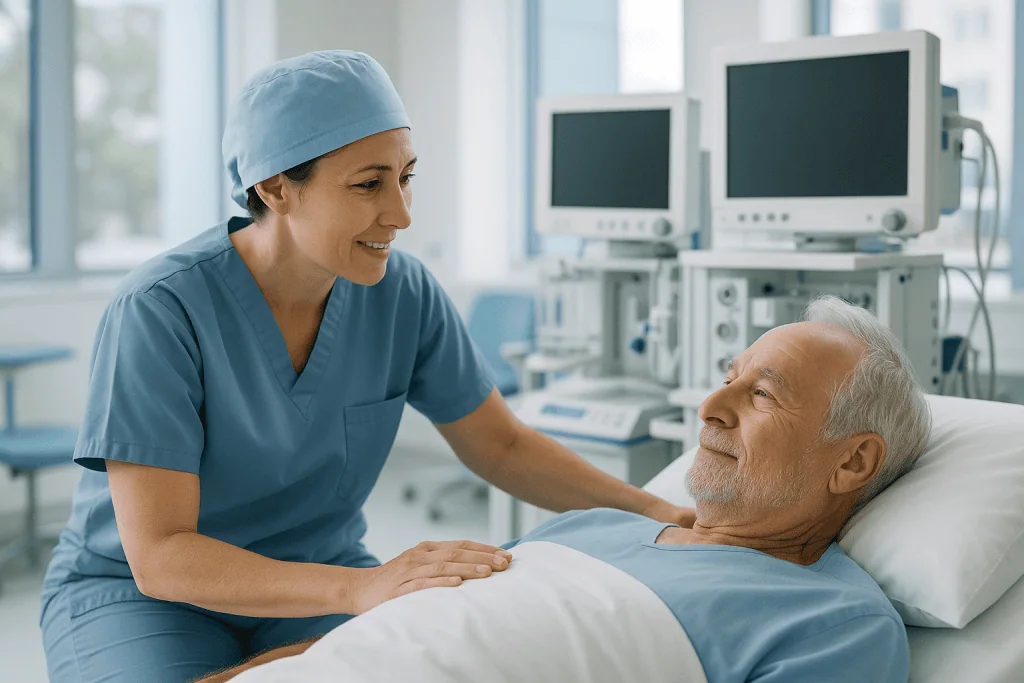
Every operation has two doctors
One performs the procedure. The other keeps you alive and unaware while it happens, and then brings you back, managing breathing, circulation, temperature, fluid and pain minute by minute, because anaesthesia switches off the regulation that would have done it for you.
Major surgery, sub-specialised anaesthesia
Cardiac, thoracic, cancer and transplant work where the anaesthetic is a specialty in itself: a stopped circulation, a collapsed lung, or a pressure managed inside a closed skull.
Everyday operations and day-case anaesthesia
The great majority by number, where the aim is to be awake, comfortable, eating and going home the same day, which is what the technique is chosen for.
Conditions that change the anaesthetic plan
These matter more to us than the operation does. Each one alters the airway plan, the drugs, the monitoring or the recovery, and each is worth declaring before the date rather than on the day.
The questions that matter are asked at the worst possible moment
Most patients meet their anaesthetist for a few minutes, on a trolley, shortly before going in, which is precisely when it is hardest to ask anything useful. A preoperative assessment done properly, and done early, changes that: it establishes what can be optimised, which medicines to stop and when, what the airway plan is, and which technique actually suits this patient rather than this procedure.
For anyone travelling, this is not a formality but the step that prevents a cancelled operation. It can be done remotely, before a flight is booked, and it needs a complete medicine list, previous anaesthetic records, recent investigations and any implanted device details.
What we will not do
- Make an unsafe operation safe with a more careful anaesthetic. Where the risk exceeds the benefit, we say so.
- Proceed without an accurate history. A previous difficult intubation or a family reaction changes the plan.
- Deliver deep sedation without the monitoring and airway skills a general anaesthetic would require.
- Starve a patient overnight when the evidence says clear fluids may continue much closer to the time.
- Offer organ support that would prolong dying rather than support recovery, simply because it exists.
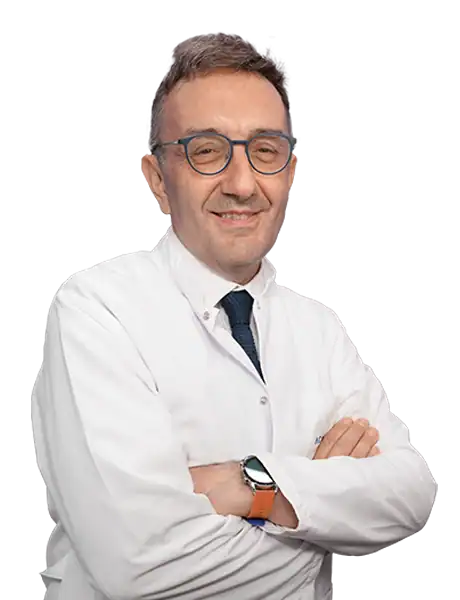
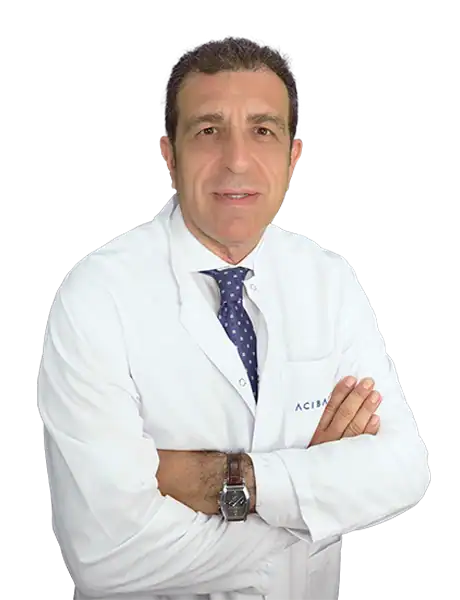
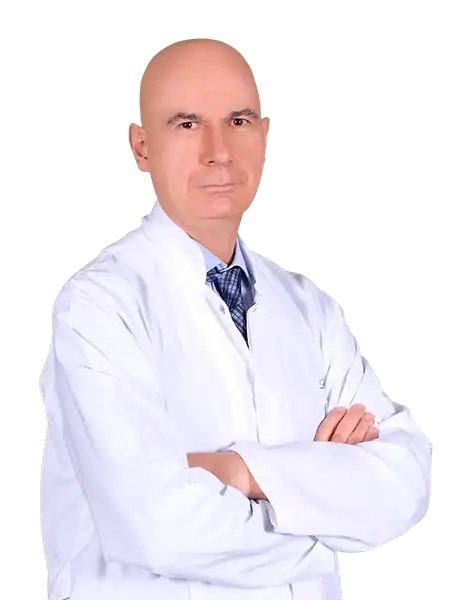
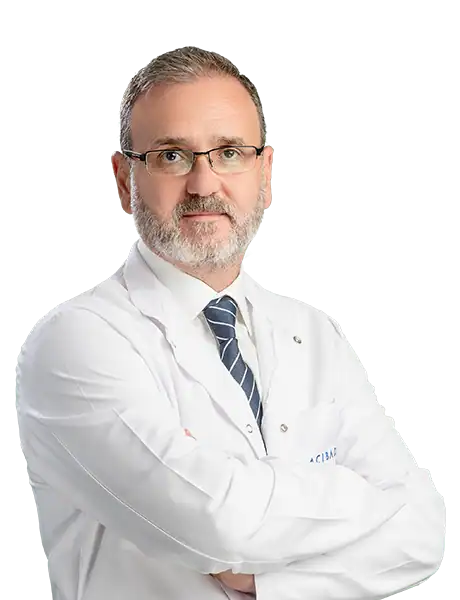
Anaesthesiologists who lead this work
What actually happens, in order
The assessment happens before you fly
This is the single most useful thing to arrange. A remote preoperative assessment identifies what needs optimising, which medicines must stop and when, and what further tests are needed, which is what prevents an operation being cancelled after a long flight.
Send the medicine list, in full
Doses included, and supplements and herbal preparations too, because people leave those out. Anticoagulants and antiplatelet drugs decide whether a regional technique is possible at all and when they must be stopped.
Declare the things nobody asks about
A previous difficult intubation. An unexplained anaesthetic problem in a relative. Sleep apnoea, even if only suspected. Loose or capped teeth. Any weight-loss or diabetes injection, which changes fasting advice.
Bring the investigations you already have
ECG, blood tests, echocardiogram, lung function, and implanted device details including pacemakers and defibrillators. Repeating them is avoidable and delays the date.
Plan the way home before you leave
Flying has its own timeline after an operation, set by the surgery rather than the anaesthetic. Nobody travels alone on the day of a general anaesthetic or sedation, and nobody drives or signs anything that day.
Six things worth knowing first
Fasting rules are shorter than you remember
Prolonged fasting causes dehydration, low blood sugar and worse recovery without adding safety. Clear fluids are allowed considerably closer to surgery than solids, and some pathways encourage a carbohydrate drink. Fasting since the previous evening because nobody said otherwise leaves you worse off, not safer.
Waking up during surgery is rarer than the fear
Most reported experiences are recall of the moments before the drug worked or as it wore off, or sensations during sedation where full unconsciousness was never intended. Where the risk is genuinely higher, depth-of-anaesthesia monitoring is used for exactly that reason.
Sedation is a continuum, not a setting
A patient can move from moderate to deep sedation faster than expected, and deep sedation needs the same monitoring and airway skills as a general anaesthetic. That is the whole safety argument for who delivers it and where.
Do not stop your medicines on your own
Some are continued through surgery, some held for a defined period, and some are dangerous to stop abruptly. That decision belongs to the doctor who prescribed them together with the anaesthetist, which is why the assessment asks for the complete list.
Family anaesthetic history is worth knowing
Malignant hyperthermia is inherited and entirely avoidable in someone known to be susceptible, because an anaesthetic with no triggering agents is straightforward to give. An unexplained anaesthetic death in a relative is information worth carrying.
Getting up early is the treatment
Lying still causes many of the complications once blamed on surgery itself, chest infections, clots, weakness and delirium. Early mobilisation, eating and drinking early and staying warm are interventions rather than encouragement.
Jump to what you came for
Quick answer
Anesthesiology and Reanimation is the medical unit that provides anesthesia for surgical and diagnostic procedures, monitors patients’ vital functions, and manages intensive care, pain control, and recovery support when critical functions need to be stabilized. At Acibadem in Turkey, this unit evaluates patients before treatment, applies the appropriate anesthesia method during procedures, and oversees reanimation and postoperative care in close…
What our anaesthesiology (anesthesiology) unit covers, and who it is for
Every operation has two doctors. One performs the procedure; the other keeps the patient alive and unaware while it happens, and then brings them back. The second is the anaesthetistanesthesiologist in American usage, the same specialist under either name, and this unit is about what that person actually does.
It is the largest medical specialty in most hospitals and the least visible. Patients meet their anaesthetist for a few minutes before an operation and frequently never see them again, which is why the questions that matter most are asked at the worst possible moment: on a trolley, minutes before going in. A substantial part of what follows exists so those questions can be asked earlier.
At Acıbadem International the work falls into five strands.
- Preoperative assessmentdeciding whether an operation is safe now, what must be optimised first, and which technique fits this patient rather than this procedure.
- Anaesthesia for surgerygeneral, regional, sedation and combinations of them, across every surgical specialty in the group.
- Airway managementthe part of the specialty that has no substitute and no delay, and the reason anaesthetists are called to emergencies elsewhere in the hospital.
- Postoperative recovery and acute painthe first hours and days, where most of what patients remember is decided.
- Intensive care and reanimationthe critically ill, whether after surgery or admitted directly.
Where the borders sit. Chronic and cancer pain: the blocks, radiofrequency and neuromodulation given to treat long-standing pain rather than to enable an operation, belong with pain management (algology), which covers them in full. Sedation and general anaesthesia for dental treatment as a dental service belong with dental and oral health. The obstetric decisions around delivery belong with gynaecology and obstetrics, and the surgery itself with whichever unit performs it. What this unit owns is the anaesthetic, the airway, the monitoring, the immediate recovery and the intensive care that may follow.
What an anaesthetist (anesthesiologist) actually does while you are asleep
The common belief is that the anesthesiologist gives an injection and waits. What happens is closer to the opposite: the drug is the easy part, and the work is continuous physiological management of a person whose own regulation has been deliberately switched off.
Anaesthesia removes several things at once, consciousness, memory, movement, and the reflex responses to pain. It also removes the body’s ability to protect its own airway, to maintain blood pressure normally, and frequently to breathe at all. Everything the body would have done for itself is done for it, minute by minute, for as long as the operation lasts.
So during a procedure the anaesthetist is managing breathing and the concentration of gases going in and coming out, blood pressure and heart rhythm as the surgery causes them to swing, fluid balance and blood loss, body temperature, blood sugar in diabetic patients, the depth of anaesthesia itself, and the analgesia that will determine how the first night goes. The surgeon is operating on one organ; the anaesthetist is looking after everything else.
That is also why the specialty is called anaesthesiology and reanimation in Turkey and much of Europe. Reanimation means intensive care: the same skills applied to the critically ill, whether or not an operation was involved.
The preoperative assessment, and what it is looking for
The assessment before an operation is not a formality and it is not primarily about the surgery. It exists to answer three questions: is this patient in the best condition they can reasonably be in, what will their physiology do under anaesthesia, and what could go wrong that can be prepared for.
It covers previous anaesthetics and any problems with them, medical conditions and how well controlled they are, current medicines including supplements, allergies, previous reactions, family history of anaesthetic problems, smoking and alcohol, dental work and loose teeth, and an examination focused on the airway, heart and lungs.
The ASA classification
The ASA classification is the shorthand used worldwide to describe a patient’s overall physical state, from ASA I to ASA VI. It is not a risk score for a specific operation and it is not a grade of how sick someone looks; it is a description of systemic disease. ASA I is a healthy patient, ASA II mild systemic disease without functional limitation, ASA III severe systemic disease that limits activity, ASA IV severe disease that is a constant threat to life, ASA V a patient not expected to survive without the operation, and ASA VI a declared brain-dead organ donor. An E is added for emergency procedures.
What it is genuinely used for is communication and planning, it tells any anaesthetist anywhere what kind of patient is coming, and it correlates with outcome well enough to be worth recording. What it does not do is predict what will happen to an individual, and a patient told they are ASA III has been described rather than warned.
Fasting before surgery
Fasting before surgery exists for one reason: to reduce the chance of stomach contents entering the lungs while the airway reflexes are suppressed. The rules have become considerably less severe than the ones many people remember, because prolonged fasting turned out to cause harm of its own, dehydration, low blood sugar, misery, and worse recovery, without adding safety.
Modern npo guidelinesfrom nil per os, nothing by mouth, separate solids from clear fluids, allow clear fluids much closer to the operation than solids, and treat breast milk and formula differently again in infants. In several enhanced-recovery pathways a carbohydrate drink is actively encouraged rather than forbidden. The specific intervals are given by the treating team for the individual operation, because they depend on the procedure, the patient and whether the stomach is expected to be empty at all, and someone who has fasted since the previous evening because nobody told them otherwise has been made worse off, not safer.
The four kinds of anaesthesia
Almost every anaesthetic is one of four things or a combination, and knowing which is proposed makes the rest of the conversation possible.
- General anaesthesiacomplete unconsciousness with no awareness and no memory, with breathing supported and usually controlled.
- Regional anaesthesiaa whole region numbed by blocking the nerves supplying it, while the patient remains conscious or lightly sedated. Spinal, epidural and nerve blocks belong here.
- Sedationa graded reduction in awareness ranging from mildly relaxed and talking to close to general anaesthesia, used alone for uncomfortable procedures or alongside a regional technique.
- Local anaesthesiaa small area numbed directly, usually administered by the person doing the procedure rather than by an anaesthetist.
Some settings are sub-specialties in their own right. Cardiac anesthesia manages a patient whose circulation is stopped and taken over by a machine, and includes intraoperative echocardiography as part of the anaesthetist’s role rather than the cardiologist’s. Thoracic anaesthesia deliberately collapses one lung and ventilates the other so the surgeon can work. Neuroanaesthesia manages pressure inside a closed skull, and in an awake craniotomy keeps a patient conscious and able to speak or move on request while brain surgery proceeds, so that function can be mapped directly: an anaesthetic built around what the patient must be able to do rather than around unconsciousness.
The choice is made from the patient and the procedure together, and it is a genuine conversation rather than a default. For some operations a regional technique offers real advantages, less nausea, better early pain control, no airway instrumentation, and for others general anaesthesia is simply better. Being awake behind a screen suits some people and is unbearable for others, and that preference is a legitimate part of the decision rather than a detail.
General anaesthesia, from induction to waking
Described in sequence, it is far less mysterious than it sounds.
Induction. A cannula is placed, monitoring is attached, and an intravenous drug, usually propofolis given. Loss of consciousness takes seconds. In small children an inhalational induction through a mask is frequently used instead, because it avoids a needle in an awake child.
Airway. Once asleep, breathing is supported through a device placed in the airway, since anaesthesia removes both the drive to breathe adequately and the reflexes that protect the lungs.
Maintenance. Anaesthesia is kept going either with an inhaled agent such as sevoflurane or with a continuous propofol infusion. Depth is adjusted continuously against what the surgery is doing.
Emergence. The agents are stopped, any muscle relaxant is reversed, and consciousness returns over minutes as the drugs are cleared. The airway device is removed once protective reflexes have come back: the step called extubation when a breathing tube is involved, and one that is timed by the return of those reflexes rather than by the clock.
Recovery. The first period is spent in a recovery unit with one-to-one observation, where pain, nausea, blood pressure and breathing are managed before returning to the ward.
Two things patients consistently misunderstand. Anaesthesia is not sleep: the brain state is different, which is why it cannot be interrupted by noise and why nobody wakes up because the operation is taking too long. And the amount of drug is not calculated from weight alone and then left; it is titrated continuously against what is being observed, which is why the anaesthetist stays in the room.
The airway: intubation, the laryngeal mask, and when it is difficult
Airway management is the part of this specialty with no alternative and no time. Everything else can be delayed; this cannot.
Intubation places a tube through the vocal cords into the trachea. It gives the most secure airway available, protects the lungs from stomach contents, and allows full control of ventilation, which is why it is used for abdominal, chest and long operations, for emergencies, and wherever the risk of aspiration is raised.
A laryngeal mask airway sits above the vocal cords rather than through them. It is less invasive, causes less throat discomfort, requires less anaesthetic depth and no muscle relaxant, and is entirely appropriate for a great many shorter and superficial procedures. It does not protect against aspiration to the same degree, which is what decides between the two.
A sore throat after intubation is common with either device and settles within a day or two. Hoarseness that persists beyond a few days is uncommon and is assessed rather than assumed to be part of it.
A difficult airway means one that is hard to ventilate or intubate. Most instances are anticipated at the assessment, from mouth opening, neck movement, jaw and dental anatomy, previous surgery or radiotherapy to the neck, obesity and certain syndromes, and anticipation is what makes it manageable. Where difficulty is expected the plan changes in advance: videolaryngoscopy, flexible fibreoptic intubation with the patient awake and the airway anaesthetised topically, or a surgical airway prepared as a backup. Every unit follows a published difficult-airway algorithm, and knowing about a previous difficult intubation is one of the most valuable pieces of history a patient can bring.
What is watched while you are unconscious
An unconscious patient cannot report anything, so everything is measured. Certain monitors are mandatory for every anaesthetic anywhere in the world, and their introduction is one of the main reasons anaesthesia became as safe as it is.
- Pulse oximetryoxygen saturation, continuously, from a finger probe.
- Capnographythe carbon dioxide in every exhaled breath. This is the monitor that confirms a breathing tube is in the trachea rather than the oesophagus, and it does so within seconds. It is the single most important safety monitor in the specialty.
- Electrocardiographyheart rate and rhythm.
- Blood pressureintermittently by cuff, or continuously through an arterial line in major surgery.
- Temperaturebecause operating theatres are cold, anaesthesia impairs temperature regulation, and hypothermia worsens bleeding, wound healing and recovery.
- Neuromuscular monitoringwhere a muscle relaxant is used, to confirm it has fully worn off before the breathing tube is removed.
All of this is delivered and displayed through the anesthesia machine, which is not simply a gas supply: it ventilates, measures inspired and expired concentrations, integrates the monitors, and performs a self-test before every list. Where a muscle relaxant is used, the degree of neuromuscular blockade is measured directly rather than estimated, because residual paralysis at the end of an operation is both dangerous and invisible without a monitor.
Depth-of-anaesthesia monitoring, of which the bispectral index is the best known, processes the EEG into a number intended to reflect how deeply anaesthetised someone is. It is genuinely useful in specific situations, particularly where a total intravenous technique is used, since there is no exhaled agent concentration to measure, and it is a guide rather than a guarantee. Major surgery adds invasive monitoring of cardiac output, central venous pressure and, in cardiac and neurosurgical work, of the organ at risk directly.
Regional anaesthesia and nerve blocks for surgery
Regional anaesthesia numbs a whole region by placing local anaesthetic around the nerves that supply it. Ultrasound changed this field completely: the nerve, the needle and the spread of the injection are all seen in real time, which made blocks more reliable and considerably safer than when they were performed by landmarks alone.
The advantages are real and specific. Excellent pain relief for many hours after the operation, less opioid and therefore less nausea, sedation and constipation, no airway instrumentation where the block is used alone, and earlier mobilisation. The trade-offs are equally real: a block takes time to place and time to work, occasionally does not work completely, and leaves a limb numb and weak for hours afterwards, which has to be planned for rather than discovered.
The blocks used most often
An interscalene block covers the shoulder and is standard for shoulder surgery. A supraclavicular or axillary brachial plexus block covers the arm and hand. A femoral nerve block and its modern relative the adductor canal block cover the front of the thigh and the knee, and are widely used for knee replacement. A popliteal block covers the foot and ankle. The TAP blocktransversus abdominis plane, covers the abdominal wall and is used after caesarean section, hernia repair and laparoscopic abdominal surgery. Chest wall blocks such as the erector spinae and serratus anterior blocks are used after breast, chest and rib surgery.
Some blocks are placed as a single injection and some as a catheter left in place to deliver a continuous infusion for a day or more after major surgery.
One distinction is worth stating plainly, because the same words are used for two different things. The blocks described here are given to enable an operation and to control the pain that follows it. Blocks given to treat long-standing pain, steroid injections, radiofrequency, sympathetic and neuromodulation procedures, are a different practice with different aims, and they belong with pain management.
Spinal and epidural anaesthesia
Both place local anaesthetic near the spinal cord in the lower back, and they are not the same technique.
A spinal anaesthetic is a single injection of a small dose directly into the cerebrospinal fluid, through a very fine needle. It works within minutes, produces a dense and reliable block from roughly the waist down, and lasts a defined period. It is the standard technique for caesarean section, and it is widely used for hip and knee replacement, urological surgery and hernia repair.
An epidural places a catheter just outside that space, allowing local anaesthetic to be given continuously and adjusted over hours or days. It comes on more gradually, can be topped up, and is used for labour, for major abdominal and chest surgery alongside a general anaesthetic, and for postoperative pain.
Neither means being awake and feeling the operation. Sedation is offered alongside, and many patients choose to be lightly asleep. What is preserved is the ability to breathe normally, protect the airway, and in obstetric practice to be present and awake for the birth.
Spinal headache
The complication people ask about most is spinal headache, properly a post dural puncture headache. It happens when cerebrospinal fluid leaks through a hole in the dura, and its defining feature is postural: severe when upright, substantially better when lying flat. That pattern is what distinguishes it from ordinary headache after surgery.
It is uncommon after a spinal anaesthetic with a modern fine pencil-point needle, and more likely after an accidental dural puncture during an epidural, which uses a much larger needle. Most cases settle on their own with time, fluids and simple analgesia. Where it does not, an epidural blood patch: a small volume of the patient’s own blood injected into the epidural space to seal the leak, is highly effective. The important part is recognising it rather than treating it as a routine post-anaesthetic headache, because it is treatable.
Back pain at the injection site is common, short-lived, and not caused by the needle having damaged anything. Serious neurological complications from these techniques are rare, and the honest framing is that they are rare but not zero, which is why they are discussed rather than dismissed.
Anaesthesia for childbirth and caesarean section
Obstetric anaesthesia has its own character because there are two patients and one of them cannot be asked.
An epidural for labour provides the most effective pain relief available in childbirth, is adjustable, and can be converted to surgical anaesthesia if a caesarean becomes necessary, which is a practical advantage nothing else offers. Modern low-dose techniques preserve the ability to move and to push far better than older ones.
Anesthesia for cesarean section is the clearest example of the choice mattering. For a planned caesarean, a spinal anaesthetic is the standard technique. It is safer for the mother than general anaesthesia, and it allows both parents to be present and awake at the birth. General anaesthesia is reserved for genuine emergencies where there is no time, for a failed regional block, and for the specific situations where a regional technique is not appropriate.
Two things are commonly asked. The block affects the mother and reaches the baby in negligible amounts, which is one of the main arguments for regional rather than general anaesthesia here. And an epidural placed for labour does not have to be removed if the situation changes; it is topped up.
The obstetric decisions themselves, when a caesarean is indicated, how labour is managed, belong with gynaecology and obstetrics, and high-risk pregnancy with perinatology.
Sedation, and what each level actually means
Sedation is not one thing, and treating it as one thing is where most misunderstanding sits. It is a continuum, and a patient can move along it faster than expected.
- Minimal sedationrelaxed, fully responsive, breathing and airway entirely normal.
- Moderate or conscious sedationdrowsy, responds purposefully to speech, maintains their own airway. Frequently amnesic, which is why people report having slept through a procedure they were in fact awake for.
- Deep sedationnot easily roused, may not maintain the airway reliably, and may need breathing support. This requires the same monitoring and the same personnel as a general anaesthetic.
- General anaesthesiathe end of the same continuum.
The practical consequence is that anyone giving sedation must be able to manage the level below the one they intended, because the boundary is not sharp and depends on the individual. That is the entire safety argument for sedation being delivered by people trained in airway management, with full monitoring, rather than as an informal extra.
When an anaesthetist delivers and monitors sedation for a procedure someone else is performing, the arrangement is called monitored anesthesia carethe patient is sedated to whatever depth the procedure requires while a specialist manages the airway and physiology throughout. Ketamine sedation is used where analgesia is needed alongside sedation and where preserving breathing and blood pressure matters, particularly in children and in short painful procedures.
Sedation is used for endoscopy, interventional radiology and cardiology procedures, for imaging in children and in adults who cannot tolerate a scanner, and for dental treatment. Dental sedation and general anaesthesia as a dental service, including for anxiety and for children, are covered by dental and oral health; what this unit contributes there is the assessment, the deeper levels and the monitoring.
Paediatric anaesthesia (pediatric anesthesia): children are not scaled-down adults
Pediatric anesthesia is a distinct practice rather than the same practice with smaller equipment, and the reasons are physiological rather than a matter of gentleness.
Airway anatomy differs and changes with age. Oxygen reserve is far smaller, so the time available if breathing stops is measured differently. Drug handling changes with age and weight in ways that are not proportional. Temperature is lost faster. And fluid and blood volumes are small enough that ordinary losses matter.
The non-technical parts matter as much. An inhalational induction avoids a needle in an awake child. A parent present at induction reduces distress for many children. Preparation by a play specialist measurably reduces the anaesthetic and analgesic requirement. And an upper respiratory tract infection in the preceding weeks genuinely increases airway complications, which is why operations in children are postponed for a cold far more readily than in adults: a frustration worth understanding in advance, particularly for families who have travelled.
The surgical side of children’s care belongs with paediatric surgery, and medical paediatrics with paediatrics.
The drugs, and what they are for
Anaesthesia is not one drug. It is a combination, each component doing one job, which is why it can be tailored so precisely.
Propofol is the most widely used induction agent, rapid, smooth, with a clean recovery and useful anti-nausea properties. It can also maintain anaesthesia as a continuous infusion, an approach known as total intravenous anaesthesia.
The inhaled agents, chiefly sevoflurane and desflurane, maintain anaesthesia through the lungs, with the advantage that the concentration reaching the patient can be measured breath by breath.
Opioids provide the analgesic component during and after surgery. Short-acting ones are used during the procedure precisely because they wear off quickly.
Muscle relaxants stop movement and allow the abdomen and chest to be opened and the trachea intubated. Rocuronium is the most commonly used; succinylcholine is reserved for situations needing a very rapid onset and offset. These drugs paralyse without producing any unconsciousness at all, which is exactly why depth of anaesthesia is monitored so carefully whenever they are used.
Reversal matters as much as the relaxant. Sugammadex binds rocuronium directly and reverses it rapidly and completely, including from deep block: a genuine advance over older reversal agents, which could not reverse deep block at all and had their own effects. Residual paralysis after surgery was a real and under-recognised problem, and neuromuscular monitoring together with proper reversal is how it is prevented.
What dose of any of these a person receives, and which agent is chosen, is decided by the anaesthetist for the individual and the operation. Regular medicines are a separate question: some are continued through surgery, some are held, and some must not be stopped abruptly, and that decision belongs to the doctor who prescribed them together with the anaesthetist, not to a general rule.
Anaesthesia awareness
Accidental anaesthesia awarenessbeing conscious during a general anaesthetic and later recalling it, is the fear patients raise most often and one of the rarest events in the specialty. It is worth addressing directly rather than dismissing, because dismissal is what makes people stop asking.
Most reported experiences are not what the fear imagines. Far more common is recall of the period before the drug takes effect or after it wears off, or of sensations during sedation rather than general anaesthesia, where the patient was never intended to be fully unconscious.
Genuine awareness during surgery is rare, and the situations in which it is more likely are known: emergency surgery in a patient too unstable for a full anaesthetic dose, cardiac surgery, obstetric general anaesthesia, and cases using muscle relaxants with a total intravenous technique and no depth monitoring. Those are precisely the settings where depth monitoring is used and doses are checked most carefully.
Anyone who believes they experienced awareness should say so, and be listened to properly rather than reassured. Psychological consequences are real when the experience is dismissed, and considerably less so when it is acknowledged and explained.
Malignant hyperthermia and inherited anaesthetic reactions
Malignant hyperthermia is a rare inherited reaction in which certain anaesthetic agents, the volatile agents and succinylcholine, trigger uncontrolled muscle metabolism, producing rigidity, a rapidly rising carbon dioxide level, a racing heart and a dangerously rising temperature.
Two facts make it worth a section of its own despite being rare. It is inherited, so a family history is genuinely important information and is asked about at every assessment for exactly this reason. And it is entirely avoidable in someone known to be susceptible: an anaesthetic without any triggering agent is straightforward to deliver, using propofol and non-triggering relaxants with the machine prepared accordingly.
When it does occur it is treated with dantrolene, which every unit performing general anaesthesia stocks, along with cooling and supportive management. The most useful thing a patient can do is know their family history: an unexplained anaesthetic death or a severe reaction in a relative is information worth carrying, and worth mentioning without being asked twice.
Two other inherited variations exist. Pseudocholinesterase deficiency causes succinylcholine to last far longer than intended, meaning the patient stays paralysed and needs ventilating until it wears off, alarming, but not dangerous when it is recognised and managed. And genuine anesthesia allergy is uncommon; most reported reactions turn out to be something else, which is why formal allergy testing after a suspected event is worthwhile rather than simply avoiding everything involved.
Anaesthesia side effects (anesthesia side effects): nausea, sore throat and the ordinary after-effects
These are the things that actually determine how the first day feels, and they are far more manageable than most patients are told. The common anesthesia side effects are predictable, largely preventable, and worth raising before the operation rather than reporting afterwards.
Nausea and vomiting after surgery is the commonest complaint and, for many people, worse than the pain. The patients most likely to get it are identifiable in advance, women, non-smokers, those with previous postoperative nausea or motion sickness, and those receiving opioids, and prophylaxis is given accordingly, usually with more than one drug acting by different mechanisms. Anaesthetic technique itself matters: propofol-based anaesthesia and regional techniques both reduce it. A patient with a bad history of it should say so before the operation, when something can be done, rather than afterwards.
Sore throat follows airway instrumentation and settles within a day or two. Shivering during recovery is common, related to temperature and to the drugs, and is treated with warming and sometimes medication. Drowsiness and poor concentration for the rest of the day are expected, which is why nobody drives, signs anything of consequence or travels alone on the day of a general anaesthetic. Muscle aches after succinylcholine, and a headache after a long procedure, are both recognised and self-limiting.
Confusion and memory after surgery, especially in older people
This section exists because the concern is common, rarely discussed openly, and frequently answered badly in both directions.
Postoperative delirium is an acute confusional state, usually beginning within a day or two, characterised by fluctuating attention and awareness. It is genuinely common in older patients after major surgery, and it is more strongly associated with the surgery, the illness and the hospital environment than with the anaesthetic drugs themselves. It is frequently missed in its quiet form, where the patient is withdrawn rather than agitated.
Much of what helps is unglamorous and effective: keeping glasses and hearing aids available, restoring the day-night cycle, controlling pain adequately since untreated pain itself causes delirium, avoiding certain medications, keeping people hydrated, and getting them up and moving. Family presence helps measurably.
Longer-term cognitive change after surgery is a genuine area of research and the honest position is that it is not fully settled. What can be said is that the picture is more complex than “anaesthesia damages the brain”, that pre-existing cognitive impairment is the strongest predictor, and that no anaesthetic technique has been shown to be clearly superior for preventing it. Telling an older patient or their family that this cannot happen would be false reassurance; implying that anaesthesia routinely causes lasting harm would be worse.
Enhanced recovery after surgery (the ERAS protocol), and pain relief afterwards
Enhanced recovery after surgerythe ERAS protocolis a set of practices that replaced a long list of traditions nobody had tested. Prolonged fasting, routine bowel preparation, waiting days before eating, and bed rest after surgery all turned out to make recovery worse rather than safer.
What replaced them: carbohydrate loading rather than overnight starvation, regional techniques and multimodal analgesia to reduce opioid use, keeping patients warm, avoiding unnecessary drains and tubes, restoring eating and drinking early, and getting people out of bed on the day of surgery. Anaesthesia is central to most of these, which is why the anaesthetist is a principal author of an enhanced-recovery pathway rather than a participant in it. Getting up on the day of an operation is not toughness; it is the intervention.
Pain relief afterwards is built from several components rather than from one drug, regular simple analgesics as the foundation, regional blocks or catheters where suitable, and opioids as one component rather than the whole plan. Patient controlled analgesia lets a patient give themselves small doses within preset safe limits, which produces better pain control with a lower total dose than waiting to ask. The honest framing is that the aim is pain controlled enough to breathe deeply, cough and move, rather than the absence of all sensation, because the first is achievable and drives recovery while the second is not.
Long-standing pain that persists well beyond recovery is a different problem with a different approach, and it belongs with pain management.
Intensive care and reanimation
The second half of this specialty is the care of the critically ill, whether they arrive from an operating theatre, an emergency department or a ward.
Intensive care means organ support: mechanical ventilation when the lungs cannot do their job, vasoactive drugs and fluids when the circulation cannot, renal replacement therapy when the kidneys fail, and nutrition, sedation and infection control throughout. It also means the continuous observation that allows deterioration to be caught early, which is much of what distinguishes an intensive care unit from a ward.
Sepsis is the commonest reason for admission worldwide, and the principles are consistent: recognise it, find the source, take cultures, give antimicrobials without delay, and support the failing organs while the treatment works. The microbiological side is covered by infectious diseases, the ventilation and lung disease side by pulmonology, and renal replacement by nephrology.
Two things about intensive care are worth saying plainly. Sedation and ventilation are minimised rather than maximised, patients are woken and assessed daily and mobilised where possible, because prolonged deep sedation and immobility cause weakness and delirium of their own. And intensive care is not always the right answer: where organ support would prolong dying rather than support recovery, saying so is part of the specialty rather than a failure of it.
Talking honestly about anaesthetic risk
Anaesthesia has become dramatically safer over the past several decades, driven by pulse oximetry and capnography, standardised monitoring, better drugs, difficult-airway algorithms, checklists and simulation training. For a healthy person having routine surgery, the anaesthetic is not the dangerous part of the day.
That is different from saying it carries no risk. Risk is dominated by the patient’s own condition and by the size and urgency of the operation, not by the anaesthetic technique in isolation. The same anaesthetic carries a very different risk in a fit forty-year-old having a planned hernia repair and in an eighty-year-old with heart failure having emergency bowel surgery.
What is genuinely worth optimising beforehand: smoking, which affects both lungs and wound healing and is worth stopping for as long as possible before the date; anaemia, which is treatable and independently associated with worse outcomes; diabetes control; untreated sleep apnoea, which changes airway and postoperative management; and physical fitness, where even a few weeks of preparation is measurable.
The useful question at an assessment is not whether anaesthesia is safe in general. It is what this patient’s specific risks are, what can be changed before the date, and what the plan is for the things that cannot.
What anaesthesia cannot do
It cannot make an unsafe operation safe. Where the risk of the procedure exceeds its benefit, the right answer is not a more careful anaesthetic, and saying so is part of the assessment.
It cannot eliminate all sensation and all after-effects. Some discomfort, nausea and drowsiness are part of the process, and pain relief aims at function rather than at zero.
It cannot correct in a day what took years. Poor diabetic control, untreated heart failure or severe anaemia are optimised over weeks, and an operation postponed for that reason has been made safer rather than delayed.
It cannot guarantee against rare events. Serious complications are rare and not zero, and any account that omits them is not consent.
It cannot make intensive care always the right choice. Organ support that would prolong dying rather than support recovery is not offered simply because it exists.
It cannot work without an accurate history. A previous difficult intubation, a family history of malignant hyperthermia, a supplement not mentioned because it seemed irrelevant: these change the plan, and they only work if they are known.
Your multidisciplinary team
The anaesthetist assesses, plans and delivers the anaesthetic and manages everything physiological during the operation, and in this group also staffs the intensive care unit. The intensivist manages critically ill patients and is frequently the same specialist working in the other half of the discipline. The anaesthetic nurse or technician prepares the equipment and drugs and assists at induction, particularly during airway management, where a second trained pair of hands is not optional. The recovery nurse manages the first period after anaesthesia one-to-one, which is where most immediate problems are detected. The perfusionist runs the heart-lung machine in cardiac surgery. The acute pain service follows patients with epidurals, nerve catheters and patient-controlled analgesia on the wards. The physiotherapist gets patients breathing deeply and moving, which is what prevents most postoperative chest complications.
Around them, every surgical unit in the group, and in particular: cardiovascular surgery and thoracic surgery, whose anaesthesia is sub-specialised; paediatric surgery and paediatrics; gynaecology and obstetrics and perinatology for obstetric anaesthesia; pain management for pain that outlasts recovery; infectious diseases for sepsis and antimicrobial decisions; pulmonology and nephrology for organ support; cardiology for preoperative cardiac assessment; dental and oral health for dental treatment under sedation or anaesthesia; and nutrition and dietetics for feeding in critical illness.
The international patient journey
Anaesthesia is rarely the reason someone travels, and it is frequently the reason a journey does not go as planned, so the preparation matters more here than the destination.
What is needed before travel. A list of current medicines including doses, supplements and herbal preparations. Any previous anaesthetic records, particularly if there was a problem. Recent investigations, ECG, blood tests, echocardiogram, lung function, since repeating them is avoidable. A written note of allergies and what actually happened in each case. And any implanted device details, including pacemakers and defibrillators, which change the plan.
What genuinely changes the plan. A previous difficult intubation. A family history of malignant hyperthermia or of an unexplained anaesthetic death. Obstructive sleep apnoea, diagnosed or suspected. Anticoagulants and antiplatelet drugs, which determine whether a regional technique is possible at all and when they must be stopped. Recent chest infection. And in the current era, anti-obesity and diabetes medicines that slow stomach emptying, which have changed fasting advice and must be declared.
The assessment happens before you travel, not on arrival. This is the single most useful thing to know. A remote preoperative assessment identifies what needs optimising, what needs stopping and when, and what further tests are required, which is what prevents an operation being cancelled after a flight.
Afterwards. Flying has its own timeline after an anaesthetic and an operation, and it is set by the surgery rather than by the anaesthetic, but it exists, and it is planned before departure rather than discovered afterwards. Nobody travels alone on the day of a general anaesthetic or sedation.
Frequently Asked Questions
What is the difference between an anaesthetist and an anesthesiologist?
None: they are the same specialist under two spellings, British and American respectively. In Turkey and much of Europe the department is called anaesthesiology and reanimation, where reanimation means intensive care, which is why the same doctors staff both the operating theatres and the intensive care unit. In some countries the word anaesthetist is also used for a non-physician anaesthesia provider, so the distinction worth asking about is not the spelling but whether the person delivering your anaesthetic is a physician.
Will I feel anything during the operation?
Under general anaesthesia, no. Consciousness, memory and the responses to pain are all suppressed, and the depth is adjusted continuously against what the surgery is doing rather than set once at the start. Under a regional technique the area is completely numb while you remain conscious, and sedation can be added so that you are lightly asleep if you prefer. Pressure and movement are sometimes felt under a regional block, which is expected and is not pain.
Could I wake up during surgery?
Genuine awareness during general anaesthesia is one of the rarest events in the specialty. Most reported experiences are recall of the period just before the drug worked or just as it wore off, or of sensations during sedation, where full unconsciousness was never the intention. The situations where risk is higher are known, emergency surgery in an unstable patient, cardiac and obstetric general anaesthesia, and those are exactly where depth-of-anaesthesia monitoring is used.
What does my ASA classification mean?
It describes your overall physical state, not the risk of your particular operation. ASA I is a healthy patient, II mild systemic disease, III severe systemic disease limiting activity, IV disease that is a constant threat to life. It exists so that any anaesthetist anywhere immediately understands what kind of patient is coming, and it correlates with outcome well enough to record. Being told you are ASA III is a description of your medical history rather than a warning about your operation.
Why do I have to fast, and for how long?
Fasting reduces the chance of stomach contents entering the lungs while the protective reflexes are suppressed. The rules are much less severe than they used to be, because prolonged fasting causes dehydration, low blood sugar and worse recovery without adding safety. Clear fluids are allowed considerably closer to surgery than solid food, and some pathways actively encourage a carbohydrate drink. The exact intervals for your operation come from the treating team, because they depend on the procedure and on you.
Which is safer, general or spinal anaesthesia?
Neither is universally safer; they suit different patients and operations. A spinal avoids airway instrumentation, tends to cause less nausea and gives good early pain relief. A general anaesthetic gives complete unconsciousness, full control of breathing and no time limit, which some operations require. Patient factors decide it, anticoagulants, spinal anatomy, the ability to lie still, and your own strong preference about being awake, which is a legitimate part of the decision.
What is the difference between a spinal and an epidural?
A spinal is a single injection of a small dose directly into the cerebrospinal fluid through a very fine needle, working within minutes and lasting a defined period: the standard technique for caesarean section and widely used for joint replacement. An epidural places a catheter just outside that space so the dose can be given continuously and adjusted over hours or days, which is what makes it suitable for labour and for major surgery.
What is a spinal headache and how is it treated?
It is a headache caused by cerebrospinal fluid leaking through a hole in the dura, and its defining feature is that it is severe when upright and substantially better lying flat. That postural pattern is what distinguishes it from an ordinary headache after surgery. Most settle with time, fluids and simple analgesia. Where they do not, an epidural blood patch using a small amount of your own blood seals the leak and is highly effective, so it is worth reporting rather than enduring.
Does an epidural in labour increase the chance of a caesarean?
Modern low-dose epidurals are not considered to increase the caesarean rate, and they preserve the ability to move and push far better than older techniques did. What an epidural does offer is the most effective pain relief available in labour, and the practical advantage that it can be topped up to provide surgical anaesthesia if a caesarean becomes necessary, avoiding a general anaesthetic at short notice. The obstetric decisions themselves are made by the obstetric team.
Will I need a breathing tube?
It depends on the operation rather than on preference. Intubation, where a tube passes through the vocal cords, gives the most secure airway and protects the lungs, and is used for abdominal, chest and long operations and where aspiration risk is raised. A laryngeal mask sits above the cords, is less invasive and causes less throat discomfort, and is entirely appropriate for many shorter procedures. Regional anaesthesia alone may need neither.
Why does my throat hurt afterwards?
Because something was in your airway to keep you breathing safely while you were unconscious, either a tube through the vocal cords or a laryngeal mask above them. Soreness is common with either, is usually mild, and settles within a day or two. Simple analgesia and lozenges help. Hoarseness lasting beyond a few days is uncommon and should be assessed rather than assumed to be a normal part of it.
What is capnography and why does it matter?
It measures the carbon dioxide in every breath you exhale, and it is the monitor that confirms within seconds that a breathing tube is in the windpipe rather than the oesophagus. It also gives continuous information about breathing, circulation and metabolism. Along with pulse oximetry, its introduction as a mandatory monitor is one of the main reasons anaesthesia became as safe as it now is.
How is the dose of anaesthetic decided?
It is not calculated from your weight once and then left. An initial dose is estimated from weight, age, physical state and the drugs involved, and then adjusted continuously against blood pressure, heart rate, exhaled agent concentration, breathing and, where used, depth-of-anaesthesia monitoring. That continuous titration is why the anaesthetist stays with you for the whole procedure rather than starting the anaesthetic and leaving.
Should I stop my regular medicines before surgery?
Not on your own. Some medicines are continued through surgery, some are held for a defined period, and some are dangerous to stop abruptly. Anticoagulants and antiplatelet drugs have specific timings that also determine whether a regional technique is possible at all. That decision belongs to the doctor who prescribed the medicine together with the anaesthetist, which is why the assessment asks for a complete list including supplements and herbal preparations.
Do I need to mention weight-loss or diabetes injections?
Yes, explicitly. Medicines in this class slow the rate at which the stomach empties, which means the stomach may not be empty even after standard fasting, and that changes both the fasting advice and the airway plan. This has changed practice recently enough that many patients have not been asked about it directly. Mention it without waiting to be asked.
What is malignant hyperthermia?
A rare inherited reaction in which certain anaesthetic agents trigger uncontrolled muscle metabolism, causing rigidity, a rapidly rising carbon dioxide level and a dangerous rise in temperature. It matters more than its rarity suggests for two reasons: it runs in families, so history is genuinely useful; and it is entirely avoidable in someone known to be susceptible, because an anaesthetic using no triggering agents is straightforward to give. Dantrolene is the treatment and is stocked wherever general anaesthesia is given.
Why does the anaesthetist ask about my family’s anaesthetics?
Because a small number of anaesthetic problems are inherited. Malignant hyperthermia is the main one, and pseudocholinesterase deficiency, which makes one muscle relaxant last far longer than intended, is another. An unexplained death or a severe unexpected reaction during anaesthesia in a relative is genuinely useful information, and it is the kind of family history people frequently do not think to volunteer.
Why do I feel so sick after an anaesthetic?
Postoperative nausea is the commonest complaint after surgery and for many people is worse than the pain. The people most likely to experience it can be identified in advance, women, non-smokers, those with previous postoperative nausea or motion sickness, and those receiving opioids, and preventive medication is given accordingly, usually more than one drug acting differently. Technique matters too. If you have had it before, say so before the operation rather than after.
How long does anesthesia last, and how long until it wears off?
Consciousness returns within minutes of the agents being stopped, but drowsiness, poor concentration and impaired judgement last considerably longer, typically for the remainder of the day. That is why nobody drives, signs anything of consequence, drinks alcohol or travels alone on the day of a general anaesthetic or sedation, and why a responsible adult must be available afterwards for a day procedure.
Is sedation safer than general anaesthesia?
Not automatically, because sedation is a continuum rather than a fixed state and patients can move along it faster than intended. Deep sedation requires the same monitoring and the same airway skills as a general anaesthetic. That is precisely why sedation is delivered by people trained in airway management with full monitoring rather than as an informal addition, and why the level intended is discussed beforehand.
Will I remember a procedure done under sedation?
Often not, and that surprises people. Moderate sedation frequently produces amnesia while you remain responsive and able to follow instructions, so patients regularly report having slept through a procedure they were in fact awake and cooperative for. It is not a failure of the sedation. If retaining no memory is important to you, say so, because the technique can be chosen with that in mind.
Is anaesthesia riskier for older people?
Risk in older patients is driven mainly by their medical conditions and by the size and urgency of the operation rather than by age as a number, and a fit eighty-year-old may be a lower risk than a much younger patient with poorly controlled disease. What does change with age is the recovery: delirium is more common, and it is more strongly associated with the surgery, the illness and the hospital environment than with the anaesthetic drugs themselves.
Does anaesthesia cause memory problems or dementia?
The honest answer is that this is not fully settled and neither reassurance nor alarm would be accurate. Delirium in the days after major surgery is common in older patients and usually resolves. Longer-term cognitive change remains an active research question; pre-existing cognitive impairment is the strongest predictor, and no anaesthetic technique has been shown to be clearly better at preventing it. What helps is known: glasses and hearing aids available, good pain control, hydration, early mobilisation and family presence.
What is patient controlled analgesia?
A pump that lets you give yourself a small dose of pain relief by pressing a button, within limits set so that an unsafe amount cannot be delivered. It produces better pain control with a lower total dose than waiting to ask for relief, partly because pain is treated before it becomes severe. Only the patient presses the button, which is itself a safety feature, someone too drowsy to press it is too drowsy to need another dose.
Why am I made to get up so soon after surgery?
Because lying still is what causes many of the complications that used to be blamed on surgery itself, chest infections, clots, weakness and delirium. Early mobilisation is one of the most effective interventions in recovery, not an act of toughness. It sits alongside eating and drinking early, avoiding unnecessary drains, keeping warm and using regional techniques to reduce opioid requirements, which together make up an enhanced recovery pathway.
Can I have surgery if I have a cold?
Frequently the answer is to postpone, particularly in children, where a recent respiratory infection genuinely increases airway complications during and after anaesthesia. In adults the decision depends on the severity of the illness and the urgency of the operation. It is the commonest reason a planned procedure is deferred, which is worth knowing in advance if you are travelling for surgery.
What happens if I have sleep apnoea?
It changes the plan rather than preventing the operation. Sleep apnoea affects airway management, sensitivity to opioids and sedatives, and monitoring requirements afterwards, so it is one of the most useful things to declare, including if it is suspected but never formally diagnosed. Patients who use CPAP are usually asked to bring their machine, since using it after surgery is part of the recovery plan.
What does intensive care actually do?
It supports organs that have failed while the underlying problem is treated: mechanical ventilation for the lungs, drugs and fluids for the circulation, renal replacement therapy for the kidneys, together with nutrition, infection control and continuous observation. Modern practice deliberately minimises sedation and immobility rather than maximising them, because prolonged deep sedation causes weakness and delirium of its own, so patients are woken and assessed daily and moved as early as they safely can be.
Can my anaesthetic be assessed before I travel?
Yes, and it is the single most useful thing to arrange. A remote preoperative assessment identifies what needs optimising, which medicines must be stopped and when, and what further investigations are needed, which is precisely what prevents an operation being cancelled after a long flight. What it needs is a complete medicine list, previous anaesthetic records, recent investigations, allergy details and any implanted device information.
What should I tell the anaesthetist that nobody asks about?
A previous difficult intubation, if you were ever told about one. An unexplained anaesthetic problem in a relative. Supplements and herbal preparations, which people omit because they do not think of them as medicines. Loose or capped teeth. Any weight-loss or diabetes injection. Severe nausea after a previous anaesthetic. And whether you would rather be awake or asleep for a procedure that could be done either way: that preference is a legitimate part of the plan, not an inconvenience.
Medically reviewed by the Acıbadem International Medical Board September 26, 2026
See our medical review board →
Update history
- PublishedJune 7, 2026
- Medical review approvedSeptember 26, 2026
- Last content updateSeptember 25, 2026
References8
- Anesthesia medlineplus.gov
- General anesthesia medlineplus.gov
- Spinal and epidural anesthesia medlineplus.gov
- Postsurgical pain treatment in adults medlineplus.gov
- Malignant hyperthermia medlineplus.gov
- Critical Care medlineplus.gov
- Sepsis medlineplus.gov
- Anesthesia (NIGMS) nigms.nih.gov
Add us as a Preferred Source to see more of our trusted health content across Google Search, AI Overviews and Discover.
Specialists in this Unit










Available at these Hospitals

















Speak with our medical team
Share your case and our international patient team will guide you to the right specialist, free of charge.