Female Hair Transplant
Female hair transplant is a minimally invasive procedure that restores hair density in women by relocating healthy hair follicles to thinning areas for a more natural-looking hairline and fuller scalp.
Quick answer
A female hair transplant moves healthy follicles from a stable donor area, usually the back or sides of the head, to areas where hair has thinned. Performed under local anaesthesia, it is used for female pattern hair loss, traction alopecia and some scars. Transplanted hairs shed early, then regrow over several months. Careful diagnosis determines who is a suitable candidate.
What Is a Female Hair Transplant?
A female hair transplant is a surgical procedure that moves healthy, growing hair follicles from a stable donor area of the scalp, usually the back or sides of the head, to areas where hair has become thin or sparse. The transplanted follicles keep growing in their new position, which is why the procedure can restore visible density where you have lost it. It is an option for women with female pattern hair loss, traction alopecia, certain types of scarring and some hairline concerns, once a specialist has confirmed that surgery suits your particular diagnosis.
A hair transplant does not create new hair. It redistributes hair you already have, which means the result depends on two things: an adequate supply of stable donor follicles, and a recipient area where transplanted hair is likely to survive and look natural. That distinction shapes every honest conversation about the procedure, and it explains why careful assessment matters more in women than almost any other detail. Large numbers of women now travel to Turkey each year for exactly this treatment, and the questions they ask before committing, does it work, is it permanent, am I genuinely a candidate, are the right ones. This page answers them plainly.
Hair follicles are transplanted as naturally occurring follicular units, which may contain one, two or several hairs. Placed at precise angles and in carefully planned patterns, these grafts recreate the soft transitions and slight irregularity that characterise natural density. Because female hair restoration must respect part lines, styling habits and existing long hair, planning and technique carry particular weight.
Can females get hair transplants?
Yes, women can and regularly do have hair transplants, provided the cause of their hair loss is one that surgery can help. The idea that transplantation is a male procedure comes from the fact that male pattern baldness follows a predictable course with a reliably stable donor zone at the back of the head. Female hair loss is more varied in its causes and patterns, so a larger share of women need a proper diagnostic work-up before candidacy can be confirmed. That does not make surgery unsuitable for women; it makes the assessment stage more important. When women ask whether females can do a hair transplant at all, the accurate answer is that suitability is decided case by case, not by sex.
How is a hair transplant for women different from one for men?
A hair transplant for women usually aims to rebuild density through the central scalp, strengthen the frontal frame, soften temple recession or repair localised damage, rather than reconstruct a lower hairline alone, as many male procedures do. Women also tend to keep the surrounding hair long, which changes how the donor area is harvested and concealed, and it means grafts are frequently placed between existing hairs rather than into bald skin. The design goal is not a dramatic or artificial change but a balanced, believable result that matches your facial proportions, hair texture and the native hair around it.
When Hair Thinning Changes More Than Appearance
For many women, hair loss is not simply a cosmetic concern. It can affect confidence, daily routines, social comfort and the way you feel when you look in the mirror. Women often describe a gradual widening of the parting, visible scalp at the crown, reduced volume around the temples, or a hairline that no longer frames the face in the same way. Because female hair loss is common yet deeply personal, many women spend months or years trying supplements, topical products, styling changes or temporary concealers before considering a procedural solution.
Deciding whether to pursue surgery can feel complicated. You may worry about whether you are truly a good candidate, whether the result will look natural, whether the donor area will be noticeable, and how long recovery takes. If you are considering travelling for treatment, you may also wonder how the diagnosis is confirmed abroad and what follow-up looks like once you return home.
These are reasonable questions. Hair restoration in women requires careful evaluation because the causes and patterns of female hair loss differ significantly from those seen in men. A transplant works best when it is chosen for the right patient, based on a precise diagnosis and a plan that respects natural hair direction, density and long-term hair preservation. It matters not only because it can improve visible density, but because it offers a durable option when non-surgical measures are no longer enough, or when thinning is localised in a way that transplantation can meaningfully improve.
Who May Be a Candidate for Female Hair Transplantation
Not every woman with hair loss needs a transplant, and not every type of hair loss should be treated with surgery. The first step is understanding why the hair is being lost. Women who seek evaluation often report one or more of the following:
- Progressive thinning at the crown or top of the scalp
- A widening central parting
- Reduced fullness around the temples or frontal scalp
- A higher or uneven hairline
- Hair loss from traction related to tight hairstyles
- Patchy areas of permanent loss after injury, burns, surgery or scarring conditions
- Loss of density that has not improved sufficiently with medical treatment
Diagnosis begins with detailed assessment rather than an automatic decision to operate. The specialist reviews the pattern and duration of your hair loss, family history, hormonal and medical factors, current medications, prior treatments, hair care practices and any signs of scalp disease. Examination of the donor area is essential, because everything else depends on whether there is enough stable hair to transfer.
What tests are done before a female hair transplant?
Evaluation typically includes scalp examination under magnification, assessment of hair shaft calibre and miniaturisation, pull testing and standardised photography. When the history suggests a contributing cause, blood tests may look for factors such as iron deficiency, thyroid disease or hormonal imbalance. In selected cases, dermatological review or a scalp biopsy is recommended, particularly where an inflammatory or scarring alopecia is suspected. This step matters because active inflammatory hair disorders usually need medical control before surgery can sensibly be considered.
Can you have a hair transplant if your thinning is diffuse?
Often the honest answer is: not yet, and sometimes not at all. Women whose thinning affects the entire scalp, including the zone that would normally serve as the donor area, may not benefit from moving follicles that are themselves miniaturising, because transplanted hair follows the biology of the area it came from. The women generally considered better candidates have stable donor hair, localised areas of thinning and a diagnosis in which transplanted follicles are expected to remain viable long term. This is why the diagnosis matters as much as the procedure itself, and why a responsible team will sometimes advise against surgery.
Conditions a Female Hair Transplant Can Address
The most common indication is female pattern hair loss, especially when thinning is concentrated in the frontal or mid-scalp and the donor zone remains relatively preserved. In these women, transplantation can improve density and scalp coverage, often alongside medical therapies intended to help maintain the existing native hair.
Another indication is traction alopecia, which can develop from long-term tension on the hair from braids, tight ponytails, weaves, head coverings or styling practices that repeatedly stress the follicles. If the follicles have been permanently damaged and the traction has stopped, transplantation may restore the affected margins or temporal areas. If the tension continues, surgery alone will not solve the problem.
Scarring alopecia from trauma, burns, cosmetic surgery or previous procedures may also be treated in selected cases. The key questions are whether the scar tissue has adequate blood supply and whether the process that caused the loss is stable. Some scars respond well to grafting; others need a more cautious, staged approach in which a smaller test area is treated first.
Women may also seek transplantation for congenitally high hairlines, temple recession or eyebrow and focal scalp restoration in carefully selected situations. In every case the principle is the same: the surgeon matches your goals to what your donor hair and scalp biology can realistically support.
What can a hairline transplant achieve for women?
A hairline transplant lowers, rounds or reinforces the frontal hairline by placing grafts along a newly designed frontal edge, and it is one of the more common requests among women with a naturally high forehead or receded temples. Done well, it relies on fine single-hair grafts at the leading edge, deliberate irregularity rather than a straight line, and angles that follow the natural forward direction of frontal hair. Done poorly, it is one of the most visible mistakes in hair restoration, which is why conservative design and a surgeon experienced in female hairlines matter more here than graft numbers.
It is equally important to recognise situations where a transplant should not be the first answer. Active scarring alopecia, uncontrolled medical causes of shedding and diffuse unpatterned alopecia all limit candidacy. For some women, treatment begins with medical management, platelet-based supportive therapies where appropriate, nutritional correction or a period of observation before any decision about surgery. A thoughtful plan may include transplantation as one part of broader hair restoration care rather than a stand-alone fix.
How a Female Hair Transplant Is Performed
The process starts well before the day of treatment. During consultation, the surgeon confirms the diagnosis, evaluates the donor area, discusses your goals and explains what level of improvement is realistic. Planning usually includes photographs, hairline or density mapping, and a practical conversation about your hair texture, curl pattern, colour contrast against your scalp, and whether you normally wear your hair up or down. In women these details are not minor: they determine where grafts should go and how the donor area can be managed discreetly.
Preparation is guided entirely by your treating doctor. It often covers supplements or medicines that affect bleeding, pausing smoking where relevant, and specific instructions on washing your hair and scalp; any change to medication is decided and timed by the doctor, never on your own. If an underlying medical condition is contributing to your hair loss, that condition may need treatment first.
On the day itself, the sequence is broadly the same everywhere, even though the details are individualised:
- 1. Final examination and design. The scalp is examined again, the recipient area is marked, and the design is confirmed with you before anything begins.
- 2. Local anaesthesia. Most female hair transplants are performed under local anaesthetic, sometimes with supportive medication for comfort. You are awake, and the scalp is numbed.
- 3. Donor harvesting. Follicles are taken from the back or sides of the head using the method agreed in your plan.
- 4. Graft preparation. Each follicular unit is separated, checked and organised under magnification. This stage is meticulous, because gentle handling protects graft viability.
- 5. Recipient site creation. The surgeon makes tiny incisions in the thinning area. Their angle, depth and direction determine how the new hair will grow, and how natural it will look.
- 6. Placement. Grafts are placed with attention to density distribution and natural patterning: finer single-hair grafts near frontal transition zones, multi-hair grafts further back for volume.
- 7. Cleaning and instructions. The scalp is cleaned and the post-operative routine is explained in detail before you leave.
In female cases the surgeon is usually working around existing longer hairs and integrating grafts into partially thinned areas rather than bald skin. Precision here matters twice over, for the final appearance, and for protecting the blood supply and the surrounding native follicles. Session length depends on graft numbers, case complexity and harvesting method; many take several hours, and some occupy most of a day. The objective is usually strategic improvement rather than maximum packing in a single sitting, because a sensible plan considers both the immediate effect and how your native hair will evolve over the years.
Which technique is used: FUE hair implants, DHI or strip harvesting?
FUE hair implants are follicular units extracted one by one with fine micro-punches and then implanted into prepared recipient sites: the approach most international patients recognise, described in detail on our FUE hair transplant page. DHI hair transplant is a variant in which grafts are loaded into implanter pens and placed directly, which some surgeons prefer when working between existing hairs. Strip harvesting removes a narrow band of scalp from the donor area and leaves a linear scar that longer hair typically conceals; it remains a reasonable option for some women. Many female cases use a carefully chosen combination, decided by your anatomy, hairstyle, degree of loss and goals rather than by fashion.
Do you have to shave your head for a female hair transplant?
Usually not entirely, and often not visibly. In many female cases the donor zone is shaved in narrow strips that the longer surrounding hair covers immediately, and the recipient area is left unshaven. For smaller sessions, fully unshaven approaches are possible, see hair transplant without shavingthough they take longer per graft and limit how many grafts can be moved in one session. The harvesting strategy is individualised precisely because most women want the procedure to be invisible from day one.
Technology supports every stage: high-resolution scalp imaging clarifies the pattern of loss and donor quality, magnification supports graft preparation and placement, fine micro-instruments allow small recipient sites, careful anaesthesia techniques improve comfort, and standardised photography tracks progress over time. None of it replaces clinical judgement; it helps the team execute the plan consistently.
Does a Female Hair Transplant Work?
Yes, in correctly selected women, transplanted follicles are expected to take hold in their new position and produce growing hair. The honest caveat is contained in the phrase “correctly selected”: when female transplants disappoint, the cause is usually a diagnosis that surgery could never fix, an unstable donor area or an unrealistic plan, rather than a failure of the technique itself. That is why the evaluation described above is not a formality.
Is a female hair transplant permanent?
The transplanted follicles come from a zone chosen for its long-term stability, and they are expected to continue growing in their new location for the long term, which is why the result is commonly described as permanent. Two qualifications keep that answer honest. First, your native, non-transplanted hair can continue to thin over time, so the overall picture may evolve even while the grafts persist. Second, permanence assumes the underlying diagnosis was correct; follicles transplanted into an active scarring process, for example, can be lost. A good long-term plan accounts for both.
Are female hair transplants successful?
Female hair transplants can be genuinely satisfying when the candidate, diagnosis, donor supply and surgical design all line up, and disappointing when any of those elements is missing. “Success” is also worth defining before surgery: a well-executed transplant improves density and creates a natural, believable result, but it does not recreate the volume you had in adolescence and it does not stop future loss in untreated native hair. Women who go in with a clear, individualised understanding of what their donor hair can support are the ones most likely to be pleased a year later.
Recovery After a Female Hair Transplant
Recovery begins immediately. Most women return to their hotel or home the same day. Mild soreness, swelling, tightness, pinpoint crusting and temporary redness are common in the first several days. Washing instructions matter because newly placed grafts need protection while the scalp heals; you are usually advised to sleep with your head elevated for a short period, avoid strenuous activity for a while, and protect the scalp from friction and direct sun.
Expect shedding: in the early weeks after a hair transplant hair often falls out from the grafted area. This is a normal part of the follicular cycle, not a sign the grafts have failed: the follicles remain under the skin and later enter a new growth phase. Visible growth typically begins after several months, with continued thickening and maturation over a longer period. For a stage-by-stage picture, see the hair transplant recovery timeline, and for the practical daily routine, the complete post-op aftercare instructions.
| Time Period | What Patients Can Expect |
|---|---|
| Day 1 | Mild soreness, tightness, redness or swelling may occur. Newly placed grafts need protection, and detailed washing and positioning instructions are important. |
| First Week | Small crusts form around grafts and gradually clear. Many patients resume light daily activities, but strenuous exercise and scalp friction are usually limited. |
| First Month | Transplanted hairs often shed as part of the normal cycle. The scalp continues to settle, and the donor area becomes less noticeable. |
| Several Months | New growth typically begins gradually. Early hairs may look fine at first, then become stronger over time. |
| Longer Term | Density and texture continue to mature. Final assessment requires patience, as the full cosmetic effect develops over an extended period. |
Hair transplant and medical therapy: do they work together?
A hair transplant and ongoing medical treatment often complement each other in women, because they do different jobs: the transplant restores density in areas that have already thinned, while medical therapy is aimed at supporting the native hair you still have. Some women continue medical treatment before and after surgery, depending on their diagnosis. Whether any medication is appropriate for you, and if so, which one and for how long, is a decision that belongs with your treating doctor, based on the cause of your hair loss rather than on general advice.
Benefits of Treatment
When female hair transplantation is recommended for the right patient, the benefits are both visible and practical.
| Benefit | What It Means for You |
|---|---|
| Improved hair density | Thinning areas can appear fuller, with less visible scalp and better overall coverage. |
| Natural-looking restoration | Careful placement of follicular units helps the result blend with your existing hair pattern, direction and facial proportions. |
| Long-lasting transplanted growth | Transferred follicles are chosen from more stable donor zones and are expected to continue growing in their new location. |
| Targeted treatment for specific problem areas | The procedure can focus on the parting, frontal scalp, temples, hairline or selected scarred regions depending on your needs. |
| Reduced reliance on camouflage strategies | Some patients use fewer styling adjustments, fibres or scalp-concealing products once density improves. |
| Personalised planning | The treatment adapts to your hair texture, colour contrast, donor capacity, diagnosis and long-term hair goals. |
Why Acting Early Can Matter
Hair transplantation is easier to plan and more effective when hair loss is assessed before it becomes advanced. Early evaluation does not mean proceeding straight to surgery. It means identifying the cause, understanding whether the loss is stable or progressive, and preserving your options.
If assessment is delayed too long, several problems can emerge. The donor area may become less favourable, especially in women whose thinning proves more widespread than it first appeared. Progressive loss in untreated native hair can shift the balance between transplanted and non-transplanted areas, sometimes creating the need for additional medical treatment or staged planning. In traction and inflammatory conditions, ongoing damage can permanently reduce the number of viable follicles left to work with.
Delay can also prolong the emotional burden. Many women adapt their hairstyle, avoid certain lighting, apply fibres or concealers daily and grow steadily more self-conscious. A timely expert assessment clarifies whether a transplant is appropriate now, later, or not at all, and that clarity alone is worth having.
What Influences a Good Result
The result depends on more than the operation itself. The single most important factor is diagnostic accuracy: a transplant performed for the wrong type of hair loss is unlikely to give a satisfying or durable outcome, which is why thorough evaluation carries so much weight in women.
Donor hair quality comes next. The surgeon assesses density, thickness, curl, texture and the stability of the donor zone. Coarser or curlier hair provides more visual coverage per graft, while strong contrast between dark hair and a light scalp makes thinning more noticeable and influences planning.
Pattern and extent of loss shape both candidacy and strategy. Localised thinning is more straightforward to treat than diffuse, scalp-wide miniaturisation, and your existing native hair must be factored in, since some women will need continued medical support for the follicles that were not transplanted.
Surgical design and technique determine how believable the outcome looks. Hairline shape, density transitions, graft distribution and insertion angle all matter. Overly dense or poorly angled placement looks unnatural; conservative, artistic planning tends to age better and integrate more convincingly with the surrounding hair.
Scalp health also plays a role. Inflammation, scarring disorders, poor wound healing or untreated dermatological disease can affect graft survival and recovery. Where these exist, coordination with dermatology or other specialties may be needed before surgery goes ahead.
Your expectations shape satisfaction as much as any technical factor. A transplant improves density; it does not restore adolescent volume, and it does not halt future native loss. The best outcomes follow realistic, individualised goals grounded in what surgery can and cannot do.
Finally, aftercare and long-term planning matter. Following the washing, activity and follow-up guidance you are given supports healing, and some women benefit from ongoing therapies to protect native hair as they age. Hair restoration is best understood as a long-term strategy, not a one-day event.
How Much Does a Female Hair Transplant Cost?
There is no honest fixed answer before assessment, because the cost of a female hair transplant is built from variables that differ in every case: the number of grafts your plan requires, the harvesting technique chosen, the complexity of the donor management, whether the work is completed in one session or staged, and the setting in which it is performed. A quote issued before anyone has examined your scalp, or at least reviewed your history and photographs in detail, is a marketing number, not a treatment plan.
When you compare offers, look past the headline figure to what it actually covers: the pre-operative evaluation and any blood tests, the procedure itself, medications and aftercare products, follow-up reviews and, for international patients, transfers and accommodation where these are bundled. Just as importantly, check who performs the assessment and the surgery, and whether the team is willing to tell you that you are not a good candidate. In female hair restoration, the willingness to say no is one of the more reliable markers of quality.
Coming to Turkey for a Female Hair Transplant
Turkey is one of the most established destinations for hair restoration, and a growing share of the women who travel here do so for exactly the kind of diagnosis-led treatment described on this page. If you are planning a trip, it helps to understand what a well-organised pathway looks like from start to finish; our hair transplant in Turkey treatment guide covers the practicalities in depth.
Planning usually starts before you travel. Clinics typically review your photographs, medical history and previous test results remotely to form a preliminary view, then confirm everything with an in-person examination before any final decision is made. For women this pre-travel stage matters more than for men, because it identifies the cases that need blood work, dermatological review or medical treatment first, ideally before a flight is booked, not after.
A typical visit runs over several days: an in-person consultation and scalp examination, the procedure itself, a first wash and post-operative check, and detailed departure guidance covering flying, sun exposure, sleeping position and headwear. After you return home, follow-up usually continues remotely, with photographs reviewed at set intervals through the first year so the team can track shedding, early growth and maturation. Build a small buffer into your travel plans rather than scheduling the tightest possible trip, and follow your surgical team’s specific advice on when to fly and when to resume exercise.
Is it a good idea to get a hair transplant in Turkey?
It can be: the country has deep experience, a large pool of surgical teams and well-developed pathways for international patients, but the honest answer depends less on geography than on where, specifically, you are treated. The risks of hair restoration are the same in every country: poor candidate selection, aggressive selling of surgery to women who need medical work-up first, and design decisions driven by graft counts rather than aesthetics. Women considering treatment abroad should judge a provider by the quality of its evaluation, not by its location or its marketing.
Which clinic in Turkey is best for a female hair transplant?
No single clinic can honestly claim that title, and you should be sceptical of any that does. What you can do is judge providers against criteria that genuinely predict a good female result:
- A physician-led assessment that investigates the cause of your hair loss before proposing surgery
- Access to dermatology and laboratory testing when the diagnosis is not straightforward
- A demonstrated willingness to decline unsuitable candidates or recommend medical treatment first
- Clear, specific discussion of technique, donor management and shaving options for women
- Examples of female cases with hair texture and loss patterns similar to yours
- A structured aftercare and remote follow-up plan for patients who live abroad
Female Hair Restoration at Acibadem
For international patients, the quality of decision-making matters as much as the technical procedure. Female hair loss often sits at the intersection of dermatology, endocrinology and aesthetic surgical judgement. In a hospital-based setting such as Acibadem, evaluation follows structured pathways, with access to related specialties when the diagnosis is not straightforward, relevant whenever the history suggests hormonal issues, anaemia, thyroid disease, autoimmune factors, scarring alopecia or previous unsuccessful treatment elsewhere. Hair loss is treated as part of your broader medical picture, not as an isolated cosmetic complaint.
Specialist collaboration underpins this approach. You may be assessed with input from physicians experienced in hair disorders, dermatological scalp disease and procedural hair restoration, with an individualised plan rather than a one-size-fits-all recommendation. In complex cases, multidisciplinary discussion helps determine whether surgery is appropriate, whether medical therapy should come first, or whether a staged strategy makes more sense.
Technology plays a practical rather than decorative role: modern scalp imaging, magnified graft preparation, refined micro-instrumentation and standardised photographic assessment support diagnosis, planning, precision and follow-up. Their value lies in clearer decisions and more controlled execution, not in technology for its own sake.
International patient services round out the pathway for travellers from Europe, the United States, the Middle East and beyond: coordinated support in multiple languages covering medical record review, scheduling, travel planning, airport–hotel–hospital logistics, and communication before and after treatment. This organisation does not replace medical quality, but it reduces uncertainty and makes a complex healthcare decision easier to manage from abroad.
Deciding Whether Surgery Is the Right Step
The most useful starting point is not the assumption that surgery is the answer, but a careful diagnosis and a personalised plan built on it. For some women, transplantation is an effective way to restore density in selected areas. For others, medical treatment, stabilisation of scalp disease or a combined strategy is the better route, at least first. What matters is understanding which option fits your pattern of hair loss, your donor capacity and your expectations, and being treated by a team prepared to tell you honestly when the answer is “not yet”. That clarity, more than any single technique, is what separates good female hair restoration from disappointing outcomes.
Preparation
- Patients first undergo a detailed scalp and hair analysis to assess the pattern and cause of hair loss and determine candidacy. Blood thinners, smoking, and alcohol may need to be stopped before the procedure based on medical advice. Hair washing instructions and medication guidance are usually provided before treatment day.
Aftercare
- Mild redness, swelling, and scabbing in the treated areas are common for several days. Patients should avoid rubbing the scalp, heavy exercise, and direct sun exposure during early healing. Washing and medication instructions should be followed carefully, and transplanted hairs may shed before new growth begins over the following months.
Frequently Asked Questions
Am I a suitable candidate for a female hair transplant?
Many women with localized thinning, a stable hair loss pattern, a strong donor area, and realistic expectations may be suitable candidates for a female hair transplant. The cause of hair loss matters, because hormonal changes, nutritional issues, thyroid problems, or active scalp disease may need treatment first. At Acibadem, hair restoration specialists provide a personalized assessment to determine whether transplantation is appropriate and which technique may suit your goals.
How is a female hair transplant different from a male hair transplant?
Female hair transplantation is planned differently because women often keep longer hair and usually experience diffuse thinning rather than a receding hairline alone. The design aims to preserve a natural density and hair direction while protecting existing strands. Donor shaving can sometimes be limited depending on the technique and scalp condition. Acibadem specialists evaluate hair pattern, density, and facial proportions to create a treatment plan that looks natural and fits your preferences.
Which technique is used for female hair transplant in Turkey?
The most commonly used technique is FUE, where individual hair follicles are taken from the donor area and implanted into thinning areas. In some cases, DHI may also be considered to support precise placement. The best method depends on your hair type, degree of thinning, donor quality, and styling preferences. At Acibadem, specialists recommend the most suitable approach after examining your scalp, hair shaft characteristics, and overall hair loss pattern.
Do I need to shave my head for a female hair transplant?
Not always. Many international patients ask this because maintaining appearance is important. In some female hair transplant cases, only a small hidden donor area may be trimmed, while the rest of the hair remains long enough to cover it. However, the need for shaving depends on the technique, the number of grafts, and the surgeon’s plan. Acibadem specialists can explain whether partial shaving or another option may be possible in your case.
Is a female hair transplant painful?
The procedure is usually performed under local anesthesia, so you should not feel significant pain during the transplant itself. You may notice brief discomfort from the anesthetic injections and some mild soreness, tightness, or tenderness afterward, especially in the donor area. Most patients describe recovery discomfort as manageable. Your care team will provide guidance on medications, washing, and sleeping position to help you stay comfortable during the first few days after treatment.
How long does recovery take after a female hair transplant?
Initial recovery is relatively quick, but complete healing and visible growth take time. Small scabs and redness often improve within days to a couple of weeks, depending on your scalp and the size of the session. Many patients return to light daily activities soon, while strenuous exercise should wait until your doctor advises. Transplanted hairs may shed before regrowing. Acibadem specialists give personalized aftercare instructions and a follow-up plan for international patients.
When will I see the final results of a female hair transplant?
Hair growth after transplantation is gradual, so patience is important. It is common for transplanted hairs to shed early before new growth begins. Many patients start noticing visible improvement after several months, while fuller maturation usually takes longer as the hair thickens and blends naturally. The timeline can vary based on the scalp, hair cycle, and treatment area. Acibadem specialists monitor progress and explain what to expect at each stage of recovery and regrowth.
Will the transplanted hair look natural?
A natural result depends on careful planning, artistic hairline design, correct angle and direction of implantation, and matching the density to your existing hair. In women, preserving a soft, age-appropriate appearance and blending with surrounding strands are especially important. When performed by experienced specialists, transplanted hair can look very natural in daily life. At Acibadem, the treatment plan is customized to your facial features, hair texture, donor capacity, and styling habits.
Can a female hair transplant treat all types of hair loss?
No, not every type of hair loss is best treated with transplantation. Women with traction alopecia, scar-related hair loss, or stable localized thinning may benefit, while diffuse unpatterned alopecia or active inflammatory scalp conditions can make transplantation less suitable. The underlying cause should always be identified first. Acibadem specialists may recommend blood tests, scalp evaluation, or medical treatment before deciding on surgery, so the plan addresses both hair restoration and overall scalp health.
Why do international patients choose Turkey for female hair transplant?
Turkey is widely chosen for hair restoration because of its experienced medical teams, modern facilities, and convenient care pathways for international patients. For women, expertise is especially important because the procedure requires customized planning and natural aesthetic judgment. At Acibadem, patients benefit from multidisciplinary evaluation, personalized treatment planning, and hospital-based standards designed for safety and comfort. Travel support, clear communication, and structured follow-up also help make the process easier for patients coming from abroad.
Medically reviewed by the Acıbadem International Medical Board September 1, 2026
See our medical review board →
Update history
- PublishedJuly 19, 2026
- Medical review approvedSeptember 1, 2026
- Last content updateSeptember 1, 2026
Planning tools for this treatment
Indicative figures for orientation only: your written plan and quote follow a free medical review.
Hair transplant cost in Turkeyledger-based guide ranges, or browse the full Turkey Medical Price Index.
From the Acibadem Blog
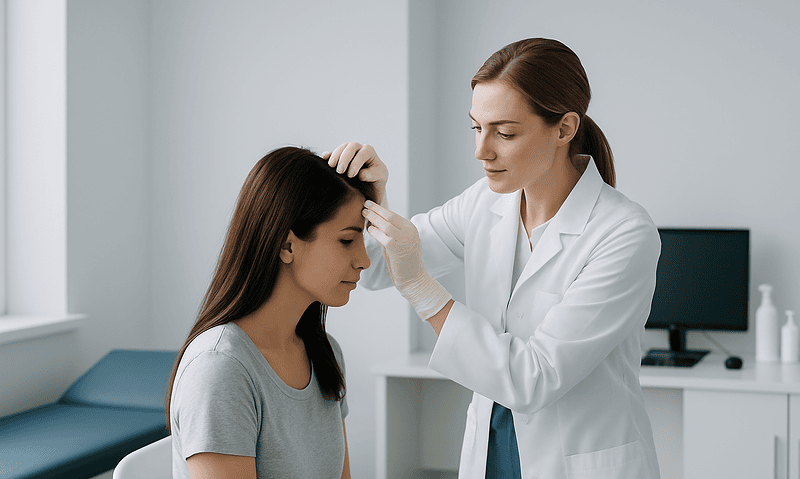
Why the Widening Part Guides Female Hair Transplant Planning in Female Pattern Hair Loss
A widening center part is the classic sign of female pattern hair loss, and it guides transplant planning because it shows where density is…

Female Hair Transplant Cost: How Unshaven Techniques Affect the Price
A female hair transplant using unshaven FUE or DHI typically falls in a guide range of EUR 3,250–6,500 for international patients treated in Turkey,…