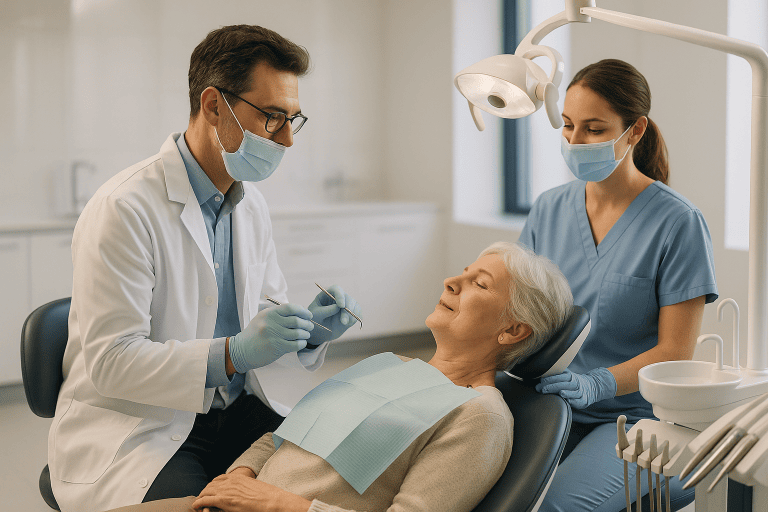
Fissure Sealants
Fissure sealants are thin resin or glass ionomer coatings applied to the pits and grooves on the chewing surfaces of molars and premolars, where toothbrush bristles cannot reach. By sealing these fissures,…
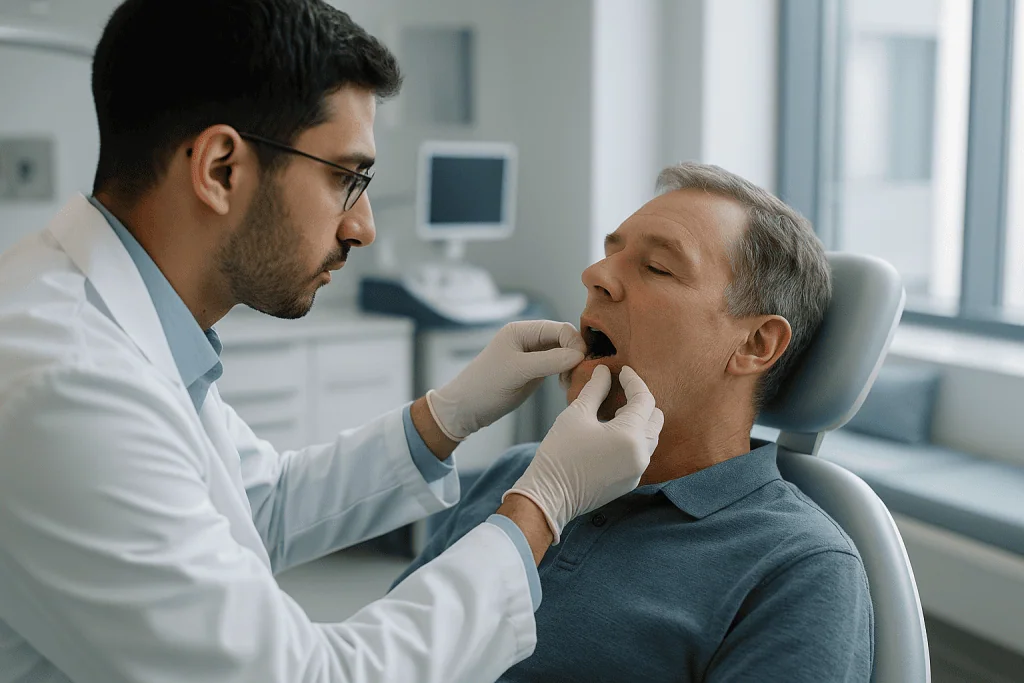
Quick answer
Fissure sealants are thin protective coatings painted onto the grooves of back teeth to keep out food and bacteria and help prevent tooth decay. The procedure is quick, painless, and usually needs no anesthesia. Sealants are most often placed on children's permanent molars, can last several years, and are checked and repaired at routine dental visits.
What are fissure sealants?
Fissure sealants are thin protective coatings that a dentist or dental hygienist paints onto the chewing surfaces of the back teeth (the molars and premolars). The chewing surfaces of these teeth have natural grooves and pits, which dentists call fissures. Some fissures are very narrow and deep, so toothbrush bristles cannot reach the bottom. Food debris and bacteria collect there, and this is where tooth decay (the softening and breakdown of tooth tissue caused by acid from bacteria) often begins.
A fissure sealant fills and smooths over these grooves with a plastic-like material, usually a resin (a hard-setting synthetic material) or a glass ionomer (a material that releases small amounts of fluoride). Once set, the sealant forms a physical barrier that keeps bacteria and food out of the fissure and makes the surface easier to clean.
Fissure sealants are a preventive treatment. They are used to help prevent decay in healthy teeth, or to stop very early decay that has not yet formed a cavity from getting worse. They are not used to repair teeth that already have established cavities; those teeth usually need a filling instead. Sealants are most commonly placed on permanent (adult) molars in children and teenagers, but they can also be used in adults and, in some cases, on baby teeth. In many hospital groups, including Acibadem, this care is provided through the Dental & Oral Health department.
Who is a candidate: who needs fissure sealants
Deciding who needs fissure sealants is an individual judgment made by a dentist after examining the teeth. In general, sealants are considered when:
- A child’s first permanent molars have come through, which usually happens around the age of six, or when the second permanent molars appear, often around age twelve.
- The fissures are deep or narrow, so they are difficult to keep clean with normal brushing.
- The person has a higher risk of tooth decay, for example because of previous cavities, a diet high in sugar, limited access to fluoride, a dry mouth, or difficulty brushing due to a disability or medical condition.
- Very early decay is visible in a fissure but has not yet broken through the enamel (the hard outer layer of the tooth). A sealant may be used to stop this early lesion from progressing.
Adults can also benefit, particularly if they have healthy molars with deep grooves and a history of decay. Fissure sealants are not usually suitable when:
- The tooth already has a cavity that has reached the dentin (the softer layer under the enamel); this needs a filling rather than a sealant.
- The tooth has not fully come through the gum, because the surface cannot be kept dry during placement and the sealant may not bond well. In this case the dentist may suggest waiting or using a fluoride-releasing material instead.
- The tooth already has a filling on the chewing surface.
- The person has a known allergy to a component of the sealant material, which is rare.
Your dentist may also decide that sealants are unnecessary for someone with shallow, easily cleaned fissures and a very low risk of decay.
How the fissure sealants procedure works
The fissure sealants procedure is simple, quick, and usually painless. It does not involve drilling into healthy tooth structure, and it does not require an injection or anesthesia (medicine to numb the area) in most cases.
Before the procedure
The dentist first checks the tooth to confirm that it is a suitable candidate. This may involve a visual examination, gently running a fine instrument over the grooves, and sometimes X-rays to rule out hidden decay. The dentist will explain what will happen and, for children, may show them the instruments so they know what to expect.
During the procedure
- Cleaning: The tooth is cleaned thoroughly to remove plaque (a sticky film of bacteria) and food particles from the fissures. This may be done with a small rotating brush and a polishing paste, or with a gentle spray.
- Isolation: The tooth is kept dry using cotton rolls, a small suction tube, or a thin rubber sheet called a dental dam. Keeping the tooth dry is important because moisture stops the sealant from sticking properly.
- Etching: A mild acid gel is applied to the chewing surface for a short time. This slightly roughens the enamel at a microscopic level so the sealant can bond to it. The gel is then rinsed away and the tooth is dried again.
- Applying the sealant: The liquid sealant is painted or dripped into the grooves, where it flows into the fissures.
- Setting: Most resin sealants are hardened with a special blue light held over the tooth for a few seconds. Some materials set on their own within a couple of minutes.
- Checking: The dentist checks that the sealant has set, that it covers all the grooves, and that the bite feels normal. Any excess material is smoothed or removed.
Each tooth typically takes only a few minutes. Several teeth are often sealed in a single visit.
After the procedure
You or your child can usually eat and drink straight away, although some dentists advise waiting a short time. The sealant is checked at routine dental visits and can be topped up or replaced if it wears or chips.
Preparation for fissure sealants
Very little preparation is needed for fissure sealants. The following points may help the visit go smoothly:
- Brush before the appointment. Clean teeth make the cleaning step quicker and easier.
- Mention any allergies. Tell the dental team about any known allergies, especially to plastics, resins, or latex, which may be used in gloves or the dental dam.
- Share the medical history. Let the team know about any medical conditions or medicines, even though these rarely affect sealant placement.
- Prepare a child. Explain in simple terms that the dentist will clean the tooth, paint on a coating, and shine a light on it. Reassure them that it does not hurt and there are no injections.
- Eat normally beforehand. Fasting is not required because no sedation or general anesthesia is used.
If a child is very anxious or has difficulty keeping their mouth open and dry, the dentist may suggest a shorter first visit, distraction techniques, or in some cases a fluoride-releasing glass ionomer sealant that is more tolerant of moisture.
Recovery and aftercare: fissure sealants recovery time
The fissure sealants recovery time is essentially immediate. Because the procedure does not involve cutting, drilling, or numbing, there is no wound to heal and no numbness to wear off. Most people return to school, work, and normal eating the same day.
Some things you may notice in the first days:
- A slightly different feel when biting. The sealed surface may feel a little smoother or slightly higher for a short time. This sensation typically settles within a few days as the material wears very slightly and the mouth adapts. If the bite still feels uneven after a week or so, the dentist can adjust it.
- A mild taste. Some people notice a brief unusual taste from the sealant material immediately after placement. This usually disappears quickly.
Simple aftercare helps sealants last longer:
- Continue brushing twice a day with a fluoride toothpaste, including the sealed teeth.
- Avoid chewing very hard objects such as ice, pen tops, or hard candies, and avoid very sticky sweets, which can pull at the edges of a sealant.
- Keep regular dental check-ups so the sealants can be examined and repaired if needed.
Sealants are not permanent. Many last several years, and some remain intact much longer, but they gradually wear with chewing. Reapplication is common and straightforward.
Fissure sealants risks and benefits
Understanding fissure sealants risks and benefits helps families make an informed choice. Overall, sealants are considered a very safe treatment with few side effects.
Potential benefits
- They create a barrier over the grooves most prone to decay.
- They make chewing surfaces easier to clean with a toothbrush.
- They are non-invasive, do not remove healthy tooth tissue, and do not usually require anesthesia.
- They can help arrest very early decay in a fissure so that a filling is not needed.
Possible risks and side effects
- Loss or chipping of the sealant. This is the most common issue. If part of a sealant comes off, the exposed groove can trap bacteria again, so it should be repaired. Regular check-ups catch this.
- Sealing over undetected decay. If decay is already present and is missed, it could in theory continue under the sealant. Careful examination before placement, and monitoring afterward, reduces this concern. Evidence generally suggests that well-sealed early lesions tend not to progress.
- Bite changes. A slightly high sealant can feel uncomfortable until it wears down or is adjusted.
- Allergic reaction. Reactions to sealant materials are rare but possible.
- Exposure to trace chemicals. Some resin sealants contain compounds related to bisphenol A (BPA). Any exposure is very small and short-lived, and major dental and health organizations consider sealants safe for children. Rinsing or wiping the tooth after placement further reduces exposure.
There are no serious complications commonly associated with fissure sealants. A sealant that is lost simply returns the tooth to its previous unsealed state.
Results and outlook
The evidence supporting fissure sealants is well established. Reviews of clinical studies generally show that sealants placed on the permanent molars of children and adolescents reduce the risk of decay on those chewing surfaces compared with leaving the teeth unsealed, and that the protective effect continues for as long as the sealant remains intact. Sealants are recommended by many national dental and public-health organizations as part of preventive care, especially for children at higher risk of decay.
Several factors influence how well a sealant performs:
- Placement technique, particularly keeping the tooth dry during application.
- The material used; resin sealants generally stay on longer, while glass ionomer materials release fluoride and can be useful when a tooth is hard to keep dry.
- The person’s habits, including diet, chewing on hard objects, and tooth grinding.
- Regular follow-up, so that worn or lost sealants are replaced promptly.
Sealants work best as one part of a wider prevention plan that includes fluoride toothpaste, a diet low in frequent sugar, and routine dental visits. They protect only the surface they cover; they do not prevent decay between teeth or along the gum line. Outcomes vary from person to person, and your dentist can discuss what to expect in your particular situation.
Cost considerations
Fissure sealants are generally among the least costly dental treatments because they are quick, use small amounts of material, require no anesthesia, and involve no hospital stay. Even so, the overall cost can vary, and several factors influence the price:
- Number of teeth sealed. Fees are usually charged per tooth, so sealing several molars costs more than sealing one.
- Type of material. Different resin and glass ionomer products have different costs.
- The examination. A check-up and any X-rays needed to confirm that the tooth is healthy may be charged separately.
- Follow-up and repair. Sealants that wear or chip may need touching up over the years, which adds to the long-term cost.
- Insurance and public programs. Many insurance plans and some public health schemes cover sealants for children, often with age limits. Coverage for adults varies.
Because sealants are preventive, they are often compared with the potential cost of treating decay later, such as fillings or more extensive restorations. Your dental provider can explain the fee structure that applies to you.
Frequently asked questions
Who needs fissure sealants the most?
Sealants are most often recommended for children and teenagers whose permanent molars have recently come through, especially if the grooves are deep or the child has already had decay. Adults with deep fissures and a history of cavities may also benefit. A dentist assesses each tooth individually, so not everyone needs sealants on every molar.
Does the fissure sealants procedure hurt?
In most cases the procedure is painless. There is no drilling into healthy tooth and no injection. Some people notice the taste of the etching gel or a cool feeling from the air used to dry the tooth, and children may dislike keeping their mouth open, but discomfort is uncommon.
What is the fissure sealants recovery time?
There is essentially no recovery period. Eating and drinking can usually resume right away, and normal activities are not affected. A slightly different bite sensation, if it occurs, typically settles within a few days.
What are the main fissure sealants risks and benefits?
The main benefit is a reduced chance of decay on the sealed chewing surfaces while the sealant is intact. The main risk is that the sealant may chip or come off and need replacing. Serious side effects are very rare, and any exposure to trace chemicals from resin materials is considered very small.
How long do fissure sealants last?
Sealants often last several years, and some remain in place much longer. Their lifespan depends on the material, how well the tooth was kept dry during placement, and habits such as chewing hard objects. Dentists check sealants at routine visits and repair them when needed.
Can fissure sealants be placed over a cavity?
Sealants are intended for healthy teeth or for very early decay that has not broken through the enamel. A tooth with an established cavity usually needs a filling. The dentist examines the tooth carefully, sometimes with X-rays, before deciding.
Are fissure sealants a substitute for brushing and fluoride?
No. Sealants protect only the grooves they cover. Brushing twice daily with fluoride toothpaste, limiting sugary snacks and drinks, and attending regular check-ups remain essential to protect the rest of the tooth and the gums.
When to see a doctor
A dentist should assess the teeth if you or your child has any of the following, whether or not sealants have been placed:
- New permanent molars have appeared and have not yet been checked.
- Dark spots, chalky white patches, or visible holes on the chewing surfaces of the back teeth.
- Sensitivity or pain when eating sweet, hot, or cold foods.
- Food repeatedly catching in a particular tooth.
- A previous sealant that feels rough, has a gap, or appears to have come off.
Serious problems after fissure sealants are very unusual, but the following situations should be evaluated promptly:
- Persistent toothache or pain on biting that does not settle within a few days, which could suggest decay under or near the sealant or a bite that needs adjusting.
- Signs of an allergic reaction, such as swelling of the lips, mouth, or face, a rash, or difficulty breathing. Difficulty breathing or facial swelling requires emergency medical care.
- A swollen gum, a bad taste, or a pimple-like bump near the tooth, which can indicate infection and needs dental assessment.
Routine follow-up remains the most reliable way to catch worn sealants early. Dental units such as Acibadem’s Dental & Oral Health department typically review sealants during regular check-ups and advise on whether repair or reapplication is needed.
Preparation
- Brush and floss before the appointment so the teeth are clean. Tell the dental team about any allergies, especially to resins, plastics or latex, and about any medical conditions. No fasting is needed because no sedation is used. For children, a simple explanation that the dentist will clean the tooth, paint on a coating and shine a light on it can reduce anxiety.
Aftercare
- Eating and drinking can usually resume immediately. Continue brushing twice daily with fluoride toothpaste and avoid chewing ice, hard candies or very sticky sweets that can damage the sealant. Attend regular dental check-ups so worn or chipped sealants can be repaired, and report any persistent bite discomfort or toothache.
Medically reviewed by the Acıbadem International Medical Board September 13, 2026
See our medical review board →
Update history
- PublishedSeptember 13, 2026
- Medical review approvedSeptember 13, 2026
- Last content updateSeptember 13, 2026
References3
From the Acibadem Blog

Fissure Sealant Appointment: How the Grooves Are Cleaned, Coated and Set in One Visit
A fissure sealant procedure is a short, non-invasive dental visit in which the deep grooves on the chewing surface of a back tooth are…