Hair Transplant Repair
Hair transplant repair corrects unsatisfactory previous hair restoration by improving hairline design, density, graft distribution, or scarring. Planning is individualized after donor area and scalp assessment.
Quick answer
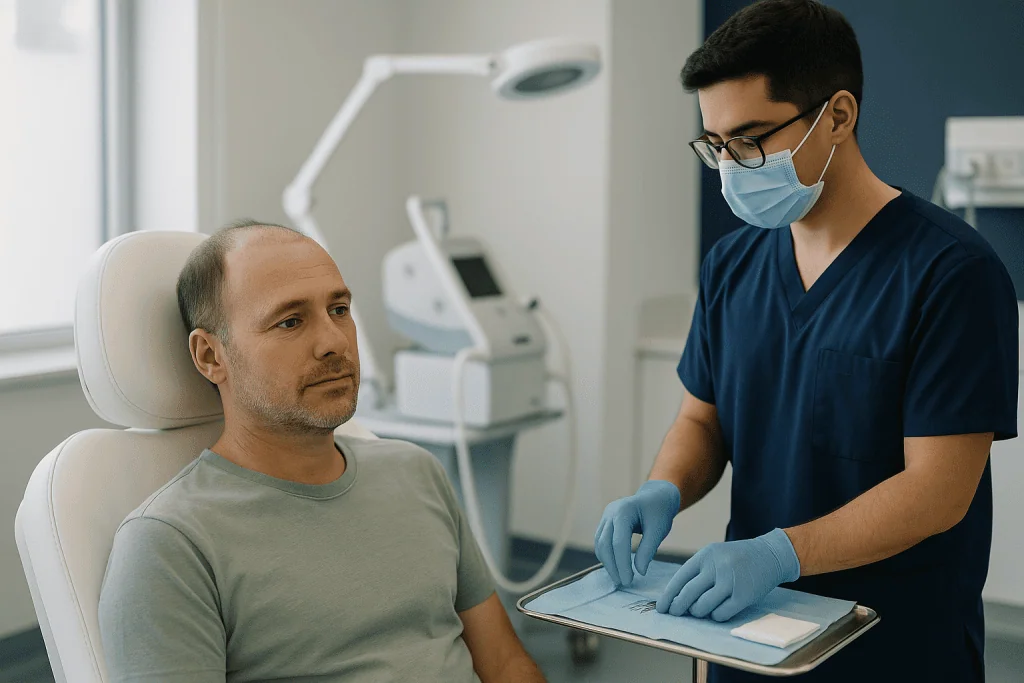
Hair transplant repair is a corrective procedure for unsatisfactory previous hair restoration, used to improve the hairline, density, graft placement, or visible scarring. At Acibadem in Turkey, treatment is planned individually after assessing the donor area and scalp, and may involve graft redistribution, camouflage techniques, scar revision, or a new transplant approach.
When a Previous Hair Transplant Does Not Look or Feel Right
A hair transplant is a personal decision. Many patients choose it after years of living with hair loss, comparing options, and hoping for a natural result that fits their face and age. When the outcome is disappointing, the emotional impact can be significant. Some people feel self-conscious about a hairline that appears too straight, too low, too high, or uneven. Others notice visible “pluggy” grafts, patchy density, unnatural angles, scarring in the donor area, or hair that does not blend with the surrounding scalp.
Hair transplant repair is designed for patients who have already undergone hair restoration but are not satisfied with the appearance, density, hairline design, graft placement, or scarring. It is not simply a second transplant. Repair requires careful analysis of what was done before, what donor hair remains available, how the scalp has healed, and what result can be achieved safely and realistically.
For international patients considering corrective treatment abroad, the decision can feel complex. You may be wondering whether the previous result can be improved, whether another procedure could make things worse, how many grafts may be needed, whether scars can be softened, and whether your donor area is still strong enough. These are appropriate concerns. A well-planned repair begins with a detailed medical and aesthetic assessment, not with a fixed number of grafts or a standard package.
At Acibadem, hair transplant repair is approached as an individualized reconstructive and aesthetic procedure. The goal is to improve naturalness, balance, density, and confidence while respecting the limitations of the donor area and the biology of hair growth. In some patients, correction may involve placing new follicular units with more appropriate direction and distribution. In others, it may include removing or camouflaging poorly placed grafts, revising scars, improving density in strategic zones, or combining surgical treatment with medical therapy to preserve existing hair.
What Is Hair Transplant Repair?
Hair transplant repair is a corrective hair restoration procedure performed after a previous hair transplant has produced an unsatisfactory cosmetic or functional result. It may address the recipient area, where transplanted hair was placed, the donor area, where grafts were harvested, or both.
The procedure is highly customized. In many cases, the main concern is the hairline. A natural hairline is not a simple line across the forehead. It has irregularity, age-appropriate height, soft transition zones, single-hair grafts at the front, and hair angles that follow natural growth patterns. When a hairline is built with large grafts, incorrect angles, excessive density in the wrong location, or an unsuitable shape, it may look artificial even if the transplanted hair survives well.
Hair transplant repair can also improve density problems. Some patients have wide gaps between grafts or uneven distribution that creates a see-through appearance. Others have depleted donor areas because too many grafts were removed in a prior procedure or harvesting was performed unevenly. Repair planning must therefore balance the desire for greater coverage with the need to protect remaining donor resources.
Common repair techniques may include additional follicular unit transplantation using grafts from the scalp donor area, redistribution of grafts to improve the hairline and frontal zone, removal or refinement of large or misplaced grafts, scar camouflage with carefully placed follicular units, and, in selected patients, scar revision. In some cases, non-surgical treatments may be recommended to stabilize ongoing hair loss before or after the repair procedure.
The most important difference between a standard first-time transplant and a repair procedure is complexity. The surgeon must work with tissue that has already been altered, understand previous graft patterns, evaluate scar tissue and blood supply, and plan for future hair loss. A conservative, evidence-based strategy is essential because donor hair is limited and cannot be replaced once overused.
Who May Need Hair Transplant Repair?
Patients seek hair transplant repair for many reasons. Some notice problems soon after the initial growth phase, while others become dissatisfied years later as natural hair loss progresses around the transplanted area. Repair may be appropriate when the result appears unnatural, when density is inadequate, when scarring is visible, or when the donor area has been affected by poor harvesting.
Typical concerns include a hairline that looks harsh, straight, rounded, low, asymmetrical, or inconsistent with the patient’s facial proportions. Some patients describe visible “doll-like” or “pluggy” grafts, especially in procedures performed with older techniques or with grafts placed too densely in unnatural groupings. Others are troubled by grafts that grow in the wrong direction, such as hairs pointing outward, upward, or in a pattern that does not match native hair.
Repair may also be considered when transplanted hair has grown but does not provide enough coverage. This can happen if the original procedure used too few grafts, if the grafts were poorly distributed, if survival was limited, or if ongoing hair loss reduced surrounding density. In other patients, the recipient area may look patchy because grafts were placed irregularly or because the scalp has scar tissue from previous surgery.
Donor area concerns are also common. Patients may notice a wide linear scar after strip harvesting, multiple visible dot-like scars after follicular unit extraction, thinning or overharvesting at the back and sides of the scalp, or an uneven donor appearance when hair is cut short. The repair plan must assess whether these concerns can be improved through scar revision, scar camouflage, careful redistribution, or changes in hairstyle expectations.
How the Need for Repair Is Diagnosed
Diagnosis begins with a detailed consultation and scalp assessment. The medical team evaluates the hairline design, graft size and placement, density, direction of growth, donor availability, scalp laxity, scar quality, and overall pattern of hair loss. High-resolution photography and dermoscopic scalp evaluation may be used to assess hair caliber, follicular unit density, miniaturization, and the condition of the donor area.
The patient’s history is equally important. Your physician will ask when the previous transplant was performed, which technique was used if known, how many grafts were placed, whether there were complications, how the hair grew, and whether you are using medical treatments for hair loss. If previous records or photographs are available, they can be helpful, but repair planning can still be performed without them in many cases.
Because hair transplant repair is partly medical and partly aesthetic, a good assessment also considers the patient’s age, facial structure, hair characteristics, expectations, and likely future hair loss. The objective is to create a plan that improves the current concern while remaining appropriate over time.
Conditions and Indications Addressed by Hair Transplant Repair
Hair transplant repair can address a broad range of concerns after previous hair restoration. The appropriate approach depends on the cause of the problem, the quality of the donor area, the location of transplanted hair, and the condition of the scalp.
- Unnatural hairline design: A hairline that is too low, too straight, too rounded, too dense at the front, or poorly matched to facial proportions.
- Pluggy or large graft appearance: Older or poorly refined grafts may create visible clusters of hair instead of a soft, natural transition.
- Incorrect hair direction or angle: Hair that grows in an unnatural orientation can be difficult to style and may draw attention to the transplant.
- Low or uneven density: Patchy areas, gaps, or inadequate coverage may occur after a limited or poorly distributed transplant.
- Progressive hair loss after transplant: Native hair may continue to thin around transplanted hair, creating an isolated or unnatural appearance.
- Visible donor scarring: Linear scars, widened scars, dot scarring, or uneven donor thinning may be improved in selected patients.
- Overharvested donor area: Excessive removal of grafts can leave the donor region visibly thin, requiring careful assessment and realistic planning.
- Scalp scarring or texture changes: Previous surgery, inflammation, or poor healing may affect how new grafts can be placed.
- Unsuitable graft distribution: Too many grafts in one area and too few in another may require strategic redistribution or additional placement.
Not every issue can be completely reversed, and not every patient is a candidate for further surgery. When donor hair is limited or scalp conditions are unfavorable, the repair plan may focus on modest but meaningful improvements, camouflage, medical stabilization, or alternative grooming strategies. A responsible recommendation includes both what can be improved and what should be avoided.
How Hair Transplant Repair Is Performed
Hair transplant repair is performed in stages, beginning with planning. The details differ from patient to patient, but the process generally includes consultation, diagnostic assessment, treatment design, donor planning, the repair procedure, and follow-up through the hair growth cycle.
Preparation and Treatment Planning
Before surgery, the medical team evaluates the scalp and reviews your goals. Photographs are taken from standardized angles to document the hairline, temples, mid-scalp, crown, donor area, and any scars. The surgeon assesses the remaining donor capacity and decides whether further graft harvesting is appropriate. This step is critical because repair procedures often depend on limited donor reserves.
Planning may include marking a revised hairline, identifying grafts that need to be camouflaged or removed, selecting priority zones for density improvement, and determining whether scar treatment is needed. In some cases, the repair is best performed in more than one session, especially if large grafts need to be removed and the area must heal before new grafts are placed.
Patients may be advised to begin or continue medical therapy for androgenetic hair loss if appropriate. Treatments such as topical or oral medications may help preserve native hair and support a more stable long-term result, although suitability depends on medical history and physician evaluation. Smoking cessation, management of scalp inflammation, and review of blood-thinning medications may also be part of preparation.
The Procedure Itself
Most hair transplant repair procedures are performed under local anesthesia, sometimes with sedation depending on the patient’s needs and the scope of treatment. The surgical plan may use follicular unit extraction, strip-based harvesting in selected cases, graft removal, scar revision, scar camouflage, or a combination of techniques.
When additional grafts are required, follicular units are harvested from the donor area with careful spacing to avoid creating new thinning. The grafts are prepared under magnification so that single-hair, two-hair, and multi-hair follicular units can be placed in the correct zones. For natural hairline repair, single-hair grafts are typically used at the leading edge, while larger follicular units may be placed behind them to support density.
If the previous hairline contains large or misplaced grafts, the surgeon may remove selected grafts using small punches or excision techniques. These grafts may sometimes be dissected and reused, depending on their quality. Removal can soften an unnatural hairline, reduce visible clumping, and create room for a more refined transition zone. In other cases, rather than removing older grafts, the surgeon may camouflage them by placing finer grafts in front and around them.
For scar repair, treatment depends on the type and location of the scar. A widened linear scar may be revised surgically in selected patients if scalp laxity allows. Alternatively, or later, follicular units can be placed into the scar to help break up its visibility. Dot scarring or overharvested areas may be camouflaged with carefully distributed grafts, although this must be planned cautiously to avoid further donor depletion.
Technology Used in Hair Transplant Repair
Modern hair transplant repair relies on detailed visualization, precise planning, and careful graft handling. Digital photography and magnified scalp assessment help document hair density, hairline geometry, scar patterns, and donor quality. Dermoscopy or trichoscopic assessment may be used to evaluate follicular unit density, hair shaft caliber, miniaturization, and the health of the scalp.
During the procedure, magnification supports graft preparation and placement accuracy. Fine surgical instruments allow the team to create recipient sites that respect natural hair angles, direction, and spacing. Controlled graft storage and hydration are important to maintain graft viability while the procedure is underway. In repair work, precision matters because the surgeon is often placing grafts between existing hairs or within scarred tissue.
The procedure duration varies according to complexity. A focused scar camouflage or small hairline refinement may take several hours. A larger repair involving donor harvesting, graft redistribution, and density improvement can take most of the day. Patients are usually able to return to their accommodation the same day with written instructions and follow-up guidance.
Recovery Process
Recovery after hair transplant repair is usually manageable, but it requires patience. Mild swelling, redness, tenderness, and scabbing can occur in the recipient and donor areas. Most patients can perform light activities within a few days, depending on the extent of the procedure and their physician’s advice. Strenuous exercise, swimming, direct sun exposure, and activities that may rub or traumatize the grafts are restricted during the early healing period.
Transplanted hairs often shed in the first weeks after surgery. This is an expected part of the hair growth cycle and does not necessarily indicate graft failure. New growth typically begins gradually over several months, with visible improvement developing progressively. Final cosmetic maturation can take a year or longer, particularly in areas of scar tissue or complex repair.
Why Acting Early Matters
Hair transplant repair does not always need to be urgent, but timely evaluation is important. Many patients wait because they hope the appearance will improve on its own, or because they are hesitant to undergo another procedure. While some early irregularities can soften as hair matures, persistent problems after the normal growth period should be assessed by an experienced physician.
Delaying evaluation can make planning more difficult if ongoing hair loss continues untreated. Native hair may thin around transplanted hair, exposing an unnatural pattern. Donor hair may become more limited over time, especially if additional procedures are performed without careful strategy. In patients with scarring, chronic inflammation, or scalp disease, untreated conditions may reduce the chance of successful graft growth.
Early consultation also helps prevent unnecessary or excessive surgery. A patient with limited donor reserves may benefit more from a conservative repair plan than from aggressive graft harvesting. A patient with active hair loss may need medical stabilization before surgery. A patient with a very low or unnatural hairline may require staged correction rather than immediate dense packing. The sooner these factors are understood, the better the treatment plan can be aligned with long-term appearance.
There are also psychological benefits to obtaining a clear medical opinion. Many patients feel stuck between dissatisfaction and uncertainty. A structured assessment can clarify whether the issue is correctable, what techniques may be appropriate, how much improvement is realistic, and what risks should be considered before proceeding.
Benefits of Hair Transplant Repair
When carefully planned, hair transplant repair can improve the natural appearance of prior hair restoration and help patients feel more comfortable with their hair in daily life.
| Benefit | What It Means for You |
|---|---|
| More natural hairline design | Refinement of shape, irregularity, and graft selection can soften an artificial or harsh hairline. |
| Improved density balance | Strategic placement of additional grafts can reduce patchiness and create better visual coverage where donor supply allows. |
| Correction of visible graft problems | Large, misplaced, or poorly angled grafts may be removed, redistributed, or camouflaged for a more natural appearance. |
| Scar improvement | Selected donor or recipient scars may be revised or camouflaged with follicular units to reduce visibility. |
| Better long-term planning | A repair consultation considers future hair loss, remaining donor hair, and realistic priorities rather than focusing only on the immediate concern. |
| Greater styling confidence | Improved direction, density, and blending may make the hair easier to style and less likely to draw attention. |
Recovery Timeline After Hair Transplant Repair
Recovery varies according to the extent of correction, scar tissue, and the techniques used, but many patients follow a general healing and growth pattern.
| Time Period | What Patients Can Expect |
|---|---|
| Day 1 | You may have mild tenderness, redness, and small scabs in the treated areas. Most patients return to their hotel or home the same day with detailed care instructions. |
| First Week | Swelling and redness usually begin to settle. Gentle washing is introduced as directed. Patients avoid rubbing, scratching, strenuous exercise, and direct sun exposure. |
| First Month | Many transplanted hairs shed, which is expected. The scalp continues to normalize, and most daily activities can usually resume with physician approval. |
| Three to Six Months | Early new growth may begin. Hair can appear fine or uneven at first, and improvement develops gradually rather than all at once. |
| First Year | Density, texture, and styling options typically continue to improve. Scar areas or complex repairs may mature more slowly. |
| Longer Term | Ongoing hair loss management may be needed to preserve surrounding native hair and maintain a balanced appearance over time. |
Factors That Influence Outcomes
The outcome of hair transplant repair depends on several medical, surgical, and individual factors. One of the most important is donor availability. Hair used for transplantation is usually taken from the permanent zone at the back and sides of the scalp. If this area has been overharvested or scarred, the number of usable grafts may be limited. A responsible repair plan protects the donor area and uses available grafts where they can create the greatest visual benefit.
Hair characteristics also influence the result. Coarser hair may provide more coverage than fine hair, while curly or wavy hair can create a fuller appearance than straight hair. Hair and skin color contrast matters as well; lower contrast often makes thinning less visible. These factors affect how many grafts are needed and how dense the result may appear.
The condition of the recipient area is equally important. Scar tissue may have reduced blood supply compared with untreated scalp, which can affect graft growth. Previous inflammation, infection, or repeated procedures may influence healing. For this reason, graft placement in scarred areas may be planned more cautiously, sometimes in stages.
The type of problem being corrected also matters. Camouflaging an unnatural hairline may be more predictable when there is enough space and donor hair to create a soft transition. Removing large grafts can improve appearance, but it may require more than one session and may leave small marks that need time to heal. Scar camouflage can reduce visibility, but the degree of improvement depends on scar width, depth, color, and blood supply.
Patient expectations are a major part of a good result. Hair transplant repair can often improve naturalness and balance, but it cannot always restore unlimited density or erase every sign of previous surgery. The best plans are honest about priorities: what should be corrected first, what can be improved later, and where further surgery may not be advisable.
Long-term success also depends on management of ongoing hair loss. If androgenetic hair loss continues, native hair may thin around transplanted areas. Medical therapy, follow-up, and realistic planning help reduce the risk of an initially improved result becoming unbalanced over time. For some patients, the most effective strategy combines repair surgery with a long-term preservation plan.
Finally, surgical judgment plays a central role. In repair cases, more grafts are not always better. Naturalness depends on angle, direction, graft selection, spacing, and artistic design as much as density. A careful surgeon places grafts in a way that respects the face, age, donor limits, and future hair loss pattern.
Why International Patients Choose Acibadem for Hair Transplant Repair
International patients considering hair transplant repair often seek more than a technical procedure. They need a careful medical opinion, clear communication, and a coordinated treatment experience in a country they may be visiting for the first time. Acibadem Hospitals in Turkey provide hair restoration services within a broader healthcare system that is accustomed to caring for patients from many countries.
Acibadem’s approach begins with individualized assessment. The medical team evaluates the previous transplant, donor area, scalp condition, hair loss pattern, and patient goals before recommending a repair strategy. This is particularly important for corrective cases, where the safest plan may differ from what the patient originally expected. Some patients are candidates for a focused refinement; others require staged treatment or medical stabilization before surgery.
Care is supported by hospitals that hold international accreditation and follow evidence-based clinical standards. When needed, patients can be assessed by related specialists, such as dermatologists for scalp disease, plastic surgeons for scar concerns, or other physicians for medical conditions that may affect healing. This multidisciplinary access is valuable when repair involves scarring, inflammation, previous complications, or complex decision-making.
Technology is used to support precision and planning rather than to replace clinical judgment. Detailed photography, magnified scalp assessment, refined graft preparation, and precise implantation techniques help the team design a correction that respects natural hair direction and donor limitations. For international patients, this structured diagnostic pathway can make the consultation more informative and the treatment plan easier to understand.
Another important consideration is communication. Acibadem International provides dedicated services for patients traveling from abroad, including assistance in multiple languages, appointment coordination, hospital navigation, and practical support before and during the visit. Clear pre-travel instructions help patients understand how long they may need to stay, what medical information to send in advance, what to expect on the day of treatment, and how follow-up communication will be handled after returning home.
Experienced physicians are central to repair work. Corrective hair transplantation requires aesthetic judgment, technical precision, and the restraint to avoid overusing donor hair. The physician must decide whether to add grafts, remove grafts, revise a scar, camouflage a problem, or advise against further surgery in certain areas. At Acibadem, treatment plans are personalized to the patient’s anatomy, previous surgery, medical history, and long-term goals.
For many patients from the United States and other countries, Turkey is associated with hair transplantation. However, the quality of care can vary widely between providers. Patients seeking repair should be especially selective, because donor hair may already be limited and previous scarring may make treatment more complex. Choosing a hospital-based environment with structured assessment, physician-led planning, and coordinated international patient services can be particularly important for a corrective procedure.
Taking the Next Step With Confidence
An unsatisfactory hair transplant can be frustrating, but it does not always mean you must accept the result as it is. In many patients, careful repair can improve hairline softness, density balance, graft distribution, scar visibility, and overall naturalness. The right plan begins with a detailed assessment of what has been done before and what can be safely improved now.
If you are considering hair transplant repair, it can be helpful to gather photographs of your current hair from several angles, any records from your previous procedure, and a clear description of what bothers you most. A consultation or second opinion can clarify whether you are a candidate for repair, which techniques may be appropriate, how recovery may affect travel plans, and what type of improvement is realistic for your individual situation.
Acibadem’s international patient team can help coordinate the evaluation process and guide you through the practical steps of planning care in Turkey. A physician review is the best way to understand your options and to build a repair strategy that respects your appearance, donor area, and long-term hair health.
This information is general and is not a substitute for professional medical advice. Diagnosis and treatment recommendations should be made by a qualified physician after an individual medical evaluation.
Preparation
- A specialist evaluates the previous transplant, donor capacity, scalp condition, hairline, and patient expectations. Photos and medical history are reviewed, and a staged repair plan may be recommended. Patients may be asked to stop blood-thinning medicines, avoid alcohol and smoking, and follow hair-washing instructions before the procedure.
Aftercare
- Mild swelling, redness, crusting, or tenderness can occur for several days after repair. Patients should protect the scalp from trauma and sun exposure, avoid strenuous exercise as advised, and use prescribed sprays or medicines. Follow-up visits help monitor healing and hair growth progress.
Frequently Asked Questions
What affects the cost of hair transplant repair?
The main factors are the complexity of the previous result, donor area condition, amount of correction needed, chosen technique, surgeon involvement, hospital standards, and aftercare needs. Travel, accommodation, interpreter support, and medication planning can also affect the total cost.
How can I get a personalised quote?
You can request a free consultation and share clear photos, previous procedure details, medical history, and your goals. A specialist can then assess whether repair is suitable and provide a personalised plan and quote.
Why is repair often different from a first hair transplant?
Repair may involve working around previous grafts, scarring, limited donor reserves, and altered scalp tissue. This can make planning more complex and may require a staged or combined approach.
Does a package usually include travel support?
Package content varies by provider. International patient programs may include care coordination, hotel guidance, transfers, interpreter support, medications, and follow-up instructions, but inclusions should be confirmed in writing before booking.
Is the lowest quote the best option for repair?
Not necessarily. Hair transplant repair requires careful planning and donor preservation. Patients should compare the medical team, revision experience, facility standards, aftercare, and what is included, not only the quoted cost.
Medically reviewed by the Acıbadem International Medical Board September 8, 2026
See our medical review board →
Update history
- PublishedJune 8, 2026
- Medical review approvedSeptember 8, 2026
- Last content updateSeptember 8, 2026
References1
- Hair transplant medlineplus.gov
Planning tools for this treatment
Indicative figures for orientation only: your written plan and quote follow a free medical review.
Trusted care for international patients
Compare options, costs and recovery
Hair transplant cost in Turkeyledger-based guide ranges, or browse the full Turkey Medical Price Index.
From the Acibadem Blog

Why Hair Transplant Repair Is Often Staged: Sequencing Graft Removal, Redesign and Regrafting
Hair transplant repair is usually staged because each step changes the conditions for the next. Misplaced grafts are typically removed first, the scalp is…

Healing After Hair Transplant Repair: Normal Crusting and Tenderness vs Signs to Call Your Team
After hair transplant repair, fine crusts around each graft, mild tenderness, scalp tightness and patchy numbness are expected during the first one to two…