Strabismus Disorders Treatment
Strabismus disorders cause misaligned eyes, affecting binocular vision and appearance. Treatment in Turkey may include glasses, patching, eye exercises, botulinum toxin, or corrective eye muscle surgery.
Quick answer
Strabismus disorders are conditions in which the eyes do not point at the same target, one eye turns inward, outward, upward or downward, constantly or intermittently. Treatment depends on the cause and may involve glasses, patching, prism lenses, eye exercises, botulinum toxin injection or eye muscle surgery. The aim is to improve alignment, protect visual development in children and reduce double vision in adults.
Strabismus Disorders: When Eye Alignment Affects Vision and Daily Life
Strabismus disorders are conditions in which the two eyes do not point at the same target. One eye may turn inward, outward, upward or downward, either constantly or only some of the time. Treatment ranges from glasses, patching and prism lenses through to botulinum toxin injection and corrective eye muscle surgery, and the right approach depends on the type of misalignment, its cause and the age of the patient.
Strabismus is more than an eye that appears to turn. For children, it can affect how the brain learns to use both eyes together, and untreated misalignment can lead to amblyopia, reduced vision in one eye. For adults, strabismus can cause double vision, eye strain, headaches, loss of depth perception and social discomfort. Many patients and families begin looking into strabismus disorders when they notice that one eye does not consistently look in the same direction as the other, when photographs repeatedly show an eye turn, or when everyday activities such as reading, driving, sport or screen use become harder than they should be.
It is natural to feel anxious when the eyes are involved. Parents may worry about whether their child’s vision will develop normally. Adults may wonder whether eye misalignment is a sign of a neurological problem, whether surgery will change their appearance too much, or whether double vision can be improved. These are reasonable questions, and honest answers depend on careful measurement, not on the visible direction of the eye turn alone.
Strabismus is highly individual. The same visible eye turn can have different causes, and two patients with similar diagnoses may need different treatment plans. Some cases are managed with glasses, patching, eye exercises or prism lenses. Others require botulinum toxin injection or corrective eye muscle surgery. The goal is not simply to “straighten the eye”, but to support the best possible visual function, comfort, alignment and long-term stability for each patient.
At Acibadem, patients with strabismus are evaluated through a detailed ophthalmological pathway that considers eye health, vision development, eye movement, neurological factors, previous treatments and personal goals. This planning matters because the most appropriate treatment depends on the type of strabismus, the patient’s age, the degree of misalignment, the potential for binocular vision and whether the condition is stable or changing.
What are the symptoms of strabismus and how is it treated?
The main symptom of strabismus is a visible misalignment of the eyes; other symptoms include double vision, closing one eye to see clearly, tilting or turning the head, poor depth perception and eye strain, and treatment ranges from glasses and patching to prisms, botulinum toxin injection and eye muscle surgery. In children, the misalignment itself may be the only obvious sign, because a child’s brain can suppress the image from the turned eye rather than experience double vision. That suppression is precisely why childhood strabismus needs attention: it can quietly interfere with visual development. In adults, whose visual systems are already mature, double vision is more common, and symptoms tend to be functional, difficulty reading, discomfort with screens, problems judging distances or fatigue by the end of the working day. Which treatment is right depends on what is driving the misalignment, which is why an accurate diagnosis always comes before a treatment decision.
What Strabismus Treatment Involves
Strabismus treatment refers to the medical, optical and surgical methods used to correct or manage misalignment of the eyes. In normal binocular vision, both eyes point at the same target and the brain combines the two images into one three-dimensional view. In strabismus, the eyes are not aligned in the same direction, so the brain receives two mismatched images. Depending on age and adaptation, the result is double vision, suppression of one eye, or a mixture of both. You can read more about the interventions themselves on our strabismus treatment page; the summary below explains how the options fit together.
Treatment aims to improve eye alignment and, wherever possible, restore or protect binocular vision. In children, treatment also focuses on preventing or treating amblyopia, often called “lazy eye”, which occurs when the brain favours one eye and visual development in the other eye becomes reduced. In adults, treatment more often focuses on reducing double vision, widening the field of comfortable single vision, relieving strain and improving appearance.
Common treatment options include:
- Glasses or contact lenses: Correcting farsightedness, nearsightedness or astigmatism can reduce certain types of eye turning, especially accommodative esotropia in children, where the effort of focusing drives the eyes inward.
- Patching or penalisation therapy: Covering or blurring the stronger eye can help improve vision in an amblyopic eye, particularly in childhood, by forcing the brain to use the weaker eye.
- Prism lenses: Prisms shift the image so the eyes do not have to work as hard to align it. They can help selected patients with small or moderate deviations, especially when double vision is present.
- Orthoptic exercises: Structured eye exercises can be useful for specific coordination problems, such as convergence insufficiency, but they are not appropriate for every type of strabismus.
- Botulinum toxin injection: In selected cases, a medication is injected into an eye muscle to weaken it temporarily and rebalance alignment.
- Strabismus surgery: Eye muscle surgery adjusts the position or tension of one or more extraocular muscles to improve alignment.
Strabismus treatment is not one-size-fits-all. A child with an eye turn related to a focusing problem may need glasses before any surgical decision is made. An adult with recent-onset double vision may require neurological assessment before any eye muscle treatment is considered. A patient who had childhood surgery may need a more complex reoperation plan, because earlier surgery changes the anatomy the surgeon will encounter. Accurate diagnosis is the foundation of appropriate care, and it sometimes takes more than one visit to establish.
Types of Strabismus
Types of strabismus are usually described by the direction of the eye turn, by whether the misalignment is constant or intermittent, and by whether it began in childhood or later in life. These distinctions matter, because each pattern has its own typical causes, natural course and treatment logic.
What are the three types of strabismus?
The three types of strabismus most commonly described are esotropia (an eye turning inward), exotropia (an eye turning outward) and vertical strabismus, in which one eye sits higher (hypertropia) or lower (hypotropia) than the other. In practice, ophthalmologists refine this classification further. Esotropia can be infantile, accommodative, partially accommodative or acquired in adulthood. Exotropia is often intermittent at first, appearing with fatigue, illness or distance viewing, and may become more constant over time. Vertical deviations frequently point to a specific muscle or nerve problem, such as a fourth cranial nerve palsy, or to a restrictive process such as thyroid eye disease. Some patients also have torsional misalignment, where one eye is rotated relative to the other: this is harder to see from the outside but can cause tilted or doubled images.
Beyond direction, two other distinctions shape treatment. The first is constancy: an intermittent deviation that the patient can still control is managed differently from a constant one. The second is comitance: in comitant strabismus the angle of deviation is roughly the same in all directions of gaze, while in incomitant strabismus the angle changes depending on where the patient looks. Incomitant patterns often suggest a nerve palsy, a restrictive process or a mechanical problem, and they usually require a broader medical work-up before any corrective treatment.
What Causes Strabismus Disorders
Strabismus disorders arise when the finely balanced system that keeps both eyes on the same target breaks down. That system involves the six extraocular muscles attached to each eye, the cranial nerves that drive those muscles, the brain centres that coordinate eye movements, and the optical clarity of each eye. A problem at any of these levels can produce misalignment, which is why the same visible eye turn can have very different underlying explanations. The questions below are among the most common that patients ask, and each deserves a direct answer.
Is strabismus a genetic disorder?
Strabismus is not a single genetic disorder, but genetics clearly play a role: strabismus often runs in families, and a child with a parent or sibling who had an eye turn has a higher chance of developing one. In most families the inheritance pattern is complex rather than caused by a single gene, and having a family history does not mean a child will definitely develop strabismus: it means the child benefits from earlier and more attentive eye examinations. A smaller group of patients has strabismus as part of a defined genetic syndrome, which is one reason a thorough medical history is part of every evaluation.
Is strabismus a neurological disorder?
Strabismus is not automatically a neurological disorder, but some forms of strabismus are neurological in origin, which is why new or changing misalignment, particularly in an adult, is investigated as a medical finding, not merely an optical one. Most childhood strabismus reflects a problem in how the developing brain coordinates the two eyes, or an optical problem such as uncorrected farsightedness, rather than disease of the brain itself. However, when strabismus appears suddenly, is accompanied by other symptoms, or follows a distinctive incomitant pattern, the ophthalmologist looks carefully for a neurological cause before planning any correction.
What neurological issues cause strabismus?
Neurological issues that can cause strabismus include palsies of the third, fourth or sixth cranial nerves, stroke and other vascular events, raised intracranial pressure, head trauma, tumours affecting the eye movement pathways, and conditions such as myasthenia gravis that affect the connection between nerve and muscle. Cranial nerve palsies are a particularly important group: the sixth nerve moves the eye outward, the fourth nerve controls a muscle responsible for vertical and rotational movement, and the third nerve drives most of the remaining muscles as well as the eyelid and pupil. Damage to any of them produces a characteristic pattern of misalignment and double vision. Some patients with broader neurological conditions affecting motor control may also show eye movement problems, which is why ophthalmology sometimes works alongside teams managing movement disorders. Identifying, or excluding, a neurological cause always comes before deciding how to correct the eye position.
Is strabismus a refractive disorder?
Strabismus is not itself a refractive disorder, but uncorrected refractive error can cause or worsen certain types of strabismus, most notably accommodative esotropia in children. A refractive disorder means the eye does not focus light correctly, farsightedness, nearsightedness or astigmatism. In accommodative esotropia, a farsighted child has to make an extra focusing effort to see clearly, and because focusing and eye convergence are neurologically linked, that effort pulls the eyes inward. In these children, wearing the full glasses prescription can substantially reduce or control the eye turn. This is also why an accurate refraction, often measured with dilating drops in children, is a standard early step in every strabismus evaluation, and why glasses are sometimes the treatment rather than merely an accessory to it.
Which conditions can include strabismus as a feature?
Strabismus can appear as a feature of many broader conditions, including cerebral palsy, Down syndrome and other genetic syndromes, prematurity and low birth weight, hydrocephalus, and some children with wider developmental differences. Parents sometimes ask whether an eye turn seen together with speech delay or sensory processing differences points to a single unifying diagnosis; there is no one disorder that combines these features, but children with developmental conditions do have strabismus more often than average, which is why vision and eye alignment checks are a routine part of comprehensive care for children evaluated for autism spectrum disorders in neurology or other developmental concerns. In adults, thyroid eye disease is a common systemic cause: inflammation stiffens the eye muscles and physically restricts movement, producing misalignment. Because thyroid eye disease sits at the junction of ophthalmology and endocrinology, its management is often coordinated with specialists in hormonal disorders.
Who May Need Strabismus Evaluation
Patients may need strabismus evaluation when the eyes do not appear to work together consistently, or when symptoms suggest a problem with binocular vision. Some cases are visible early in life, while others develop after childhood, illness, trauma, eye surgery or neurological disease. In some patients, the eye turn is intermittent and appears only when tired, unwell, focusing at near distance or looking in a specific direction.
Common signs and symptoms include:
- An eye that turns inward, outward, upward or downward
- Eye misalignment that becomes more noticeable in photographs
- Double vision, particularly in adults or older children
- Closing or covering one eye in bright light or during reading
- Tilting or turning the head to see more comfortably
- Poor depth perception or difficulty with sport and stairs
- Eye strain, headaches or fatigue with near work
- Reduced vision in one eye, especially in children
- Difficulty reading or maintaining focus at close range
In infants, some eye crossing can be seen in the first months of life as coordination matures, and it usually settles on its own. A constant eye turn, an eye that does not move normally, a white pupil reflex, a drooping eyelid or an abnormal head posture is different: these findings are not part of typical development and generally reflect an underlying problem that examination can identify. Some infants only appear to have crossed eyes because a wide, flat nasal bridge or prominent inner eyelid skin folds cover part of the white of the eye: a harmless appearance called pseudostrabismus, which light-reflex and cover testing can reliably distinguish from a true eye turn.
What are the causes and symptoms of intermittent strabismus in adults?
Intermittent strabismus in adults is most often a childhood tendency, commonly intermittent exotropia, that the visual system controlled for years and now controls less reliably; symptoms typically include an eye drifting outward when tired, unwell or unfocused, intermittent double vision or blurred vision, eye strain, difficulty concentrating on near work, and light sensitivity that makes the person close one eye outdoors. Control tends to worsen with fatigue, alcohol, illness or long hours on screens, which is why many adults notice the drift at the end of the day. Less commonly, intermittent misalignment in an adult reflects a new medical problem, such as a partial nerve palsy, early thyroid eye disease, decompensating muscle imbalance or a condition affecting nerve-muscle transmission. The distinction matters: a long-standing, slowly decompensating deviation is approached quite differently from a new one, so the evaluation includes a careful history of when the misalignment started, old photographs when available, and measurements in different gaze positions.
How is strabismus diagnosed?
Strabismus is diagnosed through a complete eye examination that measures visual acuity, refractive error, eye alignment at distance and near, eye movements and binocular function, together with a health check of the front and back of each eye. The ophthalmologist uses cover tests and prisms to measure the size and direction of the deviation, and assesses alignment in different gaze positions to distinguish comitant from incomitant patterns. In children, cycloplegic refraction is often performed using eye drops that temporarily relax focusing, allowing a more accurate measurement of the glasses prescription and an examination of the retina.
Additional testing may be needed when strabismus appears suddenly, progresses rapidly, is associated with neurological symptoms or follows trauma. Depending on the case, this may include imaging of the brain or orbit, neurological consultation, laboratory testing or assessment by related specialists. The purpose is to distinguish common eye alignment disorders from conditions that require prompt medical management, such as cranial nerve palsy, thyroid eye disease, orbital disease, stroke-related problems or tumours.
Patients also seek strabismus care when previous treatment did not fully resolve alignment, when the eye turn recurs later in life, or when a childhood condition begins to interfere with adult work and social interaction. Reoperative strabismus care can be more complex because previous muscle surgery changes anatomy and creates scar tissue. In these situations, careful review of surgical records, current measurements and realistic expectations is essential before any plan is made.
Conditions and Indications Treated
Strabismus is an umbrella term that covers several distinct patterns of eye misalignment, and the type, the age of onset and the underlying cause strongly influence treatment planning. The objective may be visual development, functional single vision, a wider field of binocular vision, reduced symptoms or a more balanced ocular appearance, and often a combination of these.
Conditions and indications commonly addressed include:
- Esotropia: Inward turning of one or both eyes. It may be infantile, accommodative, partially accommodative, intermittent or acquired later in life.
- Exotropia: Outward drifting of an eye. It may occur intermittently, especially with fatigue or distance viewing, or become more constant over time.
- Hypertropia and hypotropia: Vertical misalignment, where one eye sits higher or lower than the other.
- Amblyopia associated with strabismus: Reduced vision in one eye caused by abnormal visual development, usually requiring treatment in childhood.
- Convergence insufficiency: Difficulty bringing the eyes together for near work, often associated with reading fatigue and eye strain.
- Cranial nerve palsies: Eye movement problems due to third, fourth or sixth nerve dysfunction, sometimes causing sudden double vision.
- Thyroid eye disease-related strabismus: Misalignment caused by inflammation and restriction of the eye muscles in thyroid-associated orbitopathy.
- Restrictive strabismus: Limited eye movement due to scarring, trauma, orbital disease or previous surgery.
- Post-surgical or recurrent strabismus: Residual or recurrent misalignment after earlier eye muscle surgery.
- Adult-onset diplopia: Double vision requiring evaluation to identify the cause and determine whether prisms, medication, observation or surgery is appropriate.
Some patients have a clear structural or optical reason for their strabismus. Others have a more complex combination of refractive error, muscle imbalance, neurological control and visual development history. For this reason, treatment decisions are made after measurements have been repeated and interpreted in the context of the full clinical picture, not after a single visit or a single number.
How Strabismus Treatment Is Performed
Strabismus care begins with careful planning rather than immediate intervention. The ophthalmologist first determines whether the misalignment is stable, whether vision is equal in both eyes, whether the patient has double vision, and whether the brain has the potential to use both eyes together. For children, the evaluation also considers developmental stage and cooperation with testing. For adults, driving needs, work demands, previous treatments and tolerance of double vision are discussed openly, because they shape what a good outcome looks like for that person.
Preparation and Diagnostic Planning
Before treatment, patients usually undergo a detailed ophthalmic examination. This may include visual acuity testing, refraction, assessment of eye alignment using cover tests and prisms, binocular vision tests, eye movement evaluation and examination of the front and back of the eye. In children, dilating drops are often used to measure the full glasses prescription and examine the retina.
If surgery is being considered, measurements may be repeated at more than one visit, or after glasses have been worn for a period of time. Stability matters. A changing deviation may require observation, medical treatment or further investigation before surgical planning. Patients with double vision may be tested with prisms to estimate the range in which comfortable single vision is possible, which helps set realistic surgical targets.
When the history suggests a neurological, endocrine or orbital condition, the ophthalmologist may coordinate care with neurology, endocrinology, radiology or other specialties. Imaging may be recommended to evaluate the brain, nerves, orbit or eye muscles. This multidisciplinary approach helps ensure that strabismus treatment addresses the correct cause and is timed appropriately, treating the eye position before the underlying condition has stabilised can undermine the result.
Non-Surgical Treatment Options
Many patients do not need immediate surgery. Glasses can be the primary treatment for some children with accommodative esotropia, where farsightedness contributes to eye crossing. In these cases, full-time glasses wear may significantly reduce or control the inward turn, and bifocal or near-focused corrections may be used in selected situations. The response to glasses is itself diagnostic information: a deviation fully controlled by glasses is managed differently from one that persists despite them.
Patching therapy may be prescribed when one eye has weaker vision due to amblyopia. The stronger eye is covered for a set amount of time each day to encourage the brain to use the weaker eye. This treatment requires consistency and regular follow-up, and in some children, eye drops that blur the stronger eye may be used as an alternative to patching. Amblyopia treatment does not straighten the eyes by itself, but it protects the visual potential that alignment treatment is meant to serve.
Prism lenses help selected patients by shifting the image so the eyes do not need to work as hard to align it. Prisms may be applied temporarily to glasses or incorporated into prescription lenses. They are most often used for small deviations, stable double vision, or as a trial before surgery to test how the patient responds to realignment.
Orthoptic exercises may be helpful for specific eye coordination problems, particularly convergence insufficiency, where structured practice can improve control of eye teaming at near distance. Exercises are not a general remedy for all types of strabismus, and their role depends entirely on the diagnosis, recommending them for a deviation they cannot influence wastes time that may matter, especially in childhood.
Botulinum toxin injection can be considered for certain forms of strabismus. The medication temporarily weakens an overacting or tight eye muscle, allowing the opposing muscle to rebalance alignment. It may be used in selected acute nerve palsies, small-angle deviations, some infantile cases, or situations where surgery is not the preferred first step. Its direct effect is temporary, but in some cases the alignment improvement persists as the visual system adapts to the corrected position.
Corrective Eye Muscle Surgery
Strabismus surgery is performed on the extraocular muscles: the muscles attached to the outside of the eye that control its movement. The surgeon does not operate inside the eyeball or change how the eye focuses; instead, the surgery adjusts muscle position or tension to change how the eyes align.
The most common surgical techniques include weakening a muscle by moving its attachment further back on the eye, strengthening a muscle by shortening or repositioning it, and adjusting muscles to correct vertical or rotational imbalance. One or both eyes may be operated on, depending on the pattern of misalignment. Operating on both eyes does not necessarily mean both eyes are equally affected; it may simply be the most balanced way to correct the measured deviation.
In children, surgery is typically performed under general anaesthesia. Adults may also have general anaesthesia or, in selected cases, local anaesthesia with sedation. The procedure is usually performed through the conjunctiva, the thin, clear tissue covering the white of the eye, so there is no skin incision. Dissolvable sutures are commonly used. The eye typically looks red afterwards, and this appearance gradually improves as healing progresses.
Some adult strabismus operations involve adjustable sutures. This technique allows the surgeon to fine-tune muscle position after surgery, usually once the patient is awake enough to give feedback about double vision and alignment. Adjustable sutures are not necessary or suitable for every patient, but they can be valuable in complex adult cases, reoperations and certain restrictive or neurological forms of strabismus, where the response to a fixed correction is harder to predict.
The duration of surgery varies with the number of muscles treated, whether one or both eyes are involved, and whether the case is a first operation or a reoperation. Many procedures are completed within a few hours including anaesthesia and recovery room time, but complex cases can take longer. The treating team provides an individual estimate once the surgical plan is finalised.
Technology Used in Evaluation and Treatment
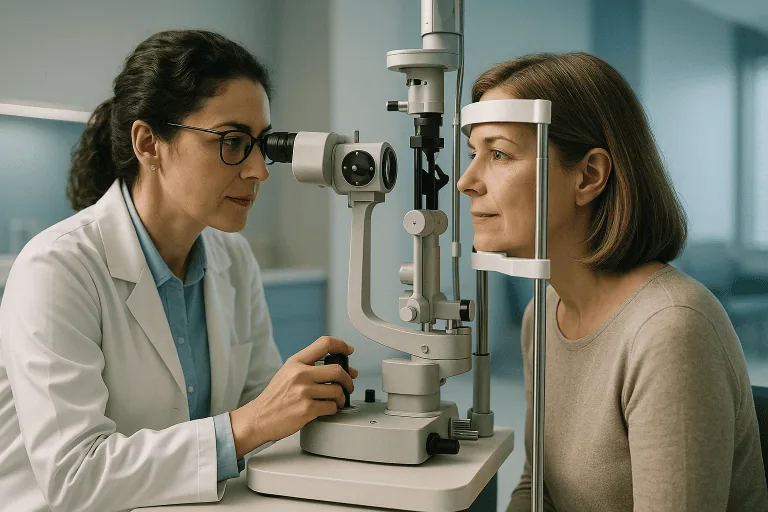
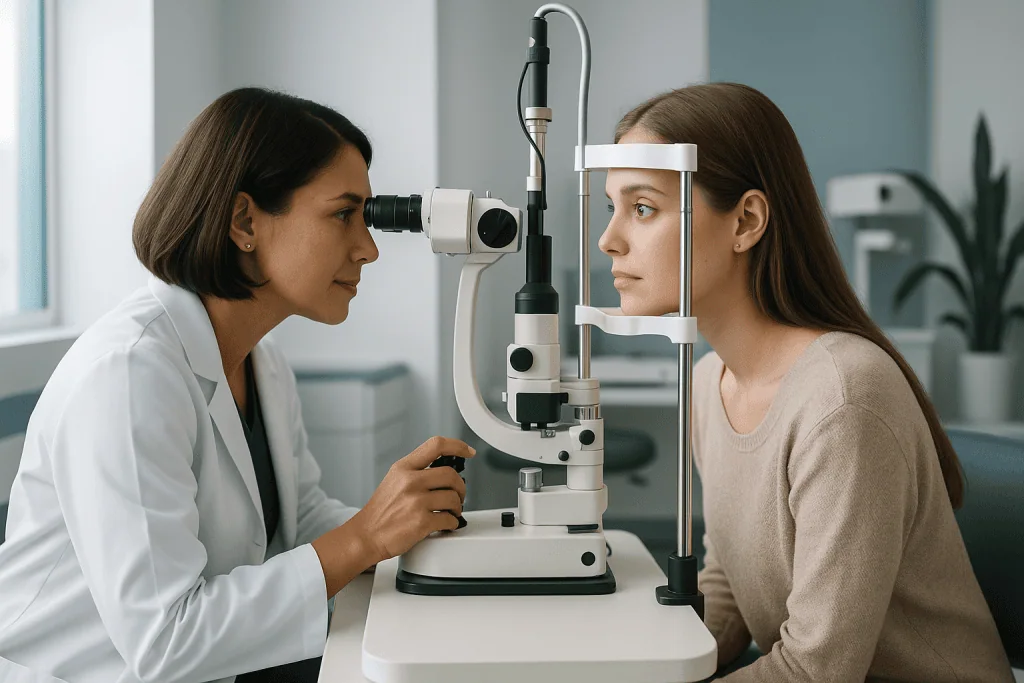
Modern strabismus care relies on precise measurement and careful documentation. Diagnostic tools may include digital vision testing, prism measurement systems, binocular vision assessment, ocular motility evaluation, slit-lamp examination and retinal examination. In selected cases, imaging of the orbit, brain or eye muscles helps identify restriction, nerve-related causes or structural abnormalities.
During surgery, magnification, microsurgical instruments, controlled illumination and fine suturing techniques help the surgeon work on delicate tissues with accuracy. For complex cases, preoperative imaging and repeated measurements guide the surgical plan. The value of technology lies not in the equipment itself but in using the right diagnostic pathway to choose the most appropriate treatment for the individual patient.
Recovery After Treatment
Recovery depends on the type of treatment. Glasses, prisms, exercises and patching require adaptation and follow-up rather than surgical healing. Botulinum toxin injection may cause temporary changes in alignment, eyelid position or double vision as the medication takes effect and then gradually wears off.
After strabismus surgery, patients commonly experience redness, tearing, mild swelling, a foreign-body sensation and discomfort with eye movement. Discomfort is usually manageable with the medications the treating team prescribes or recommends. Eye drops or ointment may be used to reduce inflammation and prevent infection. Most patients return to light daily activities within several days, although swimming, dusty environments and strenuous activity are usually restricted for a period the surgeon advises.
Alignment can fluctuate during early healing. The brain also needs time to adapt, especially in adults with long-standing misalignment. Some patients notice temporary double vision after surgery, which may improve as swelling settles and binocular adaptation occurs. Follow-up visits are important to monitor healing, evaluate alignment and decide whether further optical or medical support is needed.
Risks and Limitations to Understand
Every effective treatment has limits, and honest planning includes discussing them. Strabismus surgery is a well-established procedure, but the response of the eye muscles and the brain’s binocular adaptation cannot be predicted with complete precision. Some patients end up under-corrected or over-corrected and need a further adjustment or a second operation. Persistent or new double vision can occur, particularly in adults whose brains must re-adapt to a changed eye position. Less common surgical risks include noticeable conjunctival scarring, reaction to sutures, infection and, very rarely, injury to the eye itself. The anaesthesia team assesses each patient’s individual risk before any operation, which is part of why the preoperative work-up is thorough.
Non-surgical treatments carry their own limitations. Botulinum toxin can cause a temporary drooping eyelid or a transient vertical deviation while the medication is active, and its direct effect wears off over months. Patching can irritate the skin, and amblyopia can partially return after treatment stops, which is why children are monitored until visual development is complete. Prisms manage double vision without changing the underlying deviation, and very large deviations may exceed what prisms can comfortably correct. Finally, alignment is not always permanent: growth, ageing, thyroid disease and neurological change can shift eye position years after an initially successful treatment, and some patients need more than one intervention across a lifetime. None of this makes treatment inadvisable: it makes accurate expectations part of good care.
Why Acting Early Matters
Timely evaluation matters because strabismus can affect both vision and function. In children, the visual system is still developing. If one eye is consistently misaligned or suppressed by the brain, amblyopia may develop. The earlier amblyopia and significant misalignment are identified, the more opportunity there is to support visual development. Delayed treatment can make it harder to improve vision in the weaker eye and may reduce the potential for binocular vision later in life.
Early care also helps distinguish benign alignment patterns from more serious conditions. A sudden eye turn, new double vision, limited eye movement or a change after head trauma can signal an underlying medical condition rather than a simple muscle imbalance, and identifying that condition changes both the urgency and the order of the diagnostic steps. In adults, new strabismus may reflect nerve palsy, thyroid eye disease, vascular disease, orbital inflammation or another medical condition that needs its own diagnosis and management before, or alongside, any alignment treatment.
For intermittent strabismus, treatment timing depends on control, symptoms and progression. Some patients are monitored closely, while others benefit from intervention before the deviation becomes more constant. Waiting too long may allow symptoms to worsen, eye teaming to decline or a compensatory head posture to become entrenched.
Acting early does not always mean having surgery early. It means receiving the right evaluation, understanding the cause and following an appropriate plan. In many cases, careful observation, glasses, patching or prisms are the correct first steps. In others, timely surgery offers the best chance of restoring comfortable alignment and reducing functional problems.
Benefits of Strabismus Treatment
The potential benefits of treatment depend on the diagnosis, age, visual development and severity of misalignment, but they often include functional as well as appearance-related improvements. No treatment can promise a specific result, and the table below describes what patients may gain when treatment matches the underlying problem.
| Benefit | What It Means for You |
|---|---|
| Improved eye alignment | The eyes may appear more balanced and work together more effectively, depending on the type of strabismus and the treatment plan. |
| Better binocular function | Some patients gain improved depth perception, eye teaming or a wider field of comfortable single vision. |
| Reduced double vision | Adults with diplopia may experience less visual confusion and greater comfort in daily activities such as reading, walking or driving. |
| Support for visual development | In children, treating strabismus and amblyopia can help protect the development of vision in the affected eye. |
| Less eye strain and fatigue | Improved alignment or optical support can reduce the effort required to focus and coordinate the eyes. |
| Improved social comfort | A more balanced eye appearance may help patients feel more at ease in conversation, photographs and professional settings. |
Recovery Timeline After Strabismus Surgery
Recovery varies according to whether treatment is non-surgical, injection-based or surgical; the timeline below describes a typical course after corrective eye muscle surgery. Your surgeon’s individual advice always takes precedence over general timelines.
| Time Period | What Patients Can Expect |
|---|---|
| Day 1 | Redness, tearing, mild swelling and a scratchy sensation are common. Vision may be blurry from ointment or drops. Rest and the prescribed eye care routine are important. |
| First week | Discomfort usually improves. Many patients resume light activities while avoiding swimming, heavy exercise and eye rubbing. Alignment may still fluctuate. |
| First month | Redness gradually fades, and the surgeon evaluates alignment and healing. Temporary double vision or visual adaptation may continue in some adults. |
| Longer term | Final alignment becomes clearer as healing stabilises. Some patients may need glasses, prisms, amblyopia therapy, exercises or additional treatment depending on the case. |
Factors That Influence Outcomes
A good result in strabismus care depends on more than the technical correction of an eye turn. The most favourable outcomes occur when the diagnosis is accurate, the treatment plan matches the underlying cause and follow-up is consistent. Age, duration of misalignment, visual acuity in each eye, binocular vision potential and whether the deviation is stable all play important roles.
In children, the presence and severity of amblyopia influence treatment timing and expectations. If one eye has reduced vision, patching or other amblyopia therapy may be needed before or after alignment treatment. Even when surgery improves eye position, continued visual therapy may be necessary to support the weaker eye. Alignment and vision development are related but separate goals, and both need attention.
In adults, the history of the strabismus matters. A person with long-standing childhood misalignment may have adapted by suppressing one eye and may not develop normal depth perception after surgery, even when the eyes look well aligned. Another adult with recent-onset double vision may have strong binocular potential but may need careful prism testing or adjustable surgical planning. Patients with thyroid eye disease, nerve palsies or restrictive scarring often have more complex courses and may require staged care over more than one intervention.
The size and pattern of the deviation also matter. Horizontal deviations are often more straightforward than combined horizontal, vertical and torsional misalignments. Reoperations require particular care because previous surgery changes muscle position, tissue planes and scarring. In these cases, reviewing previous surgical records, when available, helps the surgeon plan with fewer unknowns.
Patient participation is another important factor. Children need support from parents or caregivers to wear glasses, complete patching schedules and attend follow-up visits: a well-designed plan that is not followed cannot work. Adults need to communicate clearly about double vision, work demands, driving needs and their tolerance of temporary symptoms. A realistic plan also allows enough time for preoperative evaluation, treatment and early postoperative review, with longer-term follow-up arrangements agreed in advance.
It is also important to hold realistic expectations. Treatment can be genuinely life-improving, but some patients require more than one intervention over time. Eye alignment can change with growth, ageing, neurological conditions, thyroid disease or scarring. A successful treatment plan is therefore measured not only by immediate appearance, but by functional comfort, stability and the ability to manage the condition over the long term.
How Strabismus Care Is Organised at Acibadem
Strabismus care at Acibadem is built around thorough diagnosis before any treatment decision. Patients are evaluated with detailed visual and ocular motility testing, refraction, binocular vision assessment and eye health examination. When imaging or additional medical evaluation is needed, it can be coordinated within the same hospital system, so that ophthalmology, neurology, endocrinology, radiology and anaesthesia teams work from a shared picture of the patient. This coordination is particularly relevant for adult-onset double vision, thyroid eye disease, cranial nerve palsies, previous surgery and suspected neurological causes, where the eye position is a symptom of something that needs its own assessment.
For children, the care pathway considers both medical accuracy and emotional comfort. Paediatric examinations require patience, age-appropriate testing methods and clear communication with parents. Families receive guidance on glasses, patching, amblyopia therapy, surgical timing and follow-up needs. When surgery is indicated, paediatric anaesthesia and postoperative monitoring are planned with attention to the child’s age, medical history and safety.
For adults, the evaluation includes a detailed discussion of double vision, work responsibilities, driving, previous treatments and personal goals. Some adults assume their surgery would be “merely cosmetic”. In reality, adult strabismus treatment can be functional as well as appearance-related, especially when misalignment causes diplopia, an abnormal head posture, reading difficulty or visual fatigue. The physician’s role is to explain what treatment can reasonably improve and where its limits lie, including, sometimes, the honest advice that observation or a non-surgical option is the better path.
Second opinions are a normal part of strabismus care. Decisions can be nuanced, particularly when a child has amblyopia, an adult has double vision, or a patient has already undergone surgery elsewhere. An independent review of measurements and records can clarify whether non-surgical treatment is appropriate, whether surgery is likely to help, what risks should be weighed and how follow-up should be arranged.
Moving Forward With Clarity
Strabismus disorders can affect how a person sees, learns, works, drives, reads and interacts with others. They can also create uncertainty, because the most visible sign, an eye that turns, does not always reveal the underlying cause. The most useful first step is a careful evaluation by an ophthalmologist experienced in eye alignment disorders, so that the diagnosis, not the appearance alone, drives the plan.
Whether treatment involves glasses, patching, exercises, prisms, botulinum toxin or eye muscle surgery, the plan should rest on accurate measurements, visual potential, medical history and the patient’s own goals. For some patients, early treatment protects vision development. For others, it reduces double vision or improves daily visual comfort. In complex cases, a staged plan carried out over time is often the most sensible approach, and understanding that from the outset makes the whole process easier to navigate.
Preparation
- Preparation starts with a detailed ophthalmic examination, eye movement assessment, vision testing, and refraction to plan the best treatment. Patients may need to stop certain medications before surgery and follow fasting instructions if general anesthesia is planned. Children are evaluated carefully to detect amblyopia and determine whether glasses or patching should be used before surgery.
Aftercare
- After treatment, patients may use prescribed eye drops and should avoid rubbing the eyes, swimming, and dusty environments for a short period. Mild redness, watering, or discomfort is common after surgery and usually improves within days. Follow-up visits are important to check eye alignment, healing, and whether additional therapy or glasses are needed.
Frequently Asked Questions
What affects the cost of strabismus treatment?
The final cost depends on the diagnosis, whether the plan involves glasses, orthoptic care, botulinum toxin, or surgery, the need for anaesthesia, the hospital setting, and follow-up requirements. Previous surgery or additional eye conditions can also affect planning.
How can I get a personalised quote?
You can request a free consultation by sharing recent eye reports, vision tests, photos if requested, and any previous treatment history. A specialist review is needed before a tailored treatment plan and quote can be prepared.
What is usually included in an international patient package in Turkey?
A package may include consultation, diagnostic eye measurements, selected preoperative tests, the planned procedure if needed, hospital services, interpreter support, and follow-up planning. Inclusions vary, so the written quote should be checked carefully.
Is surgery always needed for strabismus?
No. Some patients may be managed with glasses, patching, orthoptic exercises, prisms, or injections. Surgery is considered when the specialist believes it is appropriate for the type of deviation, symptoms, and treatment goals.
Can children and adults both receive strabismus treatment?
Yes. Children and adults can both be assessed, but goals may differ. In children, visual development and amblyopia prevention are often key concerns, while adults may seek improvement in double vision, alignment, comfort, or appearance.
Is this information medical or financial advice?
No. This is general educational information only. Medical suitability and final costs should be confirmed through specialist assessment and a personalised quote.
Medically reviewed by the Acıbadem International Medical Board September 13, 2026
See our medical review board →
Update history
- PublishedJune 8, 2026
- Medical review approvedSeptember 13, 2026
- Last content updateSeptember 12, 2026
References1
- Strabismus (Crossed Eyes) my.clevelandclinic.org
Trusted care for international patients
From the Acibadem Blog
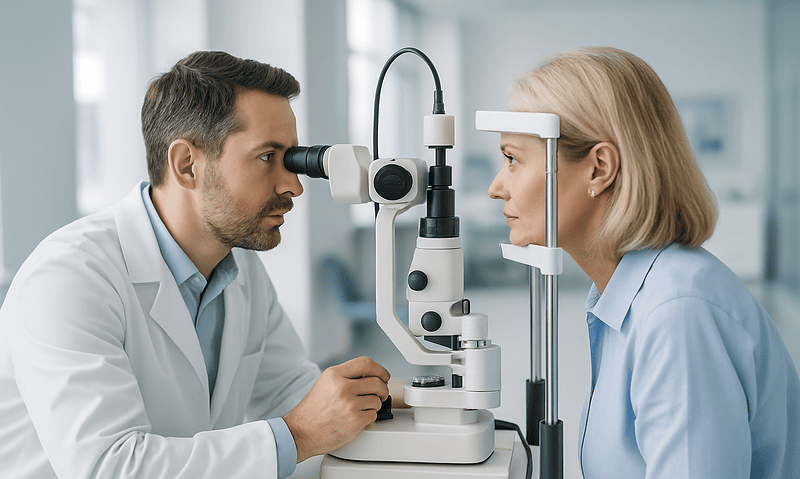
How Eye Alignment Is Measured: The Tests Behind a Strabismus Disorder Diagnosis
Eye alignment is measured with a short set of clinic tests. The cover test, in which one eye is covered while the examiner watches…

Esotropia, Exotropia and Beyond: How Strabismus Disorders Differ and How Care Is Planned
Strabismus is a misalignment of the eyes, and the main types of strabismus are named for the direction of the turn: esotropia (inward), exotropia…